
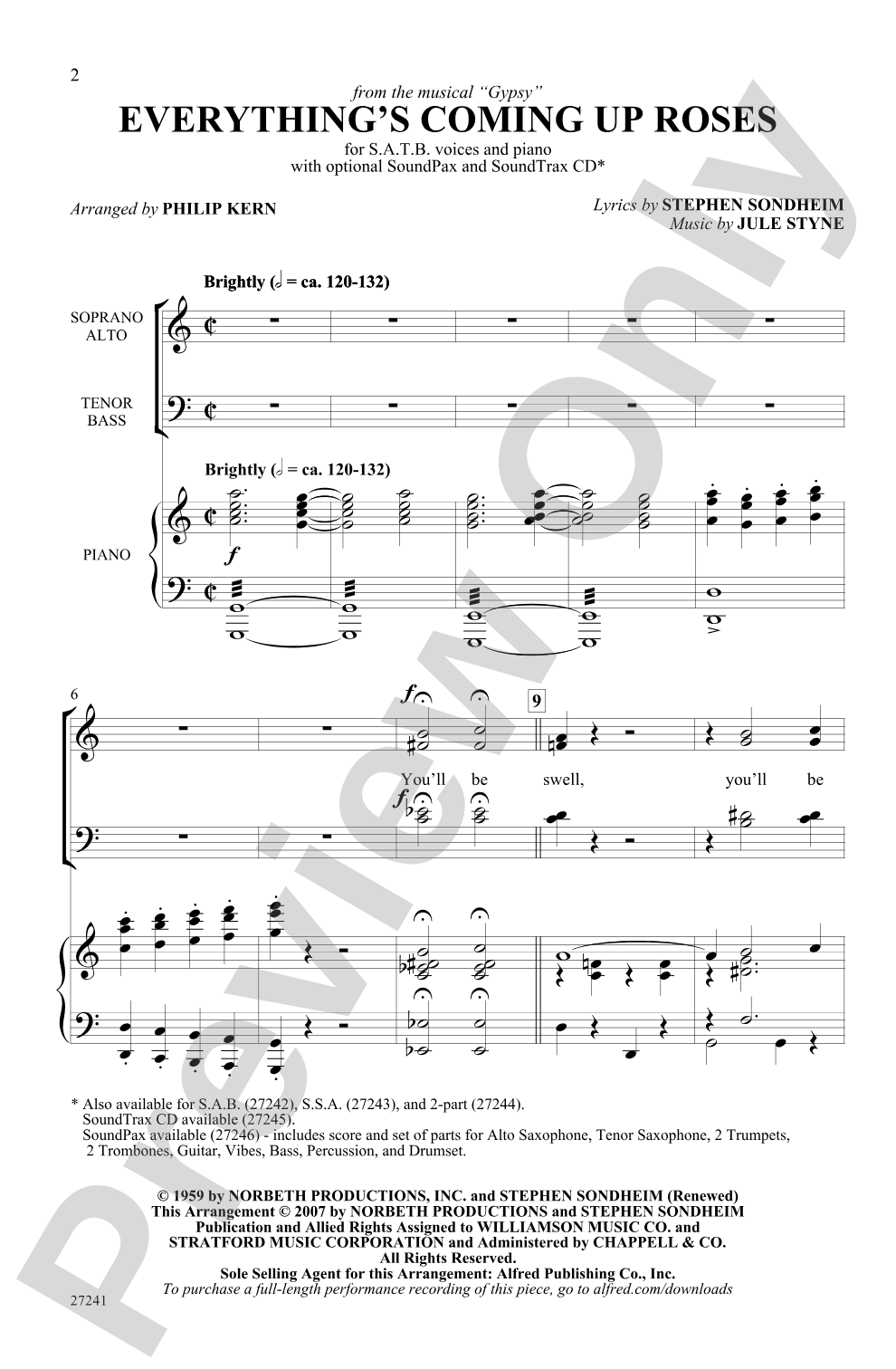
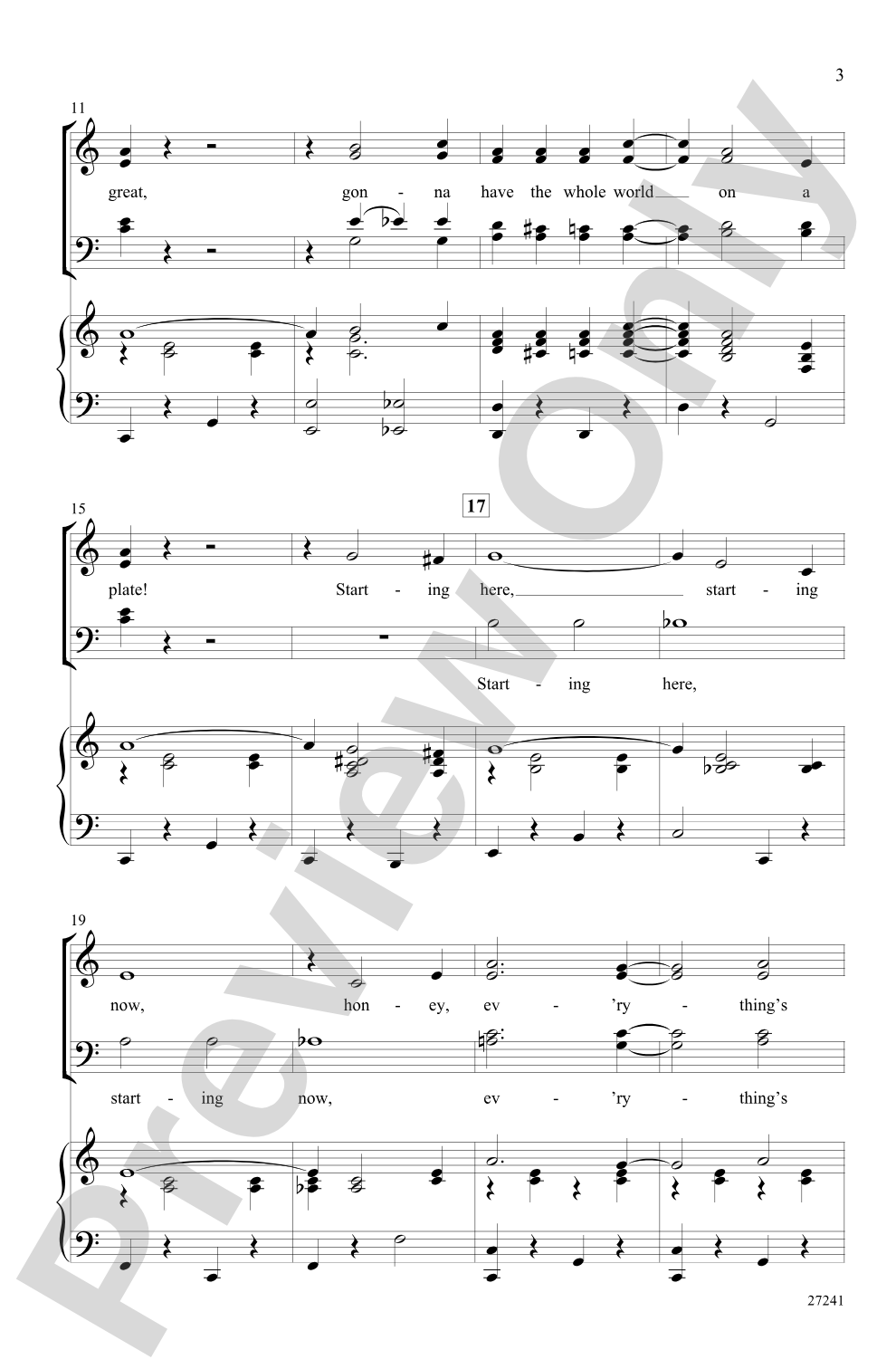
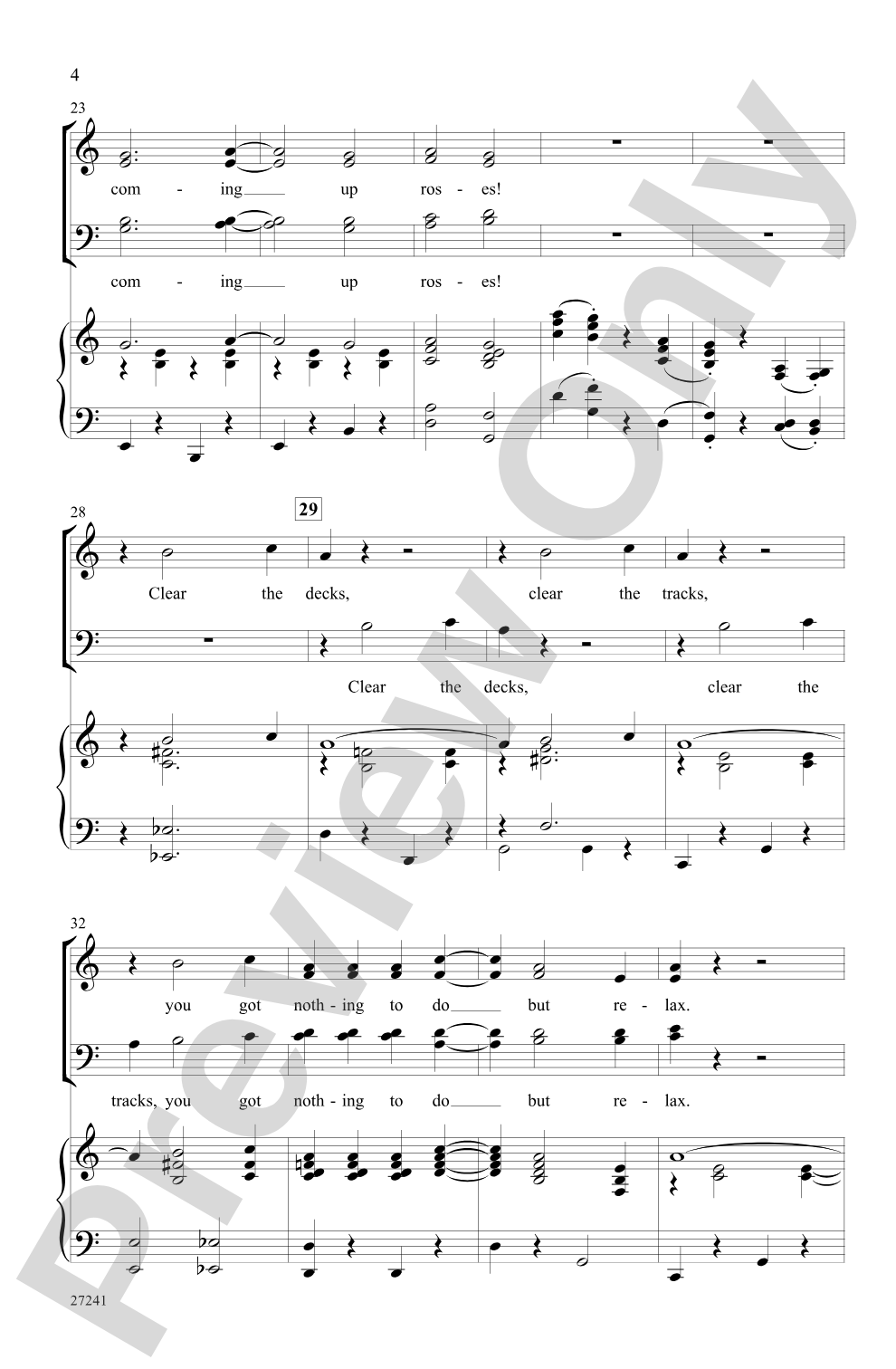

Everything's Coming Up Roses (from Gypsy): SATB Choral Octavo
From the Musical Gypsy
Lyrics by Stephen Sondheim, music by Jule Styne / arr. Philip Kern
Item: 00-PO-0002262
$2.10
Minimum order quantity: 20 copies
One moment…
Related Items
Everything's Coming Up Roses: SoundTrax Digital Audio Download |
$27.99
|
View | |
Everything's Coming Up Roses: SAB Choral Octavo |
$1.85
|
View | |
Everything's Coming Up Roses: SSA Choral Octavo |
$1.85
|
View | |
Everything's Coming Up Roses: 2-Part Choral Octavo |
$1.85
|
View | |
Everything's Coming Up Roses (from Gypsy): Choral SoundPax |
$40.00
|
View | |
Everything's Coming Up Roses: SATB Choral Octavo |
$2.10
|
View | |
Everything's Coming Up Roses: SAB Choral Octavo |
$1.85
|
View | |
Everything's Coming Up Roses: SSA Choral Octavo |
$1.85
|
View | |
Everything's Coming Up Roses: 2-Part Choral Octavo |
$1.85
|
View | |
Everything's Coming Up Roses: Choral Octavo SoundTrax CD |
$27.99
|
View | |
Everything's Coming Up Roses: Choral SoundPax |
$40.00
|
View |
Description
From the classic musical Gypsy comes this bright 2-beat number that's virtually a Broadway anthem. Phil Kern has kept the show-biz feel of the song intact, with a Broadway-style band accompaniment, available on the SoundTrax CD or as a performable SoundPax. A real showstopper; use it as a concert opener or closer with any of your choirs.


Everything's Coming Up Roses (from Gypsy): SATB Choral Octavo isn't in MakeMusic Cloud just yet...but it could be. Let us know you'd like to see it, and you'll help shape what comes next. In the meantime, start a free trial and dive into thousands of interactive titles your students can play along with today.
Request This Title
Tell us you want it.
Start Your Free Trial
Explore everything that's ready to play right now.
Sample Audio
1
Audio File
--:--
0:00
0:00
Sample Video
No sample videos found.
Additional Details
Series:
Alfred Pop Choral Series
Publisher:
Alfred Music
Page Count:
12
SKU:
00-PO-0002262
More about this title
About the Composer: Jule Styne
Jule Styne (1905-1975) composed the music for some of Broadway's most enduring musicals, including Gypsy, Funny Girl, Bells Are Ringing, and Gentlemen Prefer Blondes. His gift for writing instantly memorable melodies and his deep understanding of theatrical storytelling made him one of the most performed composers in musical theater. Styne's music remains central to the choral repertoire because it combines accessibility with genuine sophistication, giving singers material that feels natural to perform yet rewards close musical attention.
For choral directors, Styne's work represents the golden age of Broadway songwriting. His melodies sit well in the voice, his harmonies support clear part-writing, and his songs carry the dramatic weight that keeps audiences engaged. "Everything's Coming Up Roses" exemplifies why his music continues to fill concert halls and recital programs across the country.
Why we love this
Phil Kern's arrangement captures the unashamed confidence of the original without requiring pit orchestration, making this genuinely singable for community, school, and church choirs. The 2-beat feel and Broadway-style band part keep the energy high and the showmanship front and center, which means your singers perform a real song, not a diluted version. This works equally well launching a concert or closing one because audiences recognize it immediately and leave smiling.
What to expect
Optimistic, brassy, and alive. The song captures that specific Broadway moment when a character realizes everything is falling into place, and the arrangement translates that into a choral sound that feels sophisticated and celebratory at once. You get sophistication without pretension, energy without chaos.
Who it's for
Any SATB choir ready for a concert piece that feels genuinely theatrical without requiring extensive rehearsal time or dramatic training. Community choirs, school choirs in grades 6 and up, church choirs, and college groups all have the tools to make this work. If your singers can blend four parts and navigate a 2-beat feel, they can sing this successfully.
How to get the most out of it
- Lean into the rhythm section. The recorded accompaniment locks the groove in place; ask your singers to feel the 2-beat pulse in their bodies rather than overthinking individual note values.
- Balance the soprano line against the ensemble. The melody needs air and presence, but the accompanying voices matter just as much to the texture, so blend rather than feature.
- Shape the phrases as if you're delivering dialogue. This is a song about confidence and momentum, not sustained legit singing, so keep the energy moving forward even through longer note values.
- Nail the final moments. The ending should land with theatrical clarity and conviction. Rehearse the final chord separately to ensure it's crisp and unified.
How to use it
Open your concert with this number to set a bright, confident tone for the evening ahead. Alternatively, close with it if you want the audience to leave buoyant and entertained. It pairs well with other theatrical or popular choral music but also works as a contrast to more introspective repertoire earlier in your program.
Skills your students will build
- Two-beat rhythmic interpretation and ensemble lock
- Balancing melody and accompaniment in four-part writing
- Broadway diction and theatrical performance style
- Confidence in popular music expression