
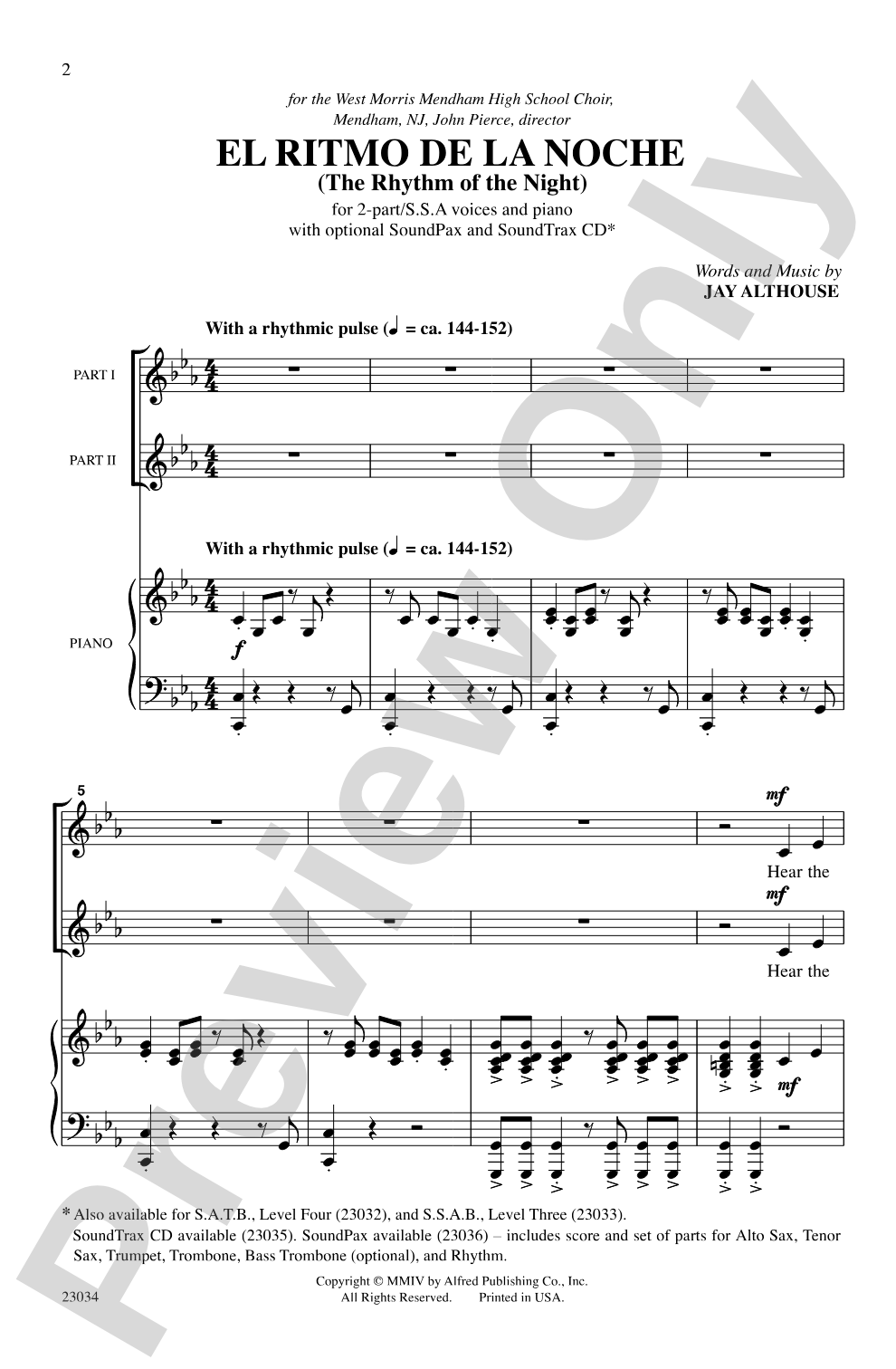

El Ritmo de la Noche: 2-Part/SSA Choral Octavo
(The Rhythm of the Night)
Music by Jay Althouse
Item: 00-PO-0007939
$1.65
Minimum order quantity: 20 copies
Pickup currently not available
Related Items
El Ritmo de la Noche: SSAB Choral Octavo |
$1.65
|
View | |
El Ritmo de la Noche (The Rhythm of the Night): Choral SoundPax |
$30.00
|
View | |
El Ritmo de la Noche: SATB Choral Octavo |
$1.65
|
View | |
El Ritmo de la Noche: 2-Part/SSA Choral Octavo |
$1.65
|
View | |
El Ritmo de la Noche: Choral Octavo SoundTrax CD |
$22.95
|
View | |
El Ritmo de la Noche: Choral SoundPax |
$30.00
|
View |
Description
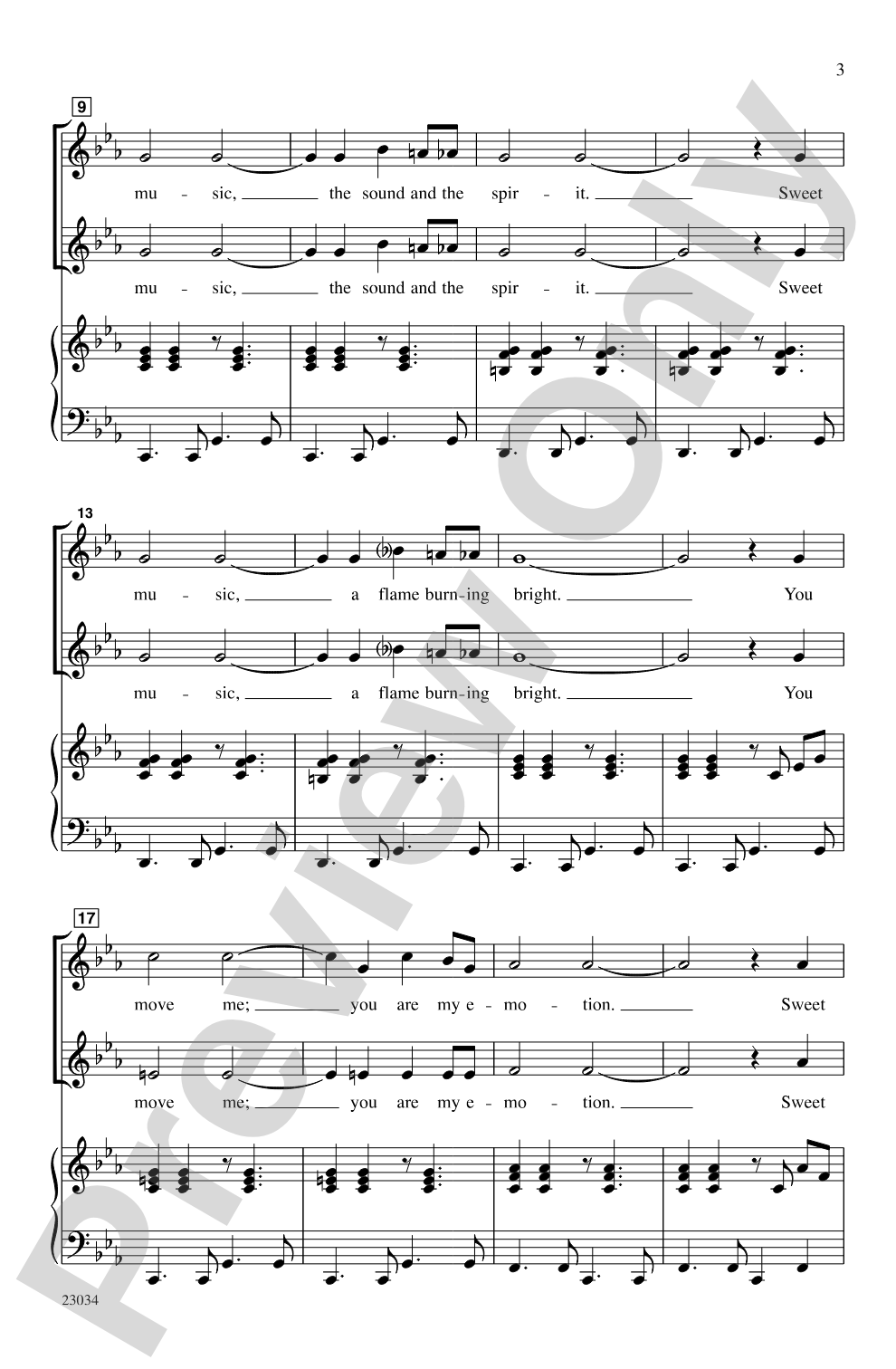
Rhythmic. Passionate. Scintillating. Take a good look at this vibrant multicultural feature by Jay Althouse. You simply cannot sit still as this sizzling song captures you with its infectious Latin groove and harmonic progression. With a text in both English and Spanish, El Ritmo de la Noche speaks to the sound and spirit of music as an essential life force. "You move me; you are my emotion." A pronunciation guide and translation are included, and the optional SoundTrax or SoundPax, and choreography video or DVD will add to your performance. Featured on the new staging DVD/Video "On the Stage!" (DVD #23037, Video #23129).


El Ritmo de la Noche: 2-Part/SSA Choral Octavo isn't in MakeMusic Cloud just yet...but it could be. Let us know you'd like to see it, and you'll help shape what comes next. In the meantime, start a free trial and dive into thousands of interactive titles your students can play along with today.
Request This Title
Tell us you want it.
Start Your Free Trial
Explore everything that's ready to play right now.
Sample Audio
1
Audio File
--:--
0:00
0:00
Sample Video
No sample videos found.
Additional Details
Series:
Alfred Choral Designs
Publisher:
Alfred Music
Page Count:
12
SKU:
00-PO-0007939
More about this title
About the Composer: Jay Althouse

Jay Althouse holds degrees in Music Education and Music from Indiana University of Pennsylvania, where he was honored as a Distinguished Alumnus. His career spans both the publishing industry (eight years as a rights and licenses administrator) and composition, with over 800 choral works now in print across all levels. He served on the Executive Board of the Music Publishers Association of America and maintains active membership in ASCAP, receiving regular Special Awards for his compositions.
Beyond choral writing, Althouse has co-created children's musicals with Sally K. Albrecht, compiled influential vocal collections like Folk Songs for Solo Singers, and authored pedagogical resources including The Complete Choral Warm-up Book and Accent on Composers. His collaborative work I Hear America Singing was performed by the San Francisco Girls and Boys Choirs at President Obama's 2009 Inauguration. He currently serves on the National Advisory Board of the Folk Art Society of America and resides in Wake Forest, North Carolina.
Why we love this
Althouse crafts this arrangement with the specific challenge of bilingual text in mind, providing pronunciation and translation support that makes authentic multicultural performance accessible without requiring prior Spanish fluency from your singers. The rhythmic architecture refuses to be a background element; instead, it propels the piece forward with genuine infectious energy rather than manufactured excitement. The choreography and staging options transform what could be a straightforward pop arrangement into something your ensemble will want to perform repeatedly.
What to expect
Rhythmic momentum collides with genuine harmonic warmth. This is music that commands physical response from your singers the moment they hear it, with lyrics celebrating emotion and human connection that resonate beyond the Latin surface. The grooves invite movement while the melodic lines retain substance.
Who it's for
Choirs seeking dynamic repertoire that energizes audiences while remaining accessible for developing singers. The 2-Part and SSA voicings make it suitable for middle school through early high school ensembles, and the built-in staging elements appeal to programs looking for concert pieces that bridge performance and entertainment.
How to get the most out of it
- Treat the Latin groove as foundational, not decorative. Your rhythm section needs rock-solid clarity in the syncopated patterns so the rest of the choir can lock into the pocket rather than fighting against it.
- Balance the bilingual text carefully during rehearsal. Mark stress patterns in Spanish syllables that differ from English to prevent the singers from defaulting to English pronunciation habits.
- Layer the choreography incrementally rather than teaching it all at once. Start with foundational movement, then add arm patterns once the vocal line is secure.
- Use the recorded accompaniment in early rehearsals to establish the groove, then gradually reduce ensemble reliance on it as confidence builds.
How to use it
Feature this as a concert anchor that showcases your ensemble's rhythmic precision and cultural awareness. It pairs naturally with other world music selections or can stand alone as a high-energy centerpiece that audiences will remember. Consider programming it in spring concerts when weather and mood favor uplifting, forward-moving repertoire.
Skills your students will build
- Syncopated rhythm reading in Latin contexts
- Spanish diction and authentic pronunciation
- Ensemble rhythmic locking and groove awareness
- Bilingual text clarity and language switching
- Choreographed movement integration with vocal performance