

El Pequeño Nino (The Tiny Baby): 3-Part Mixed Choral Octavo
(The Tiny Baby)
Words and music by Sally K. Albrecht
Item: 00-PO-0000360
$1.75
Minimum order quantity: 20 copies
Pickup currently not available
Related Items
El Pequeño Nino: SoundTrax Digital Audio Download |
$22.95
|
View | |
El Pequeño Nino (The Tiny Baby): SATB Choral Octavo |
$1.75
|
View | |
El Pequeño Nino (The Tiny Baby): 2-Part / SSA Choral Octavo |
$1.75
|
View | |
El Pequeño Nino: SATB Choral Octavo |
$1.75
|
View | |
El Pequeño Nino: 3-Part Mixed Choral Octavo |
$1.75
|
View | |
El Pequeño Nino: 2-Part / SSA Choral Octavo |
$1.75
|
View | |
El Pequeño Nino: Choral Octavo SoundTrax CD |
$22.95
|
View |
Description
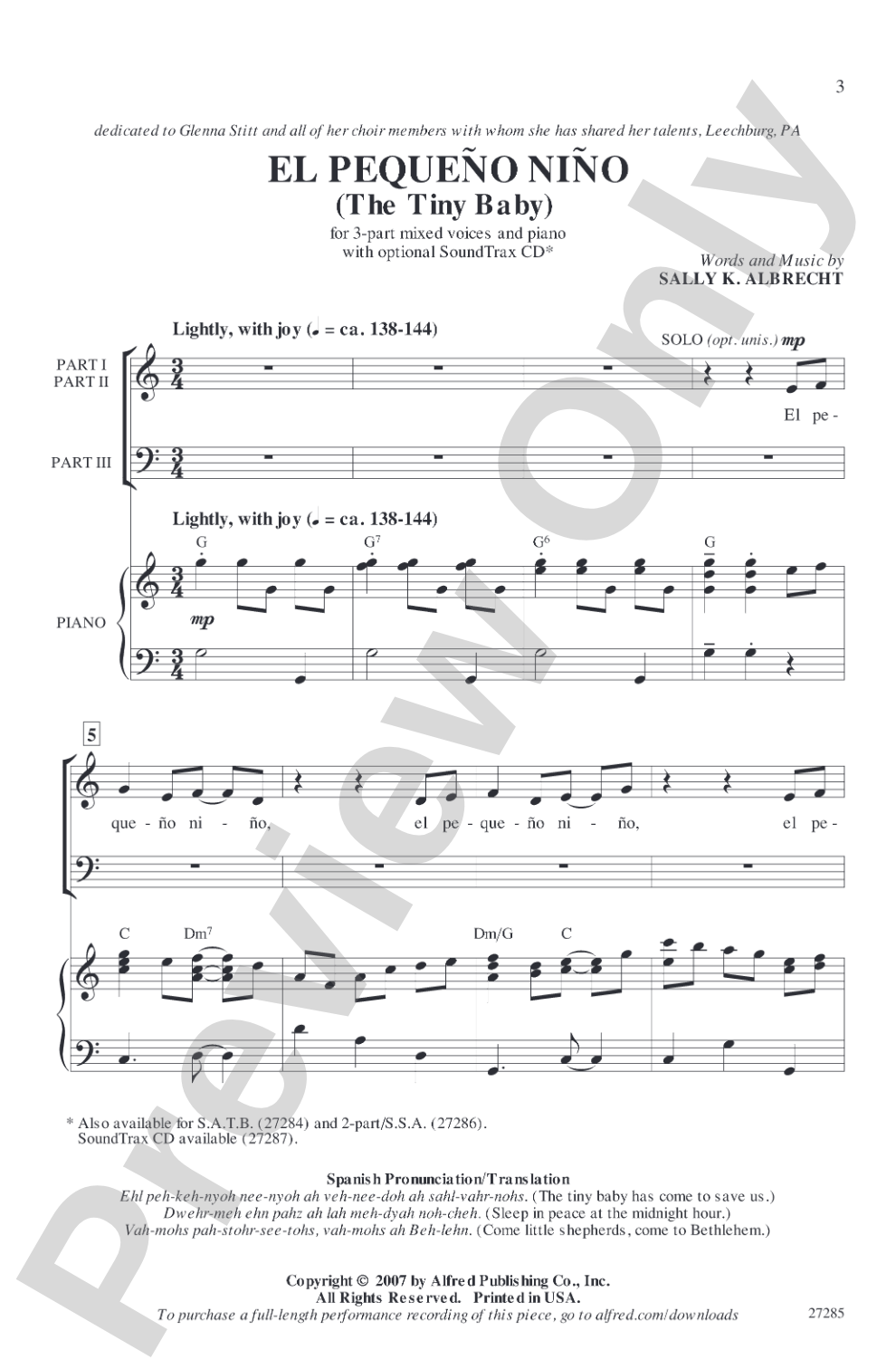
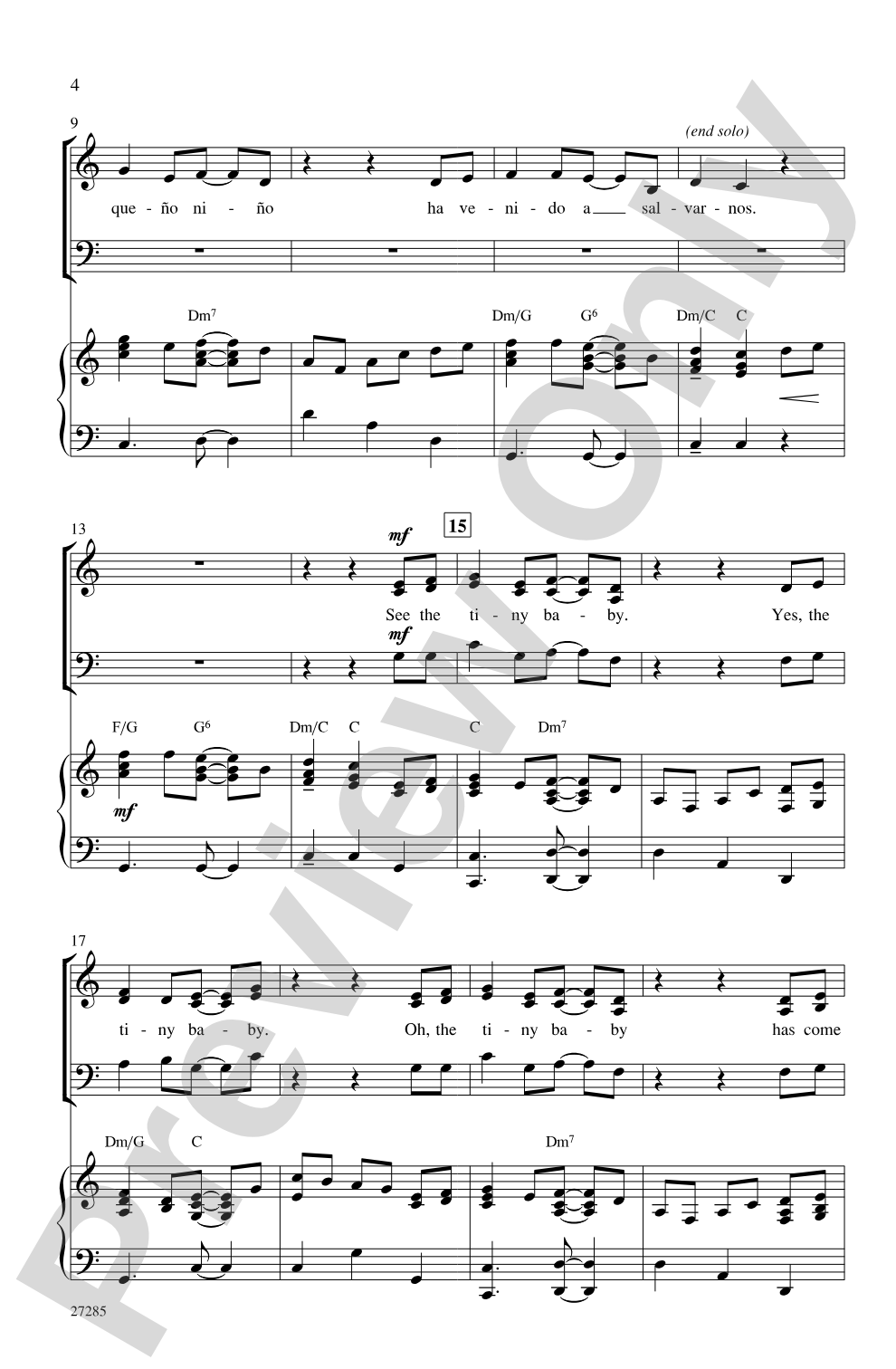
This charming and delicate Christmas number includes some Spanish phrases, and includes a pronunciation guide and translation in the publication. The perfect cross-cultural piece for your holiday concerts. Easy, straightforward choral writing for all ages with a simple piano accompaniment.


El Pequeño Nino (The Tiny Baby): 3-Part Mixed Choral Octavo isn't in MakeMusic Cloud just yet...but it could be. Let us know you'd like to see it, and you'll help shape what comes next. In the meantime, start a free trial and dive into thousands of interactive titles your students can play along with today.
Request This Title
Tell us you want it.
Start Your Free Trial
Explore everything that's ready to play right now.
Sample Audio
1
Audio File
--:--
0:00
0:00
Sample Video
No sample videos found.
Additional Details
Series:
Alfred Choral Designs
Publisher:
Alfred Music
Page Count:
12
SKU:
00-PO-0000360
More about this title
About the Composer: Sally K. Albrecht

Sally K. Albrecht has shaped choral music education for over three decades, serving as Director of School Choral, Vocal, and Elementary Publications at major educational publishers, most recently Alfred Music. A prolific composer with more than 600 published choral works and 75 larger musicals and songbooks in print, she has been a consistent recipient of the ASCAP Special Music Award since 1987 and has conducted honor choirs at prestigious venues including Lincoln Center, Carnegie Hall, and The Kennedy Center.
Albrecht earned her B.A. in Music and Theater from Rollins College (Florida) in 1976, followed by an M.A. in Drama and an M.M. in Accompanying from the University of Miami. She has taught in music departments at Oakland University (Michigan), Jersey City State College (New Jersey), and Meredith College (North Carolina). In recognition of her contributions to music education and leadership, she received the Distinguished Alumna Award from both the University of Miami Frost School of Music and Rollins College in 2021.
Why we love this
Albrecht's gift for accessible yet genuinely musical writing makes this piece work across mixed-age choirs without compromising artistry. The inclusion of Spanish text with pronunciation guidance and full translation removes barriers that often keep directors from programming multicultural repertoire, making it easy to teach authentic language phrasing alongside the music.
What to expect
Tender and gentle, with the warmth of a lullaby wrapped in holiday tradition. The straightforward piano accompaniment supports rather than complicates, letting the Spanish text and simple three-part writing create an intimate, reverent atmosphere that feels both joyful and peaceful.
Who it's for
Directors seeking repertoire that bridges cultural traditions and accessibility, especially for choirs that span multiple age groups or experience levels. This works equally well for elementary honor choirs, middle school general music ensembles, and high school choral programs looking to expand their multicultural catalog without technical overreach.
How to get the most out of it
- Lean into the warmth of the text by encouraging singers to shape vowels generously on the Spanish phrases; even without prior Spanish experience, focused vowel sounds will bring authenticity to the performance.
- Balance the three parts carefully during rehearsal so no single line dominates; the 'charming and delicate' character relies on blend rather than projection.
- Use the pronunciation guide to establish consistent diction early, then gradually shift focus to musical phrasing so text clarity becomes automatic by performance.
How to use it
Position this as a bridge piece in holiday concerts, perhaps between a more vigorous secular opening number and a traditional carol, or pair it with other Spanish or Latin repertoire to create a thematic set. The approachable difficulty makes it ideal for early-season programming when rehearsal time is limited or mixed ensembles are still building cohesion.
Skills your students will build
- Singing in Spanish with accurate vowel sounds and rhythmic precision
- Balancing three-part mixed harmony with attention to blend
- Interpreting text through musical shaping on an unfamiliar language
- Building cultural awareness through direct engagement with multicultural repertoire