
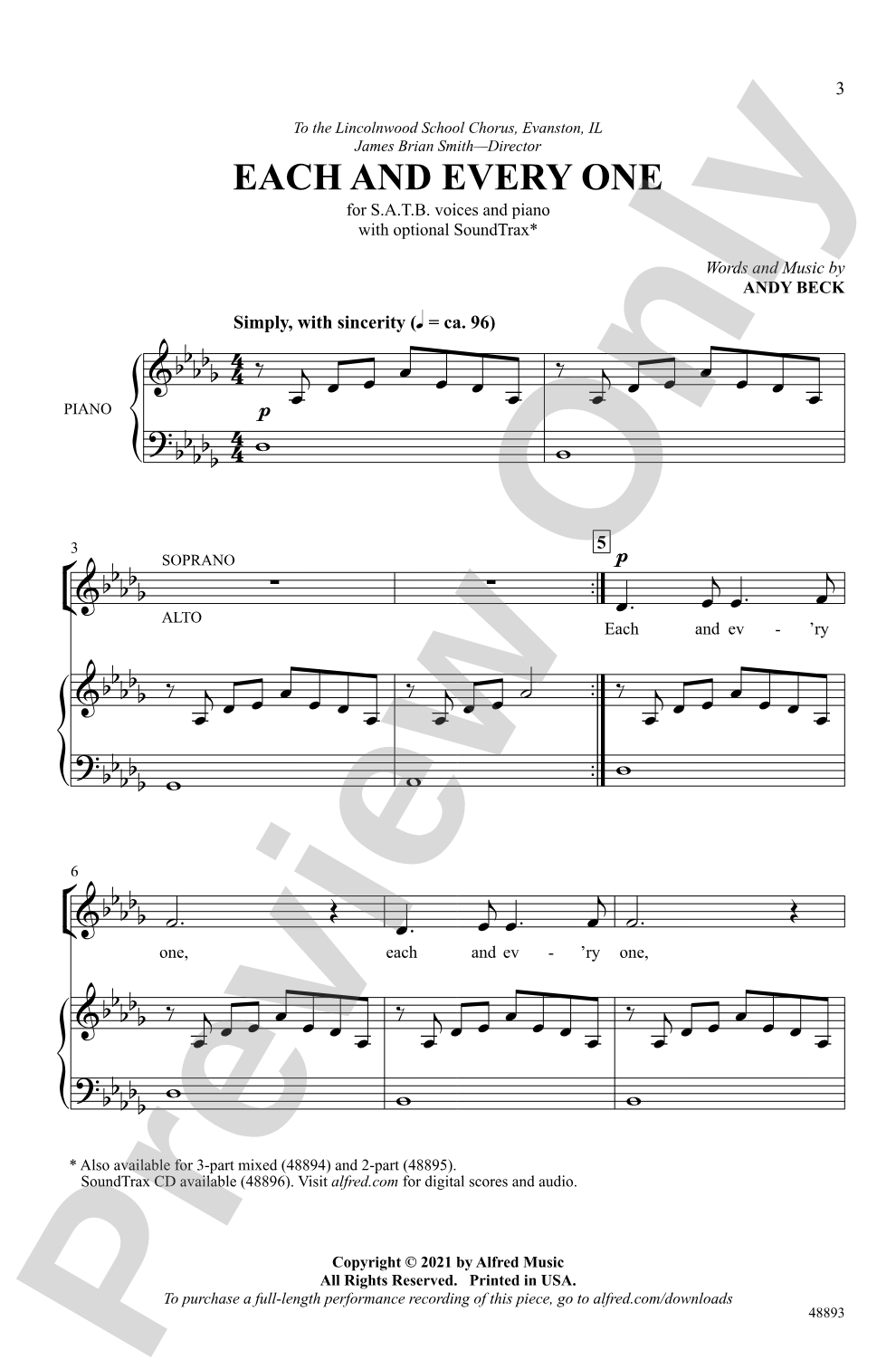

Each and Every One: SATB Choral Octavo
Words and music by Andy Beck
Item: 00-PO-0006677
$2.05
Minimum order quantity: 20 copies
Pickup currently not available
Related Items
Each and Every One: SoundTrax Digital Audio Download |
$29.99
|
View | |
Each and Every One: 3-Part Mixed Choral Octavo |
$2.05
|
View | |
Each and Every One: 2-Part Choral Octavo |
$2.05
|
View | |
Each and Every One: SATB Choral Octavo |
$2.05
|
View | |
Each and Every One: 3-Part Mixed Choral Octavo |
$2.05
|
View | |
Each and Every One: 2-Part Choral Octavo |
$2.05
|
View | |
Each and Every One: Choral SoundTrax CD |
$29.99
|
View |
Description
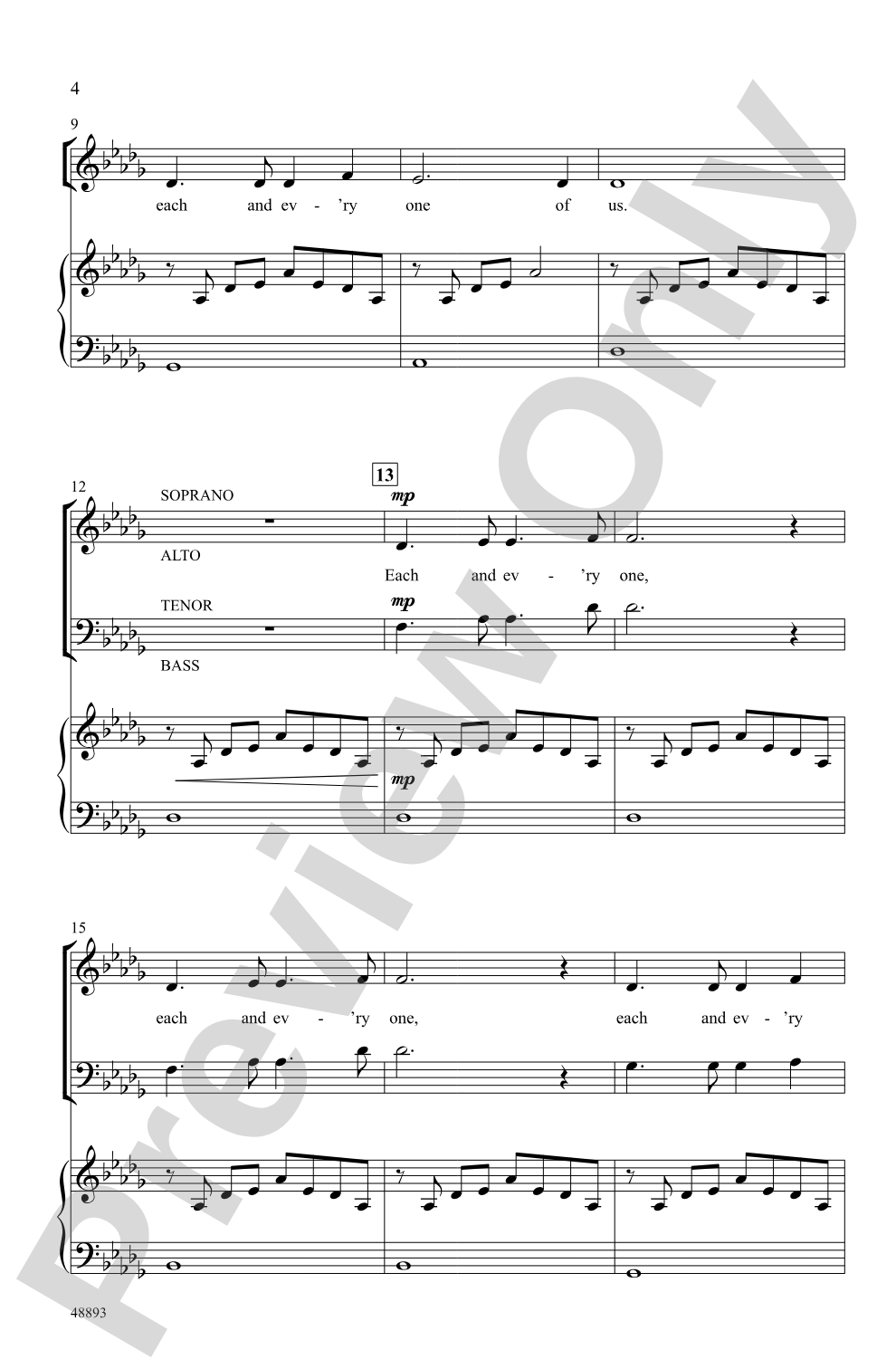
Written as a prompt for discussing diversity, equity, and inclusion, this heartfelt song favors no group over another, but rather emphasizes the value of each individual. Follow the ever-changing texture as an earnest unison melody blossoms into a fully harmonized bridge, before new and compelling lines are introduced and interwoven. In the end, you'll have a patchwork quilt with many unique squares joined together to create one thing of beauty.


Each and Every One: SATB Choral Octavo isn't in MakeMusic Cloud just yet...but it could be. Let us know you'd like to see it, and you'll help shape what comes next. In the meantime, start a free trial and dive into thousands of interactive titles your students can play along with today.
Request This Title
Tell us you want it.
Start Your Free Trial
Explore everything that's ready to play right now.
Sample Audio
1
Audio File
--:--
0:00
0:00
Sample Video
1 / 2
Additional Details
Series:
Alfred Choral Designs
Publisher:
Alfred Music
Page Count:
12
SKU:
00-PO-0006677
More about this title
About the Composer: Andy Beck

Andy Beck leads the choral publications division at Alfred Music, where he shapes the catalog of vocal resources used by educators nationwide. His output spans over 450 choral compositions, arrangements, and vocal materials, alongside widely adopted sight-singing curricula including Sing at First Sight and Vocalize! 45 Vocal Warm-Ups That Teach Technique. His work reaches singers across the globe, evident from the constant stream of performances uploaded to YouTube.
Beyond the page, Beck maintains an active presence in American music education as a guest conductor, choreographer, and clinician. He has served as composer and conductor for honor choirs at the state level and beyond, bringing the same pedagogical clarity to his guest work that characterizes his published music. Trained at Ithaca College and Northwest Missouri State University, Beck brings both artistry and educational rigor to everything he does. He continues to sing as a tenor with the North Carolina Master Chorale Chamber Choir and performs in musical theatre, grounding his writing in the lived experience of the singer.
Why we love this
Beck's text-setting is unfailingly clear and singable, and this piece proves no exception. The architecture of the piece itself becomes the message: a song about inclusion that literally grows from unison into a many-voiced harmony showcases genuine musical thinking alongside thoughtful thematic content. Your singers will grasp both the musical structure and the idea it embodies without either feeling forced.
What to expect
The piece unfolds like a conversation that begins with a single voice and gradually welcomes others in. As lines interweave and the texture deepens, you feel the weight of individual identity alongside the strength of community. The result is hopeful and grounded, never sentimental.
Who it's for
This piece works beautifully for any SATB choir seeking repertoire that addresses inclusion and belonging without preaching. Contest and concert choirs will find it sophisticated enough to engage an audience and flexible enough to accommodate varying ensemble sizes and skill levels.
How to get the most out of it
- Shape the unison opening with genuine warmth but restraint; the contrast will matter when the harmonies enter. Let this melody breathe as an individual voice before it joins the collective.
- Emphasize how each new voice part (as they layer in) brings a distinct musical line rather than harmonic filler. Have singers listen for and balance their particular melodic contour.
- Use the bridge's full harmonization as a moment of textural arrival. Mark this section distinctly in rehearsal so the ensemble understands it's the turning point toward complexity and unity.
- The interwoven lines require careful balancing of parts. Rotate which section carries the primary melody so all voices understand they contribute equally to the overall sound.
How to use it
Pair this with other works exploring social connection and belonging for a concert built around themes of equity and community. Its 12-page length makes it substantial enough to anchor a section of your program, yet accessible enough not to overwhelm a mixed-ability ensemble. It also reads well as a closing or encore piece, leaving an audience with something genuinely moving to sit with.
Skills your students will build
- Awareness of textural contrast and how unison, harmony, and counterpoint create different emotional effects
- Balancing independent melodic lines within a four-part texture
- Text expression and interpretive phrasing in the context of thematic meaning
- Part independence and listening across multiple simultaneous voice lines