
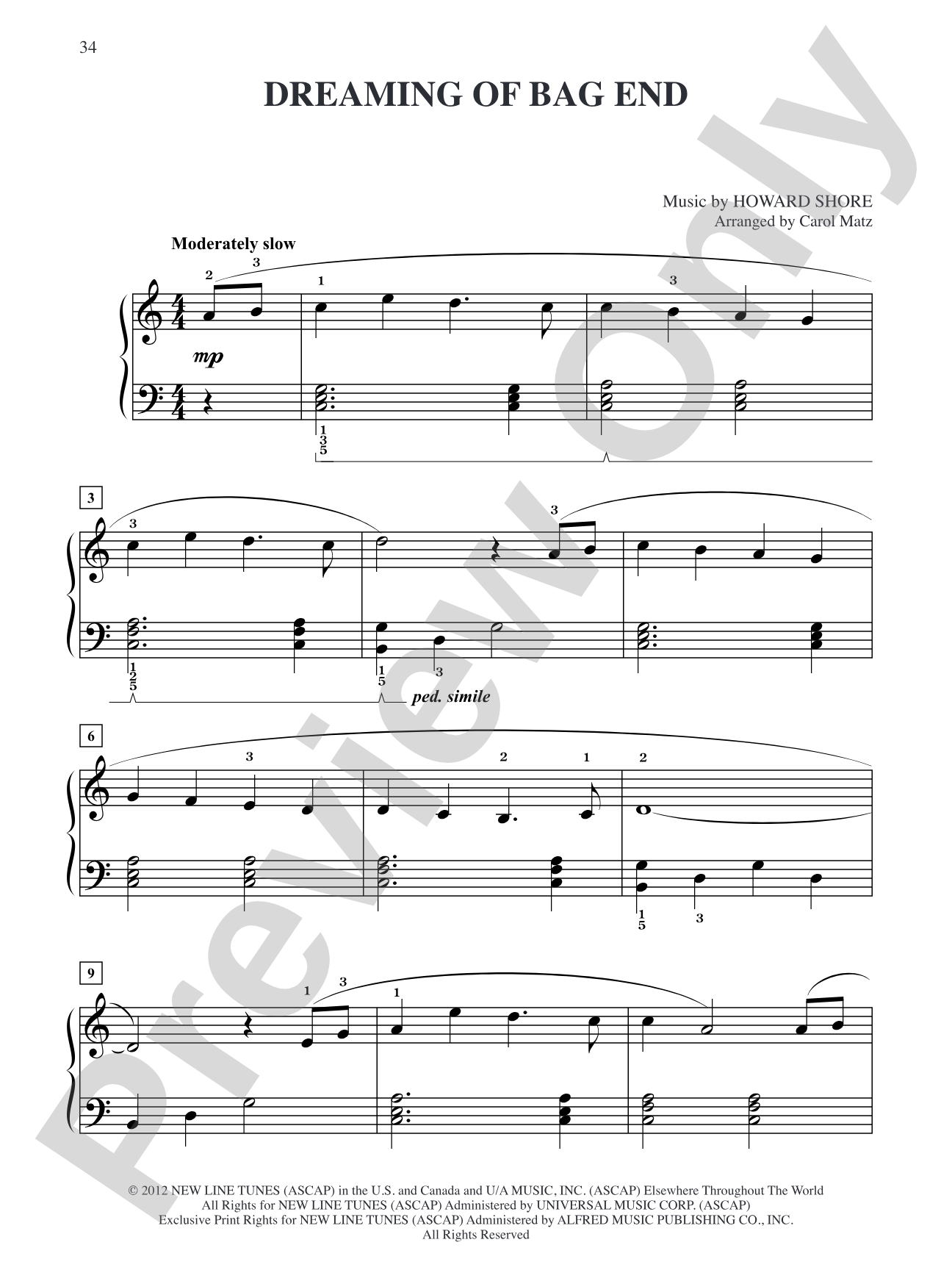
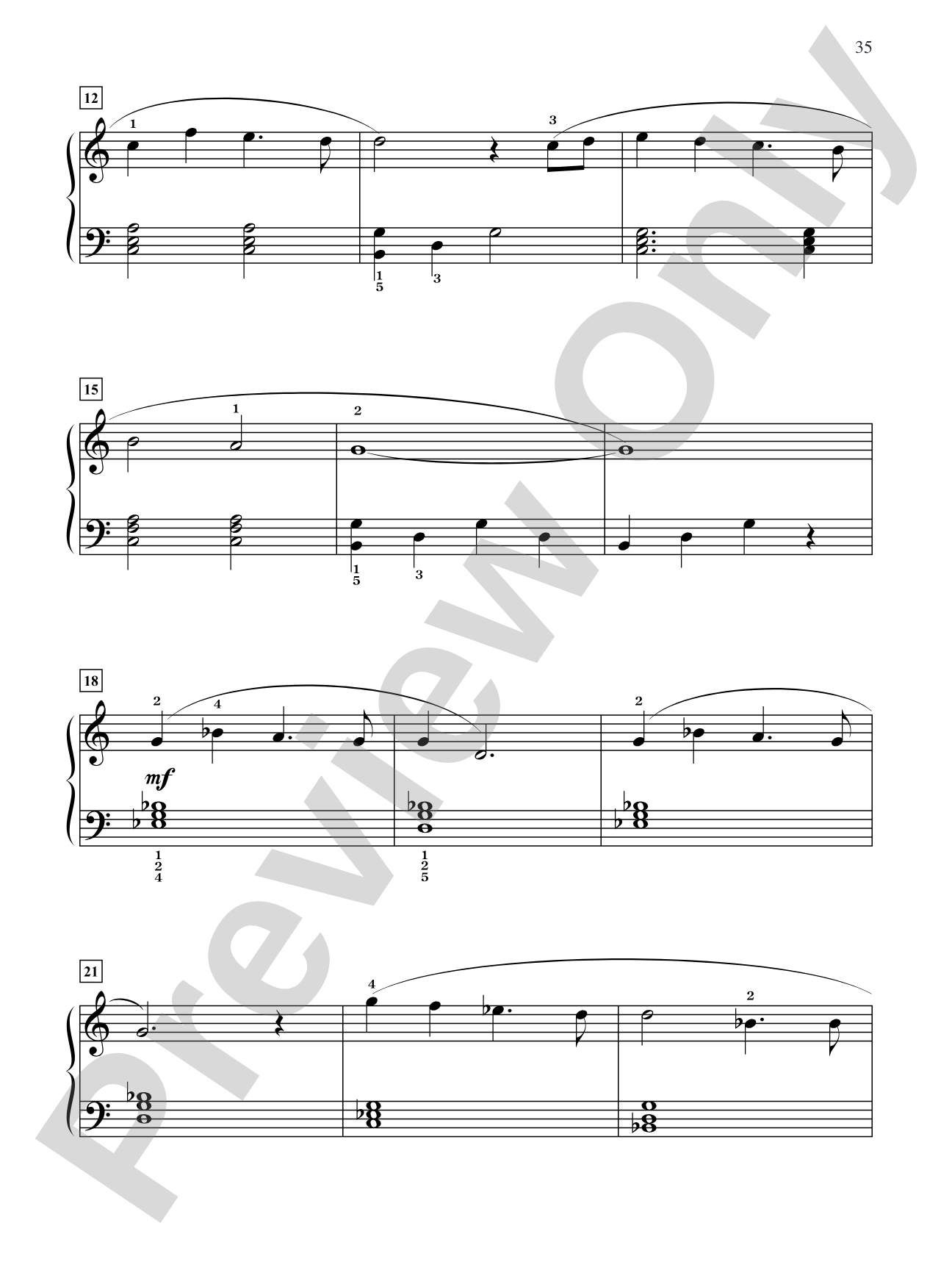

Dreaming of Bag End (from The Hobbit: An Unexpected Journey): Big Note Piano
Sheet Music Selections from the Motion Picture
Music composed by Howard Shore / arr. Carol Matz
Level: Big Note
Item: 00-PS-0015908
$5.99
One moment…
Related Items
An Unexpected Party (from The Hobbit: An Unexpected Journey): Big Note Piano |
$4.99
|
View | |
The Adventure Begins (from The Hobbit: An Unexpected Journey): Big Note Piano |
$4.99
|
View | |
The Dwarf Lords (from The Hobbit: An Unexpected Journey): Big Note Piano |
$4.99
|
View | |
Erebor (from The Hobbit: An Unexpected Journey): Big Note Piano |
$4.99
|
View | |
A Very Respectable Hobbit (from The Hobbit: An Unexpected Journey): Big Note Piano |
$4.99
|
View | |
Misty Mountains (from The Hobbit: An Unexpected Journey): Big Note Piano |
$4.99
|
View | |
Song of the Lonely Mountain (from The Hobbit: An Unexpected Journey): Big Note Piano |
$4.99
|
View | |
The Hobbit: An Unexpected Journey: Piano Book |
$14.99
|
View |
Description
With this collection, pianists in their early years of study can enjoy playing simplified arrangements of eight elections from Howard Shore's brilliant score to The Hobbit: An Unexpected Journey. Shore masterfully expands upon the musical palette of Middle-earth, blending familiar motifs from the The Lord of the Rings trilogy with an exciting array of memorable new themes. In addition to the piano arrangements, this beautifully produced souvenir folio features an array of colorful photos from the film. Titles: An Unexpected Party * Misty Mountains * The Adventure Begins * Song of the Lonely Mountain * Dreaming of Bag End * A Very Respectable Hobbit * Erebor * The Dwarf Lords.


Dreaming of Bag End (from The Hobbit: An Unexpected Journey): Big Note Piano isn't in MakeMusic Cloud just yet...but it could be. Let us know you'd like to see it, and you'll help shape what comes next. In the meantime, start a free trial and dive into thousands of interactive titles your students can play along with today.
Request This Title
Tell us you want it.
Start Your Free Trial
Explore everything that's ready to play right now.
Sample Audio
No sample audio found.
Sample Video
No sample videos found.
Additional Details
Publisher:
Alfred Music
Page Count:
36
SKU:
00-PS-0015908
More about this title
About the Composer: Howard Shore
Howard Shore is an Academy Award-winning composer whose film scores have shaped the soundscape of contemporary cinema. His work on The Lord of the Rings trilogy and The Hobbit films demonstrates his mastery of orchestral storytelling, creating thematic material that feels both epic in scope and intimately connected to character and place. Shore's ability to weave leitmotifs throughout vast narrative landscapes while maintaining melodic clarity makes his music exceptionally rewarding for musicians of all levels to learn and perform.
As an educator's resource, Shore's film scores serve as windows into professional composition and orchestration. His melodies are singable and memorable, his harmonic language is sophisticated yet accessible, and his structural clarity provides students with models of how theme, development, and variation work in practice.
Why we love this
Carol Matz's big note arrangements preserve the emotional substance of Shore's themes while keeping the technical demands manageable for early-level pianists. The collection pairs these arrangements with full-color photography from the film, creating a compelling visual context that deepens student engagement with the music. Programming music from a beloved film score can spark genuine enthusiasm in young pianists who might otherwise view their studies as disconnected from the wider world of music they actually encounter.
What to expect
These pieces capture the wonder and adventure of Middle-earth in accessible form. The melodies convey the cozy warmth of the Shire, the mystery of distant mountains, and the anticipation of unexpected journeys, all without technical barriers that would prevent students from expressing these feelings through their playing.
Who it's for
Early-level pianists (typically ages 6-10, after several months of study) who are ready to move beyond basic technique books and enjoy playing recognizable, film-based repertoire. Students who have seen or are familiar with The Hobbit films will find special motivation in learning these simplified arrangements.
How to get the most out of it
- Listen to Shore's orchestral recording before you begin learning each piece. Hearing the original arrangement will clarify the harmonic intent and help you understand where the melody sits within the larger texture.
- Shape each melody phrase by considering how the orchestra would breathe; use subtle rubato and dynamic shaping to bring the themes to life even on the reduced keyboard.
- Pay attention to the film images in the folio as you practice. They anchor the music to its narrative context and can inform your interpretive choices about tempo and character.
How to use it
Include individual pieces in student recitals throughout the year as repertoire choices aligned with the film release or during fantasy-themed concert programming. The visual folio makes these pieces excellent choices for performances where screen projection or thematic concert framing enhances the audience experience.
Skills your students will build
- Reading and performing simplified arrangements of professional orchestral music
- Phrasing and melodic shaping within a narrowed technical range
- Sustaining listener engagement through consistent tempo and clear voicing of melody
- Connecting visual imagery to musical character and interpretation