

Dream: SSAA Choral Octavo
Words and music by Johnny Mercer / arr. Jay Althouse
Item: 00-PO-0004361
$2.25
Minimum order quantity: 20 copies
One moment…
Related Items
Dream: SoundTrax Digital Audio Download |
$27.99
|
View | |
Dream: SATB Choral Octavo |
$2.10
|
View | |
Dream: SAB Choral Octavo |
$2.25
|
View | |
Dream: Choral SoundPax |
$25.00
|
View | |
Dream: SATB Choral Octavo |
$2.10
|
View | |
Dream: SAB Choral Octavo |
$2.25
|
View | |
Dream: SSAA Choral Octavo |
$2.25
|
View | |
Dream: Choral Octavo SoundTrax CD |
$27.99
|
View | |
Dream: Choral SoundPax |
$25.00
|
View |
Description
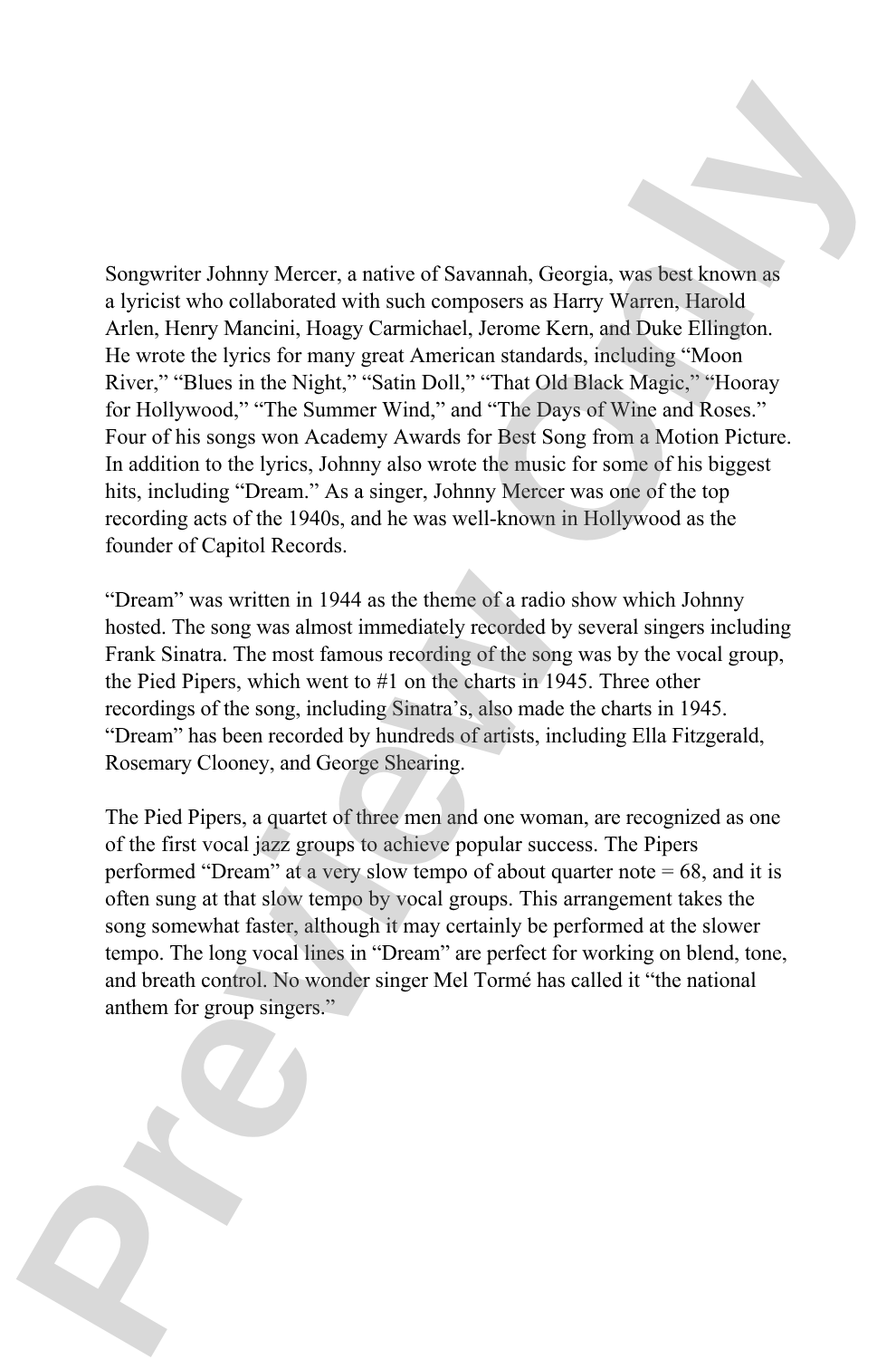
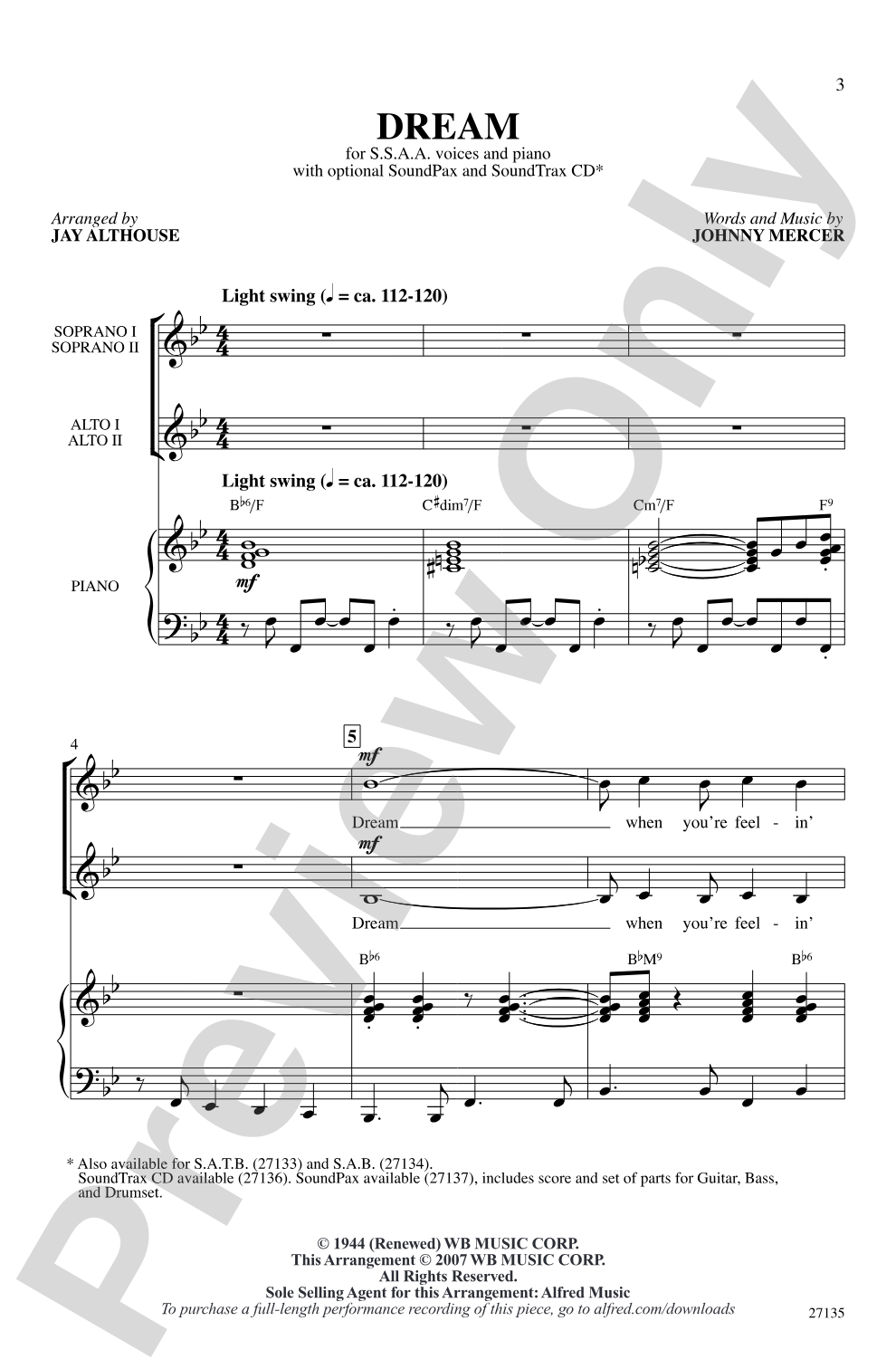
Singer Mel Tormé called "Dream" "the national anthem for group singers." It's been recorded by everyone from Frank Sinatra to George Shearing, and is the quintessential vocal group number. The vocal lines are easy, so it's a great piece to work on tone and blend...for any ensemble of any size. Easy piano accompaniment.


Dream: SSAA Choral Octavo isn't in MakeMusic Cloud just yet...but it could be. Let us know you'd like to see it, and you'll help shape what comes next. In the meantime, start a free trial and dive into thousands of interactive titles your students can play along with today.
Request This Title
Tell us you want it.
Start Your Free Trial
Explore everything that's ready to play right now.
Sample Audio
1
Audio File
--:--
0:00
0:00
Sample Video
No sample videos found.
Additional Details
Series:
Alfred Archive Edition: Alfred Pop Choral Series
Publisher:
Alfred Music
Page Count:
12
SKU:
00-PO-0004361
More about this title
About the Composer: Johnny Mercer
Johnny Mercer (1909-1976) shaped American popular song through decades of prolific lyric writing and occasional composition. His gift for crafting singable, memorable lines made him one of the most recorded songwriters in history, and his work spans jazz standards, film scores, and theatrical music. Mercer's influence on vocal music education extends far beyond his era; his melodies and lyrics remain central to choral repertoire because they sit naturally in the voice and reward careful attention to diction and phrasing.
Why we love this
This is repertoire that works. The simplicity of the vocal lines frees singers to focus on the discipline of ensemble singing—blend, balance, intonation, and phrase shape. What makes it stand out is that singers genuinely enjoy performing it; the melody is iconic, the text is elegant, and the result feels substantial even when the technical demands remain accessible.
What to expect
Sophisticated without pretense. The melody floats with the ease of a favorite standard, and the harmonic language supports rather than complicates it. There's an inherent elegance in the piece that asks singers to trust simplicity and commit to beautiful sound.
Who it's for
Any choir seeking accessible standard repertoire that rewards musicianship without requiring advanced sight-reading or range. Community choirs, school ensembles, and chamber singers all find this piece serves as an excellent vehicle for tone work and blend refinement. The easy vocal lines mean energy goes into quality rather than survival.
How to get the most out of it
- Shape the melody with attention to how the lyrics sit. Each phrase has a natural speech rhythm that Mercer designed; let that guide your tempo and breathing choices.
- Approach the harmony parts as collaborators in the melody, not as filler. SSAA writing benefits from all four parts listening actively to one another.
- Let the piano accompaniment anchor the ensemble's harmonic foundation, especially in the opening measures where the choral blend is still settling.
How to use it
This works as a standalone feature in concerts celebrating Great American Songbook standards, or paired with other Mercer songs to showcase his craftsmanship. It's equally at home in a mixed program where you want a moment of vocal sophistication and warmth.
Skills your students will build
- Balancing independent voice lines while maintaining ensemble cohesion in SSAA voicing
- Extending sustained tones with even dynamic control
- Interpreting jazz-inflected phrasing within a choral context
- Singing with clarity and precision in smooth, legit vocal style