

Dream: SAB Choral Octavo
Words and music by Johnny Mercer / arr. Jay Althouse
Item: 00-PO-0002912
$2.25
Minimum order quantity: 20 copies
One moment…
Related Items
Dream: SoundTrax Digital Audio Download |
$27.99
|
View | |
Dream: SATB Choral Octavo |
$2.10
|
View | |
Dream: SSAA Choral Octavo |
$2.25
|
View | |
Dream: Choral SoundPax |
$25.00
|
View | |
Dream: SATB Choral Octavo |
$2.10
|
View | |
Dream: SAB Choral Octavo |
$2.25
|
View | |
Dream: SSAA Choral Octavo |
$2.25
|
View | |
Dream: Choral Octavo SoundTrax CD |
$27.99
|
View | |
Dream: Choral SoundPax |
$25.00
|
View |
Description
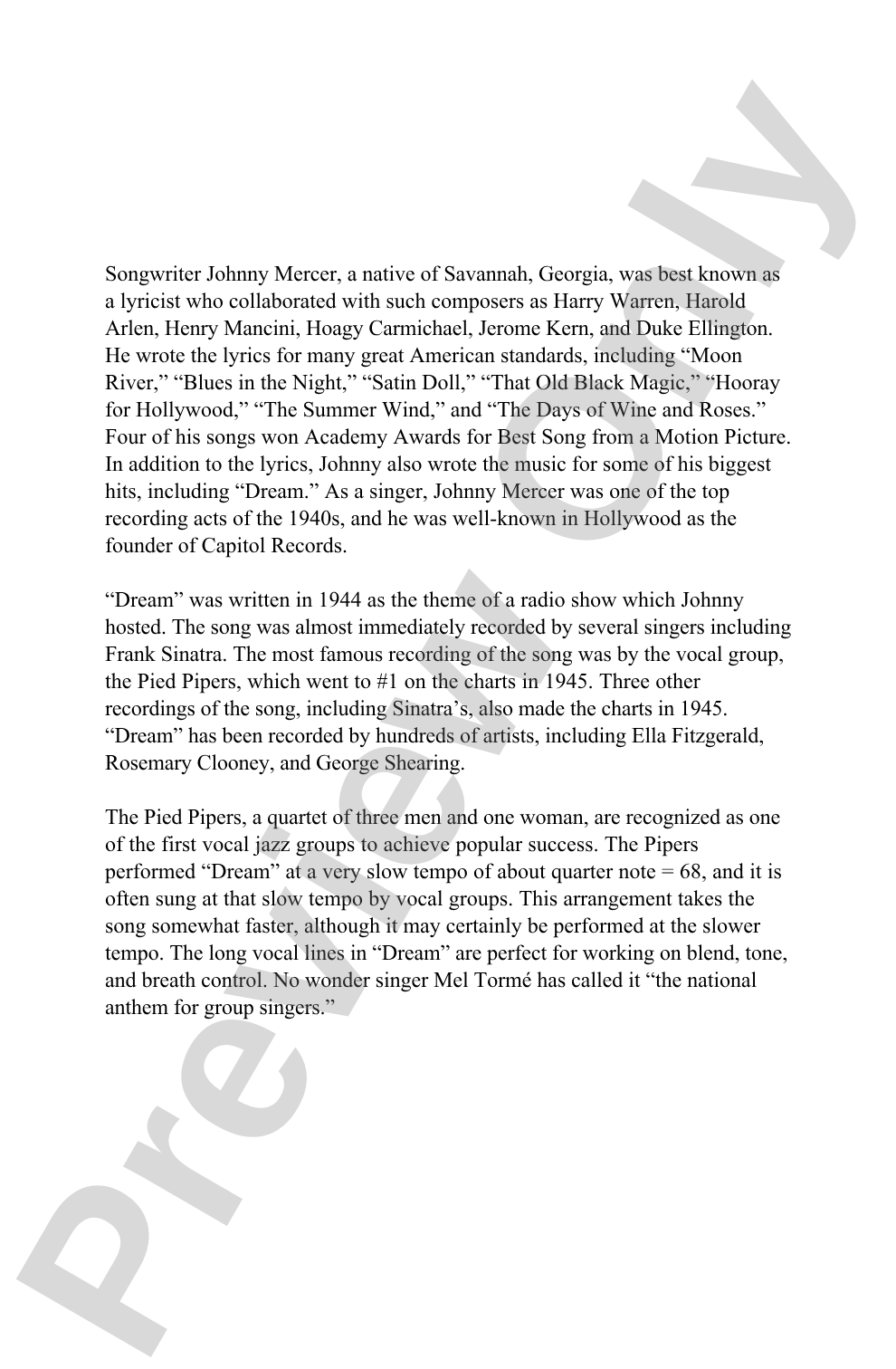
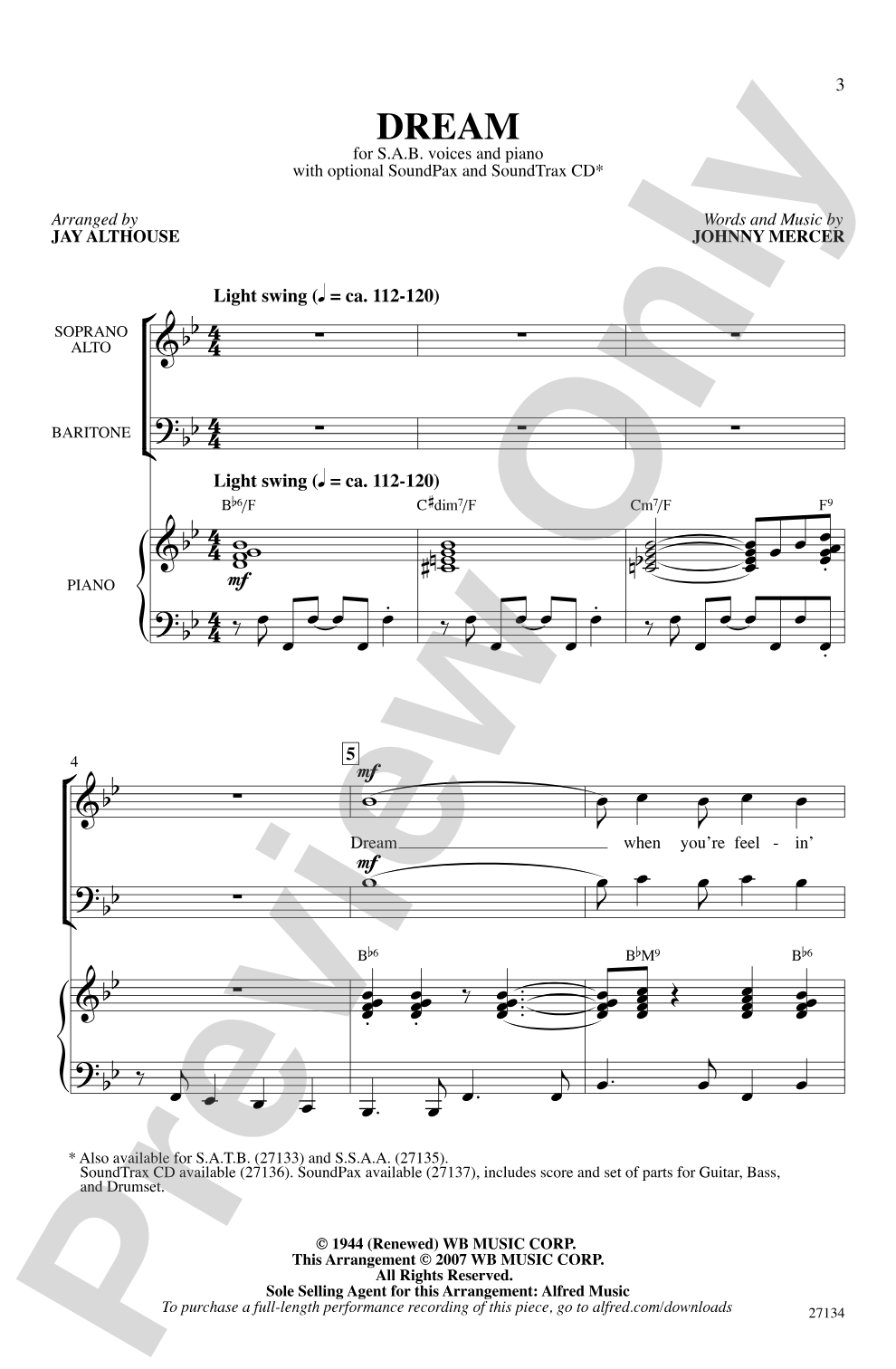
Singer Mel Tormé called "Dream" "the national anthem for group singers." It's been recorded by everyone from Frank Sinatra to George Shearing, and is the quintessential vocal group number. The vocal lines are easy, so it's a great piece to work on tone and blend...for any ensemble of any size. Easy piano accompaniment.


Dream: SAB Choral Octavo isn't in MakeMusic Cloud just yet...but it could be. Let us know you'd like to see it, and you'll help shape what comes next. In the meantime, start a free trial and dive into thousands of interactive titles your students can play along with today.
Request This Title
Tell us you want it.
Start Your Free Trial
Explore everything that's ready to play right now.
Sample Audio
1
Audio File
--:--
0:00
0:00
Sample Video
No sample videos found.
Additional Details
Series:
Alfred Archive Edition: Alfred Pop Choral Series
Publisher:
Alfred Music
Page Count:
12
SKU:
00-PO-0002912
More about this title
About the Composer: Johnny Mercer
Johnny Mercer (1909-1976) stands among the most prolific lyricists in American music history, crafting words for standards that defined the Great American Songbook. His gift lay in writing conversational, singable lyrics that felt natural to performers while maintaining sophisticated wit and emotional clarity. Mercer's influence on choral arrangers remains immense; his songs have been adapted for ensembles of every size because the melodic and harmonic architecture he created with his composing partners transfers seamlessly across voicings and contexts.
Beyond the concert stage, Mercer's work shaped popular music education itself. Teachers return to his catalog again and again because the songs demand musicality without requiring technical virtuosity, making them ideal vehicles for teaching blend, intonation, and interpretive maturity.
Why we love this
"Dream" has earned its reputation as a vocalist's anthem because it strips away everything unnecessary and asks singers to focus on what matters most: creating a unified, warm sound. The SAB voicing by Jay Althouse works beautifully in mixed ensembles of any size, and the simple vocal lines mean your rehearsal time goes toward tone production and ensemble balance rather than deciphering complex rhythms. It's the kind of piece that reminds singers why they love blending their voices.
What to expect
"Dream" settles into you like a late-night conversation, intimate and unhurried. The melody floats easily above gentle harmonic movement, and the piano comping underneath suggests a small jazz ensemble rather than a concert hall, creating a feeling that's sophisticated but never stiff. Sing it right, and your audience hears not three separate voice parts but one warm, unified voice remembering something beautiful.
Who it's for
Any choral director looking for a standard that works equally well in a small vocal jazz group, a full mixed chorus, or anywhere in between. Singers at the intermediate level benefit most, since the piece demands careful listening and mature tone production without taxing range or rhythm reading. It's essential repertoire for ensembles preparing for jazz or popular music concerts.
How to get the most out of it
- Balance the melody by rotating which section sings the lead line, especially if your sopranos are significantly outnumbered; this builds awareness of who's carrying the tune and keeps the sound fresh.
- Shape the phrase endings together by releasing on the same consonant and breath; test this in small sections first (just soprano and alto, then add baritone) before combining.
- Let the piano accompaniment breathe with you rather than pushing through it; the jazz voicings are part of the song's character, and ensemble interpretation matters as much as individual voice quality.
- Work the lyrics before adding dynamics; clear diction and consistent vowel placement across all three parts will naturally create blend and reveal where tuning issues live.
How to use it
Program this alongside other Great American Songbook standards to build a full vocal jazz or American popular music concert, or use it as a single vocal interlude in a diverse program where it will stand out for its intimacy and polish. It also works well in a short set of mood pieces, paired with something slightly more energetic to show range without breaking the evening's emotional arc. Consider it your go-to closer for informal performances or a confidence builder early in the season when you're establishing ensemble sound.
Skills your students will build
- Blending mixed voices (SAB) into a unified ensemble sound
- Singing with lyrical phrasing and text interpretation in a jazz/popular idiom
- Listening to and balancing multiple voice parts while maintaining intonation
- Responding to piano accompaniment and jazz harmonic movement
- Sustaining warm tone quality across extended phrases