
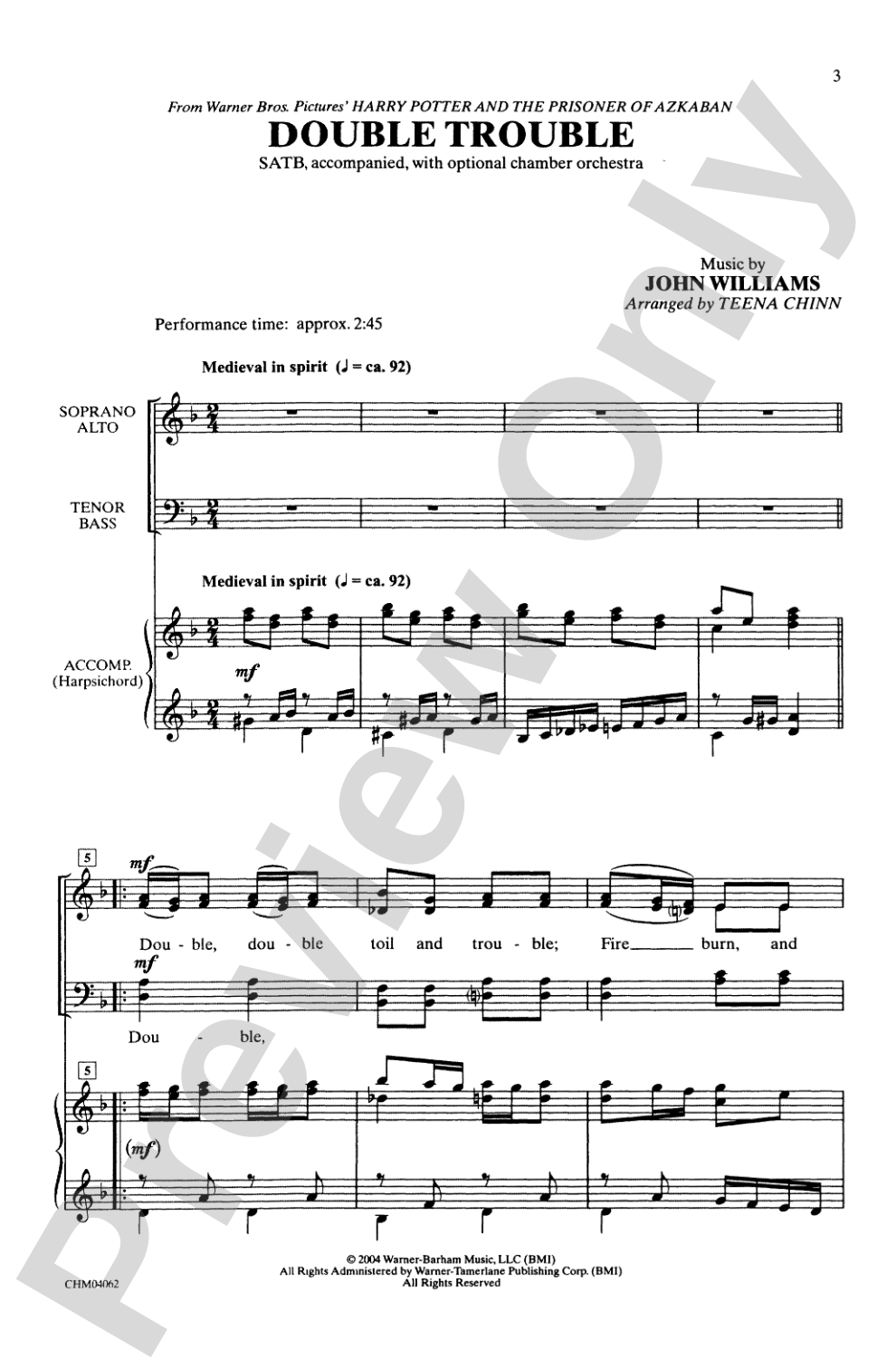
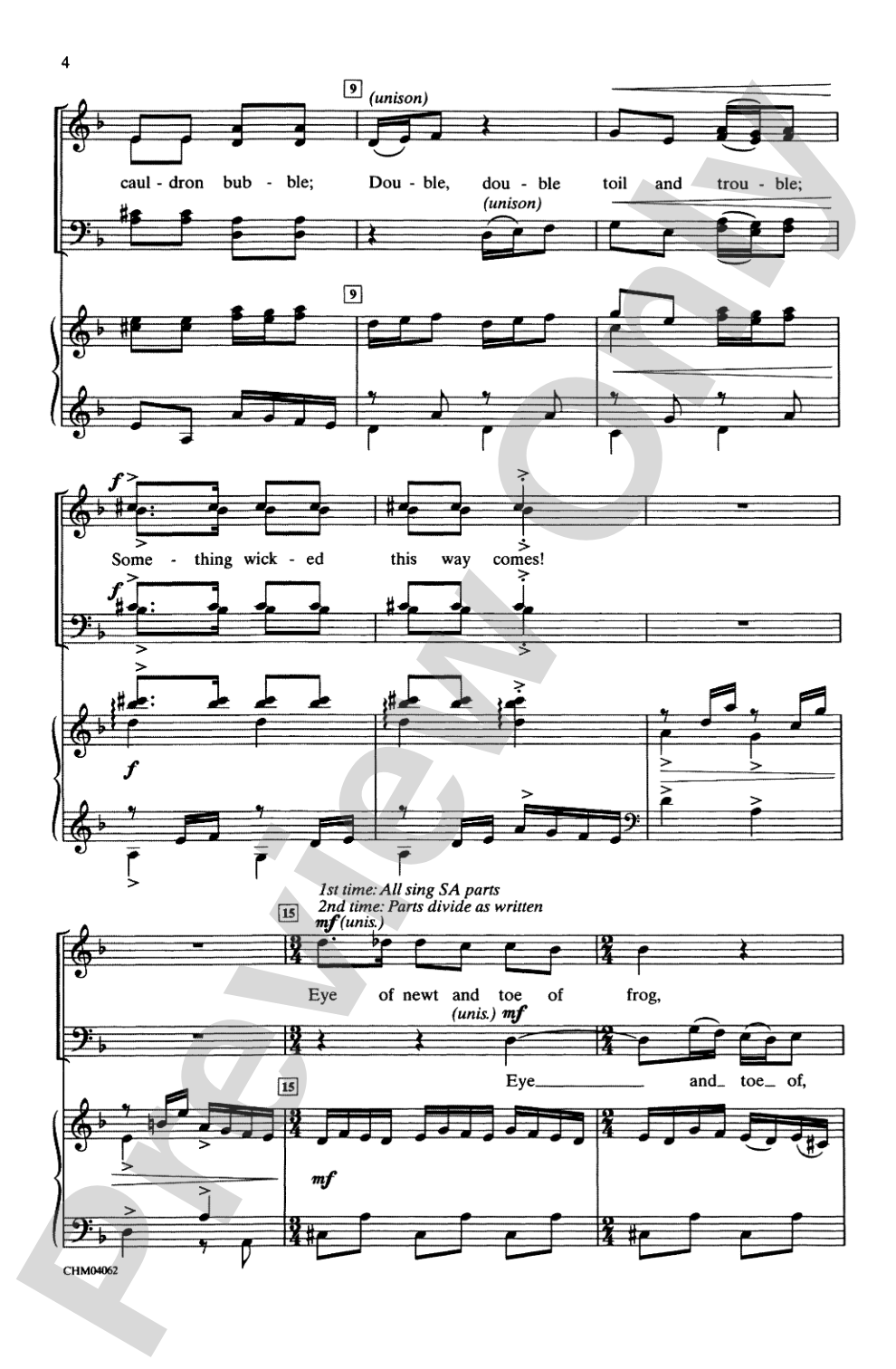

Double Trouble (from Harry Potter and the Prisoner of Azkaban): SATB Choral Octavo
From Harry Potter and the Prisoner of Azkaban
By John Williams / arr. Teena Chinn
Level: Moderate
Item: 00-PO-0003502
$2.10
Minimum order quantity: 20 copies
Pickup currently not available
Related Items
Double Trouble (from Harry Potter and the Prisoner of Azkaban): 3-Part Mixed Choral Octavo |
$2.10
|
View | |
Double Trouble (from Harry Potter and the Prisoner of Azkaban): 2-Part (Opt. 3-Part) Choral Octavo |
$2.10
|
View | |
Double Trouble (from Harry Potter and the Prisoner of Azkaban): Choral Instrumental Parts |
$50.00
|
View | |
Double Trouble: SATB Choral Octavo |
$2.10
|
View | |
Double Trouble: 3-Part Mixed Choral Octavo |
$2.10
|
View | |
Double Trouble: 2-Part (Opt. 3-Part) Choral Octavo |
$2.10
|
View | |
Double Trouble: Choral Instrumental Parts |
$50.00
|
View | |
Double Trouble: Choral Octavo SoundTrax CD |
$27.99
|
View |
Description
From the award-winning Harry Potter and the Prisoner of Azkaban comes this delightful John Williams choral work. Utilize the accompaniment track or the optional instrumental parts to capture the sounds of the original soundtrack.


Double Trouble (from Harry Potter and the Prisoner of Azkaban): SATB Choral Octavo isn't in MakeMusic Cloud just yet...but it could be. Let us know you'd like to see it, and you'll help shape what comes next. In the meantime, start a free trial and dive into thousands of interactive titles your students can play along with today.
Request This Title
Tell us you want it.
Start Your Free Trial
Explore everything that's ready to play right now.
Sample Audio
1
Audio File
--:--
0:00
0:00
Sample Video
No sample videos found.
Additional Details
Series:
Alfred Pop Choral Series
Publisher:
Alfred Music
Page Count:
12
SKU:
00-PO-0003502
Instrumentation:
Opt. Chamber Orchestra
More about this title
About the Composer: John Williams
John Williams is one of the most celebrated film composers of our time, with a career spanning more than six decades. His work across the Harry Potter series, Star Wars, Indiana Jones, Jaws, and countless other films has defined the sound of modern cinema and earned him five Academy Awards, four Golden Globes, and numerous Grammy Awards. Beyond the screen, Williams has served as conductor of major orchestras and remains deeply committed to music education, understanding that accessible arrangements of his film scores introduce young musicians to sophisticated compositional techniques.
Why we love this
This arrangement captures the whimsy and slightly spooky energy of the Prisoner of Azkaban without requiring instrumental forces beyond a moderate high school choir budget. The optional chamber orchestra parts let you scale the production from a cappella-adjacent (with just the accompaniment track) all the way up to a fuller orchestral sound, giving you genuine flexibility in how you program it.
What to expect
The piece evokes the magical yet slightly mischievous atmosphere of Azkaban's world. Harmonic colors shift between mysterious and bright, mirroring the film's blend of wonder and danger, while the vocal writing feels conversational and approachable rather than operatic.
Who it's for
This octavo works well for high school choirs and advanced middle school programs with solid sight-reading skills. It's equally effective for concert choirs seeking repertoire that resonates with student singers familiar with the film while maintaining musical substance.
How to get the most out of it
- Balance the overlapping melodic lines in the SATB texture so no single voice disappears; this piece benefits from a homogeneous blend rather than soloistic approaches.
- Use the recorded accompaniment track as a learning tool in early rehearsals, then gradually shift to live piano or the optional instrumental parts as confidence builds.
- Pay attention to rhythmic precision in the ensemble, especially if you add the optional chamber parts; the orchestral writing has specific articulations that your choir should mirror vocally.
- Capture the playful character through clear diction and buoyant phrasing rather than dragging tempos; this is music that thrives on forward motion.
How to use it
Consider programming this as a Halloween or fall concert centerpiece, especially if you're already building a movie music or popular music themed concert. It also serves as an excellent encore that brings immediate audience recognition and energy without requiring extensive costume or staging.
Skills your students will build
- Part independence in four-part SATB voicing
- Rhythmic precision with film score articulations
- Balancing harmony in a moderate-complexity texture
- Clear diction in ensemble pop/film style
- Flexibility in reading with optional instrumental parts