
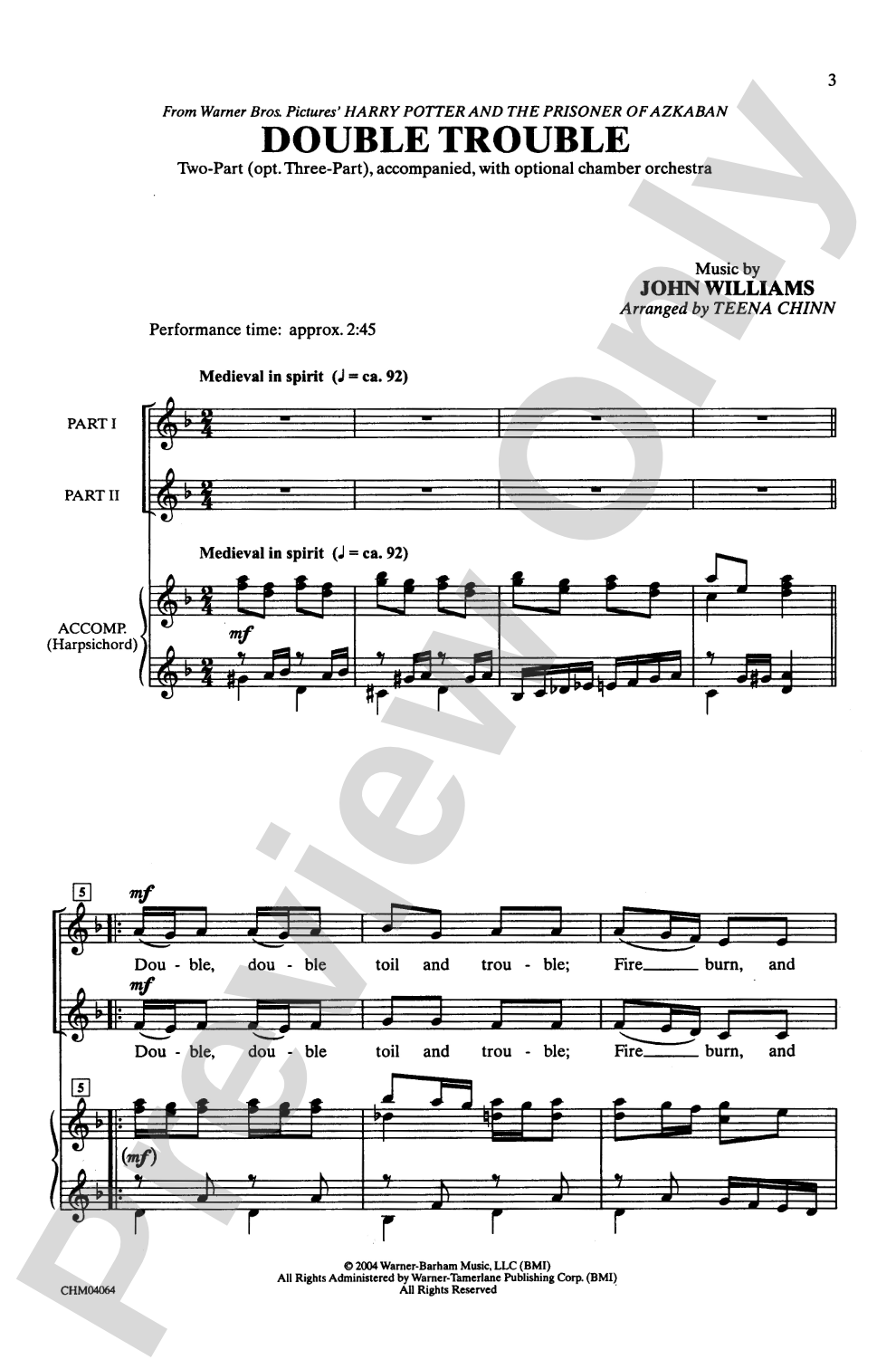
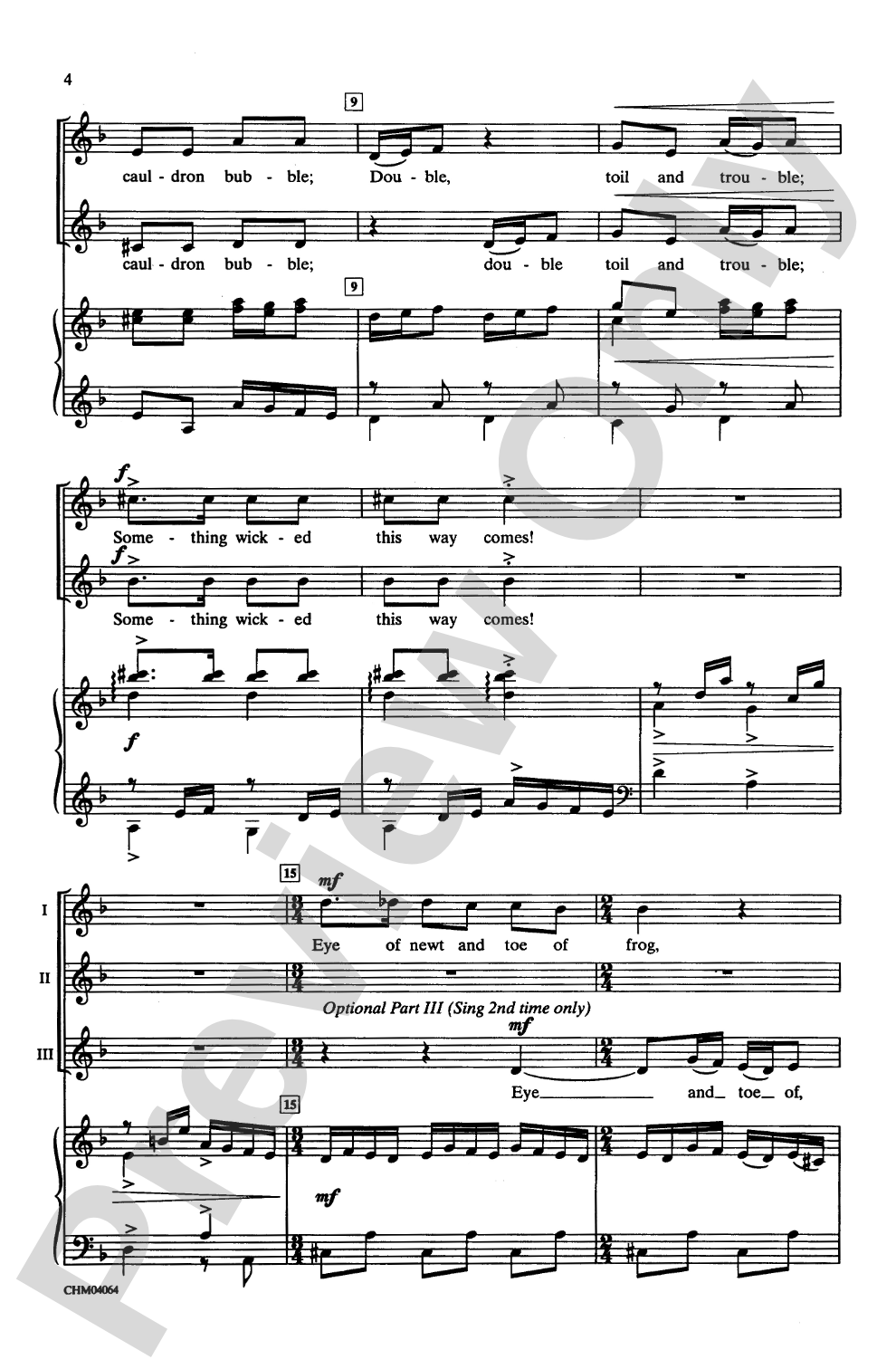

Double Trouble (from Harry Potter and the Prisoner of Azkaban): 2-Part (Opt. 3-Part) Choral Octavo
From Harry Potter and the Prisoner of Azkaban
By John Williams / arr. Teena Chinn
Level: Moderate
Item: 00-PO-0002572
$2.10
Minimum order quantity: 20 copies
Pickup currently not available
Related Items
Double Trouble (from Harry Potter and the Prisoner of Azkaban): SATB Choral Octavo |
$2.10
|
View | |
Double Trouble (from Harry Potter and the Prisoner of Azkaban): 3-Part Mixed Choral Octavo |
$2.10
|
View | |
Double Trouble (from Harry Potter and the Prisoner of Azkaban): Choral Instrumental Parts |
$50.00
|
View | |
Double Trouble: SATB Choral Octavo |
$2.10
|
View | |
Double Trouble: 3-Part Mixed Choral Octavo |
$2.10
|
View | |
Double Trouble: 2-Part (Opt. 3-Part) Choral Octavo |
$2.10
|
View | |
Double Trouble: Choral Instrumental Parts |
$50.00
|
View | |
Double Trouble: Choral Octavo SoundTrax CD |
$27.99
|
View |
Description
From the award-winning Harry Potter and the Prisoner of Azkaban comes this delightful John Williams choral work. Utilize the accompaniment track or the optional instrumental parts to capture the sounds of the original soundtrack.


Double Trouble (from Harry Potter and the Prisoner of Azkaban): 2-Part (Opt. 3-Part) Choral Octavo isn't in MakeMusic Cloud just yet...but it could be. Let us know you'd like to see it, and you'll help shape what comes next. In the meantime, start a free trial and dive into thousands of interactive titles your students can play along with today.
Request This Title
Tell us you want it.
Start Your Free Trial
Explore everything that's ready to play right now.
Sample Audio
1
Audio File
--:--
0:00
0:00
Sample Video
No sample videos found.
Additional Details
Series:
Alfred Pop Choral Series
Publisher:
Alfred Music
Page Count:
12
SKU:
00-PO-0002572
Instrumentation:
Opt. Chamber Orchestra
More about this title
About the Composer: John Williams
John Williams stands as one of the most accomplished film composers of our time, having shaped the sonic landscape of popular culture across five decades. His work spans some of cinema's most iconic franchises, from Star Wars to Indiana Jones to Harry Potter, earning him multiple Academy Award nominations and Grammy Awards. In the classroom and rehearsal hall, his compositions remain essential repertoire because they combine sophisticated orchestration with melodies that resonate immediately with performers and audiences alike.
Why we love this
Williams' melodic gift shines through in this arrangement, and Teena Chinn's choral adaptation captures the whimsy and slightly unsettling magic of the film's witches' scene without losing the sophistication that makes the original unforgettable. Your singers will recognize the source material instantly, which builds genuine investment in the performance. The optional third part and flexible instrumentation (recorded accompaniment, chamber orchestra parts, or your choice of both) means you can scale this to your resources and skill level while maintaining its theatrical impact.
What to expect
The piece opens with a mischievous, almost mocking energy that captures the theatrical malice of the scene. Williams' orchestration translates to the voices with surprising elegance; even in the 2-part version, the harmonic language feels rich and intentional, never thin or reductive. There's a delightful tension between the seemingly sinister subject matter and the buoyant, nearly cartoonish musical setting that makes singers smile as they perform it.
Who it's for
This octavo works beautifully for upper elementary through middle school choirs, and intermediate high school ensembles can program it as a fun, crowd-pleasing contrast to more serious repertoire. It's ideal for directors seeking accessible contemporary choral music that engages students through familiar film material while still demanding musical attention to blend, intonation, and ensemble cohesion.
How to get the most out of it
- Balance the melody between parts carefully; the tune should sing through clearly without drowning the harmonic support, especially in passages where the upper voices carry the hook.
- If using the recorded accompaniment, have your singers listen to it multiple times before rehearsal so they internalize the harmonic context and stylistic articulation.
- Shape the phrasing with the film's comedic timing in mind; the piece thrives when singers understand the playful character of the scene and adjust their dynamics and articulation to match that spirit.
- If adding the optional instrumental parts, rehearse several times with just voices and piano before layering in orchestration to ensure intonation and blend are secure.
How to use it
Pair this with other film music or contemporary secular works for a concert exploring how composition serves storytelling, or program it as a Halloween-adjacent novelty number that still delivers musical substance. It also works as a morale-builder mid-rehearsal season when singers need a reminder that choral music can be fun and recognizable, not always classical or serious.
Skills your students will build
- Reading and executing rhythmic precision in a contemporary harmonic idiom
- Blending two or three-part voicings while maintaining independent vocal lines
- Tracking a melody through different voice parts and understanding how orchestration translates to choral writing
- Responding to recorded accompaniment and synchronizing with pre-recorded material
- Interpretive choices around phrasing and articulation informed by the source material and film context