

Ding-Dong! The Witch Is Dead: SATB Choral Octavo
from The Wizard of Oz
Music by Harold Arlen, lyrics by E. Y. Harburg / arr. Eric Van Cleave
Item: 00-PO-0005870

$2.10
Minimum order quantity: 20 copies
One moment…
Related Items
Ding-Dong! The Witch Is Dead: SoundTrax Digital Audio Download |
$27.99
|
View | |
Ding-Dong! The Witch Is Dead: SAB Choral Octavo |
$2.10
|
View | |
Ding-Dong! The Witch Is Dead: SSA Choral Octavo |
$2.10
|
View | |
Ding-Dong! The Witch Is Dead: Choral SoundPax |
$50.00
|
View | |
Ding-Dong! The Witch Is Dead: SATB Choral Octavo |
$2.10
|
View | |
Ding-Dong! The Witch Is Dead: SAB Choral Octavo |
$2.10
|
View | |
Ding-Dong! The Witch Is Dead: SSA Choral Octavo |
$2.10
|
View | |
Ding-Dong! The Witch Is Dead: Choral Octavo SoundTrax CD |
$27.99
|
View | |
Ding-Dong! The Witch Is Dead: Choral SoundPax |
$50.00
|
View |
Description
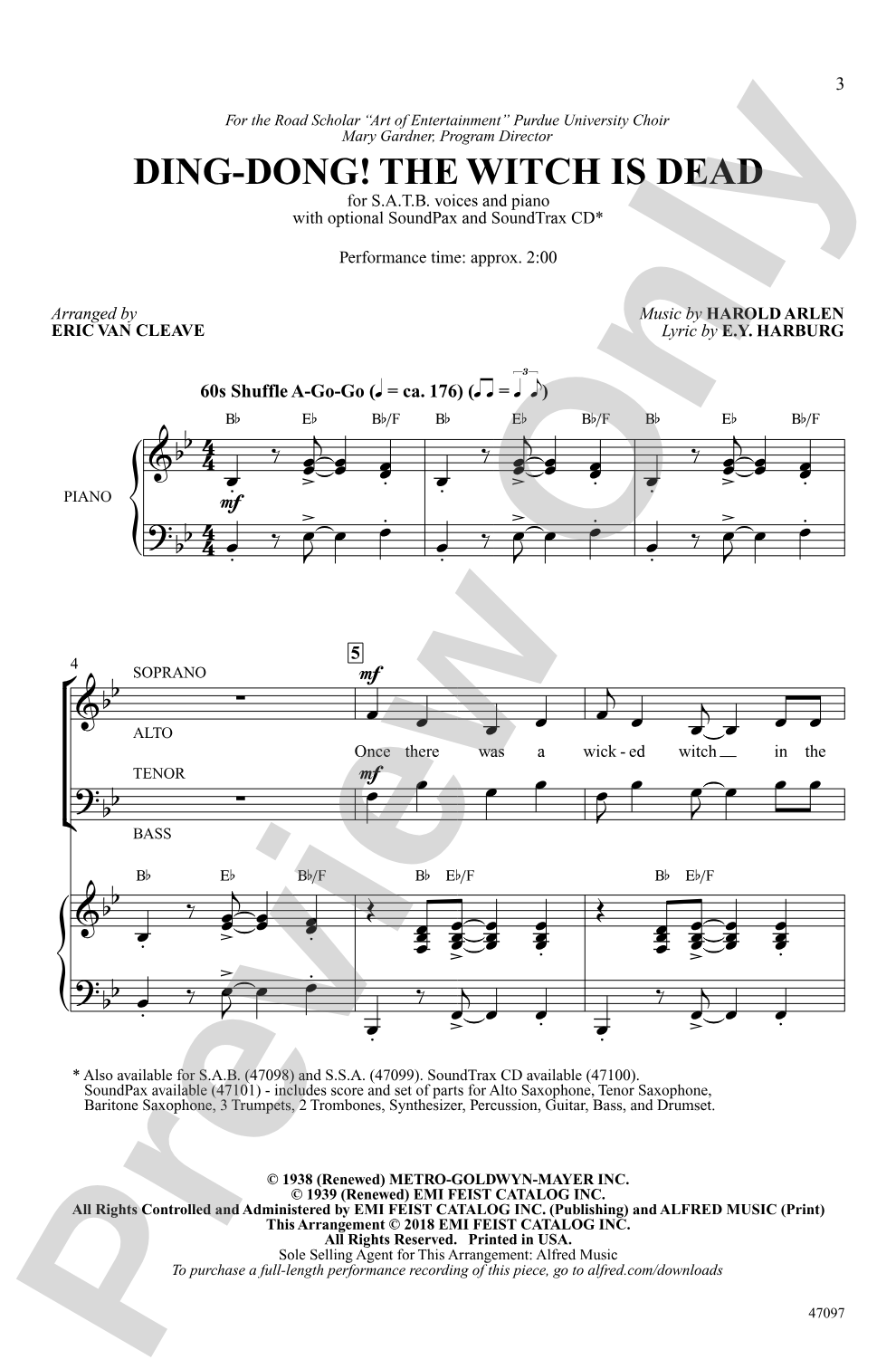
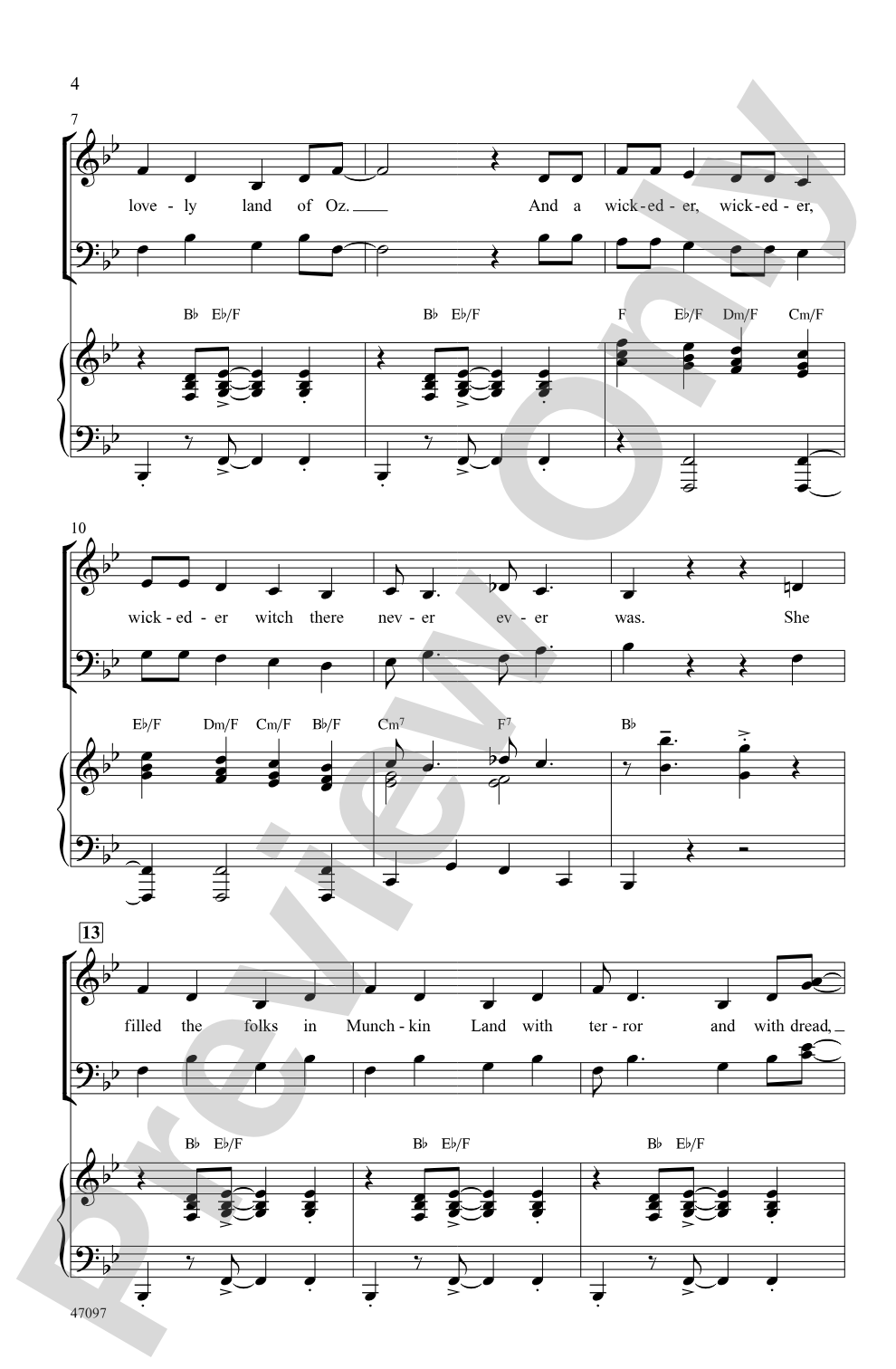
Barbra Streisand reimagined this Wizard of Oz classic as a '60s shuffle, and here Eric Van Cleave presents a perky arrangement, accessible for groups of any age. Featuring syncopated rhythms, clever backstory lyrics, and much of the original harmony. Add the optional SoundTrax CD or SoundPax instrumental parts to lock down the go-go groove.


Don't just read it, hear it, play along with it, and watch your students grow with it. In MakeMusic Cloud, Ding-Dong! The Witch Is Dead: SATB Choral Octavo comes alive with professional accompaniment, adjustable tempo, and built-in practice tools that turn solo practice into real progress.
Open in the Player
Jump straight in and assign it today.
Start Your Free Trial
Open this title and explore the full library in minutes.
Sample Audio
1
Audio File
--:--
0:00
0:00
Sample Video
Additional Details
Series:
Alfred Pop Choral Series
Publisher:
Alfred Music
Page Count:
12
SKU:
00-PO-0005870
More about this title
About the Composer: Harold Arlen
Harold Arlen (1905-1986) composed some of the most enduring American songs of the twentieth century, with a gift for melody that could shift seamlessly between jazz idioms, folk traditions, and theatrical grandeur. His work for film and stage made him a bridge between Tin Pan Alley craftsmanship and modern popular music; "Ding-Dong! The Witch Is Dead" exemplifies his talent for writing songs that are both sophisticated and instantly memorable, which is why arrangers continue to reimagine his music for contemporary audiences.
Why we love this
Eric Van Cleave strips away the orchestral lushness of the original and replaces it with a snappy '60s shuffle groove that energizes the piece without losing Arlen's harmonic sophistication. The arrangement respects the wit and lightness of the lyric while giving your singers something genuinely fun to execute, and its accessibility across age groups means you can program it with middle school through adult ensembles without sounding condescending to either.
What to expect
Perky and irreverent, with a '60s shimmer that makes you want to move. The arrangement captures the mischief of the lyric and wraps it in modern groove sensibilities without ever becoming saccharine, giving the piece a contemporary swagger while honoring Arlen's original musical architecture.
Who it's for
Directors seeking a crowd-pleasing secular number that works for concert programming, competitions, or pops shows will find this arrangement genuinely engaging rather than novelty-based. Middle school through adult choirs can tackle this; the syncopated rhythms and ensemble coordination demands are real, but the melodic memorability and fun factor keep singers motivated through rehearsal.
How to get the most out of it
- Lock the rhythmic precision of the syncopated passages by having the choir sing rhythm syllables through the trickier sections before adding text. The go-go groove depends on crisp ensemble attacks, not sloppy rushing.
- Balance the clever backstory lyrics so they land clearly without overshadowing the melodic line. Clear diction in the inner voices keeps the arrangement from becoming muddy.
- Use the recorded accompaniment to establish the shuffle feel; let your singers sit into the groove rather than fighting against the track's pocket.
- Highlight the harmonic movement beneath the melody by having sections echo or stagger their entrances during key phrases, which builds texture and maintains listener interest across the 12-page score.
How to use it
Program this in a lighter second half of your concert to give your audience a gear shift in energy and mood. Its theatrical backstory and pop sensibility make it an effective bridge between serious repertoire and audience appreciation, and it pairs well with other Arlen standards or contemporary pop arrangements.
Skills your students will build
- Reading and executing syncopated rhythms in a groove-based context
- Balancing melody and harmony across four voices while maintaining rhythmic cohesion
- Shaping text and character within an uptempo secular arrangement
- Ensemble precision in articulation and rhythmic alignment