

Deo Gratias: 2-Part Choral Octavo
Words and music by Sally K. Albrecht and Jay Althouse
Item: 00-PO-0008029
$1.75
Minimum order quantity: 20 copies
Pickup currently not available
Description
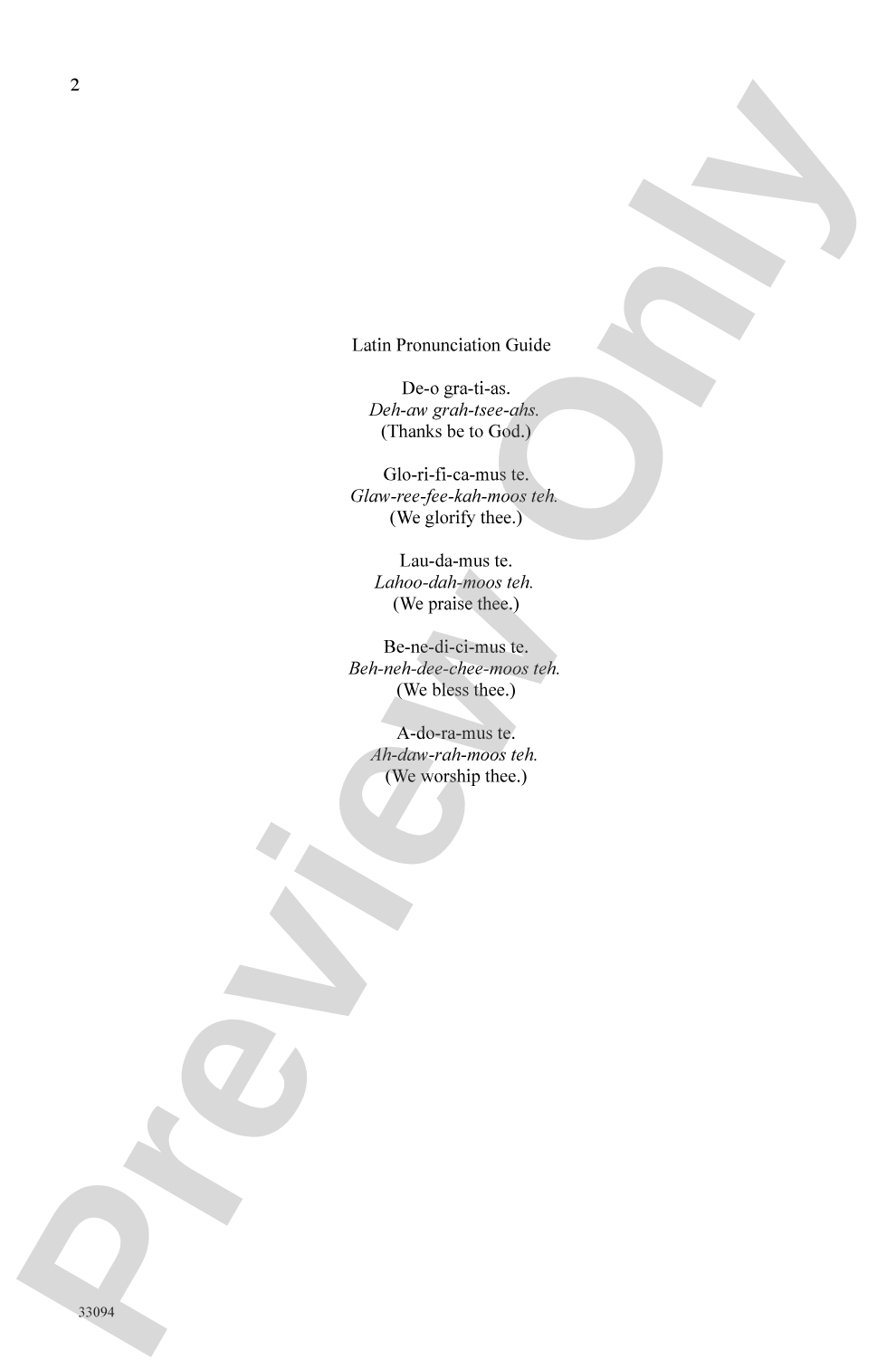
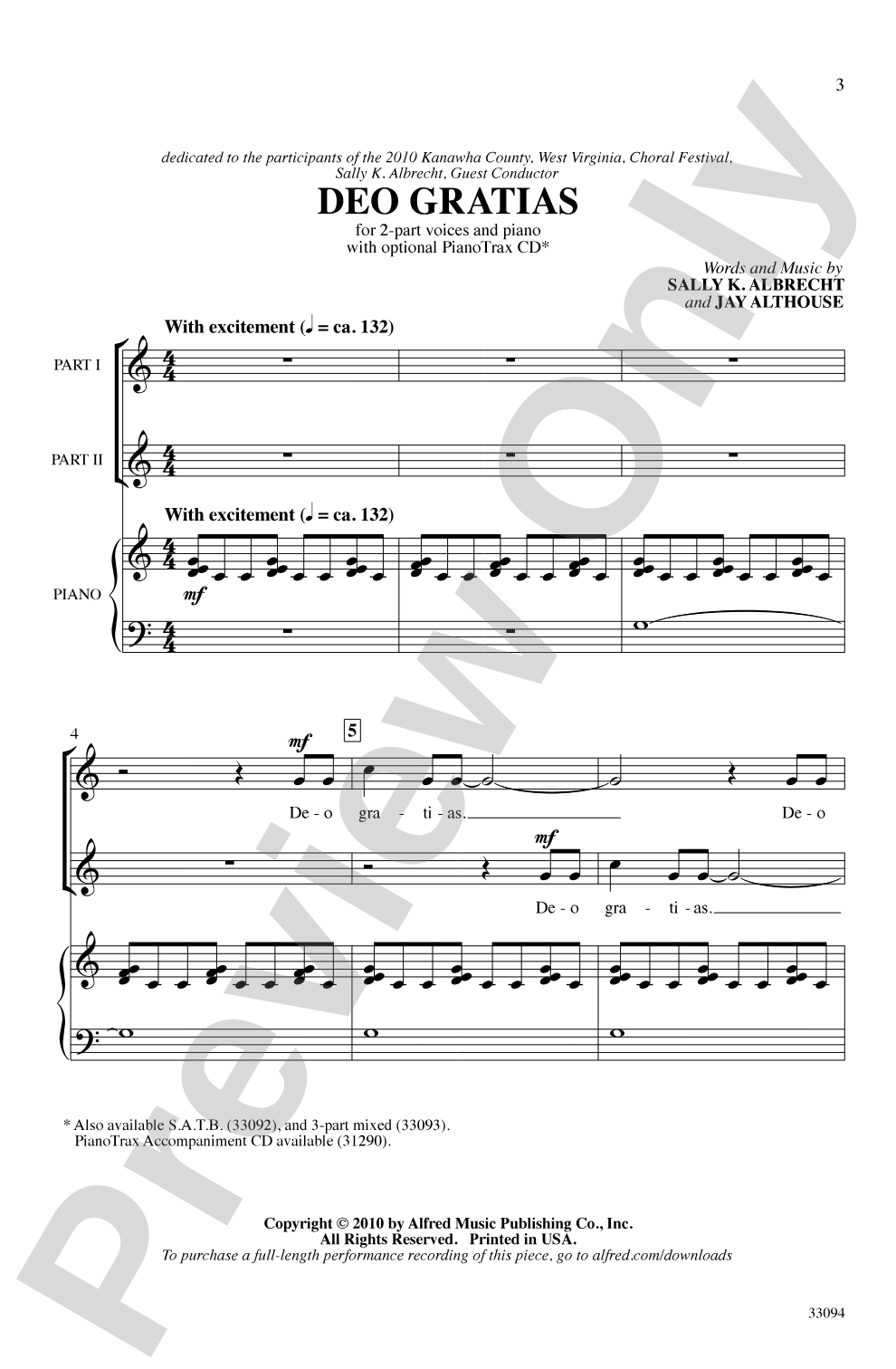
Opening and closing with a fanfare echo, this rhythmic setting of a Latin text will make your singers sound their best. An easy, yet effective choice for general or holiday use. Accompaniment available on PianoTrax 2 CD (00-31290).


Deo Gratias: 2-Part Choral Octavo isn't in MakeMusic Cloud just yet...but it could be. Let us know you'd like to see it, and you'll help shape what comes next. In the meantime, start a free trial and dive into thousands of interactive titles your students can play along with today.
Request This Title
Tell us you want it.
Start Your Free Trial
Explore everything that's ready to play right now.
Sample Audio
1
Audio File
--:--
0:00
0:00
Sample Video
No sample videos found.
Additional Details
Series:
Alfred Choral Designs
Publisher:
Alfred Music
Page Count:
12
SKU:
00-PO-0008029
More about this title
About the Composer: Sally K. Albrecht

Sally K. Albrecht has shaped choral music education for over thirty years, first as Director of School Choral, Vocal, and Elementary Publications at Alfred Music, then as a sought-after clinician and conductor at major venues including Lincoln Center, Carnegie Hall, and The Kennedy Center. Her catalog spans more than 600 published choral works alongside 75 musicals and songbooks, earning her annual ASCAP Special Music Awards since 1987. She holds degrees from Rollins College, the University of Miami (M.A. in Drama and M.M. in Accompanying), and has taught at Oakland University, Jersey City State College, and Meredith College.
Albrecht's particular expertise lies in choral movement and creating singable, effective arrangements that work across skill levels and settings. With her husband and frequent collaborator Jay Althouse, she continues to write music that serves the practical needs of school choirs while maintaining genuine musical substance. In 2021, both the University of Miami Frost School of Music and Rollins College honored her as a Distinguished Alumna.
Why we love this
The fanfare framing gives this piece architectural clarity while the Latin text lends weight without overwhelming young singers. Albrecht's gift for rhythmic drive means your singers will feel propelled forward, and the two-part voicing sits naturally in the range of middle school and early high school choirs without requiring extensive part independence.
What to expect
A piece that feels both ceremonial and accessible. The Latin text carries liturgical weight while the rhythmic energy keeps it from feeling static or overly academic, and those bookending fanfares create a sense of occasion without pretension.
Who it's for
Directors working with 2-part choirs in middle school, early high school, or multi-level community settings will find immediate utility here. The easy technical demands and effective sound make it equally suited to holiday concerts, sacred music festivals, or general worship settings.
How to get the most out of it
- Lean into the rhythmic precision of those opening and closing fanfares. They feel like the piece announcing itself, so give them clarity and energy rather than playing them soft or tentative.
- The PianoTrax accompaniment provides harmonic anchoring that allows singers to focus on text clarity and line shape. Rehearse with it early so your singers lock into the rhythmic feel before performance.
- Consider whether this works best as an opener, closer, or meditation within a larger program. Its formal structure and fanfare elements suggest it can anchor a concert moment rather than sit in the middle of a set.
How to use it
This works beautifully as a concert opener or closer where you need something that sounds mature and intentional but doesn't demand months of rehearsal. It also serves as a strong choice for holiday or spring sacred programming, particularly when paired with longer, more complex works that will benefit from the contrast.
Skills your students will build
- Latin diction and text clarity
- Rhythmic precision in ensemble contexts
- Two-part blend and balance
- Musical phrasing across fanfare-based structures
- Performance confidence in sacred repertoire