

Deo Gratias: SATB Choral Octavo
Words and music by Sally K. Albrecht and Jay Althouse
Item: 00-PO-0008027
$1.75
Minimum order quantity: 20 copies
Pickup currently not available
Description
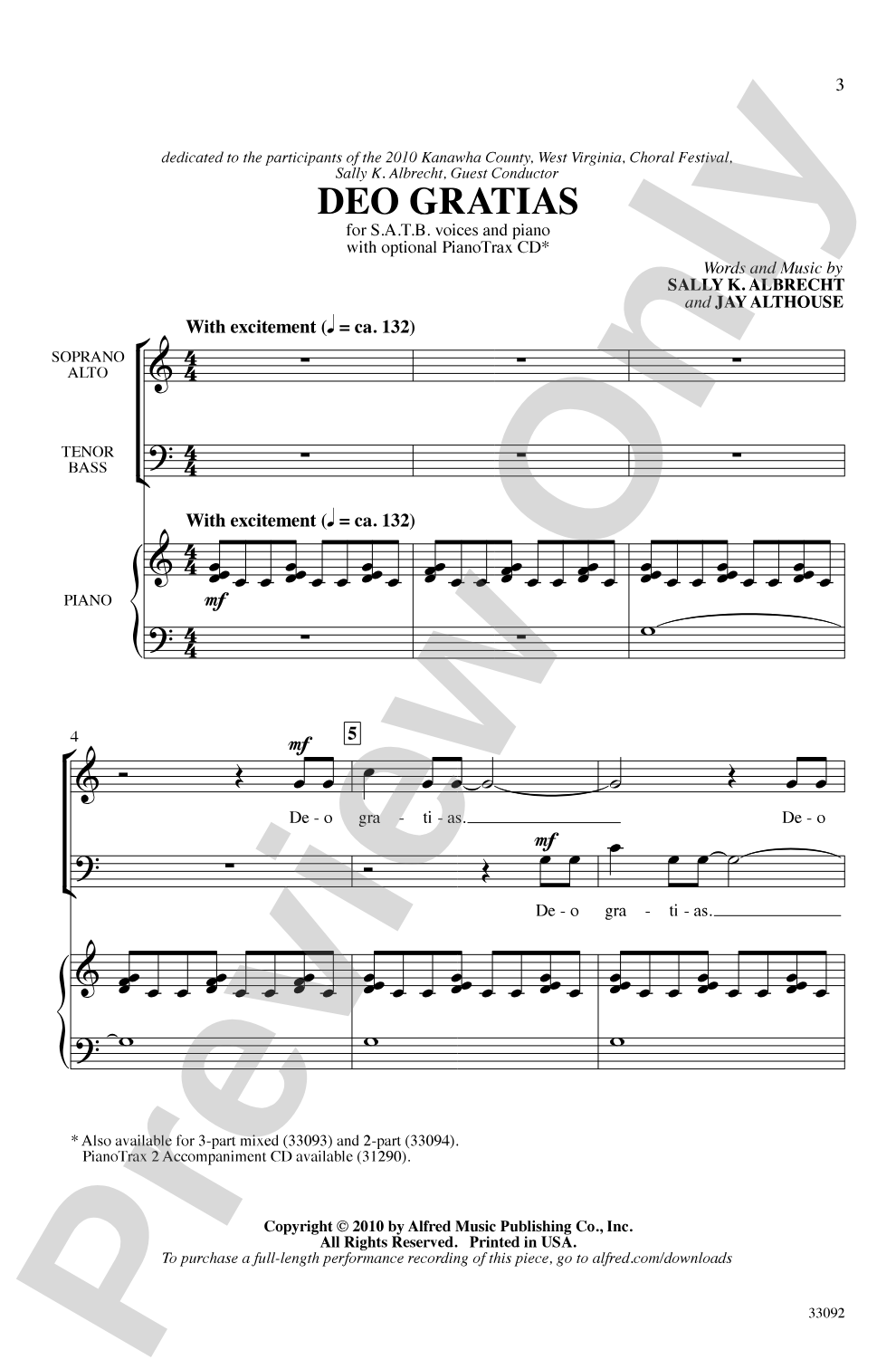
Opening and closing with a fanfare echo, this rhythmic setting of a Latin text will make your singers sound their best. An easy, yet effective choice for general or holiday use. Accompaniment available on PianoTrax 2 CD (00-31290).


Deo Gratias: SATB Choral Octavo isn't in MakeMusic Cloud just yet...but it could be. Let us know you'd like to see it, and you'll help shape what comes next. In the meantime, start a free trial and dive into thousands of interactive titles your students can play along with today.
Request This Title
Tell us you want it.
Start Your Free Trial
Explore everything that's ready to play right now.
Sample Audio
1
Audio File
--:--
0:00
0:00
Sample Video
No sample videos found.
Additional Details
Series:
Alfred Choral Designs
Publisher:
Alfred Music
Page Count:
12
SKU:
00-PO-0008027
More about this title
About the Composer: Sally K. Albrecht
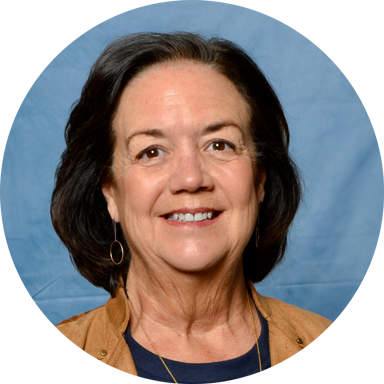
Sally K. Albrecht combines three decades of publishing expertise with an active conducting and composing career. Her work spans honor choirs at major venues including Lincoln Center, Carnegie Hall, and The Kennedy Center, and she has earned the ASCAP Special Music Award annually since 1987. With over 600 choral publications and 75 larger works in print, she shaped the field during her tenure as Director of School Choral, Vocal, and Elementary Publications at Alfred Music.
Albrecht holds degrees from Rollins College (B.A. in Music and Theater, 1976), the University of Miami (M.A. in Drama, 1977 and M.M. in Accompanying, 1979), and has taught at Oakland University, Jersey City State College, and Meredith College. Recognized with the Distinguished Alumna Award from both the University of Miami Frost School of Music and Rollins College, she currently resides in North Carolina with her husband and frequent collaborator, composer and arranger Jay Althouse.
Why we love this
Albrecht and Althouse have written a piece that achieves impact through rhythmic vitality rather than harmonic complexity. The framing fanfare effect at opening and close creates a memorable architectural shape that makes even developing choirs sound polished and intentional. For programs needing a substantial yet accessible Latin text setting, this delivers genuine musicality without excessive rehearsal demands.
What to expect
Rhythmic energy radiates outward from the opening fanfare, pulling listeners into a bright, celebratory sound. The Latin text carries weight and reverence while the music's forward motion prevents it from becoming stiff or overly formal. You hear polish and purpose in every phrase.
Who it's for
This octavo works for choirs from high school through adult levels who want solid repertoire that sounds more sophisticated than its technical demands. It suits groups seeking accessible sacred music for worship settings, concert programming, or holiday services without requiring extensive score preparation time.
How to get the most out of it
- Bring out the fanfare echo exchanges between sections at the beginning and end. These moments define the piece's character, so balance them carefully so each echo feels like a true response rather than a diminished repetition.
- Anchor the rhythmic momentum by locking the rhythm section tight. The Latin text sits most naturally when the underlying pulse stays rock solid throughout.
- Shape the middle section by varying dynamic levels and articulation. The contrast between the energetic outer sections and any softer interior material will keep the piece from feeling one dimensional.
- Use PianoTrax 2 (00-31290) during rehearsal to reinforce harmonic context, especially when voices are learning their parts independently.
How to use it
Position this as an opener or closer on concerts featuring mixed sacred repertoire; its fanfare framing gives it natural bookend strength. It also serves worship settings well during Advent, Christmas, or general liturgical seasons where Latin text feels appropriate. The 12 pages and moderate difficulty make it ideal for spring concert programming when rehearsal time is squeezed.
Skills your students will build
- Latin diction and text clarity in a rhythmic context
- Sectional independence while maintaining ensemble blend
- Echo and call-and-response techniques between voice parts
- Rhythmic precision and articulation control