
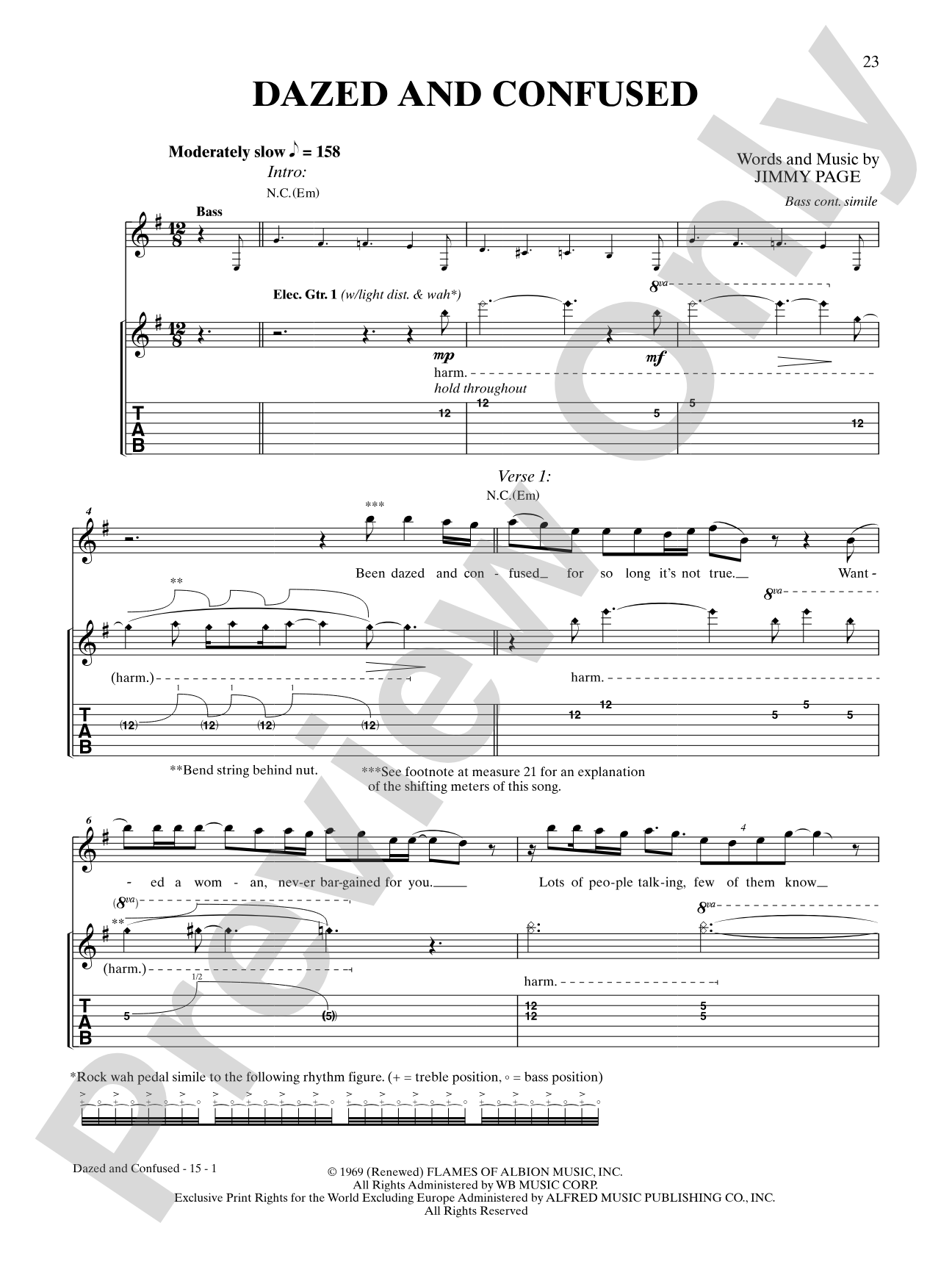
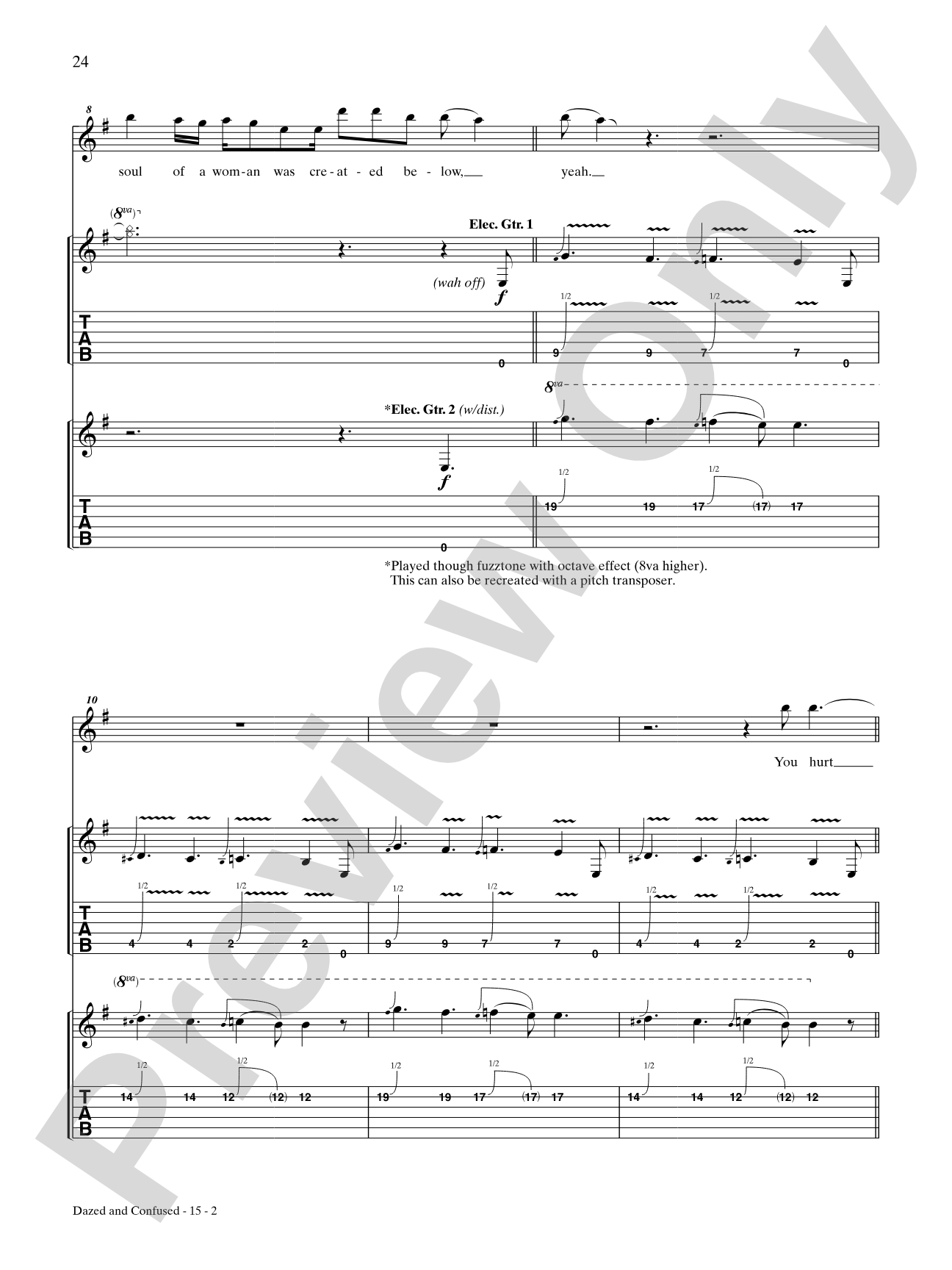
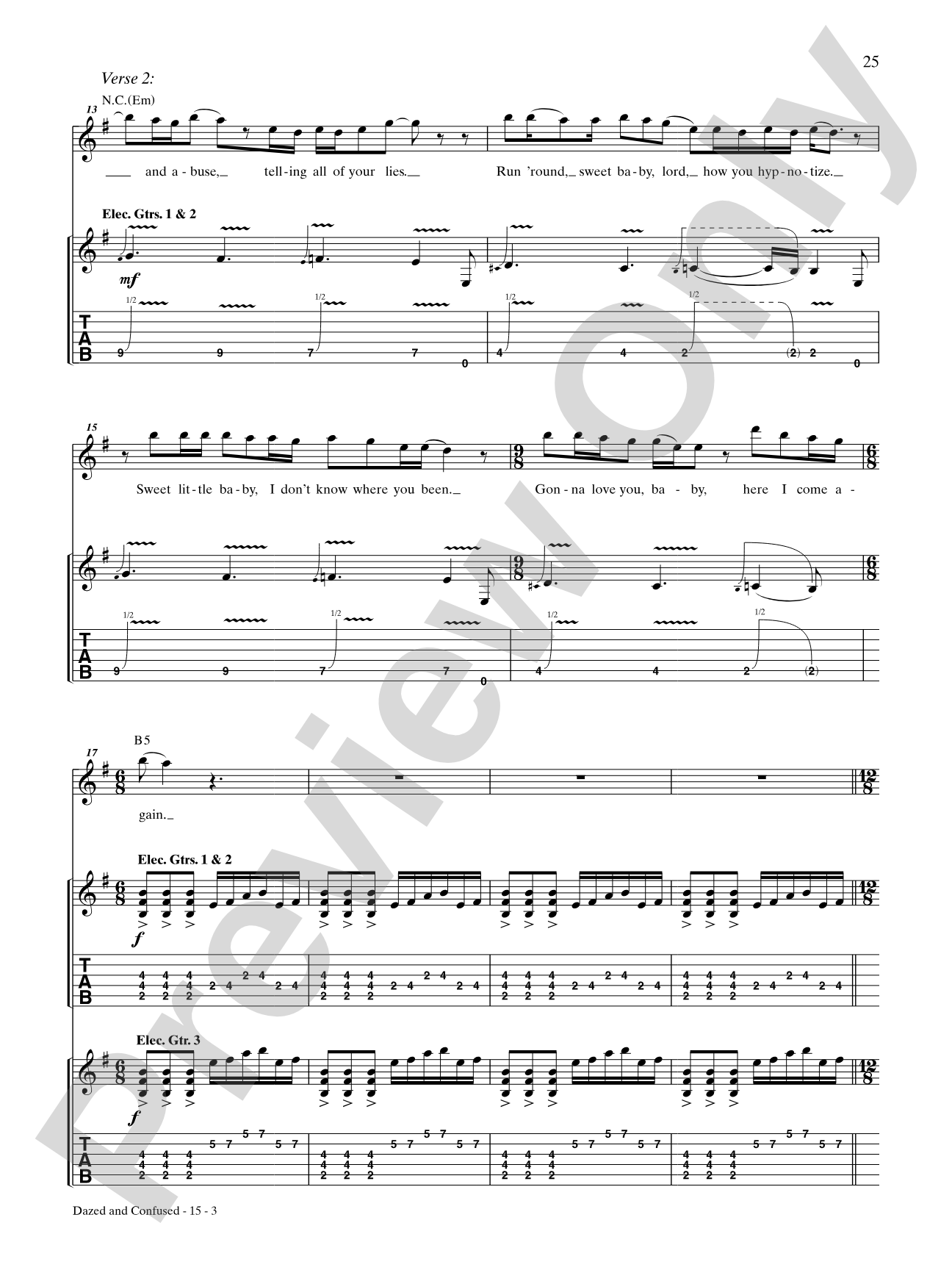

Dazed And Confused: Authentic Guitar TAB
Led Zeppelin
Item: 00-PSG-000118
$9.99
Pickup currently not available
Related Items
Babe I'm Gonna Leave You: Authentic Guitar TAB |
$9.99
|
View | |
Communication Breakdown: Authentic Guitar TAB |
$5.99
|
View | |
Good Times, Bad Times: Authentic Guitar TAB |
$5.99
|
View | |
Black Mountain Side: Authentic Guitar TAB |
$4.99
|
View | |
Your Time Is Gonna Come: Authentic Guitar TAB |
$5.99
|
View | |
How Many More Times: Authentic Guitar TAB |
$9.99
|
View | |
Communication Breakdown: Piano/Vocal/Chords |
$4.99
|
View | |
Your Time is Gonna Come: Piano/Vocal/Chords |
$5.99
|
View | |
Led Zeppelin: I Platinum Album Edition: Authentic Guitar TAB Book |
$24.99
|
View | |
Led Zeppelin: I Platinum Album Edition: Drum Transcriptions Book |
$19.99
|
View | |
Led Zeppelin: I Platinum Album Edition: Piano/Vocal/Chords Book |
$19.99
|
View | |
Led Zeppelin: I Platinum Album Edition: Authentic Bass TAB Book |
$16.99
|
View |
Description
Alfred Music, in association with Led Zeppelin, is proud to present new Platinum Album Edition songbooks for each of the band's classic studio recordings. Drawn from more than 30 years of documentation, interviews, and recorded footage, these all-new transcriptions deliver unprecedented accuracy and insight into the guitar style of Jimmy Page. With vintage Zeppelin photographs and a historical foreword by Guitar World magazine's editor-in-chief, Brad Tolinski, each volume is a true collectible every fan must own. Titles: Good Times Bad Times * Babe I'm Gonna Leave You * You Shook Me * Dazed and Confused * Your Time Is Gonna Come * Black Mountain Side * Communication Breakdown * I Can't Quit You Baby * How Many More Times.


Dazed And Confused: Authentic Guitar TAB isn't in MakeMusic Cloud just yet...but it could be. Let us know you'd like to see it, and you'll help shape what comes next. In the meantime, start a free trial and dive into thousands of interactive titles your students can play along with today.
Request This Title
Tell us you want it.
Start Your Free Trial
Explore everything that's ready to play right now.
Sample Audio
No sample audio found.
Sample Video
No sample videos found.
Additional Details
Series:
Alfred's Platinum Album Editions
Publisher:
Alfred Music
Page Count:
92
SKU:
00-PSG-000118
More about this title
About the Composer: Jimmy Page
Jimmy Page stands as one of rock music's most influential and technically innovative guitarists. His work with Led Zeppelin from 1968 onward redefined what electric guitar could accomplish, blending blues foundations with experimental studio techniques, Eastern musical influences, and a fearless approach to arrangement that pushed the instrument beyond conventional boundaries.
Why we love this
This transcription set captures the exact guitar work that shaped decades of rock music, with accuracy built on three decades of research and collaboration with the band itself. For serious guitarists, having access to Page's actual playing patterns, tunings, and phrasing straight from the source removes guesswork and opens doors to understanding his distinctive voice on the instrument. The historical context and period photography make this a resource that informs interpretation, not just mechanics.
What to expect
Powerful and exploratory, moving between bluesy swagger and mystical intensity. These arrangements span from straightforward rock grooves to passages that feel almost otherworldly, with dynamics that shift from intimate fingerpicking to crushing riffs, capturing the full range of what made this band revolutionary.
Who it's for
Intermediate to advanced guitarists serious about classic rock repertoire and the technical foundation that shaped modern guitar playing. Musicians studying rock history through primary sources will find this invaluable for understanding how Page's innovations translated to the studio and stage. Band directors programming rock-focused ensembles or directing guitar ensemble classes can draw on these transcriptions for context and study.
How to get the most out of it
- Study Page's use of alternate tunings (particularly evident in pieces like Black Mountain Side); retuning requires time and careful listening to nail the tonal character, so build this into your practice schedule rather than rushing it.
- Pay close attention to the TAB's notation of his bending techniques and vibrato; these details separate a transcription read from a Page-informed performance.
- Work through the rhythm guitar parts alongside lead passages; Page's orchestration of texture and layering is integral to how these arrangements breathe.
- Use the historical context provided to inform your phrasing and dynamics; understanding when a riff was improvised versus composed affects how you execute it.
How to use it
Solo guitarists can work through individual tracks as repertoire that builds technical and interpretive skills; this is appropriate for a recital program or as a capstone study unit. Guitar ensemble directors might select specific pieces to arrange for multiple guitars, using the authentic transcriptions as a foundation for group interpretations. Advanced students can use these as reference material for understanding how composition, arrangement, and performance technique combine in professional recordings.
Skills your students will build
- Alternate tuning systems and their sonic properties
- Bending technique, vibrato control, and expressive phrasing on electric guitar
- Reading and executing complex rhythm guitar parts with dynamic control
- Analyzing how blues and folk traditions inform rock composition
- Matching transcription to recorded source material for accuracy in interpretation
- Understanding studio arrangement through the lens of primary guitar documentation