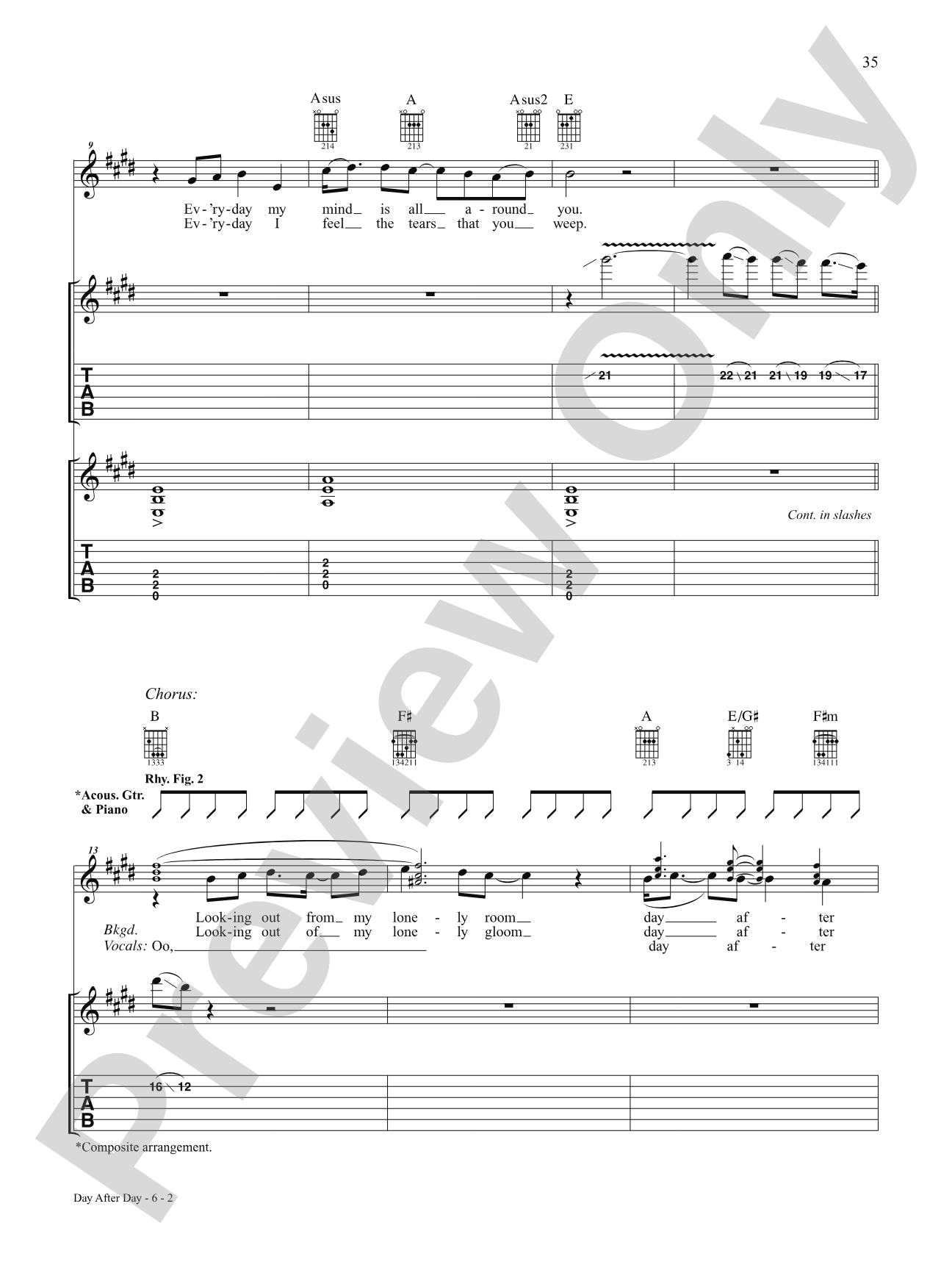
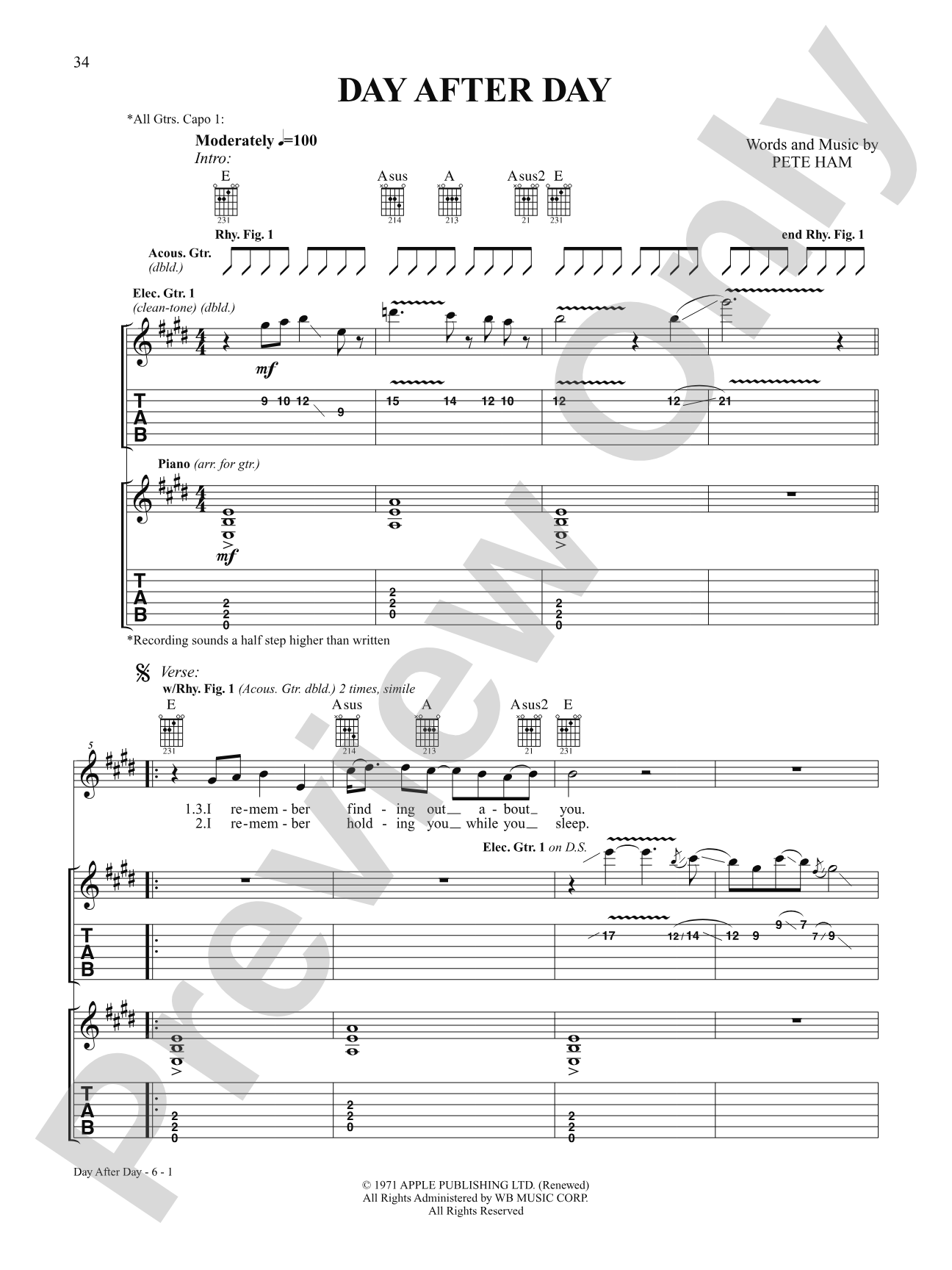
Day After Day Sheet Music Preview

Day After Day: Interm./Easy Guitar TAB

39 of the Best Guitar Songs from Your Favorite Artists

Item: 00-PS-0011411

Digital Download
$5.99

One moment…

Description
Each book in the Greatest Rock Guitar series features some of the best songs of its decade or genre---and all songs are in full guitar TAB arrangements. At about 256 pages each, these books are a tremendous resource and a great way to get your own guitar TAB library started.

39 of the greatest classic rock era guitar songs in one folio, all transcribed in full notation and TAB, with complete guitar solos included. Songs include Born to Run * Dance to the Music * Good Times Roll * Hungry Heart * I'm On Fire * My Best Friends Girl * Old Time Rock & Roll * Never Going Back Again * The Pretender * Thunder Road * Take it Easy * Time is on My Side * Woodstock * and many more.

Day After Day: Interm./Easy Guitar TAB isn't in MakeMusic Cloud just yet...but it could be. Let us know you'd like to see it, and you'll help shape what comes next. In the meantime, start a free trial and dive into thousands of interactive titles your students can play along with today.

Sample Audio
No sample audio found.
Sample Video
Additional Details
Publisher: Alfred Music
Page Count: 260
SKU: 00-PS-0011411

More about this title

About the Composer: Pete Ham

Pete Ham was the songwriter and guitarist for Badfinger, the Welsh rock band that became one of the most successful acts of the early 1970s. His gift for crafting melodic rock songs with emotional depth made him a cornerstone of the band's sound, and his compositions remain touchstones of the classic rock era.

Why we love this

This collection captures 39 essential classic rock songs in full TAB transcriptions, giving guitarists direct access to the exact voicings, techniques, and solos that defined the era. The mix of recognizable hits and deeper cuts means students can learn repertoire they actually want to play while building technical range across different styles and approaches.

What to expect

Opening this folio feels like having a master class in classic rock guitar handed to you. The songs span the full energy spectrum from rolling grooves and driving rhythms to intricate solos and dynamic shifts, giving every session variety and the chance to discover why these particular recordings became blueprints for generations of players.

Who it's for

This collection is ideal for intermediate to easy-level guitarists who want to build a library of authentic classic rock arrangements. Whether you're learning rock guitar fundamentals, preparing songs for a band, or building your repertoire for recitals and performances, these transcriptions provide direct access to the real songs without simplified adaptations.

How to get the most out of it

  • Study the rhythm patterns and strumming notation carefully before tackling the solos; many of these songs rely on specific rhythmic feels that are just as important as the melodic content.
  • Use the full TAB arrangements to learn both rhythm and lead parts, then decide which version fits your current skill level and gradually work toward the complete arrangement.
  • Record yourself playing the rhythm section and layer in the lead or solo parts separately to build confidence with the phrasing and timing that makes each song recognizable.
  • Compare TAB transcriptions across similar songs in the book to spot recurring techniques and fingering patterns that will speed up your learning of later songs.

How to use it

Use these songs as cornerstones of your students' solo recitals, especially for guitarists in grades 8-12 who want to perform music that connects with their peers. You might also select a handful of songs to learn as an ensemble or guitar class project, building ensemble skills and awareness of how classic rock arrangements translate from record to stage.

Skills your students will build

  • Reading full guitar TAB transcriptions with notation
  • Learning complete guitar solos and exact solo techniques
  • Understanding classic rock rhythm patterns and strumming styles
  • Building flexibility between rhythm and lead playing
  • Developing repertoire recognition and learning how to learn from recorded sources

You May Also Like