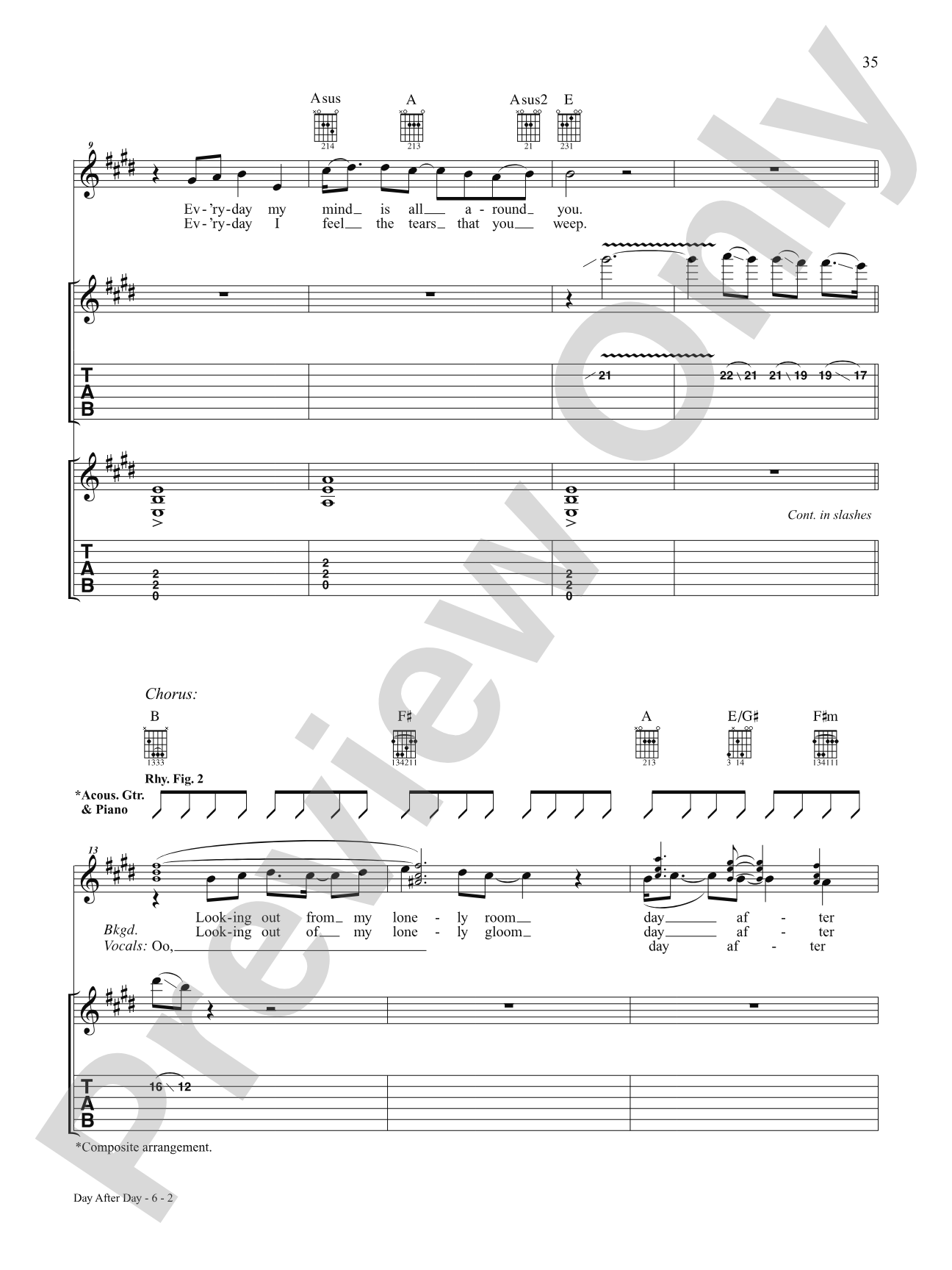
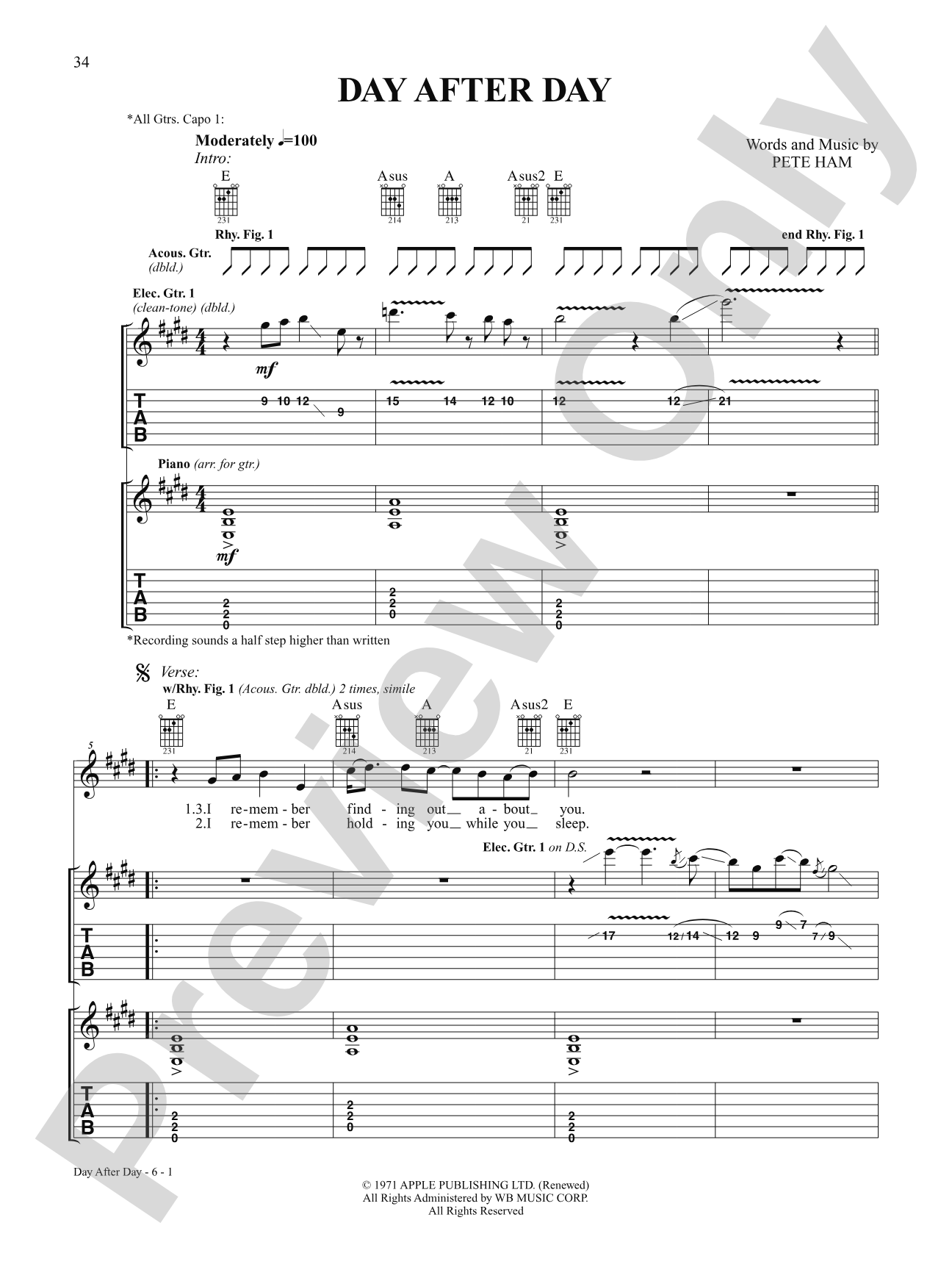
Day After Day Sheet Music Preview

Day After Day: Authentic Guitar TAB

39 of the Best Guitar Songs from Your Favorite Artists

Item: 00-PS-0011454

Digital Download
$5.99

One moment…

Description
Each book in the Greatest Rock Guitar series features some of the best songs of its decade or genre---and all songs are in full guitar TAB arrangements. At about 256 pages each, these books are a tremendous resource and a great way to get your own guitar TAB library started.

39 of the greatest classic rock era guitar songs in one folio, all transcribed in full notation and TAB, with complete guitar solos included. Songs include Born to Run * Dance to the Music * Good Times Roll * Hungry Heart * I'm On Fire * My Best Friends Girl * Old Time Rock & Roll * Never Going Back Again * The Pretender * Thunder Road * Take it Easy * Time is on My Side * Woodstock * and many more.

Day After Day: Authentic Guitar TAB isn't in MakeMusic Cloud just yet...but it could be. Let us know you'd like to see it, and you'll help shape what comes next. In the meantime, start a free trial and dive into thousands of interactive titles your students can play along with today.

Sample Audio
No sample audio found.
Sample Video
Additional Details
Publisher: Alfred Music
Page Count: 260
SKU: 00-PS-0011454

More about this title

About the Composer: Pete Ham

Pete Ham was the primary songwriter and guitarist for Badfinger, the Welsh rock band that became one of the most significant acts of the 1970s. Signed to The Beatles' Apple Records, Ham crafted infectious melodies and sophisticated pop-rock arrangements that earned him recognition as a skilled composer and multi-instrumentalist. His work on songs like "Day After Day" and "Come and Get It" demonstrates his gift for blending catchy hooks with genuine musical depth.

Why we love this

This collection captures the essence of classic rock guitar at a moment when songwriting, arrangement, and performance merged seamlessly. The 39 songs span styles and eras, giving guitarists immediate access to a comprehensive education in rock idiom, from blues-influenced riffs to sophisticated pop structures. Having complete solos transcribed means students can study how professional guitarists voice their improvisations, not just learn the chord changes.

What to expect

These songs carry the swagger and polish of their era: driving rhythms, vocal-influenced lead lines, and arrangements that balance sophistication with accessibility. You'll feel the evolution of rock guitar across decades, from raw blues energy to layered production values, all grounded in the fundamental principle that the song comes first.

Who it's for

Guitarists working toward intermediate and advanced playing levels will find this collection invaluable for building rock repertoire and understanding how the genre's most durable songs are constructed. This resource serves musicians preparing for ensemble settings, auditions, or personal performance who need authentic transcriptions they can trust.

How to get the most out of it

  • Study the rhythm guitar parts as carefully as the solos; classic rock groove comes from the pocket between your hands, not just lead line execution.
  • Use the TAB alongside standard notation to confirm fingering options, especially for chord voicings that shape the song's character.
  • Reference a recording of each song before you learn it; these arrangements capture genuine performance details that notation alone cannot convey.

How to use it

Build a unit around a single decade or theme, assigning individual songs as solo projects that guitarists can then share in ensemble settings or informal recital formats. The breadth of this folio makes it ideal for a year-long guitar curriculum where students encounter diverse playing styles, from fingerstyle work to power chord rhythm playing.

Skills your students will build

  • Reading full notation and TAB simultaneously
  • Analyzing rock song structure and form
  • Translating recorded performances into playable arrangements
  • Executing rhythm guitar patterns with pocket and dynamics
  • Learning extended solo passages and improvisational phrasing
  • Recognizing and reproducing classic rock tone production

You May Also Like