
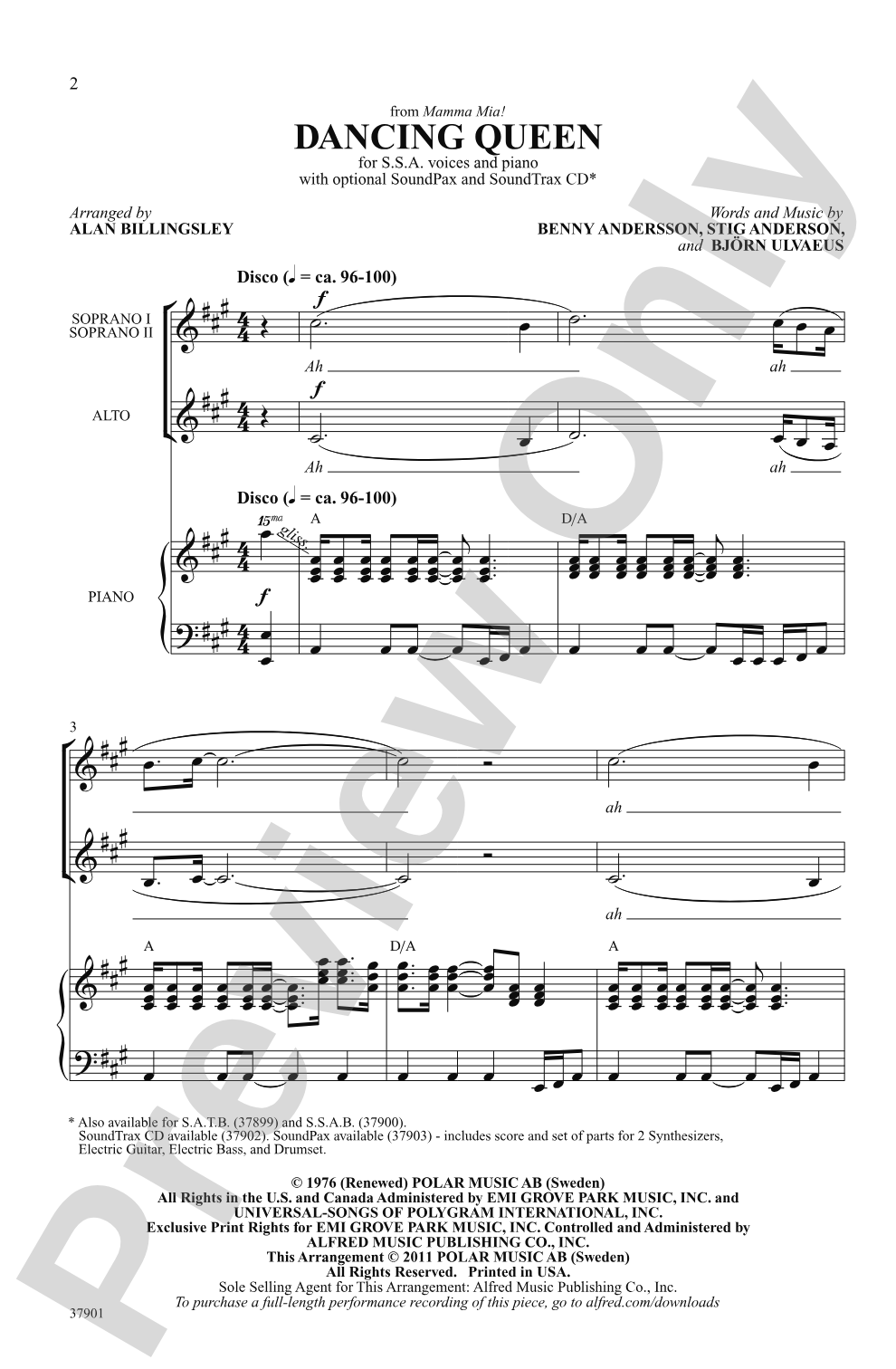
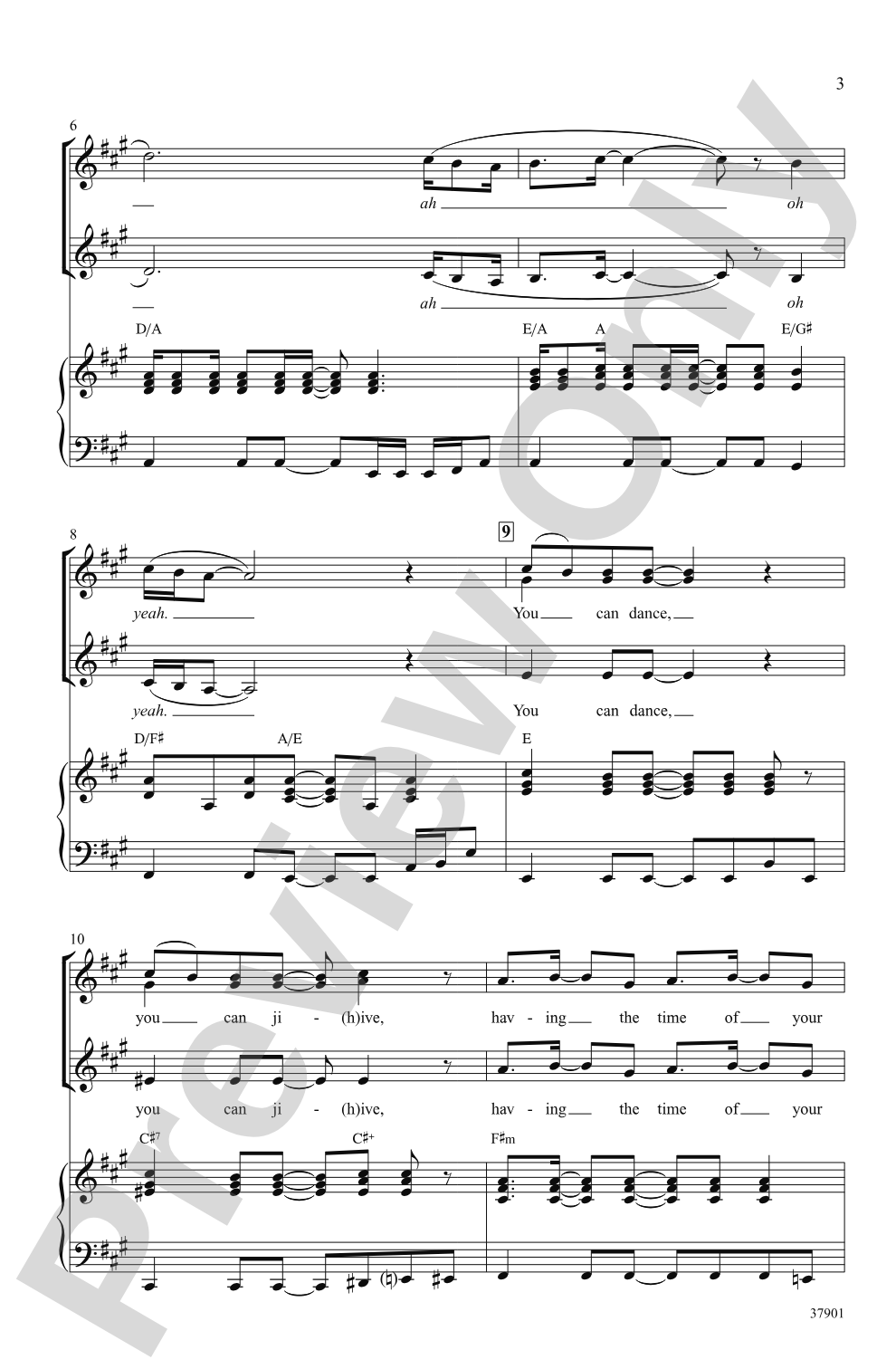
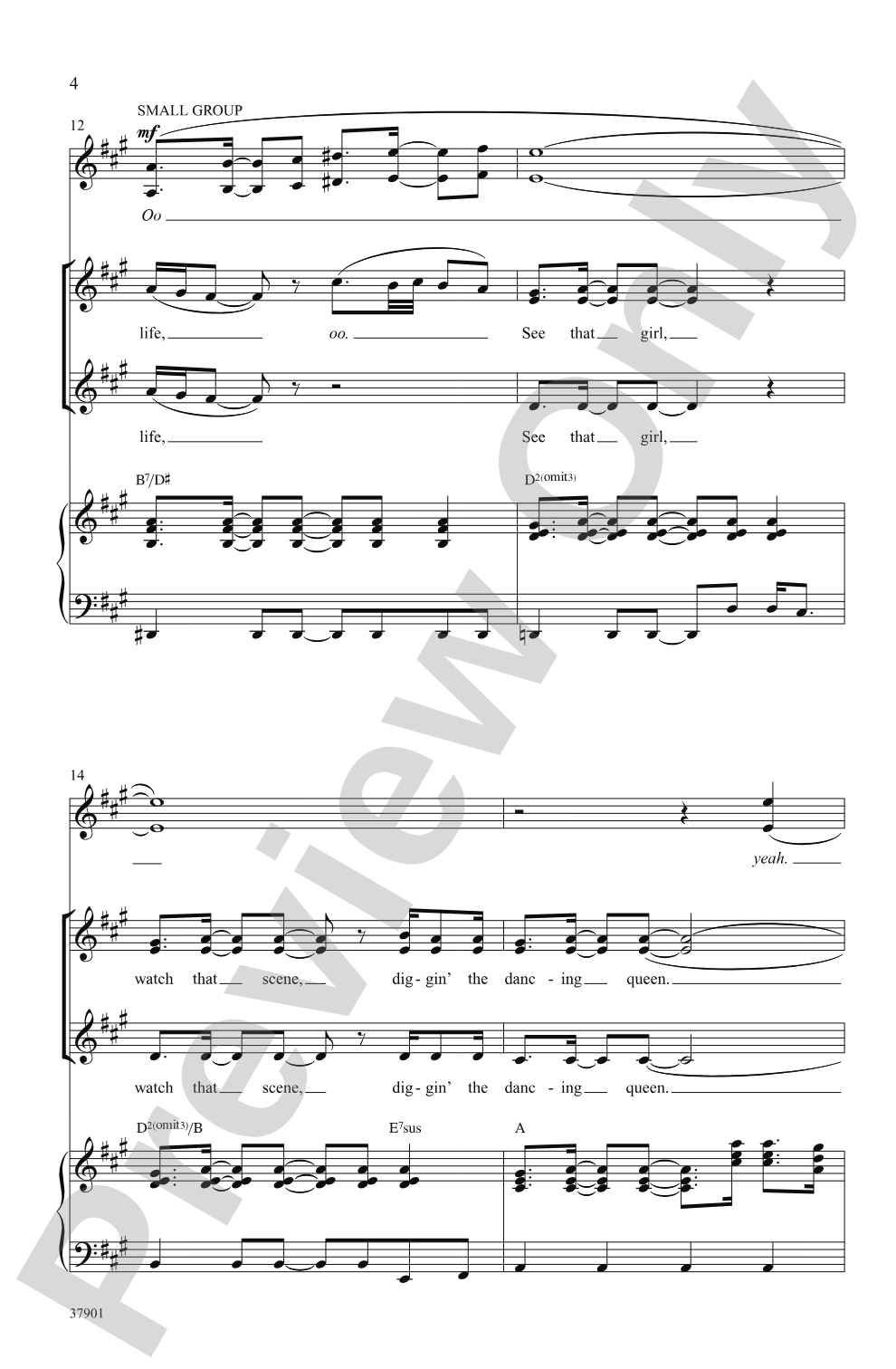

Dancing Queen (from Mamma Mia!): SSA Choral Octavo
From the Smash Hit Musical Mamma Mia!
Words and music by Benny Andersson, Stig Anderson, and Björn Ulvaeus / arr. Alan Billingsley
Item: 00-PO-0001260
$2.10
Minimum order quantity: 20 copies
One moment…
Related Items
Dancing Queen: SoundTrax Digital Audio Download |
$29.99
|
View | |
Dancing Queen (from Mamma Mia!): SATB Choral Octavo |
$2.35
|
View | |
Dancing Queen (from Mamma Mia!): SSAB Choral Octavo |
$2.10
|
View | |
Dancing Queen (from Mamma Mia!): Choral SoundPax |
$30.00
|
View | |
Dancing Queen: SATB Choral Octavo |
$2.35
|
View | |
Dancing Queen: SSA Choral Octavo |
$2.10
|
View | |
Dancing Queen: Choral Octavo SoundTrax CD |
$29.99
|
View | |
Dancing Queen: Choral SoundPax |
$30.00
|
View |
Description
This trademark ABBA song from the smash hit musical Mamma Mia is a great choice for both concert and show choirs. Featured on the "Prom Queen" episode of Glee. Energetic, disco fun!


Dancing Queen (from Mamma Mia!): SSA Choral Octavo isn't in MakeMusic Cloud just yet...but it could be. Let us know you'd like to see it, and you'll help shape what comes next. In the meantime, start a free trial and dive into thousands of interactive titles your students can play along with today.
Request This Title
Tell us you want it.
Start Your Free Trial
Explore everything that's ready to play right now.
Sample Audio
1
Audio File
--:--
0:00
0:00
Sample Video
No sample videos found.
Additional Details
Series:
Alfred Pop Choral Series
Publisher:
Alfred Music
Page Count:
12
SKU:
00-PO-0001260
More about this title
About the Composer: Benny Andersson
Benny Andersson is a Swedish musician and composer best known as a founding member of ABBA, one of the most commercially successful pop groups in history. Beyond his decades-long recording career, Andersson has composed for film and theater, bringing the same melodic sensibility and infectious energy to his stage work that defined ABBA's sound.
For music educators, Andersson's arrangements and compositions offer something rare: songs that students genuinely want to sing, paired with sophisticated pop craftsmanship. His melodies sit naturally in the voice, his harmonies reward careful listening, and his arrangements respect both the original vision and the capabilities of student ensembles.
Why we love this
Alan Billingsley's SSA setting captures the disco sparkle of the original without requiring a pit orchestra or oversized ensemble. The arrangement lives in the sweet spot between accessibility and musicianship, giving every voice meaningful material while keeping rehearsal time manageable. Students walk out of rehearsal genuinely excited about what they're singing, which makes this a natural fit for mixed-ability choirs looking to program something contemporary with real theatrical roots.
What to expect
The disco ball is spinning, the bass line is locked, and the melody soars with uninhibited joy. This is music made for celebration, where the arrangement sparkles with layered vocal lines and the rhythm section keeps everything bouncing forward with purpose.
Who it's for
Concert choirs and show choirs at the middle school and high school levels will find this accessible and genuinely fun to perform. Any director programming a themed concert (70s night, movie musicals, pop hits) or looking to balance classical repertoire with something that speaks to contemporary ears will connect with this setting.
How to get the most out of it
- Lean into the rhythmic precision of the disco groove. The infectious pulse only works if your ensemble locks the syncopated figures together; use a click track or recorded accompaniment to drill these patterns until they feel effortless.
- Balance sparkle with clarity in the upper voices. The sopranos and altos trade off bright countermelodies that should pop without drowning the melody; rehearse them separately first, then layer them with dynamic awareness.
- Give yourself permission to have fun with the style. Disco thrives on groove and personality; encourage your singers to embrace the energy rather than treat it as a novelty or guilty pleasure.
How to use it
This works beautifully as a second-half opener on a concert program, providing the energy shift that wakes up an audience after something more introspective. It pairs naturally with other pop or musical theater selections and serves as an excellent gateway piece for students who are building confidence in contemporary styles.
Skills your students will build
- Articulation and rhythmic precision in syncopated pop styles
- Layering and balance of independent melodic lines
- Stylistic awareness across genre and era
- Sustained phrasing and breath control over longer melodic phrases