Dancing Bows Cover Image

Dancing Bows: String Orchestra Conductor Score & Parts

$42.00 USD
Sale price  $42.00 USD Regular price 
Skip to product information
Dancing Bows Cover Image

Dancing Bows: String Orchestra Conductor Score & Parts

By Edmund J. Siennicki

Grade: 1

Item: 36-20250014

$42.00
Shipped

One moment…

Description
The sight of all those bows dancing in rhythm across the strings is an inspiring sight to most young string orchestra audiences. The tasteful writing of Ed Siennicki will give your group plenty of practice in simple bowing technique and will give your audience a sight to behold. Let this happy tune work its infectious magic on young and old alike.

Dancing Bows: String Orchestra Conductor Score & Parts isn't in MakeMusic Cloud just yet...but it could be. Let us know you'd like to see it, and you'll help shape what comes next. In the meantime, start a free trial and dive into thousands of interactive titles your students can play along with today.

Sample Pages

No sample pages found.

Sample Audio
No sample audio found.
Sample Video
Additional Details
Series: LudwigMasters Beginning Strings
Publisher: Keiser Productions, Inc.
ISBN10: 1-57-134119-6
ISBN13: 978-1-57-134119-8
UPC: 654690664174
SKU: 36-20250014
Instrumentation: String Orchestra

More about this title

About the Composer: Edmund J. Siennicki
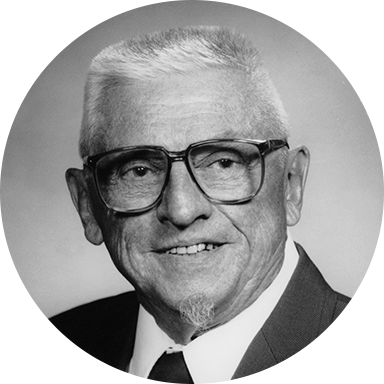
Edmund J. Siennicki

Edmund J. Siennicki grew up in Cleveland, Ohio, where at age 12 he encountered the legendary pianist Ignacy Jan Paderewski; that brief meeting shaped his artistic path for decades to come. He earned his Bachelor's degree from Kent State University, where he composed the school's fight song (still performed at football games today), and later completed his MA at Teachers College, Columbia University. His composition teachers included Herbert Elwell and Vincent Persichetti, and he studied electronic music with Sergio Barroso. As a performer, he worked professionally on bassoon and piano.

Siennicki's career balanced composition, teaching, and advocacy for young musicians. His works have won prizes in the National School Orchestra composition contests, and he served as composer in residence at the MacDowell Colony twice. He taught for many years in Cleveland's junior high schools and later held faculty positions at both Michigan and Kent State University. With roughly 200 compositions in print and two decades of ASCAP recognition awards, his body of work reflects a deep commitment to writing music that serves students and communities. He remains active in composition and continues to visit schools and lead clinics.

Why we love this

Siennicki understands what young string players need to see and hear at Grade 1. The bowing patterns are rhythmically engaging without overwhelming developing players, and the visual unity of synchronized bows across the ensemble gives students an immediate payoff for their effort. The infectious melody and straightforward harmonic writing make this a performance piece that actually sounds polished from the first read-through.

What to expect

Bright and buoyant, with a friendly melody that bounces along on infectious rhythmic momentum. The piece feels celebratory without being showy, inviting audiences to smile at the sight of young musicians moving as one.

Who it's for

Beginning string orchestras in their first year of ensemble playing will find exactly what they need here: manageable technical demands paired with a tune that audiences enjoy. Students new to coordinating bows across multiple parts will build confidence seeing themselves succeed in a full ensemble sound.

How to get the most out of it

  • Establish a clear beat pattern early in rehearsals so all sections understand when the bows move together; uniformity of bow motion is the visual goal here, and it requires conductor clarity
  • Let the melody sing in the first violins while keeping the lower voices rhythmically tight; the upper line carries the tune, so shape it as a complete phrase
  • Encourage steady, controlled bow pressure from the start rather than rushing through the rhythmic passages; clean attacks matter as much as synchronized movement

How to use it

Reserve this for early-season or spring concerts when you want a confidence-building opener that shows off ensemble unity and gets an immediate audience response. It works especially well as the first public performance for a new or reorganized string group.

Skills your students will build

  • Synchronized bowing technique across multiple parts
  • Reading and executing rhythmic figures in unison
  • Maintaining consistent tone while moving the bow in ensemble
  • Following conductor cues for ensemble attacks and releases

You May Also Like