

Dance!: SATB, a cappella Choral Octavo
Words and music by Robert T. Gibson
Item: 00-PO-0007014
$2.05
Minimum order quantity: 20 copies
Pickup currently not available
Related Items
Dance!: SSA, a cappella Choral Octavo |
$2.55
|
View | |
Dance!: TTB, a cappella Choral Octavo |
$2.20
|
View | |
Dance!: 2-Part, a cappella Choral Octavo |
$2.40
|
View | |
Dance!: SATB, a cappella Choral Octavo |
$2.05
|
View | |
Dance!: SSA, a cappella Choral Octavo |
$2.55
|
View | |
Dance!: TTB, a cappella Choral Octavo |
$2.20
|
View | |
Dance!: 2-Part, a cappella Choral Octavo |
$2.40
|
View |
Description
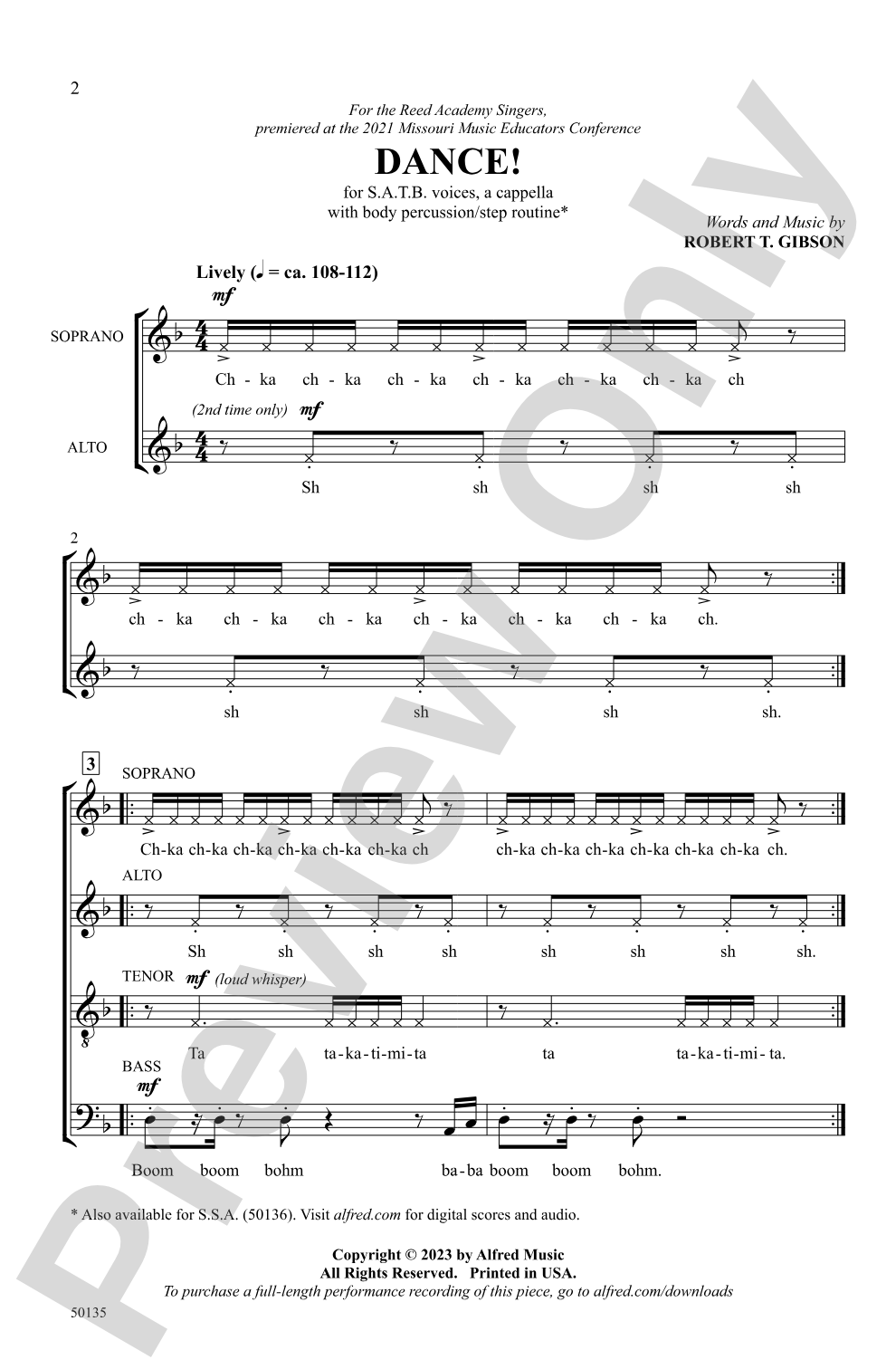
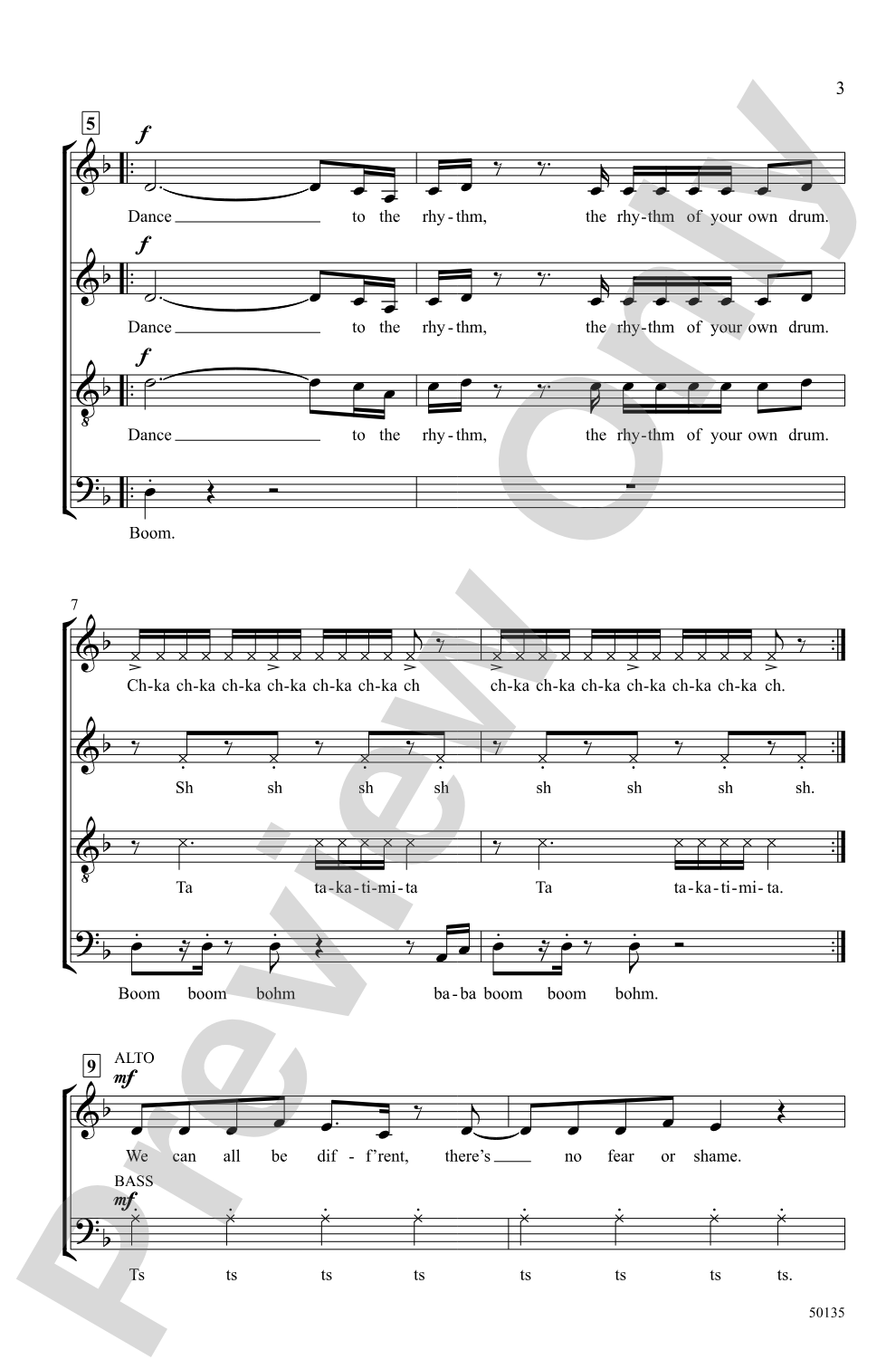
New voicings! An outside-the-box rhythmic explosion that culminates with a notated step routine! Lyrics encourage listeners to "dance to the rhythm of your own drum," embracing individuality and celebrating differences. The vocal percussion and satisfying parallel harmonies are a breeze to learn. Step instructions are included in the octavo, and an instructional video by composer Robert T. Gibson is available at alfred.com.


Discover MakeMusic Cloud: thousands of interactive titles your students can play along with today.
Sample Audio
1
Audio File
--:--
0:00
0:00
Sample Video
1 / 2
Additional Details
Series:
Alfred Choral Designs
Publisher:
Alfred Music
Page Count:
8
SKU:
00-PO-0007014
More about this title
About the Composer: Robert T. Gibson
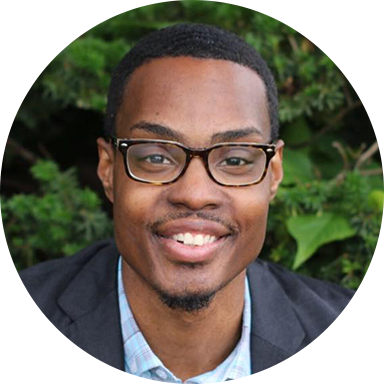
Robert T. Gibson is a conductor, composer, and arranger based in Houston who has shaped music education across multiple states through his work in middle, high school, collegiate, and church settings. He holds degrees from the University of North Texas (Bachelor of Music Education) and Missouri State University (Master of Music), where he later served as adjunct professor and founded the Missouri State Multicultural Ensemble. Gibson has been recognized with the 2020 Missouri Choral Directors Association Opus Award and the 2022 NAACP Trailblazer Award for his contributions to the Springfield community.
As a clinician and educator, Gibson has worked extensively to develop the next generation of music leaders, guest conducting ensembles across Texas, Missouri, Pennsylvania, Kansas, Tennessee, and New York. His choral arrangements and compositions appear through Walton Music and Alfred Publications, and his works have been performed by prestigious groups including the Texas All-State Tenor Bass Choir and the Missouri Summer All-State Choir. He is an active member of Phi Beta Sigma Fraternity, Inc., Phi Mu Alpha Sinfonia, and Phi Kappa Lambda Nation.
Why we love this
This piece speaks directly to ensemble culture by celebrating individuality through the act of dancing together. The rhythmic writing is genuinely inventive without being complicated to learn, and the inclusion of a notated step routine transforms a concert performance into a genuine celebration that your singers will remember long after the season ends. The parallel harmonies create instant satisfaction for singers new to a cappella work, making this an excellent choice for building confidence and joy in your ensemble.
What to expect
Energy pulses through every measure. The rhythmic layering creates a propulsive groove that feels contemporary and alive, while the parallel harmonies lock in with satisfying warmth. From first entrance to final step, the piece radiates infectious joy and celebration.
Who it's for
This octavo works beautifully for high school and middle school choirs seeking repertoire that energizes both performers and audiences. It is particularly strong for ensembles ready to explore a cappella singing without heavy vocal demands, and for groups that want to break free from traditional concert staging.
How to get the most out of it
- Work through the step routine separately during a rehearsal dedicated to movement before combining it with the vocal parts. Use Gibson's instructional video as a reference for timing and style.
- Lock in the vocal percussion parts first. These rhythmic anchors ground the piece and help singers relax into the parallel harmonies.
- Encourage your singers to embody the message in the lyrics by letting their individual personalities shape how they execute the choreography. Unity in ensemble singing does not require uniformity in movement.
- Consider the acoustic properties of your performance space when balancing a cappella blend. A rehearsal run-through in your actual concert venue will reveal whether you need to adjust vowel shapes or spacing.
How to use it
Place this in the closing section of a concert to send audiences home energized and smiling. The movement element and accessible message about embracing individuality also make it ideal for pep rallies, diversity celebrations, or community engagement events where you want to showcase your ensemble's spirit beyond traditional concert repertoire.
Skills your students will build
- Reading and executing a cappella voicings with parallel harmony movement
- Layering rhythm patterns and vocal percussion to create cohesive grooves
- Coordinating choreography with vocal performance
- Balancing blend and tuning in close harmonies without instrumental support
- Interpreting text about individuality and belonging through ensemble performance