

Dance!: 2-Part, a cappella Choral Octavo
Words and music by Robert T. Gibson
Item: 00-PO-0007323
$2.40
Minimum order quantity: 20 copies
Pickup currently not available
Related Items
Dance!: SATB, a cappella Choral Octavo |
$2.05
|
View | |
Dance!: SSA, a cappella Choral Octavo |
$2.55
|
View | |
Dance!: TTB, a cappella Choral Octavo |
$2.20
|
View | |
Dance!: SATB, a cappella Choral Octavo |
$2.05
|
View | |
Dance!: SSA, a cappella Choral Octavo |
$2.55
|
View | |
Dance!: TTB, a cappella Choral Octavo |
$2.20
|
View | |
Dance!: 2-Part, a cappella Choral Octavo |
$2.40
|
View |
Description
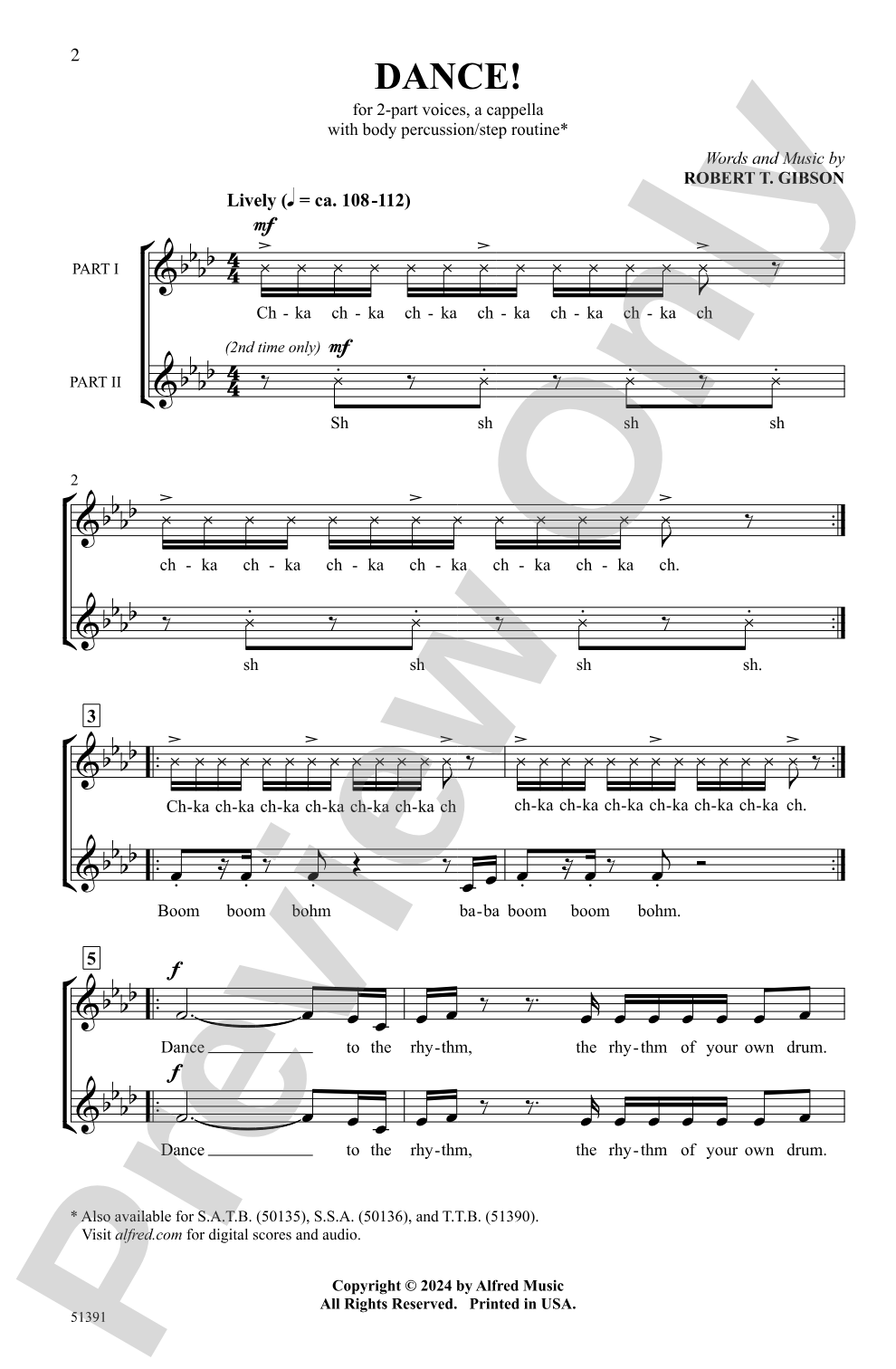
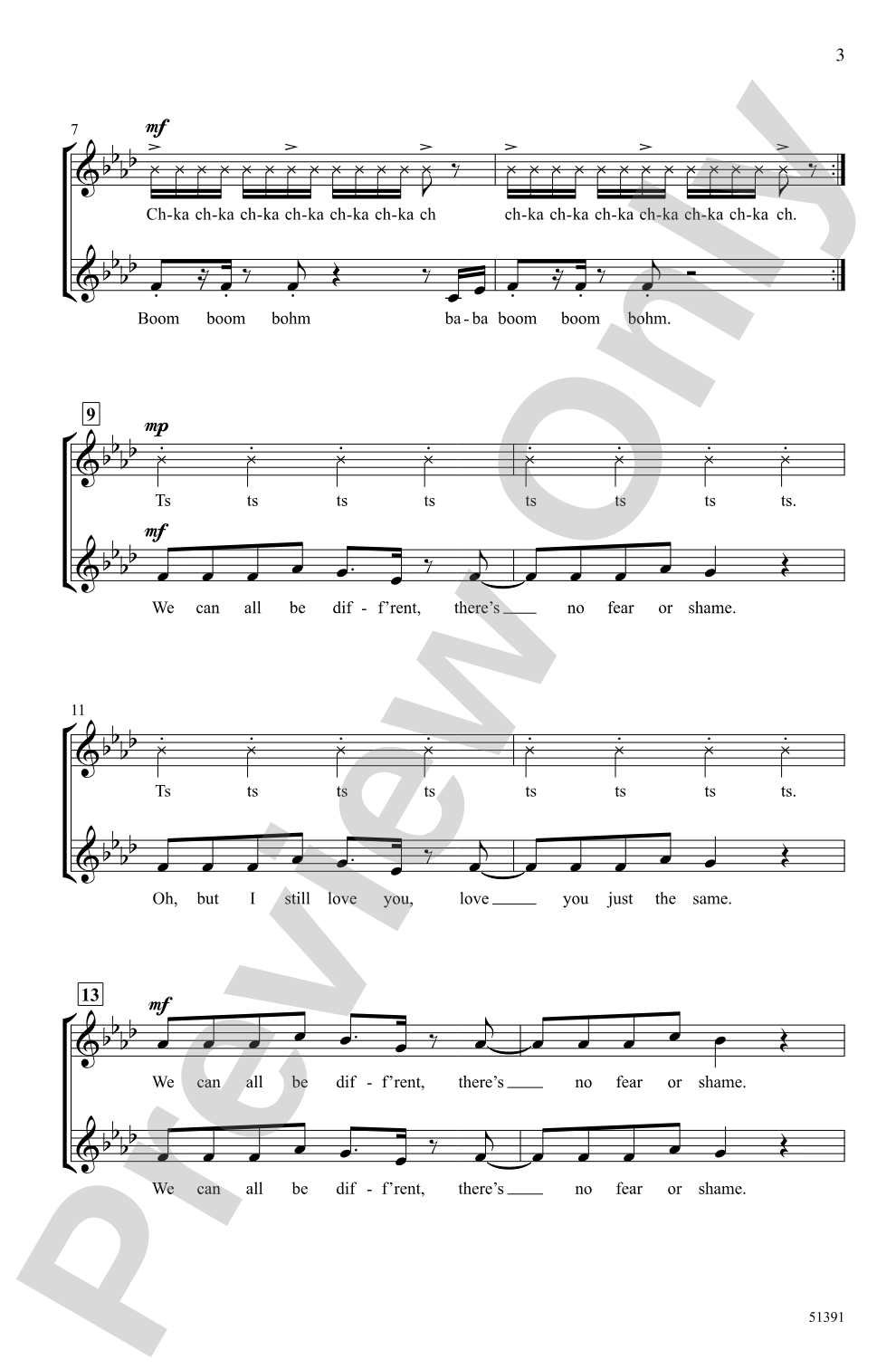
New voicings! An outside-the-box rhythmic explosion that culminates with a notated step routine! Lyrics encourage listeners to "dance to the rhythm of your own drum," embracing individuality and celebrating differences. The vocal percussion and satisfying parallel harmonies are a breeze to learn. Step instructions are included in the octavo, and an instructional video by composer Robert T. Gibson is available at alfred.com.


Discover MakeMusic Cloud: thousands of interactive titles your students can play along with today.
Sample Audio
1
Audio File
--:--
0:00
0:00
Sample Video
Additional Details
Series:
Alfred Choral Designs
Publisher:
Alfred Music
Page Count:
8
SKU:
00-PO-0007323
More about this title
About the Composer: Robert T. Gibson
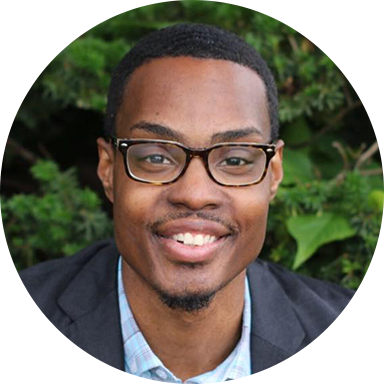
Robert T. Gibson, based in Houston, has built a career bridging conducting, composing, arranging, and teaching across multiple educational levels. He earned his Bachelor of Music Education from the University of North Texas and his Master of Music from Missouri State University, where he later served as adjunct professor and director of the Gospel Choir and Multicultural Ensemble. Gibson has conducted in middle schools, high schools, churches, and universities, and his guest clinician work has taken him across Texas, Missouri, Pennsylvania, Kansas, Tennessee, and New York.
Gibson's commitment to community and music education earned him the 2022 NAACP Trailblazer Award and an official proclamation of Robert T. Gibson Day from Springfield's mayor. His choral arrangements and compositions have been published through Walton Music and Alfred Publications, performed by the Texas All-State Tenor Bass Choir and Missouri Summer All-State Choir, and recognized with the 2020 Missouri Choral Directors Association's Opus Award for his arrangement of "We Shall Overcome." He is an active member of Phi Beta Sigma Fraternity, Inc., Phi Mu Alpha Sinfonia, and Phi Kappa Lambda Nation.
Why we love this
Gibson's rhythmic vocabulary and harmonic choices feel fresh without requiring advanced music reading skills. The piece strikes an uncommon balance: it's energetic and modern in character, yet genuinely accessible for developing choirs. The inclusion of a notated step routine lifts this beyond typical concert fare, giving your singers something tangible to rehearse and own.
What to expect
Rhythmic vitality meets invitation. The piece bounces with energy while maintaining a warm, inclusive spirit. Singing it feels like being part of something larger than yourself, yet fully seen as an individual voice.
Who it's for
Middle school through high school choirs looking for contemporary material that combines accessibility with genuine musical substance. Ensembles seeking a fun, movement-based piece without the performance intimidation factor of more demanding repertoire will find this especially rewarding.
How to get the most out of it
- Build the step routine gradually. Teach the basic footwork first without the vocal line, then layer in the singing once the movement is secure. Gibson's instructional video is essential here.
- Lean into the vocal percussion. These rhythmic elements are what make the piece propulsive, so don't let them fade into the background; they deserve as much presence as the main melodic line.
- The parallel harmonies sound best when voices blend seamlessly on sustained vowels. Spend rehearsal time locking in unison sections before moving to two-part voicing.
- Encourage performers to feel the independence in the messaging. The piece's philosophy about dancing to your own rhythm should inform how they interpret their individual parts, not as a solo spotlight but as a voice within the collective sound.
How to use it
Place this in your spring or end-of-year concert when your ensemble has developed ensemble cohesion and comfort with each other. The movement component makes it ideal for an informal concert setting or school assembly where you want to engage both performers and audience in something celebratory and memorable.
Skills your students will build
- Vocal percussion techniques and rhythmic independence
- Parallel harmony singing with blend and balance
- Integrating movement with ensemble singing
- Building stamina through rhythmic complexity and physicality
- Interpreting lyrics that celebrate individuality within a group context