
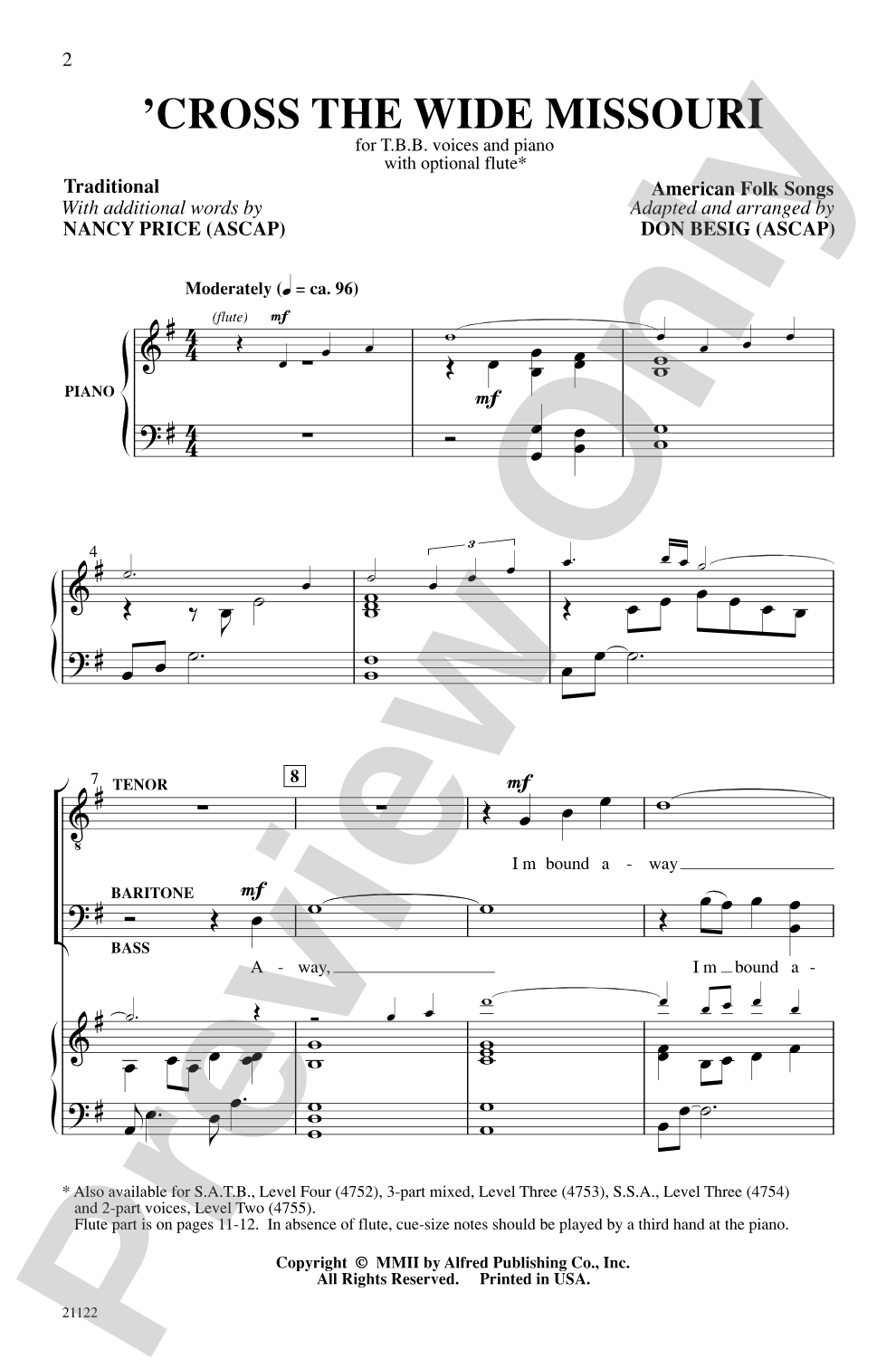
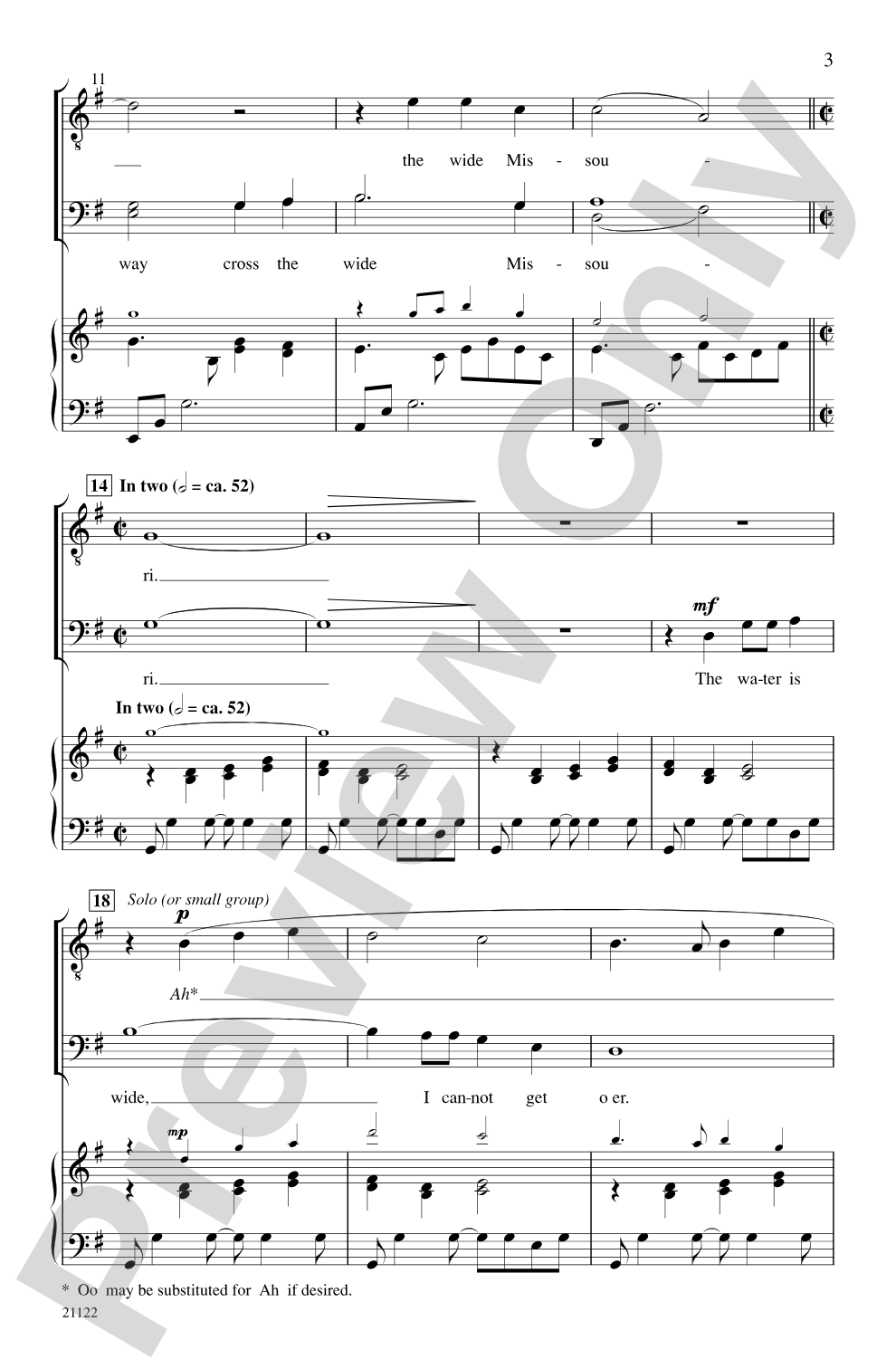
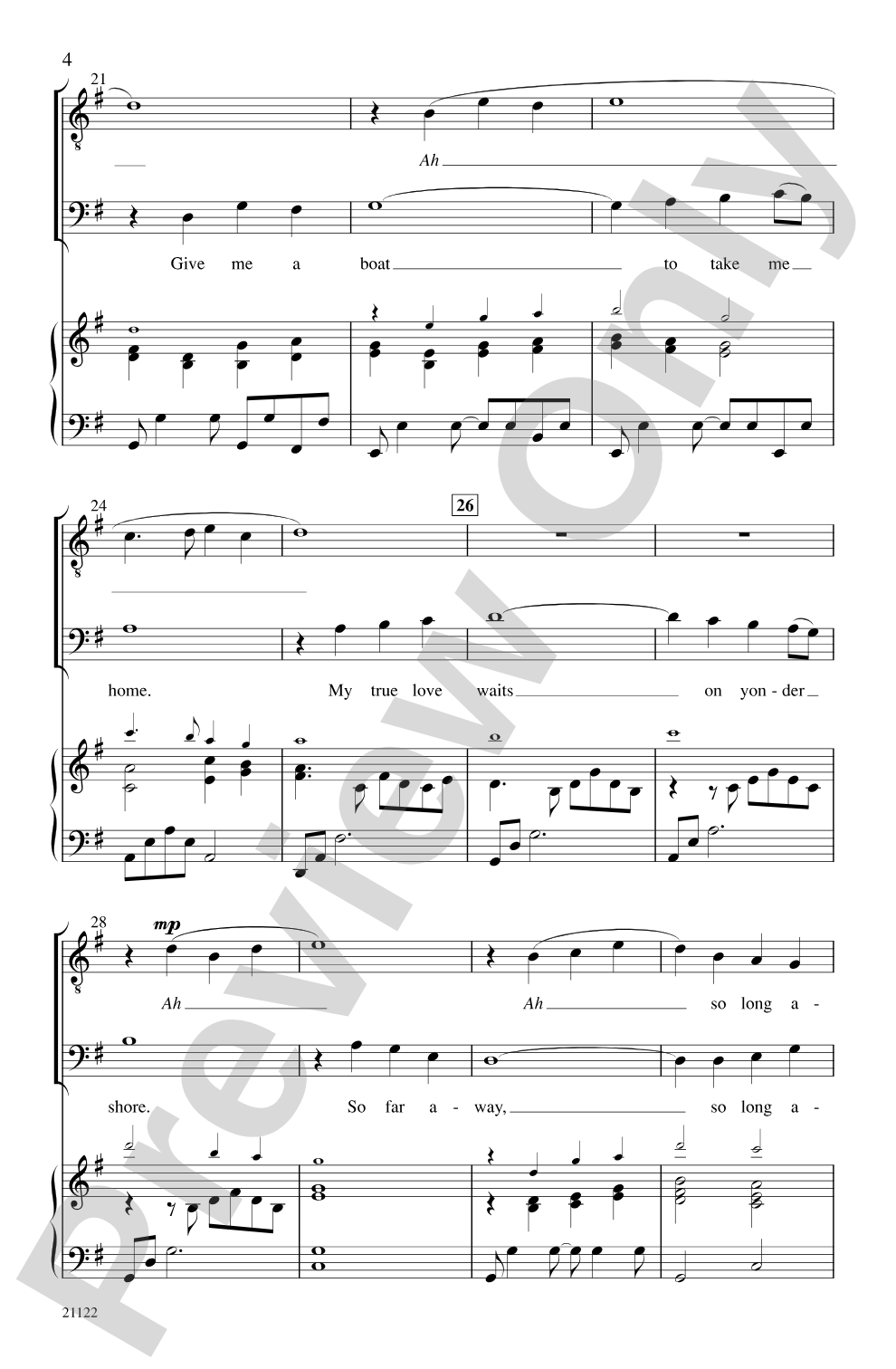

'Cross the Wide Missouri: TBB Choral Octavo
Shenandoah / The Water Is Wide
Music by Don Besig and Nancy Price
Item: 00-PO-0004255
$2.25
Minimum order quantity: 20 copies
Pickup currently not available
Related Items
'Cross the Wide Missouri: SATB Choral Octavo |
$2.25
|
View | |
'Cross the Wide Missouri: 3-Part Mixed Choral Octavo |
$2.25
|
View | |
'Cross the Wide Missouri: SSA Choral Octavo |
$2.25
|
View | |
'Cross the Wide Missouri: 2-Part Choral Octavo |
$2.25
|
View | |
'Cross the Wide Missouri: SATB Choral Octavo |
$2.25
|
View | |
'Cross the Wide Missouri: 3-Part Mixed Choral Octavo |
$2.25
|
View | |
'Cross the Wide Missouri: SSA Choral Octavo |
$2.25
|
View | |
'Cross the Wide Missouri: 2-Part Choral Octavo |
$2.25
|
View | |
'Cross the Wide Missouri: TBB Choral Octavo |
$2.25
|
View |
Description
What a wonderful pairing of two best-loved folk songs: Shenandoah and The Water is Wide. The fluid vocal lines will develop your choir's tone and control. Add the flowing piano accompaniment and the optional flute obbligato, and the result is a choral masterpiece from Don Besig and Nancy Price.


'Cross the Wide Missouri: TBB Choral Octavo isn't in MakeMusic Cloud just yet...but it could be. Let us know you'd like to see it, and you'll help shape what comes next. In the meantime, start a free trial and dive into thousands of interactive titles your students can play along with today.
Request This Title
Tell us you want it.
Start Your Free Trial
Explore everything that's ready to play right now.
Sample Audio
1
Audio File
--:--
0:00
0:00
Sample Video
No sample videos found.
Additional Details
Series:
Alfred Archive Edition: Alfred Choral Designs
Publisher:
Alfred Music
Page Count:
12
SKU:
00-PO-0004255
Instrumentation:
Opt. Flute
More about this title
About the Composer: Don Besig
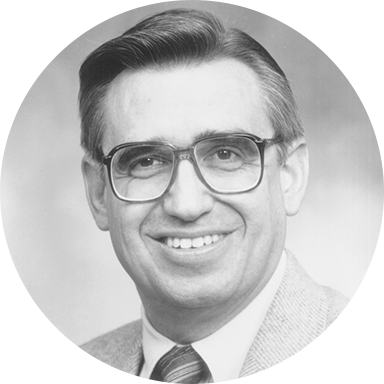
Don Besig spent 31 years directing music in western New York public schools, where his concert choirs and show choirs became known for standout performances at clinics, contests, and community events. His experience spans all grade levels and ensemble types. He currently serves as director of music at Perinton Presbyterian Church in Fairport, NY.
Raised on the principle that student singers and volunteer choirs needed repertoire written with their voices in mind, Besig began composing steadily for the ensembles he conducted. Over 350 of his original compositions and arrangements have been published by major school and church music publishers, with more than 15 million copies in circulation worldwide. He has received multiple ASCAP Special Awards and maintains active involvement as a guest conductor, clinician, and festival adjudicator across 40 states and Canada. A graduate of Ithaca College, he holds membership in Phi Mu Alpha, ACDA, MENC, NYSSMA, and ASCAP.
Why we love this
Besig and Price have paired two distinctly beautiful American folk melodies into a single, cohesive octavo that showcases what student singers can do when given music that sits naturally in their voices. The folk song treatment carries enough musical weight for a serious choral festival without requiring soloists or elaborate staging. The optional flute part adds a fresh dimension without becoming necessary, giving you flexibility across different rehearsal seasons.
What to expect
Singing these interwoven folk songs feels like standing at the confluence of two musical rivers. The melodies carry the warmth and familiarity of songs many singers have heard or sung before, while the arrangement reveals new harmonic textures and emotional depth that emerge only when you sit inside the four-part writing.
Who it's for
Treble or mixed choirs with modest to intermediate ability will find these songs approachable without sacrificing musical substance. Directors preparing for festival season or looking to balance their concert with accessible repertoire that still commands artistic respect will return to this octavo repeatedly.
How to get the most out of it
- Balance the vocal blend by encouraging singers to listen across voice parts rather than projecting individual lines; the folk tune's strength depends on the voices sounding integrated.
- Work the piano accompaniment separately before full rehearsals begin so the ensemble can settle into its harmonic foundation without the distraction of learning notes.
- Shape the phrasing through breath points that align with the text and melodic contour rather than by marking every obvious bar line; folk songs breathe differently than art song.
- If using the flute obbligato, rehearse it with only the treble voices first to establish how the instrumental line weaves through the choral texture.
How to use it
Program this alongside more challenging contemporary work to give your choir and audience a moment of reflection and connection. The piece works equally well in a concert setting or festival competition, and its modest length means you can pair it with additional selections to create a full set without overloading rehearsal time.
Skills your students will build
- Sustaining legit vocal line through longer phrases
- Blending within three-part or four-part texture
- Tuning chords built on folk harmony
- Balancing independent melodic lines with ensemble cohesion
- Interpreting phrasing from text and melody rather than notation alone