
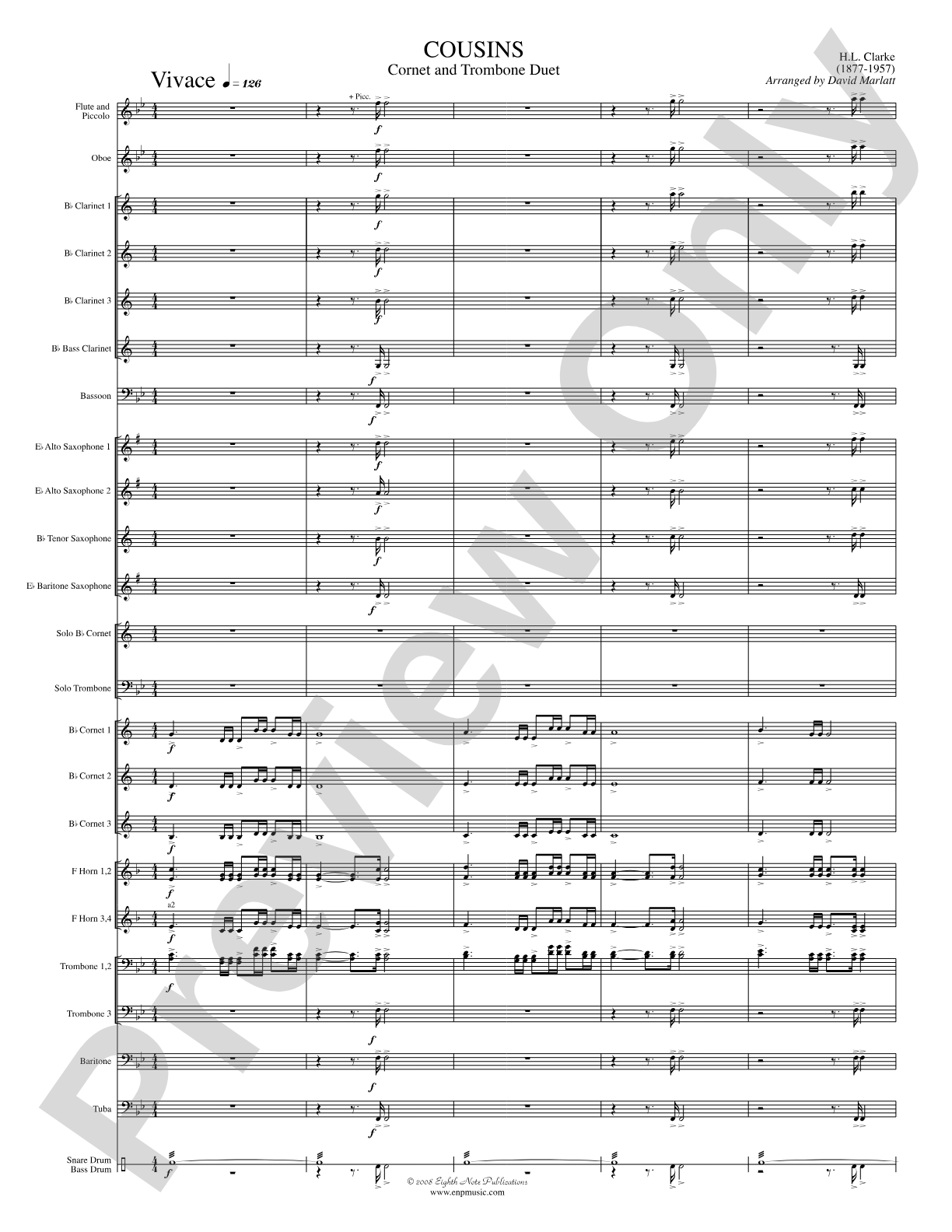
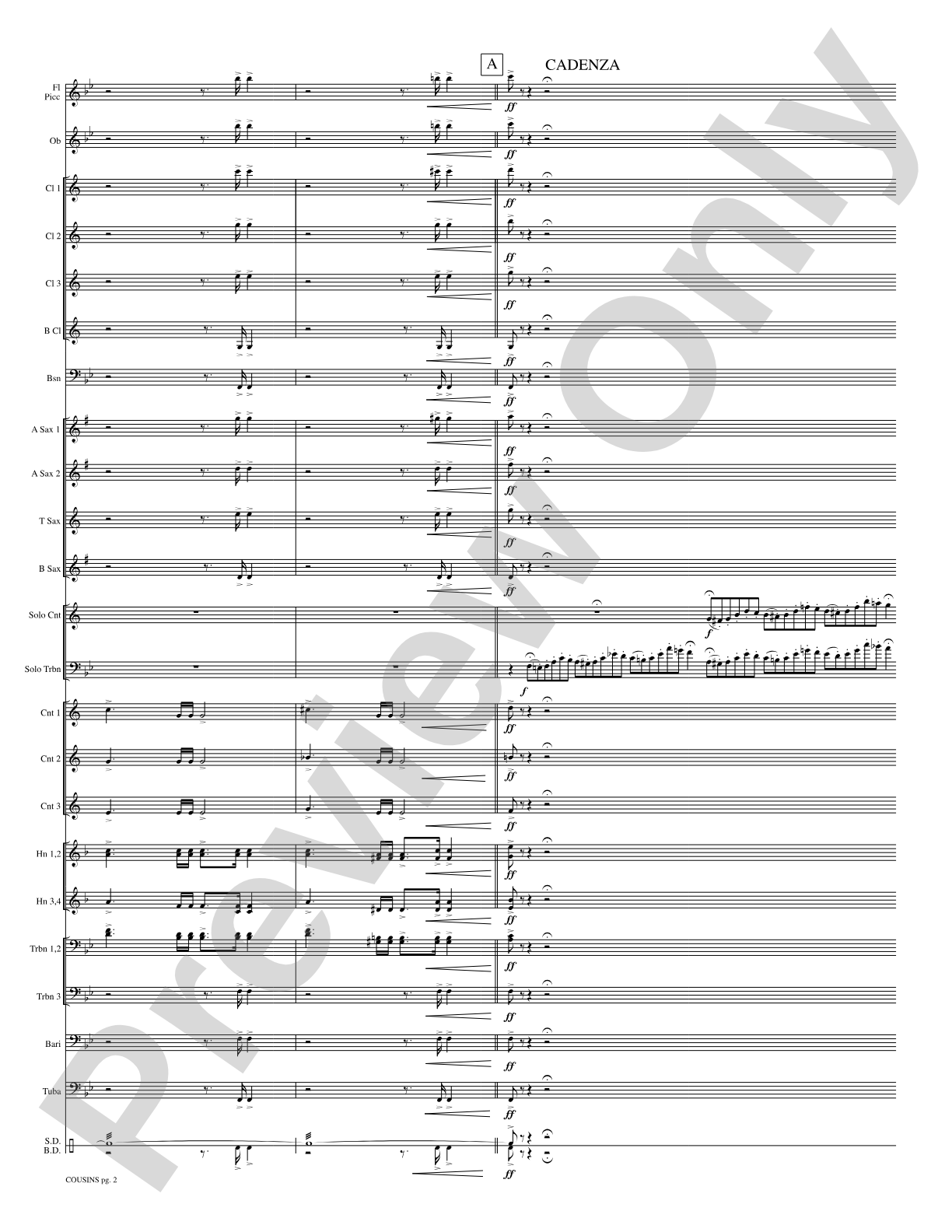
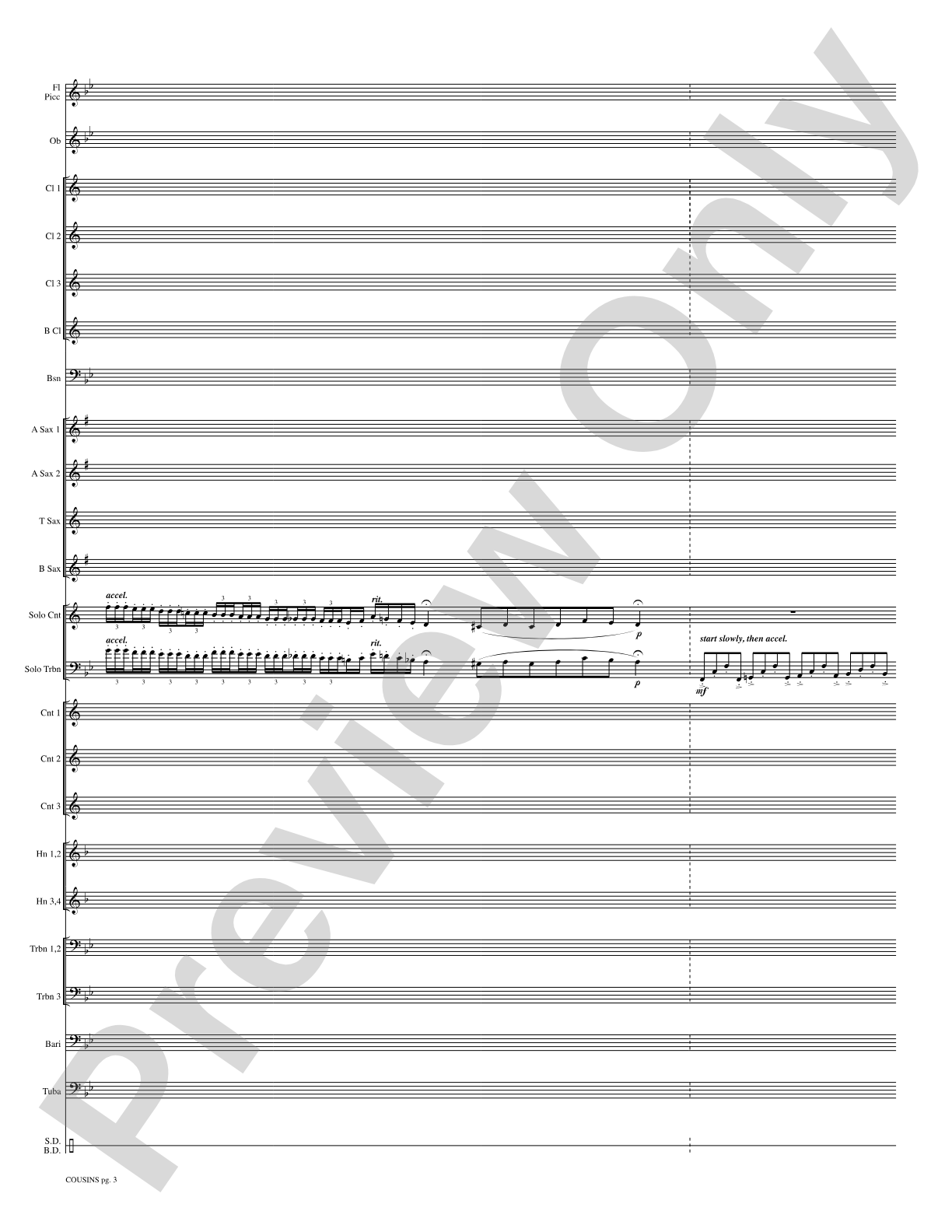
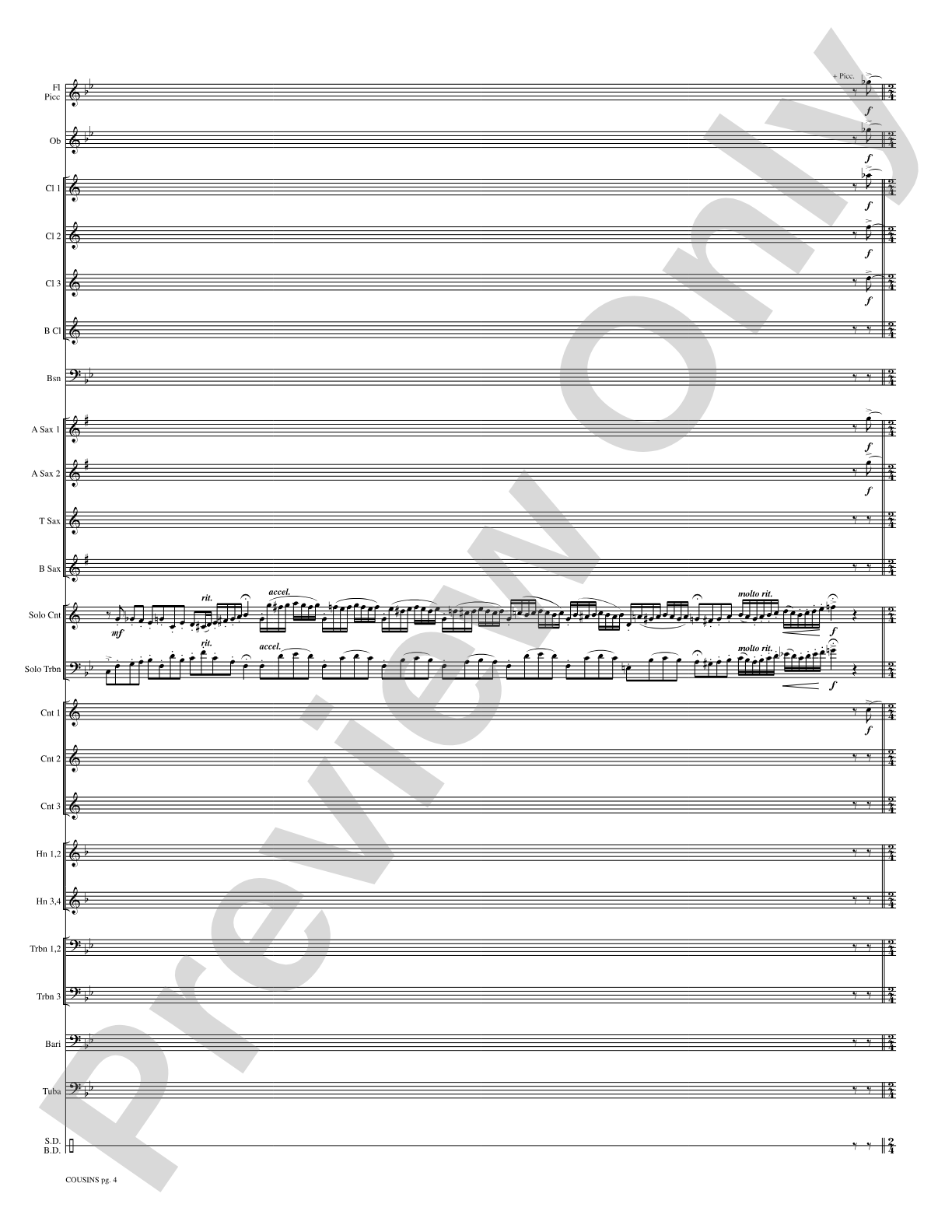
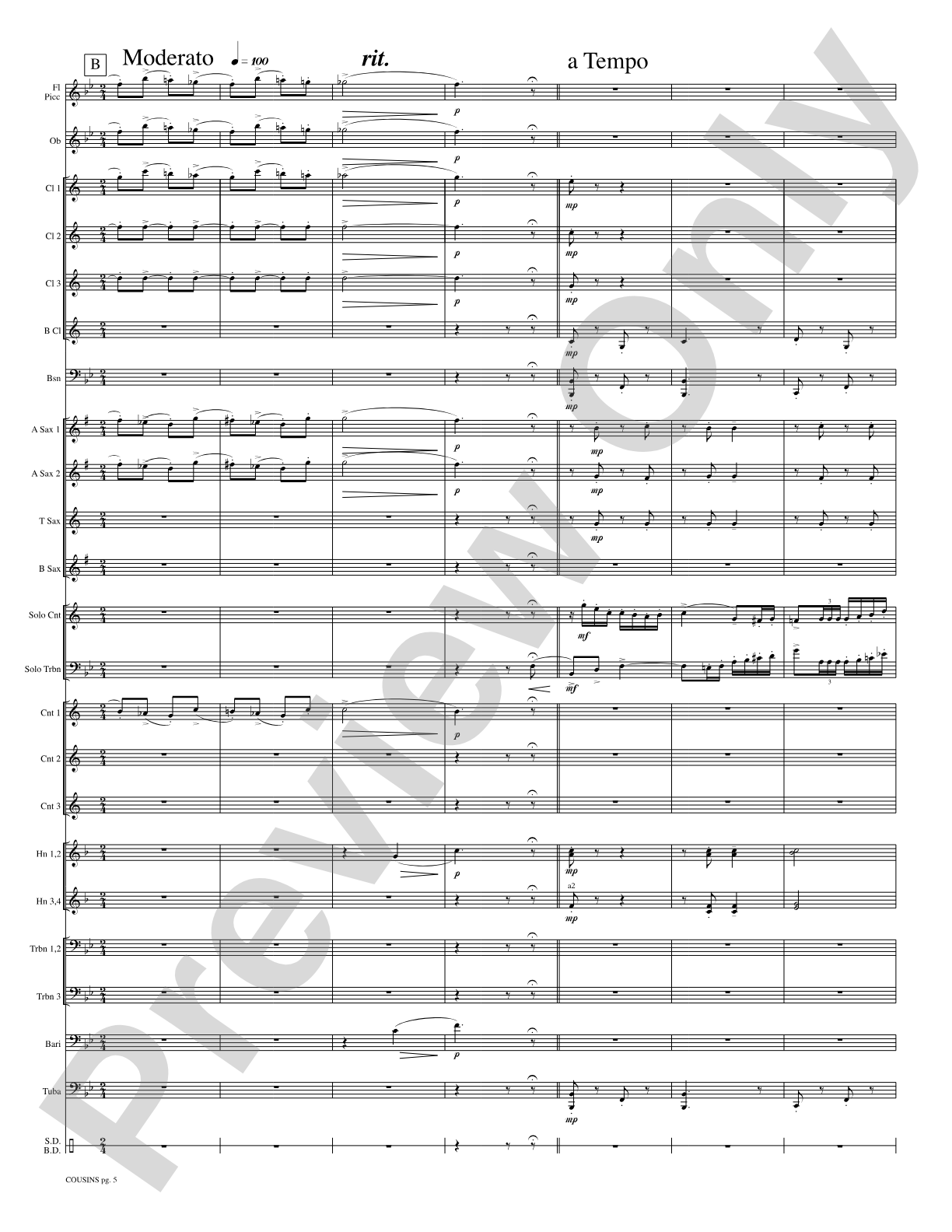
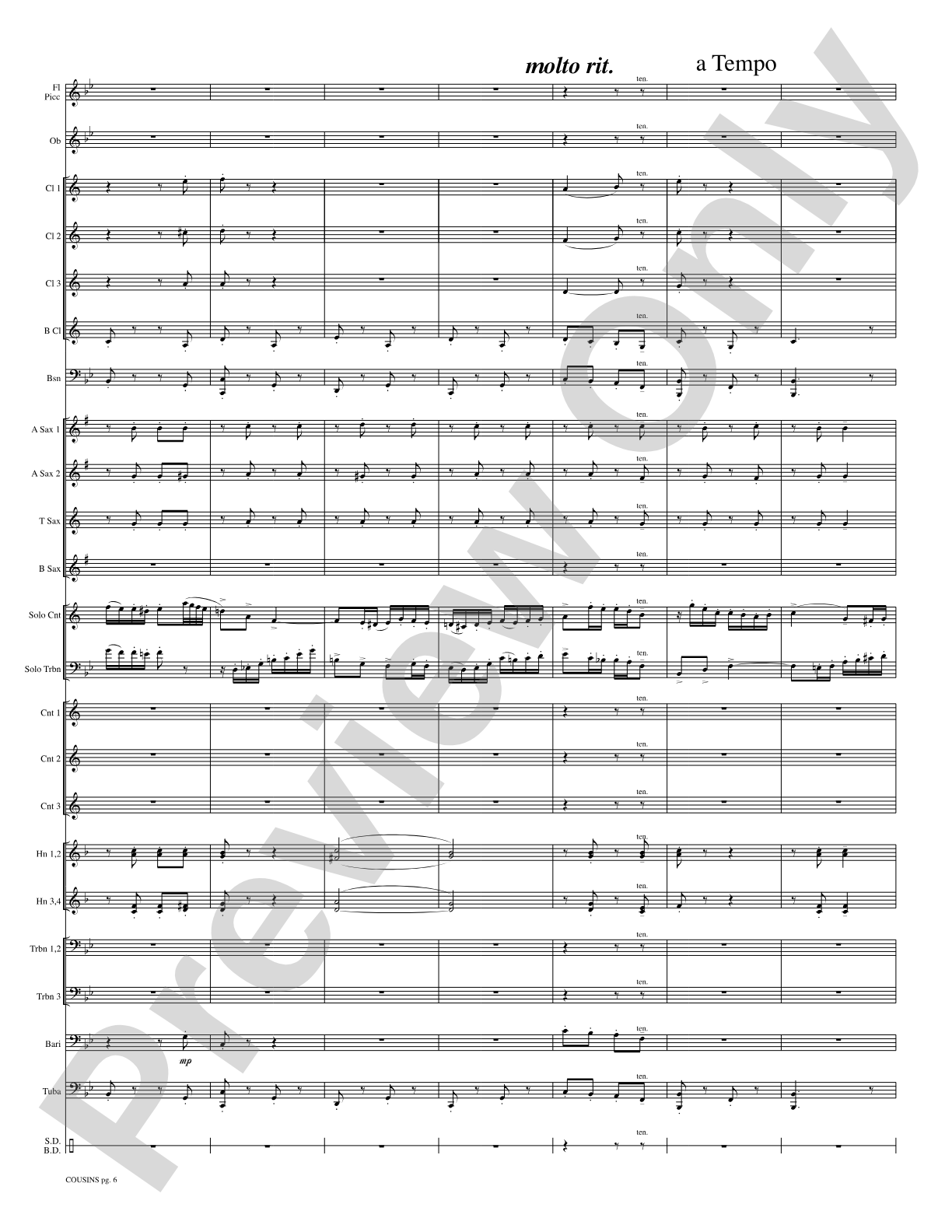
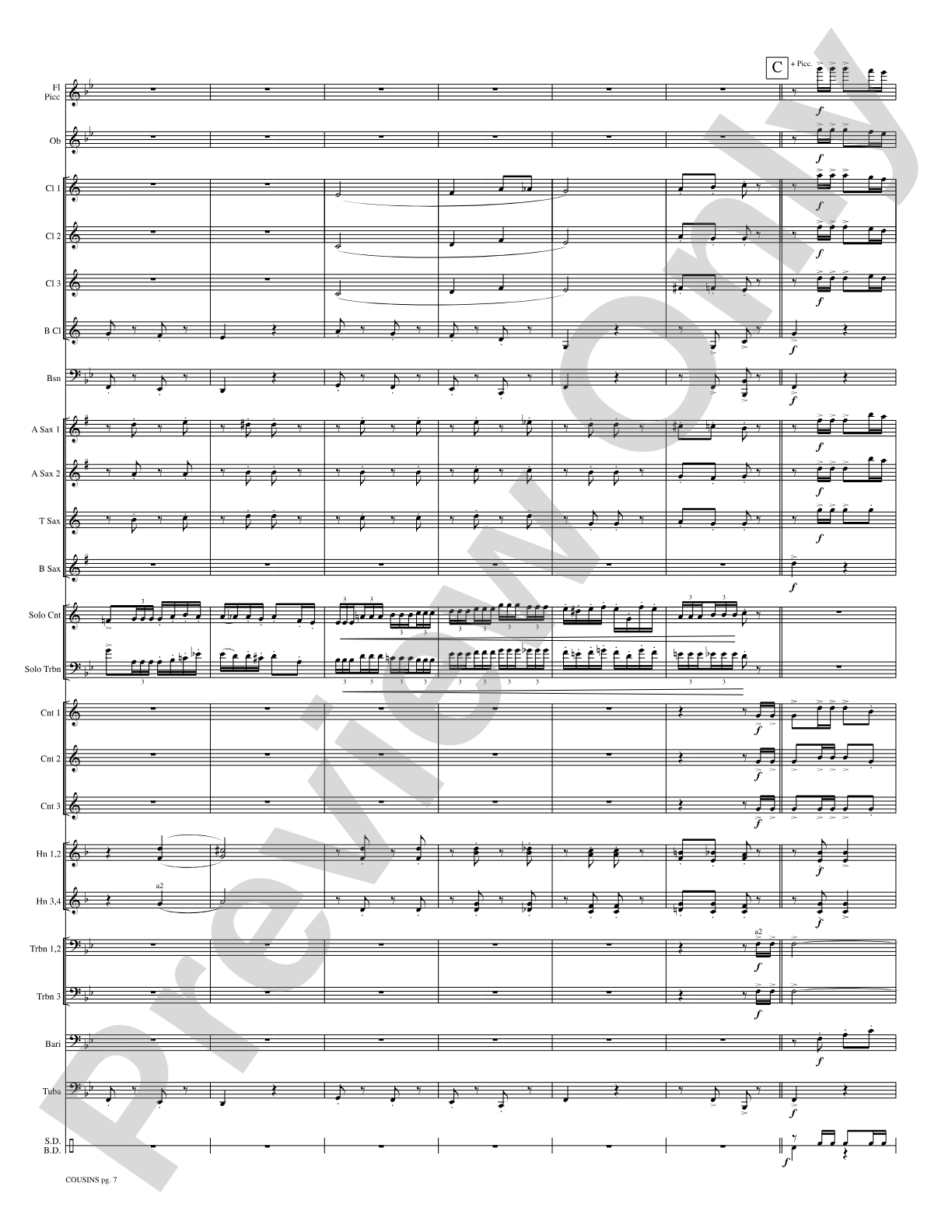
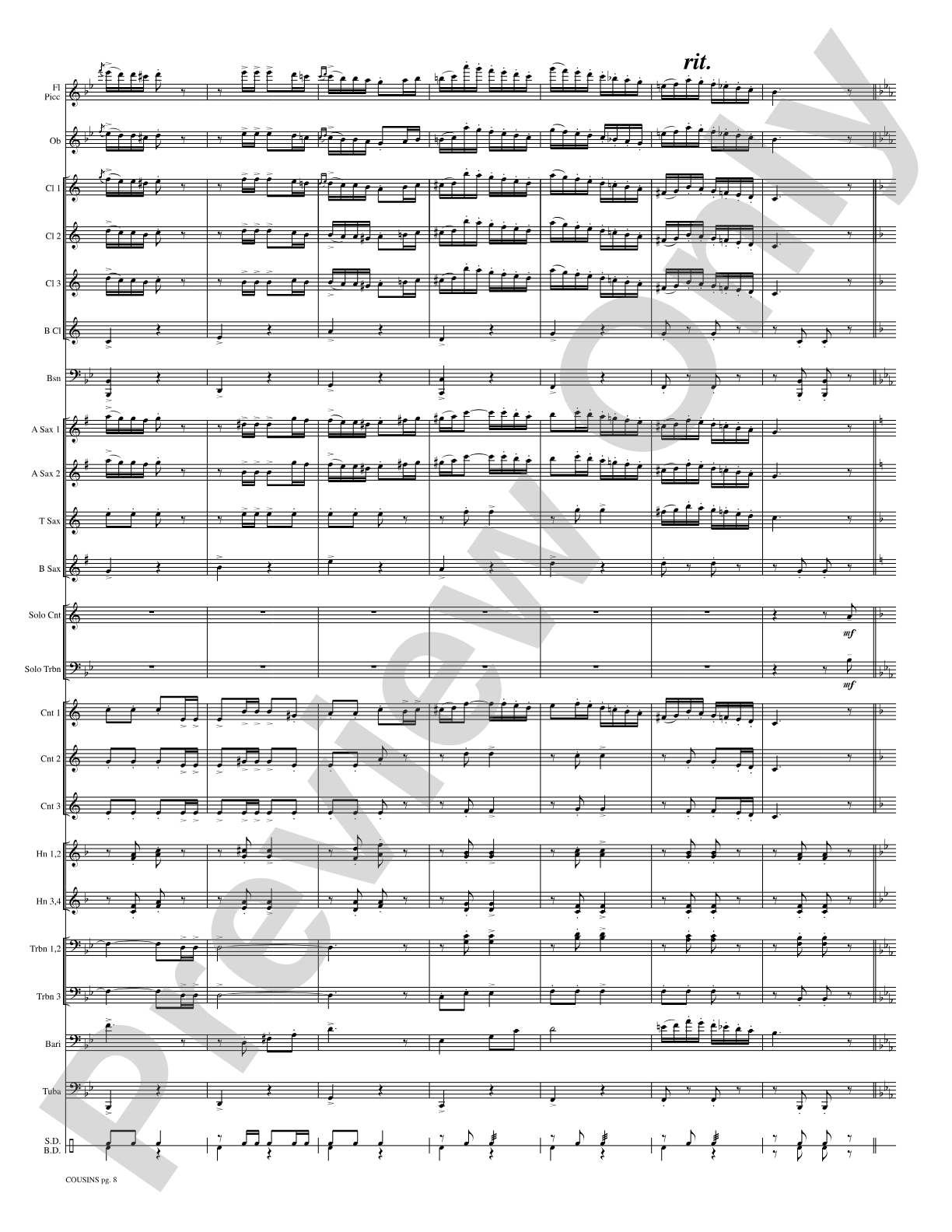
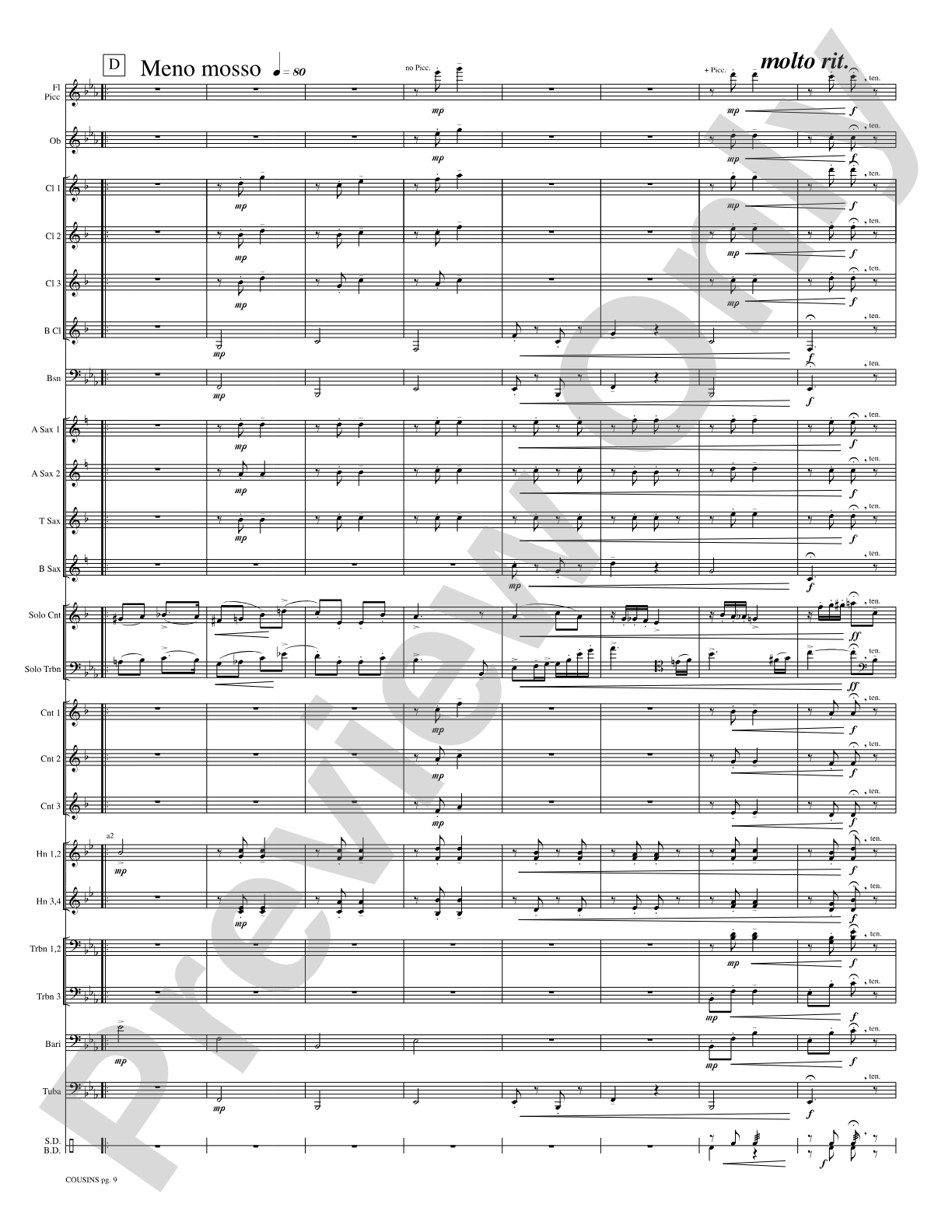
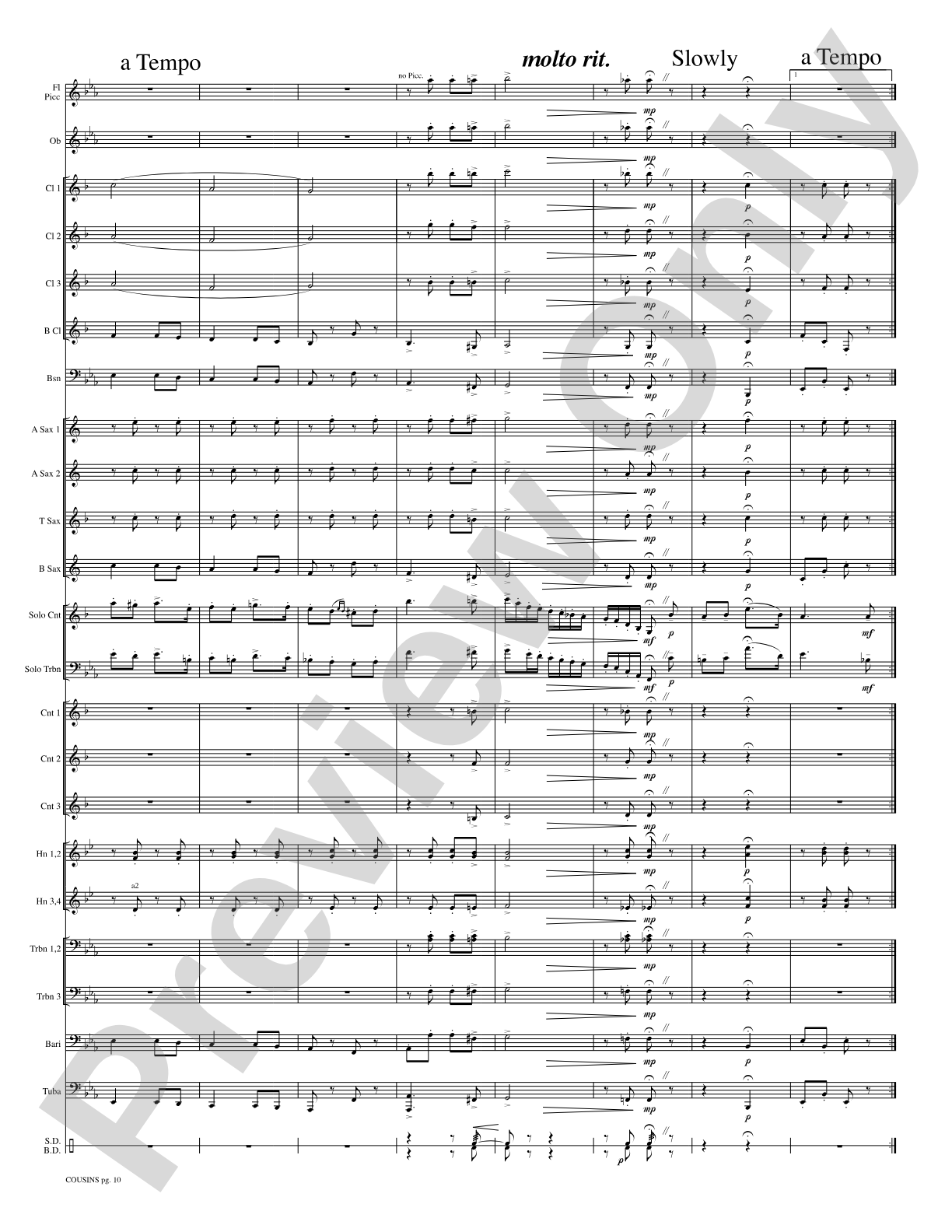
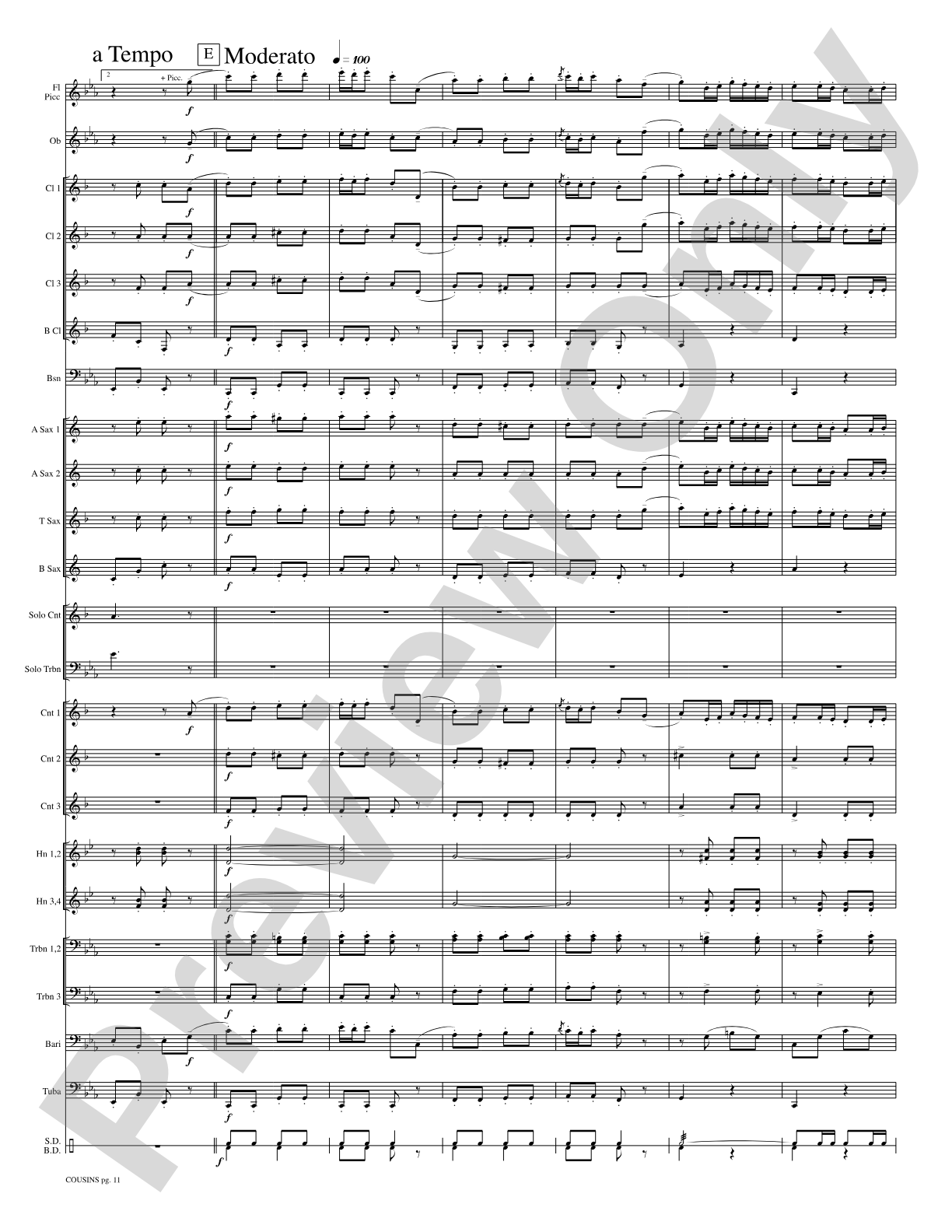
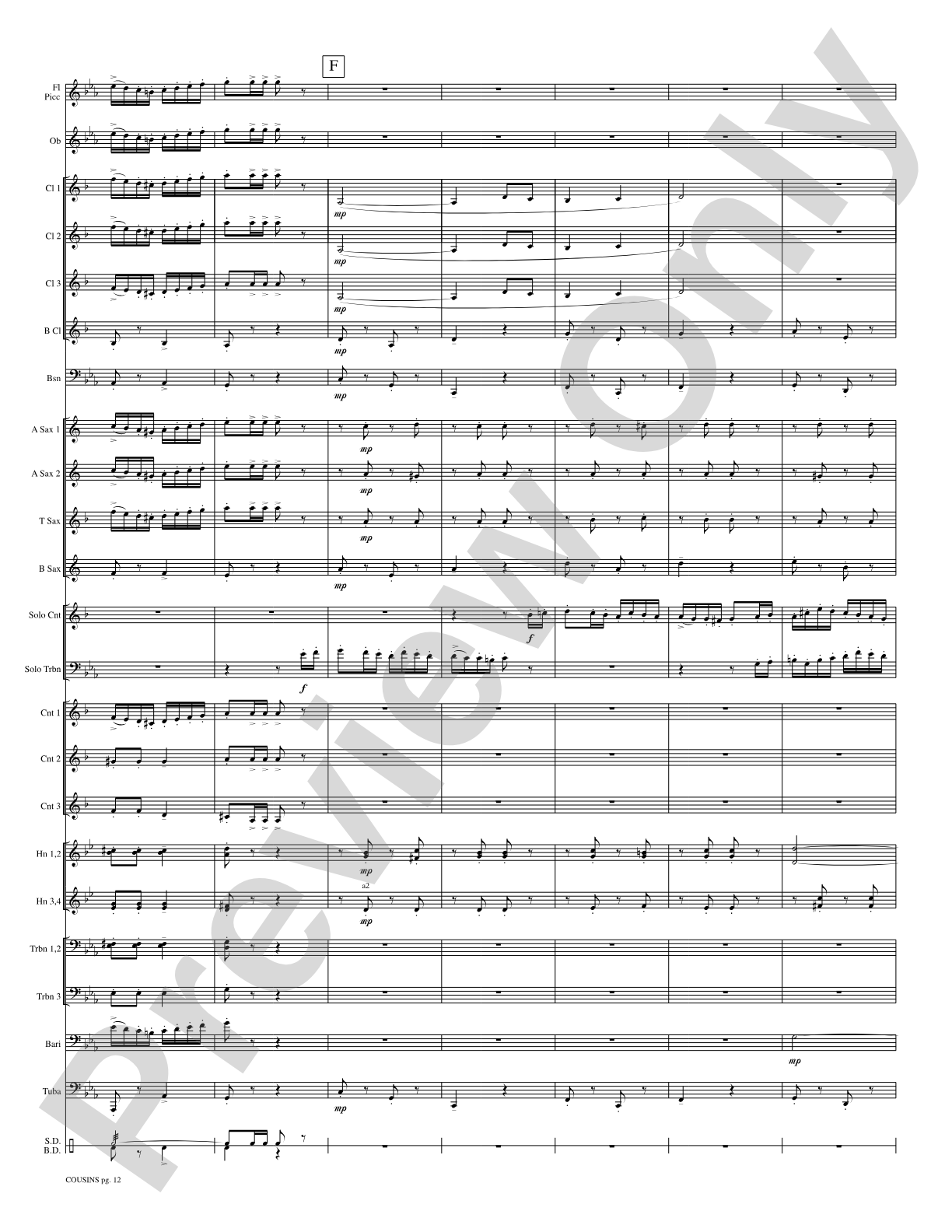
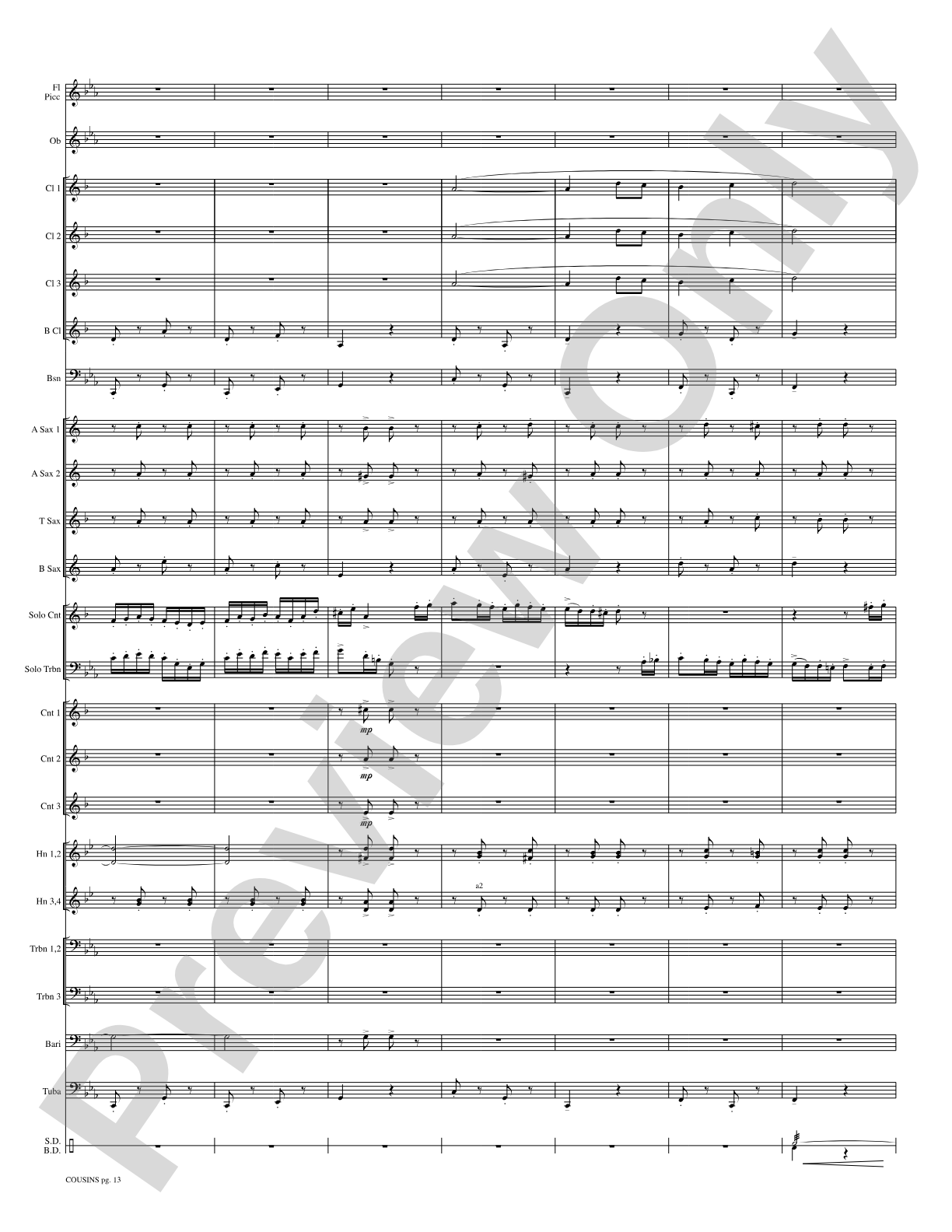
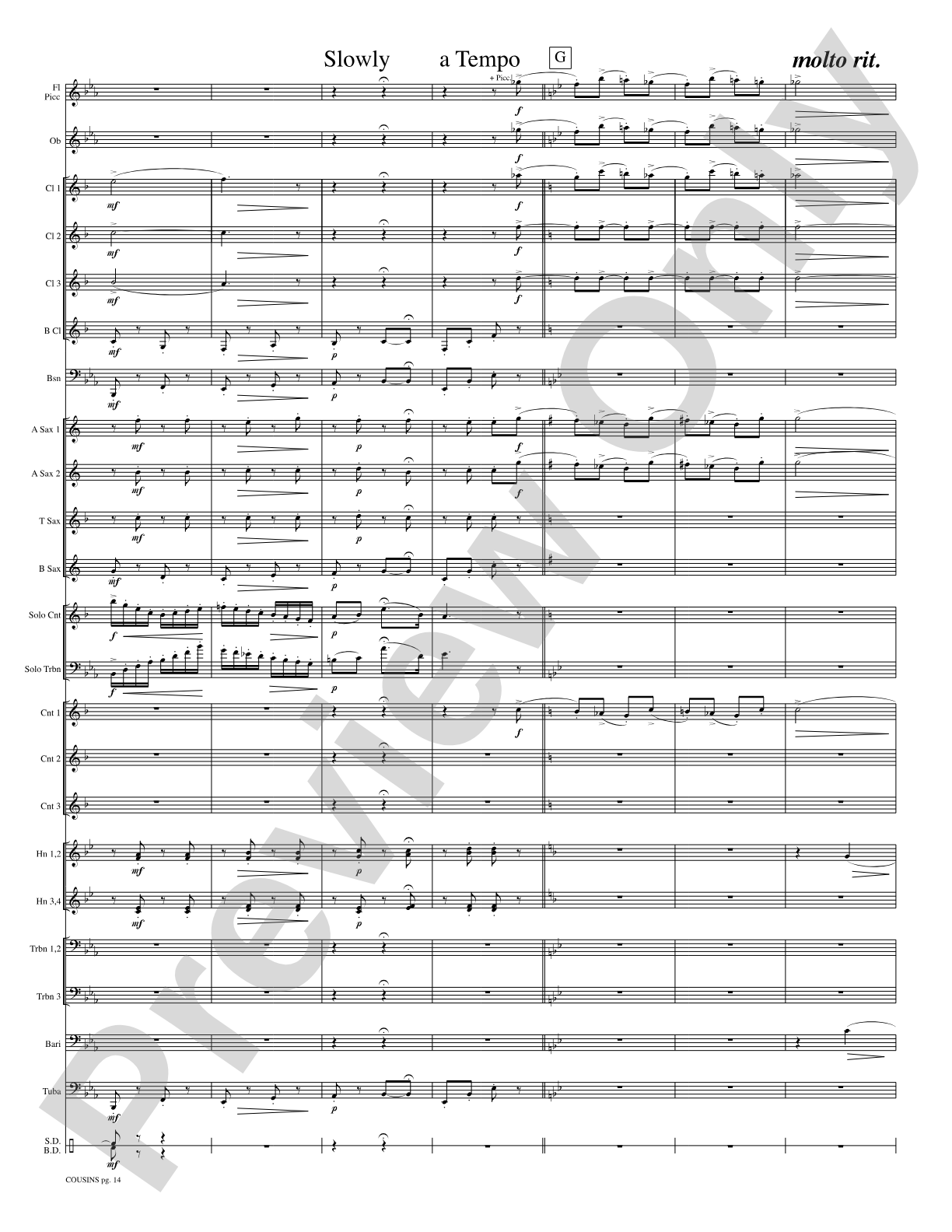
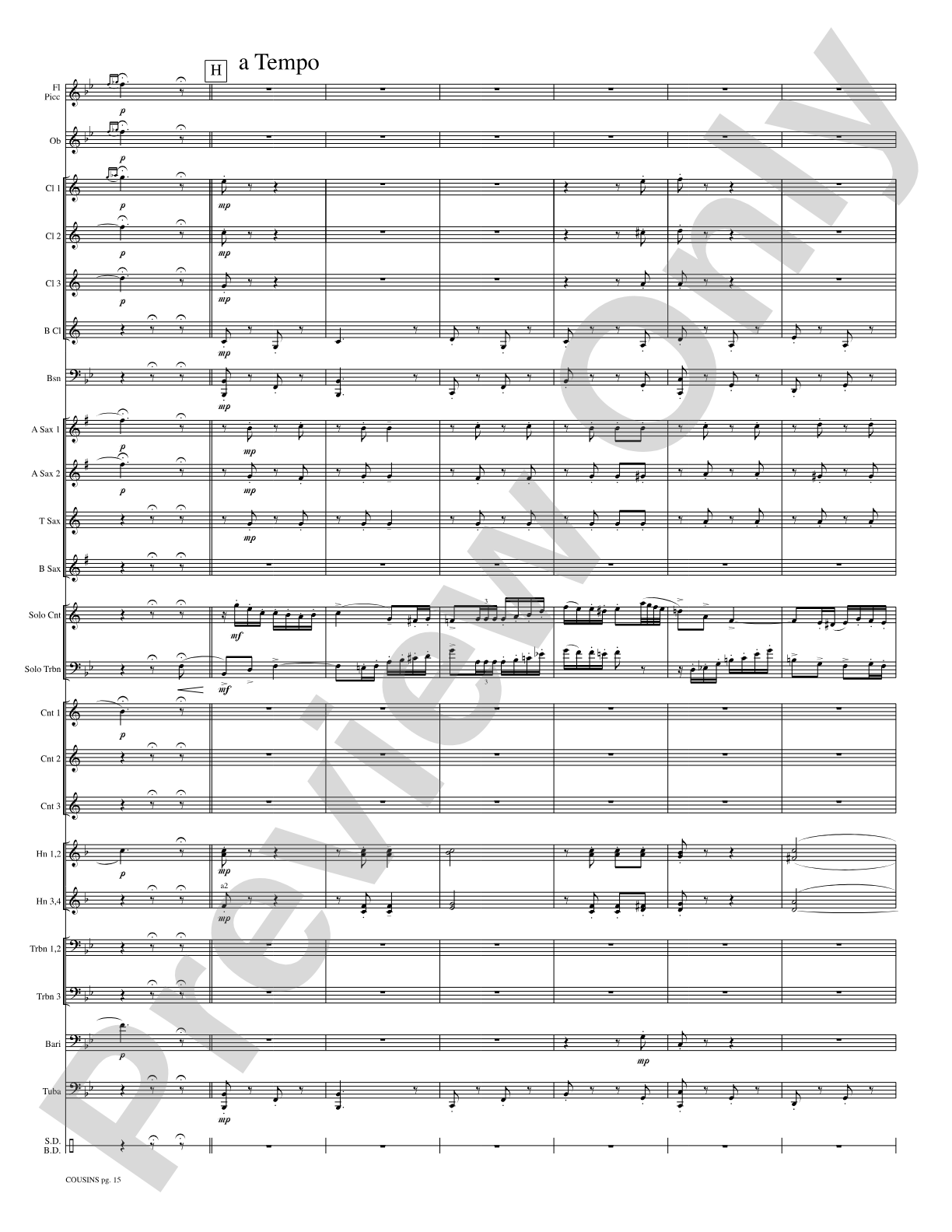
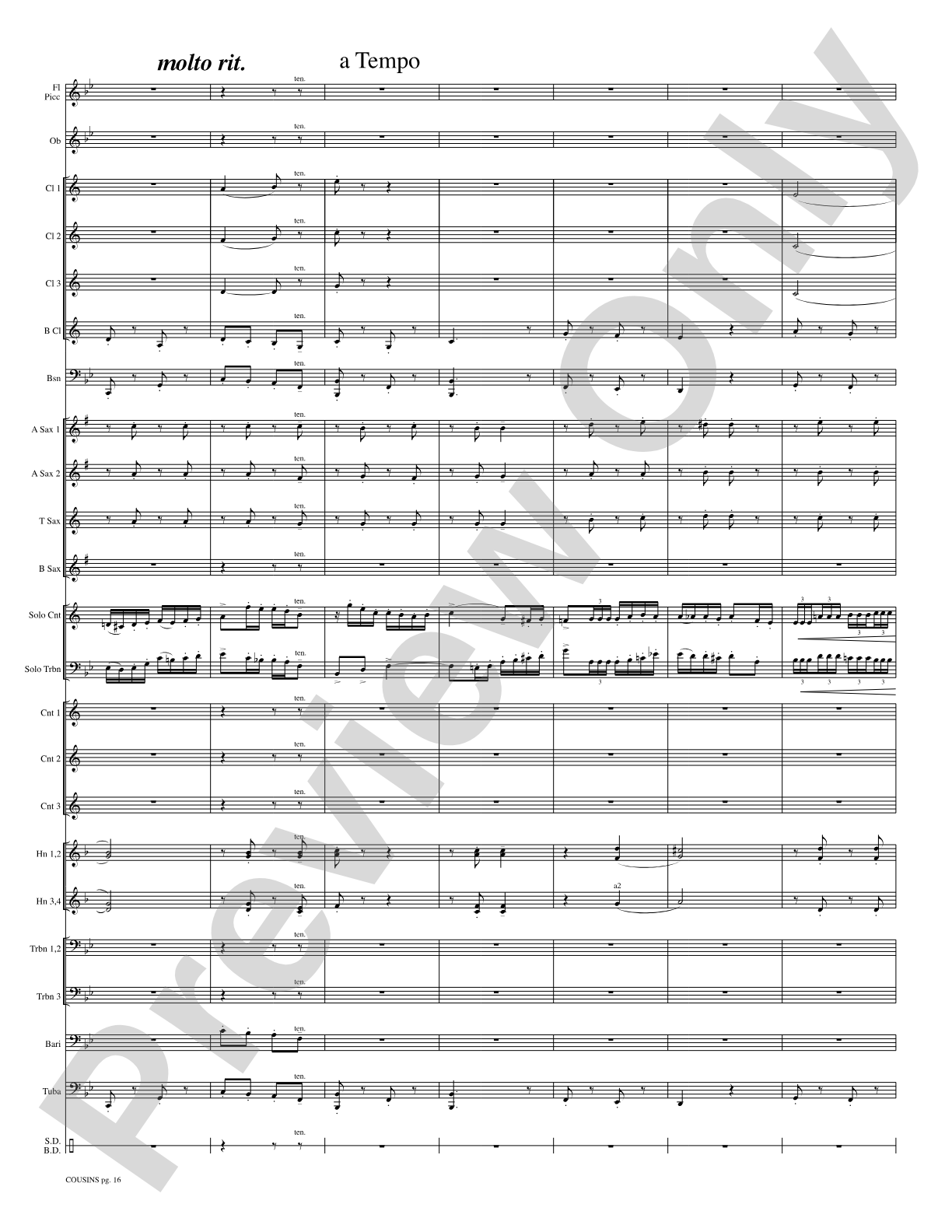

Cousins (Cornet and Trombone Duet and Concert Band): Concert Band Conductor Score & Parts
Cornet and Trombone Duet and Concert Band
By Herbert L. Clarke / arr. David Marlatt
Grade: 4
Item: 81-PK-0000011
$65.00
One moment…
Description
Clarke wrote Cousins, a cornet and trombone duet with band accompaniment in 1904 for himself as the cornet soloist and Leo Zimmerman as the trombone soloist.
To create a clean new edition, dynamics and articulations were made more consistent in the parts. Other items were changed to reflect the bands of today including F Horn parts rather than E-flat and the percussion parts have been reorganized.
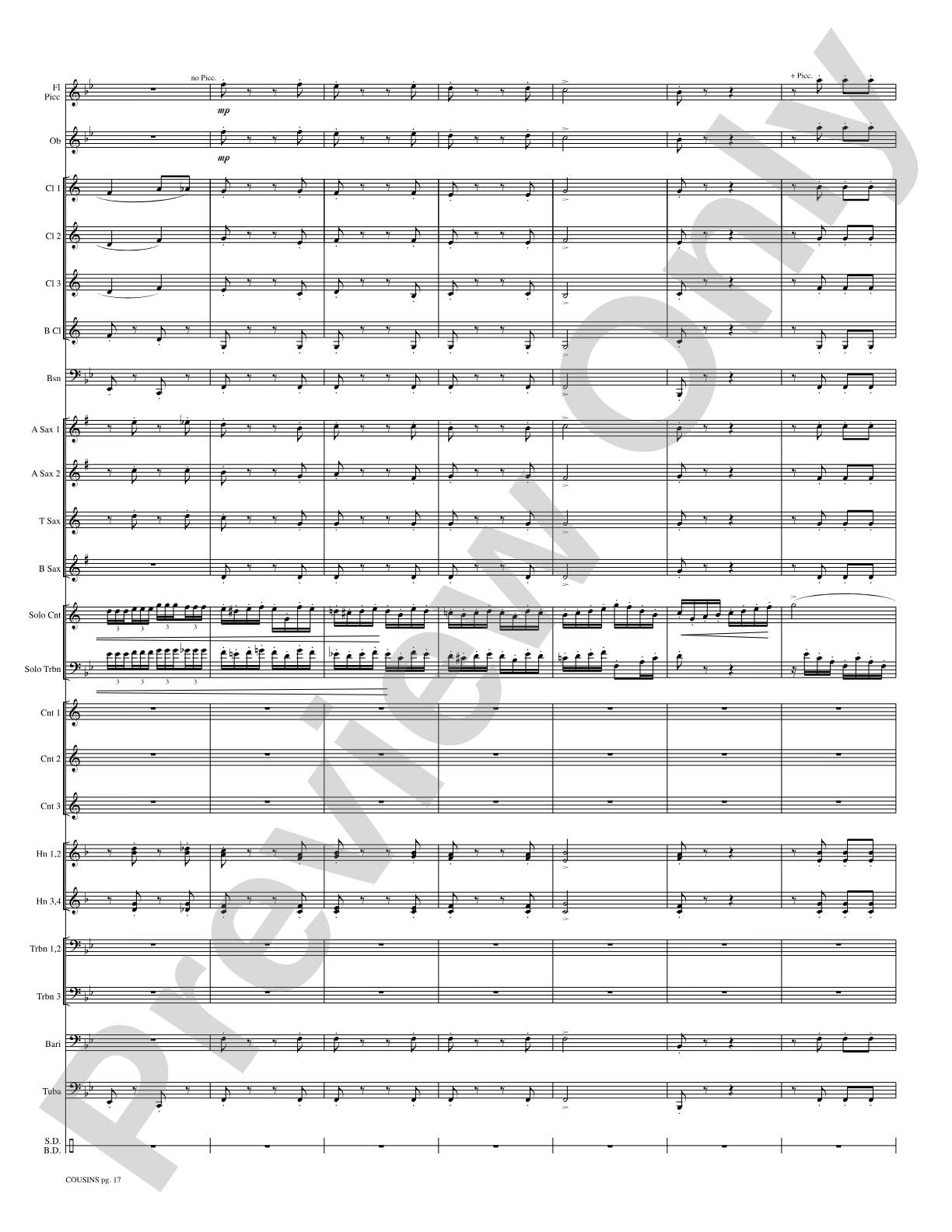
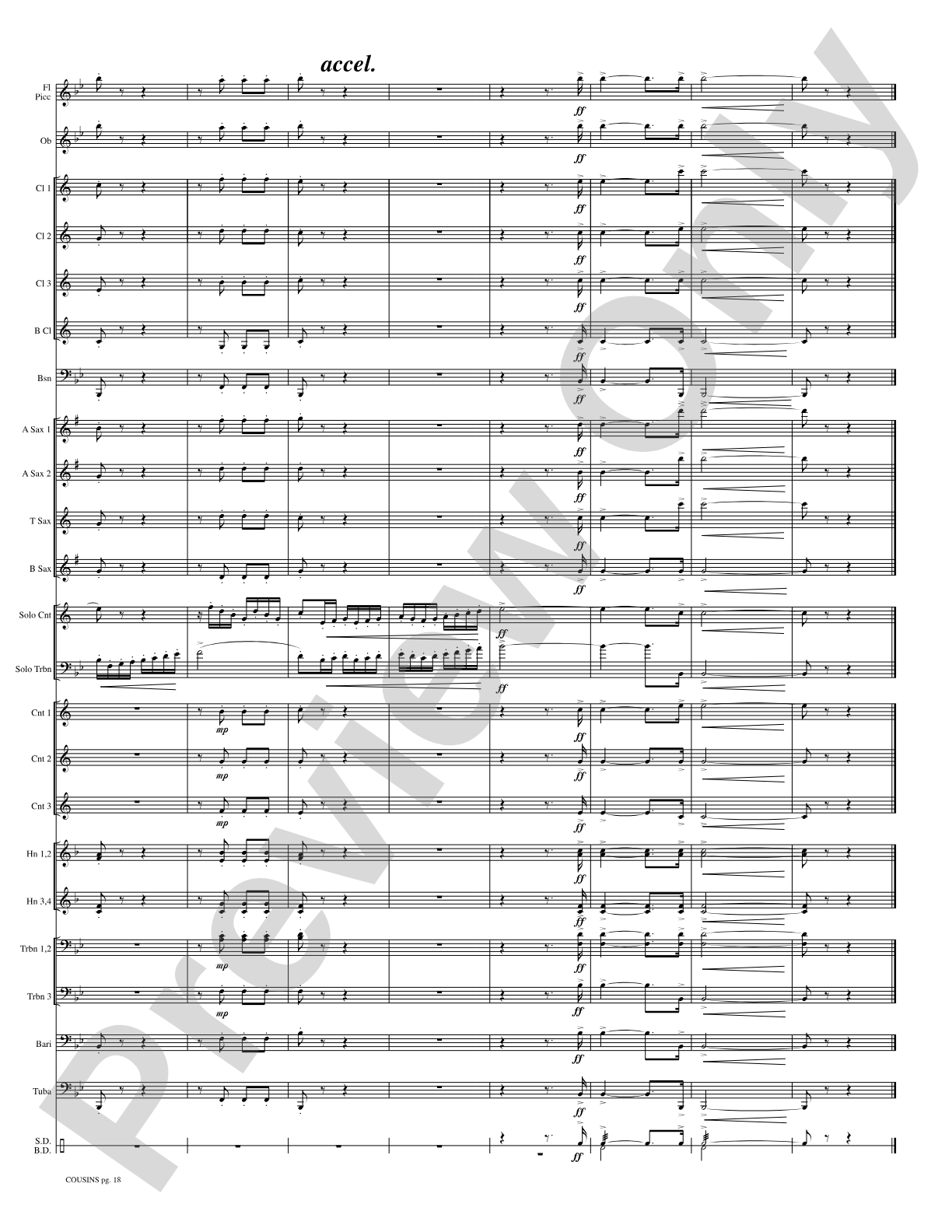
This is the first time this work has been available with a full conductor score rather than a piano reduction.


To create a clean new edition, dynamics and articulations were made more consistent in the parts. Other items were changed to reflect the bands of today including F Horn parts rather than E-flat and the percussion parts have been reorganized.
This is the first time this work has been available with a full conductor score rather than a piano reduction.
Cousins (Cornet and Trombone Duet and Concert Band): Concert Band Conductor Score & Parts isn't in MakeMusic Cloud just yet...but it could be. Let us know you'd like to see it, and you'll help shape what comes next. In the meantime, start a free trial and dive into thousands of interactive titles your students can play along with today.
Request This Title
Tell us you want it.
Start Your Free Trial
Explore everything that's ready to play right now.
Sample Audio
1
Audio File
--:--
0:00
0:00
Sample Video
No sample videos found.
Additional Details
Series:
Eighth Note Publications
Publisher:
Eighth Note Publications
Page Count:
236
SKU:
81-PK-0000011
More about this title
About the Composer: Herbert L. Clarke
Herbert L. Clarke (1867-1945) was one of the most celebrated cornet soloists of his era and a prolific composer of brass music. His technical mastery of the cornet informed every work he wrote for the instrument, and his compositions remain core repertoire for brass musicians seeking to develop velocity, control, and musical sophistication. Clarke's output spans concert pieces, pedagogical works, and chamber music; his influence on brass writing extends well beyond his lifetime.
Why we love this
Clarke composed this duet with two specific soloists in mind, and that specificity shows in every phrase. The band writing creates genuine partnership with the soloists rather than mere accompaniment, making this a rewarding experience for your section players and a genuine feature piece that audiences recognize as substantial concert literature. The new full conductor score (rather than a piano reduction) gives you clear sight lines to both balance and the inner workings of the arrangement.
What to expect
Cousins pulses with Victorian-era vigor and technical display. The soloists trade ideas in a conversational, almost playful manner, their lines ornamented and spirited, while the band provides warmth and rhythmic drive. It's music designed to showcase individual brilliance without sacrificing ensemble cohesion.
Who it's for
This work suits mature concert bands at the Grade 4 level with capable soloists on both cornet and trombone. The piece rewards orchestras with balanced sections and attentive ensemble listening, making it ideal for groups ready to feature soloists within a full band context.
How to get the most out of it
- Establish the solo line balance early in rehearsal. The cornet and trombone parts sit at different registers, so work with your soloists on projection without forcing; the band should support rather than overshadow them.
- Lock the rhythmic foundation in the lower brass and winds before bringing in tutti passages. Clarke's harmonic movement depends on steady pulse, especially in the accompaniment figures.
- Address the updated F horn parts carefully if your players are accustomed to E-flat notation. Make sure transposition is secure before full section rehearsals.
- Shape the band's dynamic contours to frame the soloists' phrases. Listen for moments where the accompaniment should breathe or recede to highlight a solo turn.
How to use it
Feature this as a strong mid-program work alongside other Clarke masterworks or pair it with contrasting contemporary band pieces to frame its historical importance. The dual solo opportunity makes it particularly effective for a concert highlighting section leaders or celebrating your band's technical depth.
Skills your students will build
- Balancing soloists against ensemble accompaniment
- Executing consistent articulation in fast passagework
- Maintaining subdivided rhythmic accuracy in supporting figures
- Reading and executing dynamic markings that shape musical phrasing
- Transposing between F and E-flat horn notation
- Listening across the ensemble to support featured lines