
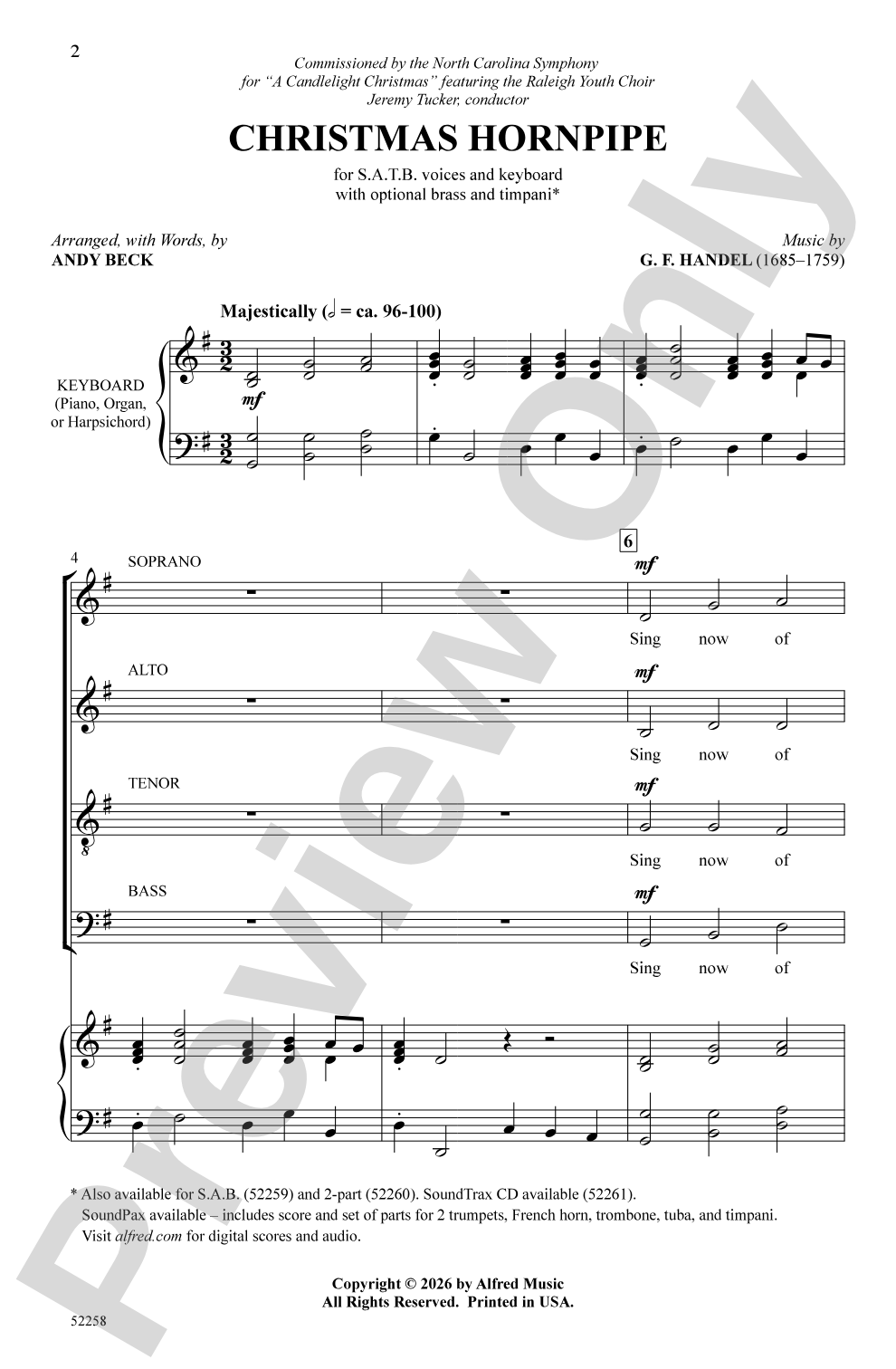
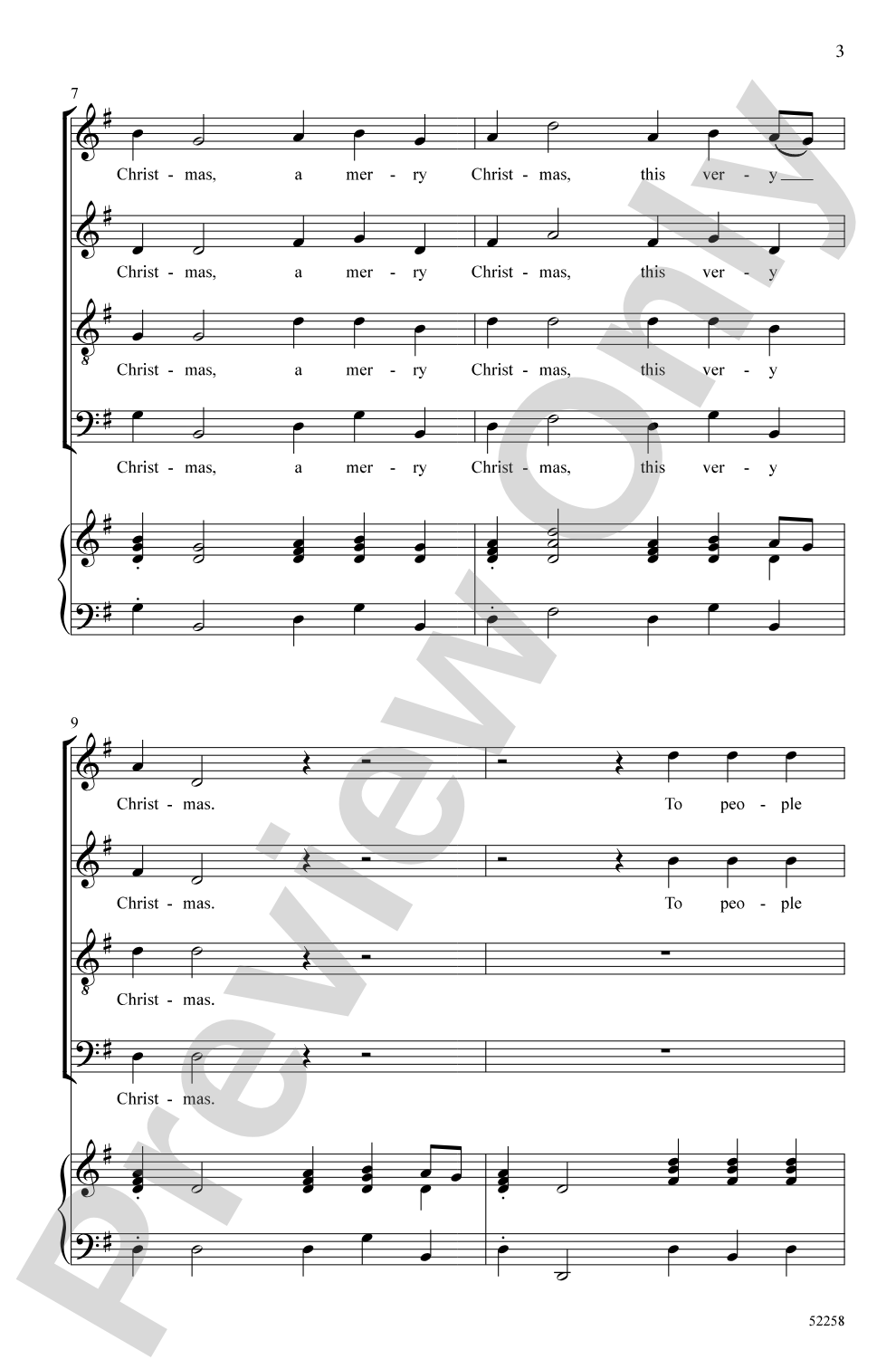
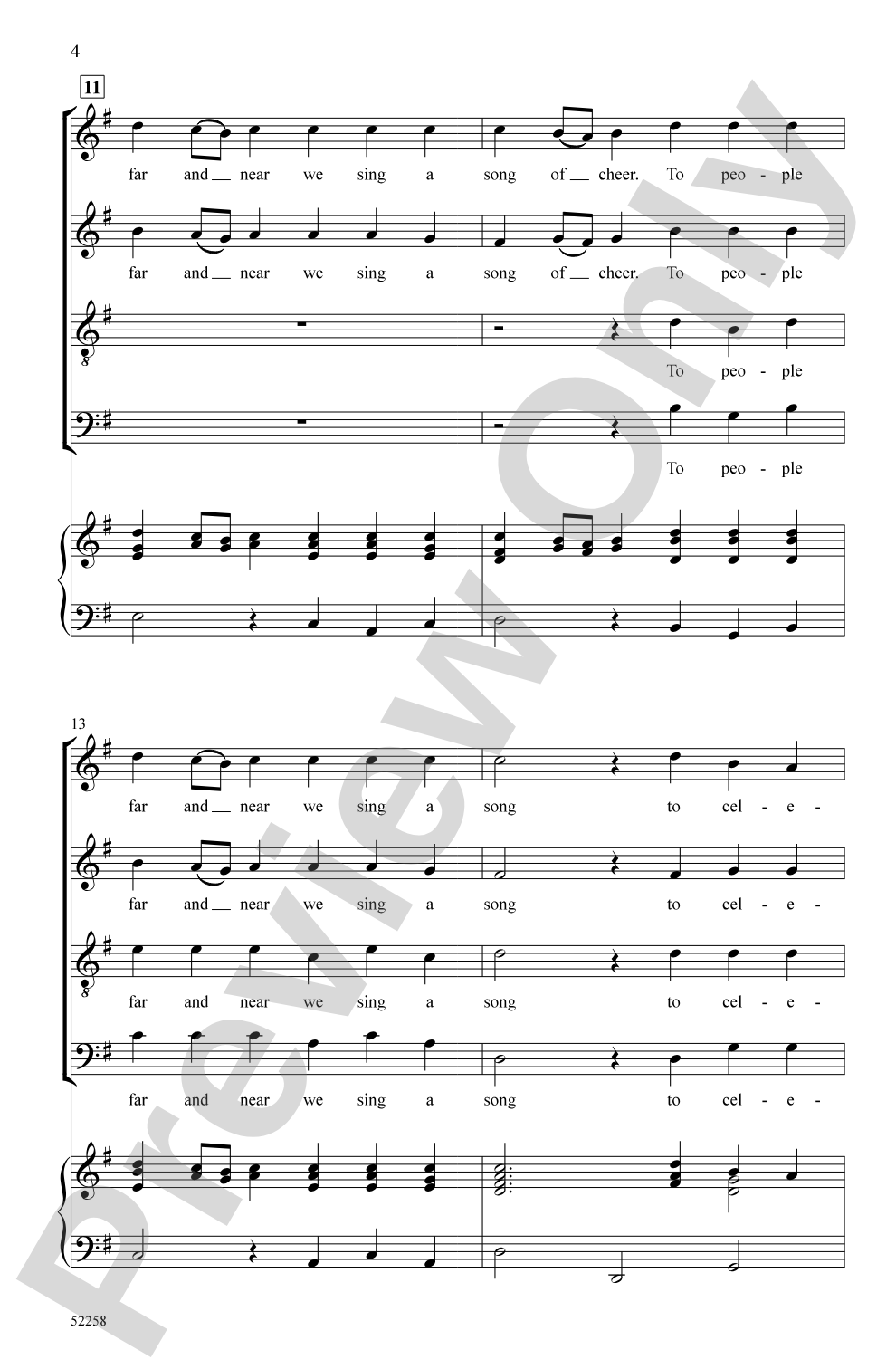

Christmas Hornpipe: SATB Choral Octavo
Music by G. F. Handel / arr., with words, by Andy Beck
Item: 00-PO-0007845
$2.50
Minimum order quantity: 20 copies
Pickup currently not available
Related Items
Christmas Hornpipe: SAB Choral Octavo |
$2.50
|
View | |
Christmas Hornpipe: 2-Part Choral Octavo |
$2.50
|
View | |
Christmas Hornpipe: Choral SoundPax Digital Download |
$30.00
|
View | |
Christmas Hornpipe: SATB Choral Octavo |
$2.50
|
View | |
Christmas Hornpipe: SAB Choral Octavo |
$2.50
|
View | |
Christmas Hornpipe: 2-Part Choral Octavo |
$2.50
|
View | |
Christmas Hornpipe: Choral Octavo SoundTrax CD |
$29.99
|
View |
Description
Handel's famous "Water Music" becomes a spirited holiday fanfare with the addition of a celebratory Christmas text. Buoyant vocal parts, traditional choral writing, and the jaunty hornpipe feel are a natural fit for the season and bring a touch of class to every performance. The flexible form invites you to sing just once through, or use the optional keyboard interlude as a Baroque-style transition before a joyful recapitulation. Elevate the majestic flair with festive brass and timpani (SoundPax sold separately).


Christmas Hornpipe: SATB Choral Octavo isn't in MakeMusic Cloud just yet...but it could be. Let us know you'd like to see it, and you'll help shape what comes next. In the meantime, start a free trial and dive into thousands of interactive titles your students can play along with today.
Request This Title
Tell us you want it.
Start Your Free Trial
Explore everything that's ready to play right now.
Sample Audio
1
Audio File
--:--
0:00
0:00
Sample Video
Additional Details
Series:
Alfred Choral Designs
Publisher:
Alfred Music
Page Count:
12
SKU:
00-PO-0007845
More about this title
About the Composer: Georg Friedrich Handel
Georg Friedrich Handel (1685-1759) was a German-born composer who spent most of his career in England, where he became the dominant figure in Baroque opera and orchestral music. His instrumental works, including the famous Water Music suites, showcase the rhythmic vitality and melodic invention that defined his style and influenced generations of composers who followed.
Handel's gift for writing singable, memorable lines made him equally successful in sacred and secular contexts. His keyboard works, concerti grossi, and dance-inspired pieces remain central to the orchestral and choral repertoire, valued by educators for their formal clarity and their capacity to engage performers and audiences alike.
Why we love this
This arrangement captures the infectious rhythmic drive of the original hornpipe while giving your singers a text that feels genuinely celebratory rather than forced. The familiar Handel melody does the heavy lifting melodically, freeing your ensemble to focus on blend, clarity, and the buoyant character that makes this piece so effective in a holiday program. It's the kind of piece that sounds polished and joyful with moderate rehearsal time.
What to expect
Bright, propulsive, and aristocratic. The hornpipe's characteristic rhythm drives forward with buoyancy while the traditional choral writing keeps the texture warm and grounded. There's genuine joy in the writing, anchored by Handel's melodic confidence and the organic fit between the baroque dance form and holiday celebration.
Who it's for
This octavo works well for choirs comfortable with four-part writing who want to program something both familiar and festive. It's equally suited to community choirs seeking accessible holiday fare and advanced ensembles looking for a polished, elegant alternative to contemporary seasonal music.
How to get the most out of it
- Shape the hornpipe rhythm with precision and consistent articulation; the jaunty character lives in rhythmic clarity rather than slow interpretation.
- Let the keyboard interlude serve as a genuine interpretive pause. Use it to reset tempo and energy before the recapitulation, giving the repeat a fresh, accelerated feel.
- Balance the parts so the melodic line stays audible without requiring sopranos to push. The upper voices carry the Handel tune, but full SATB blend creates the festive texture.
- If adding the optional brass and timpani, rehearse with them early. Their brightness transforms the energy and sets the tempo and style expectations for your singers.
How to use it
Program this as the opening or closing number on a holiday concert where it can showcase your choir's command of style and articulation. Its relatively short length and cheerful character make it an ideal bridge between weighty seasonal works and contemporary selections, or pair it with other Baroque arrangements to create a thematic set.
Skills your students will build
- Baroque stylistic interpretation, particularly articulation and rhythmic precision in dance forms
- Four-part voice leading and blend in a traditional SATB texture
- Maintaining rhythmic drive while singing with text clarity
- Performing optional harmonic structures and key relationships in the Baroque idiom