Chilli Salsa Cover Image

Chilli Salsa: String Orchestra Conductor Score

$7.00 USD
Sale price  $7.00 USD Regular price 
Skip to product information
Chilli Salsa Cover Image

Chilli Salsa: String Orchestra Conductor Score

By Loreta Fin

Grade: 1.5-2

Item: 76-32799S

$7.00
Shipped

One moment…

Description
Syncopated rhythms require the musician to “feel” rather than “read” the notes. However, recognizing the “look” of a rhythm is helpful and indeed essential in order to be able to sight-read well. Similarly, the placement of accents can alter a very simple rhythm and turn it into a more complicated sounding one. This piece utilzses accents and different groupings of quavers to discover the wonderful rhythms used in Salsa music and dance. The key is G Major, so the first two basic finger patterns are reinforced. Most of the rhythms can be taught in groups, for example, the violins and violas play the same rhythm, against the celli and basses playing another, making the piece quick to teach in a busy term or semester. Simple percussion could be added to give this piece a real South American feel. (1:37)

Chilli Salsa: String Orchestra Conductor Score isn't in MakeMusic Cloud just yet...but it could be. Let us know you'd like to see it, and you'll help shape what comes next. In the meantime, start a free trial and dive into thousands of interactive titles your students can play along with today.

Sample Pages

Sample Audio
No sample audio found.
Sample Video
Additional Details
Series: Wilfin String Orchestra: Young String Ensemble Series
Publisher: Wilfin Music
Page Count: 8
UPC: 038081357089
SKU: 76-32799S

More about this title

About the Composer: Loreta Fin
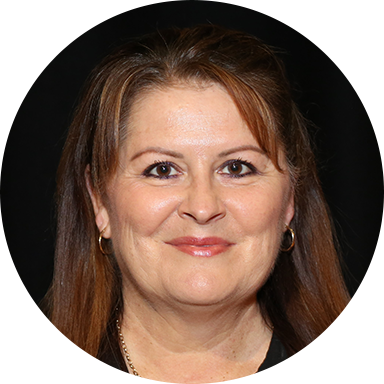
Loreta Fin

Loreta Fin AM is an Australian violist and string educator with deep roots in professional performance and music advocacy. A graduate of the Sydney Conservatorium of Music, she served as a first violinist with the Sydney Youth Orchestra and has maintained a career performing chamber music and orchestral concerts across Australia. For over 25 years, she has held the position of Principal Viola player with the Queensland Pops Orchestra and directed the strings program at Somerville House School in Brisbane since 1993.

Fin has become a leading voice in Australian string education through her work as an adjudicator, conference presenter, and composer of over 100 published works for string ensemble. She served on the Australian Strings Association committee for more than 25 years, including terms as State and National President, and was honored with a Queensland State Award for her contributions in 2009. In recent years, she has conducted the State and National Honours Ensembles Programs in Brisbane and received the National Award for Services to Music and String Teaching. Her publications include a Beginner String Ensemble Series designed to develop young musicians systematically.

Why we love this

Fin designs this piece with the teaching schedule in mind: rhythms are built so that multiple string sections can be taught simultaneously (violins and violas together, cellos and basses together), which accelerates rehearsal efficiency without sacrificing musical interest. The syncopated salsa idiom gives students genuine cultural music to engage with while the strategic use of accents demonstrates how rhythmic placement transforms simple patterns into compelling grooves.

What to expect

The piece pulses with the swagger of salsa music, where syncopated rhythms create forward momentum despite the relatively simple notation. Accents sparkle across the strings, turning straightforward quaver patterns into the sophisticated grooves that drive Latin dance, while the G Major tonality keeps everything bright and accessible for young players.

Who it's for

This conductor score serves string orchestras at early intermediate level (Grades 1.5-2) that are ready to work with syncopation and cross-rhythmic figures but still need to build fluency with fundamental patterns. It's ideal for ensembles introducing style-specific repertoire and working with directors who want to teach efficient sectional rehearsal strategies.

How to get the most out of it

  • Establish the pulse physically before addressing the syncopations. Have students tap the fundamental beat while sections learn their rhythmic figures, anchoring them to the underlying meter before the accents layer on top.
  • Isolate the rhythmic relationships between violin/viola and cello/bass parts by rehearsing these pairs independently, then bringing them together. This builds confidence in maintaining independent rhythms and prevents the ensemble from defaulting to unison.
  • Treat accents as dynamic gestures, not just louder notes. Encourage string players to think of accented figures as speech or dance movements, which helps the articulation feel natural rather than mechanical in a salsa context.
  • Consider adding simple percussion (clave or cowbell) even in early rehearsals to anchor the salsa feel and give students an ear for the traditional rhythmic foundation.

How to use it

Program this alongside other culturally grounded early intermediate work to expand students' exposure beyond European classical traditions. At roughly 1 minute 37 seconds, it works perfectly as an energetic concert opener or as a contrasting piece in a program that includes more traditional string repertoire, particularly when you're building a concert theme around world music or dance.

Skills your students will build

  • Syncopated rhythm recognition and execution in a Latin music context
  • Reading and performing rhythmic figures with strategic accent placement
  • Maintaining independent rhythmic lines while listening to contrasting parts (violins/violas against cellos/basses)
  • Understanding how accent and grouping transform the perceived complexity of simple note patterns
  • G Major tonality and first and second finger patterns on strings

You May Also Like