

Chatter with the Angels: SATB Choral Octavo
Traditional Spiritual / arr. Greg Gilpin
Item: 00-PO-0001819
$1.85
Minimum order quantity: 20 copies
Pickup currently not available
Related Items
Chatter with the Angels: PianoTrax Digital Download |
$9.99
|
View | |
Chatter with the Angels: SAB Choral Octavo |
$1.85
|
View | |
Chatter with the Angels: 2-Part Choral Octavo |
$2.10
|
View | |
Chatter with the Angels: SATB Choral Octavo |
$1.85
|
View | |
Chatter with the Angels: SAB Choral Octavo |
$1.85
|
View | |
Chatter with the Angels: 2-Part Choral Octavo |
$2.10
|
View |
Description
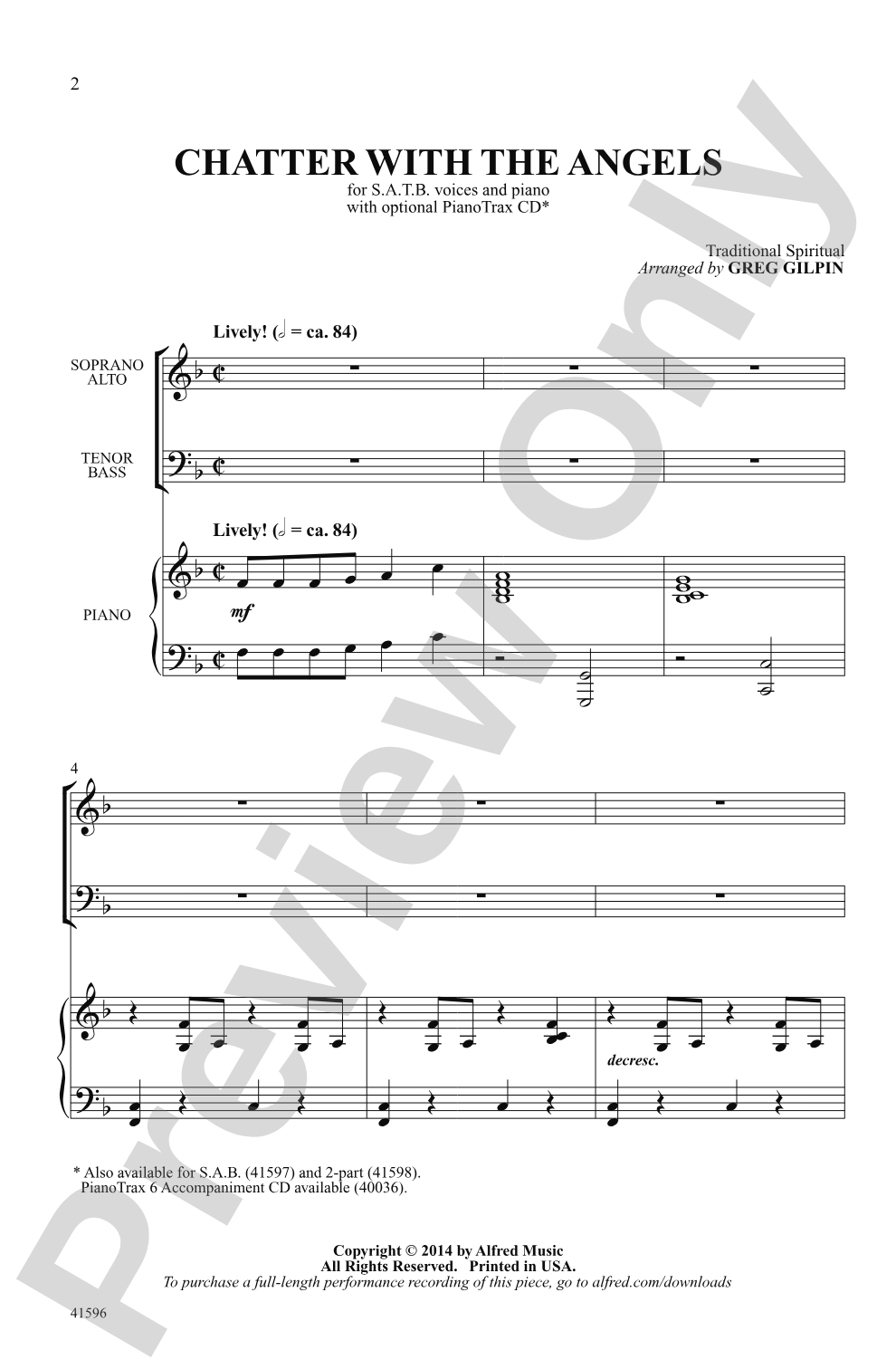
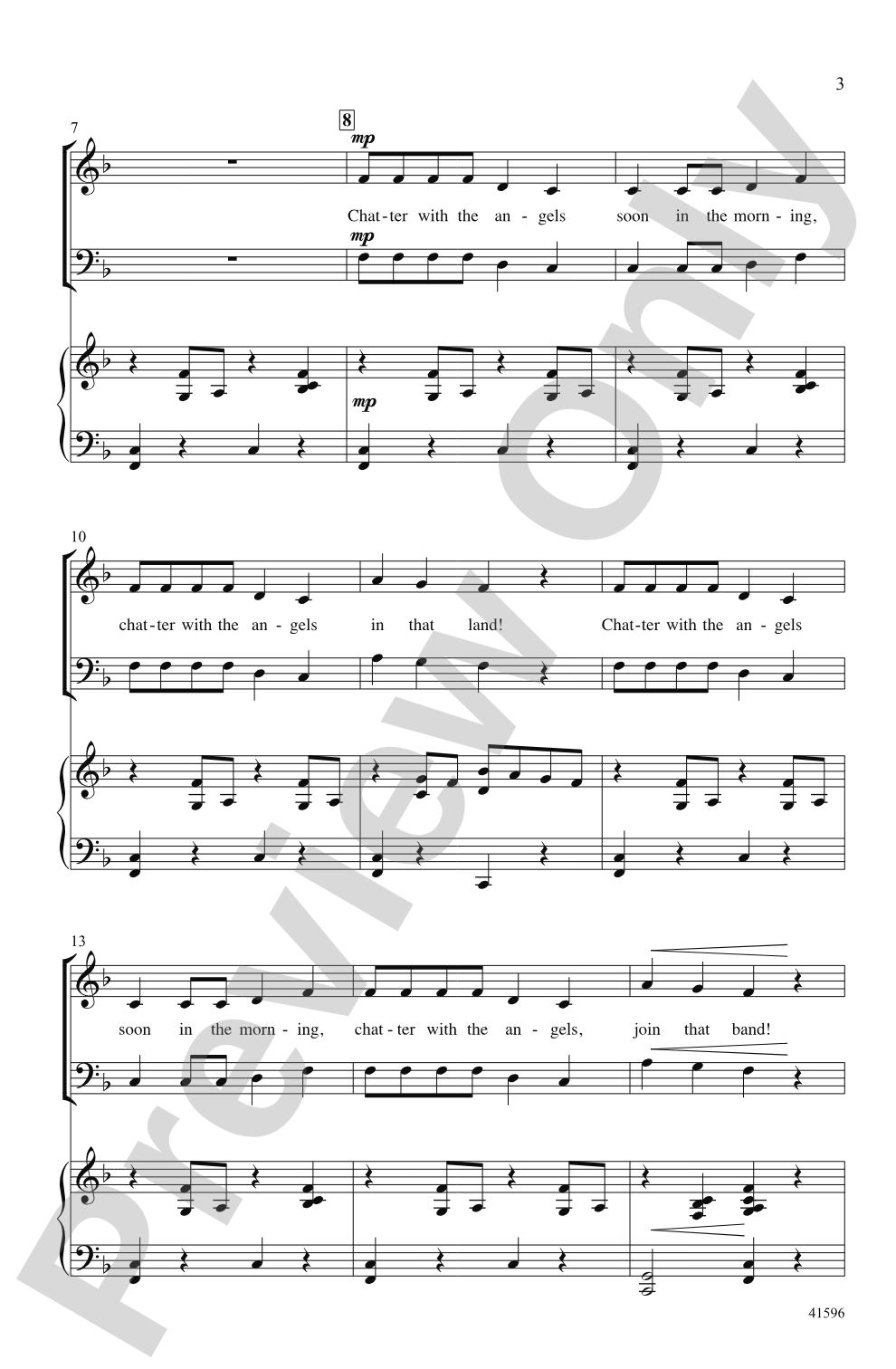
A bouncy piano accompaniment moves this cheerful arrangement along, as the playful melody is passed from voice to voice. Greg has great fun weaving "chatter"s through the choir and modulating to the big finish. Light spiritual repertoire for any group.


Chatter with the Angels: SATB Choral Octavo isn't in MakeMusic Cloud just yet...but it could be. Let us know you'd like to see it, and you'll help shape what comes next. In the meantime, start a free trial and dive into thousands of interactive titles your students can play along with today.
Request This Title
Tell us you want it.
Start Your Free Trial
Explore everything that's ready to play right now.
Sample Audio
1
Audio File
--:--
0:00
0:00
Sample Video
No sample videos found.
Additional Details
Series:
Alfred Choral Designs
Publisher:
Alfred Music
Page Count:
12
SKU:
00-PO-0001819
More about this title
About the Arranger: Greg Gilpin

Greg Gilpin is an ASCAP-award winning composer and arranger whose choral works span concert halls from Carnegie Hall and Lincoln Center to the Sydney Opera House and Royal Festival Hall. As Director of Educational Choral Publications for Shawnee Press, he shapes choral literature for students and professionals alike, and his conducting has shaped ensembles across the United States and internationally.
Beyond the podium, Gilpin's creative reach extends into film scoring (he won Best Score for the 2021 short film "Rosie's Rescue"), recording production, and collaborative projects with renowned artists. He is a member of ACDA, NAfME, SAG-AFTRA, and holds Life Loyal membership in Phi Mu Alpha Sinfonia.
Why we love this
Gilpin's arrangement captures everything that makes spirituals work for young singers: a melody that begs to be passed between sections, accompaniment that drives the energy forward, and compositional choices (the playful weaving of "chatter," the key modulation into the finale) that feel fresh without overwhelming an inexperienced ensemble. This is a piece that practically sings itself once you unlock its rhythm and voice independence.
What to expect
Bright and conversational, like a group of singers discovering joy in harmony. The "chatter" feels organic rather than contrived, and the energy builds naturally from the opening melody through to a satisfying, jubilant conclusion. This arrangement breathes ease while maintaining musical substance.
Who it's for
SATB choirs of all experience levels looking for accessible sacred repertoire with personality. The arrangement works equally well for high school choirs discovering their voices and community or church choirs seeking something contemporary yet grounded in traditional material.
How to get the most out of it
- Establish the bouncy piano accompaniment as your rhythmic anchor in early rehearsals. Let the piano part sit independently for several measures before layering in voices so singers understand where the groove lives.
- Isolate the "chatter" passages by section. Gilpin's orchestration passes these moments around, and clarity matters more than volume. Mark exactly where each voice group enters and exits these interjections.
- Treat the modulation to the final section as a genuine shift in energy and intensity, not just a key change. Lift dynamics and tempo slightly to reflect the compositional architecture.
- Balance the playfulness of the arrangement with musical execution. The arrangement should feel fun to sing, but intonation and precision in the voice-passing sections will make the fun land harder.
How to use it
Open a concert with this piece to set an uplifting tone, or tuck it into a spiritual medley alongside deeper, more contemplative arrangements of the same tradition. The recorded accompaniment makes it perfect for spring festivals or competitions where live piano support may be unavailable. Its brevity and accessibility also make it ideal for introducing newer members to ensemble singing.
Skills your students will build
- Independent voice part singing with melody passing between sections
- Rhythmic precision and ensemble lock with a steady piano accompaniment
- Intonation awareness in unison and harmony passages
- Musical interpretation through dynamic control and textural balance
- Sight-reading of contemporary choral arrangements with minimal harmonic complexity