

Can You Hear the Angels?: 2-Part Choral Octavo
Words and music by Greg Gilpin
Item: 00-PO-0003323
$1.90
Minimum order quantity: 20 copies
Pickup currently not available
Related Items
Can You Hear the Angels?: SoundTrax Digital Audio Download |
$27.99
|
View | |
Can You Hear the Angels?: SATB Choral Octavo |
$2.05
|
View | |
Can You Hear the Angels?: SAB Choral Octavo |
$2.05
|
View | |
Can You Hear the Angels?: SSA Choral Octavo |
$2.05
|
View | |
Can You Hear the Angels?: SATB Choral Octavo |
$2.05
|
View | |
Can You Hear the Angels?: SAB Choral Octavo |
$2.05
|
View | |
Can You Hear the Angels?: SSA Choral Octavo |
$2.05
|
View | |
Can You Hear the Angels?: 2-Part Choral Octavo |
$1.90
|
View | |
Can You Hear the Angels?: Choral Octavo SoundTrax CD |
$27.99
|
View |
Description
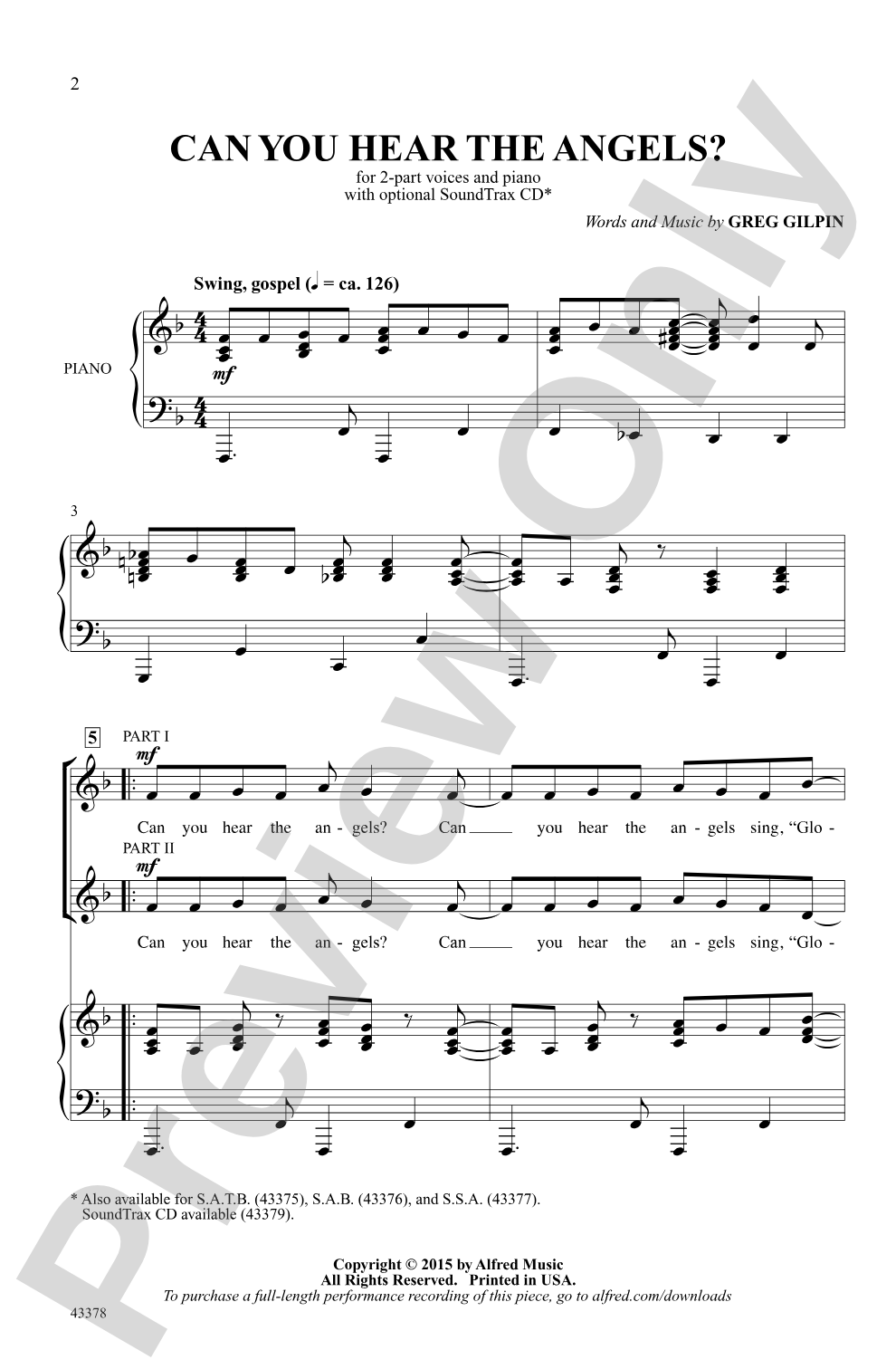
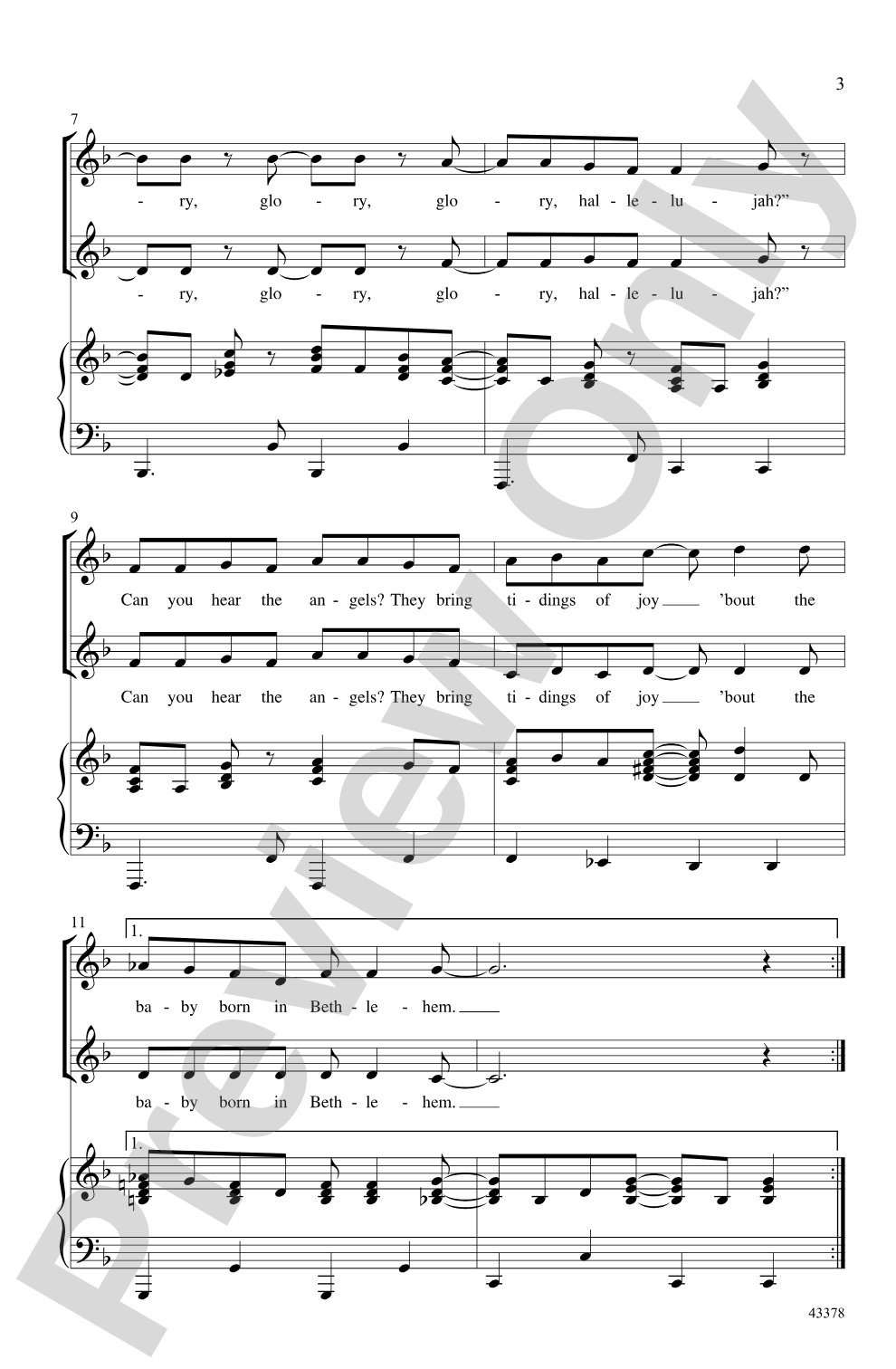
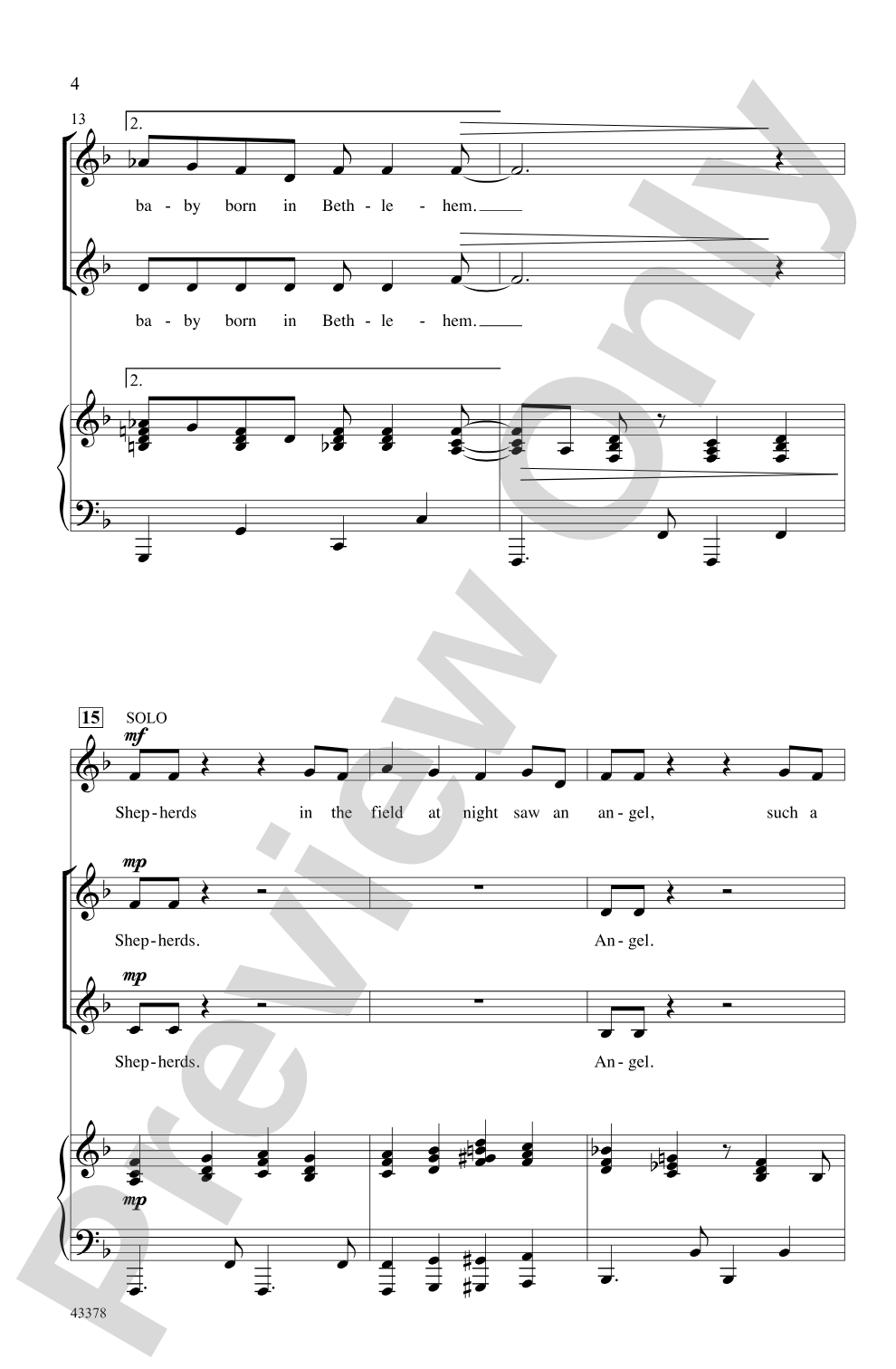
Sing about angels, shepherds, wise men, the star, and "the baby born in Bethlehem" with this spirited original for Christmas. Choirs of any age will sound their best on the gospel harmonies and catchy hook. After a modulating bridge lifts the piece to a higher level, invite your singers (and audience) to add handclaps over the final refrain!


Can You Hear the Angels?: 2-Part Choral Octavo isn't in MakeMusic Cloud just yet...but it could be. Let us know you'd like to see it, and you'll help shape what comes next. In the meantime, start a free trial and dive into thousands of interactive titles your students can play along with today.
Request This Title
Tell us you want it.
Start Your Free Trial
Explore everything that's ready to play right now.
Sample Audio
1
Audio File
--:--
0:00
0:00
Sample Video
No sample videos found.
Additional Details
Series:
Alfred Choral Designs
Publisher:
Alfred Music
Page Count:
12
SKU:
00-PO-0003323
More about this title
About the Composer: Greg Gilpin

Greg Gilpin brings decades of choral conducting and composing experience to music education at the highest level. His work has been performed at Carnegie Hall, Lincoln Center, the Sydney Opera House, and Royal Festival Hall, and he currently serves as Director of Educational Choral Publications for Shawnee Press. Gilpin is an ASCAP award-winning composer whose arrangements and original works are known for their accessibility, energy, and ability to engage singers of all ages.
Beyond the concert hall, Gilpin has expanded his creative practice into film scoring (earning Best Score for the short film "Rosie's Rescue") and professional organizing, demonstrating the kind of versatility that shapes his approach to choral writing. He is an active member of ACDA and NAfME and holds the distinction of Life Loyal Member of Phi Mu Alpha Sinfonia.
Why we love this
Gilpin's gift for writing memorable hooks combined with solid gospel harmonies means your singers will engage immediately and audiences will leave humming the tune. The modulating bridge provides genuine lift without complexity, and the option to add handclaps transforms the final refrain into a communal moment that feels both joyful and inclusive.
What to expect
Bright, energetic, and built on a gospel foundation that feels both contemporary and rooted in tradition. The piece carries genuine joy and invites singers to connect with the Christmas narrative through a catchy, singable melody that lives comfortably in the modern choral idiom.
Who it's for
This piece works beautifully for treble choirs, mixed youth choirs, and adult choirs seeking accessible Christmas repertoire with real musical substance. Any choir wanting a spirited, audience-friendly carol that doesn't require instrumental support will find this an excellent fit.
How to get the most out of it
- Emphasize the rhythmic groove in the "hook" sections; light swing or a slight push on the backbeat can make the gospel harmonies dance without sounding precious.
- Balance the two-part voicing so that each line carries its own weight, especially when parts move in thirds or sixths, to clarify the harmonic color.
- Introduce handclaps gradually during rehearsals, starting with just the melody section before bringing in the full choir; this builds confidence and ensures clean rhythmic precision.
- Use the recorded accompaniment to lock in the feel early, then consider reducing it during the modulating bridge to let your singers' voices carry the lift into the final section.
How to use it
Program this as a closing number for a Christmas concert to send the audience out energized and uplifted. It pairs well alongside more reverent carols, providing contrast and momentum. The handclap finale also makes it an excellent choice for holiday pops programs or family concerts where audience participation adds to the festive atmosphere.
Skills your students will build
- Two-part harmonic independence and blend in gospel-influenced voicing
- Rhythmic precision in syncopated melodic lines and swung feels
- Understanding modulation and key changes as structural tools for creating energy and lift
- Coordinate ensemble interpretation with audience engagement (handclaps, physicality)