

Bringers of Noise: TB Choral Octavo
Words and music by Kyle Pederson
Item: 00-PO-0006404

$2.20
Minimum order quantity: 10 copies
Please note: Under U.S. copyright law, you must purchase the exact number of copies needed for your ensemble. Printing, duplicating or sharing additional copies is strictly prohibited.
Pickup currently not available
Description
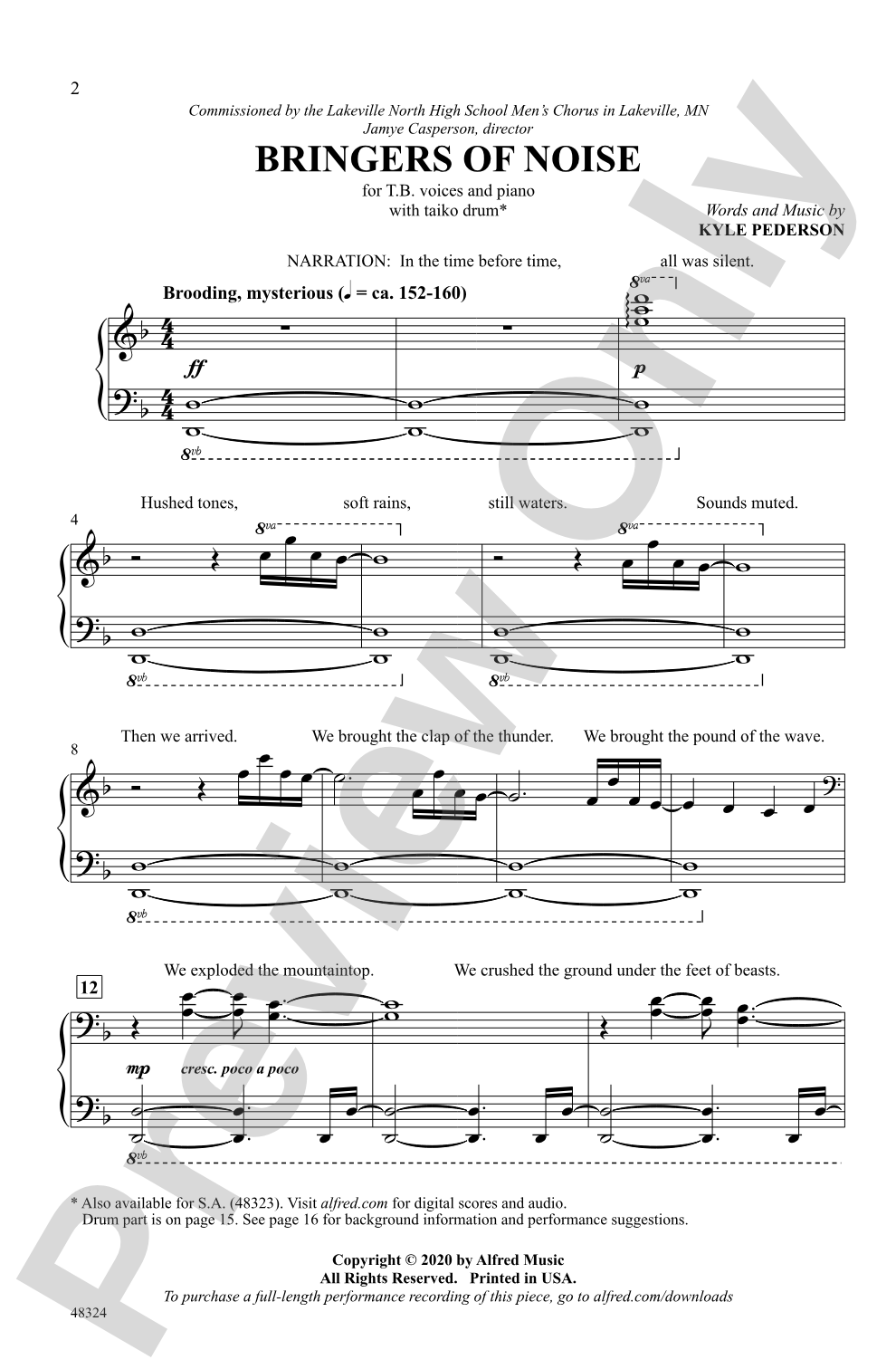
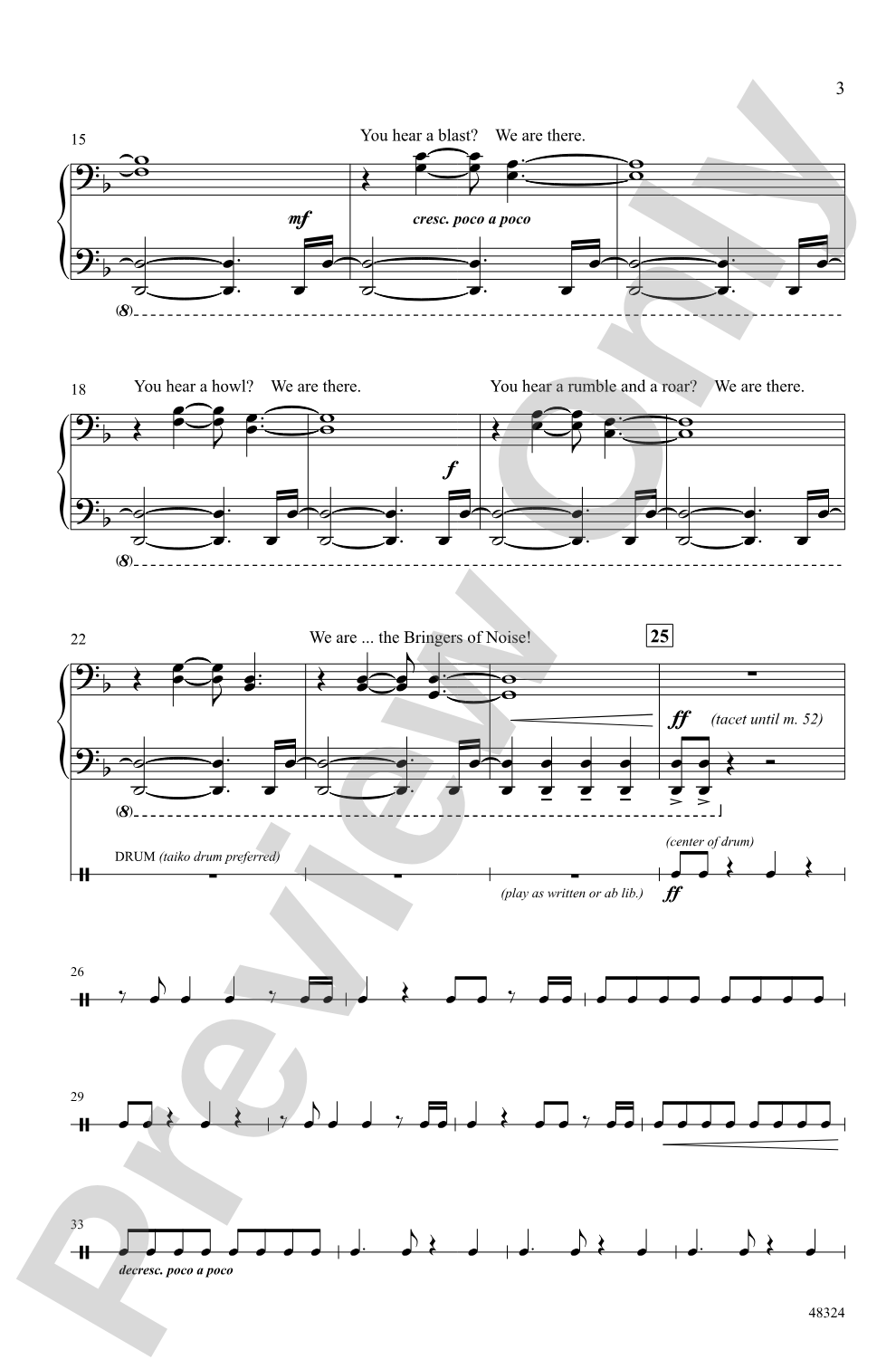
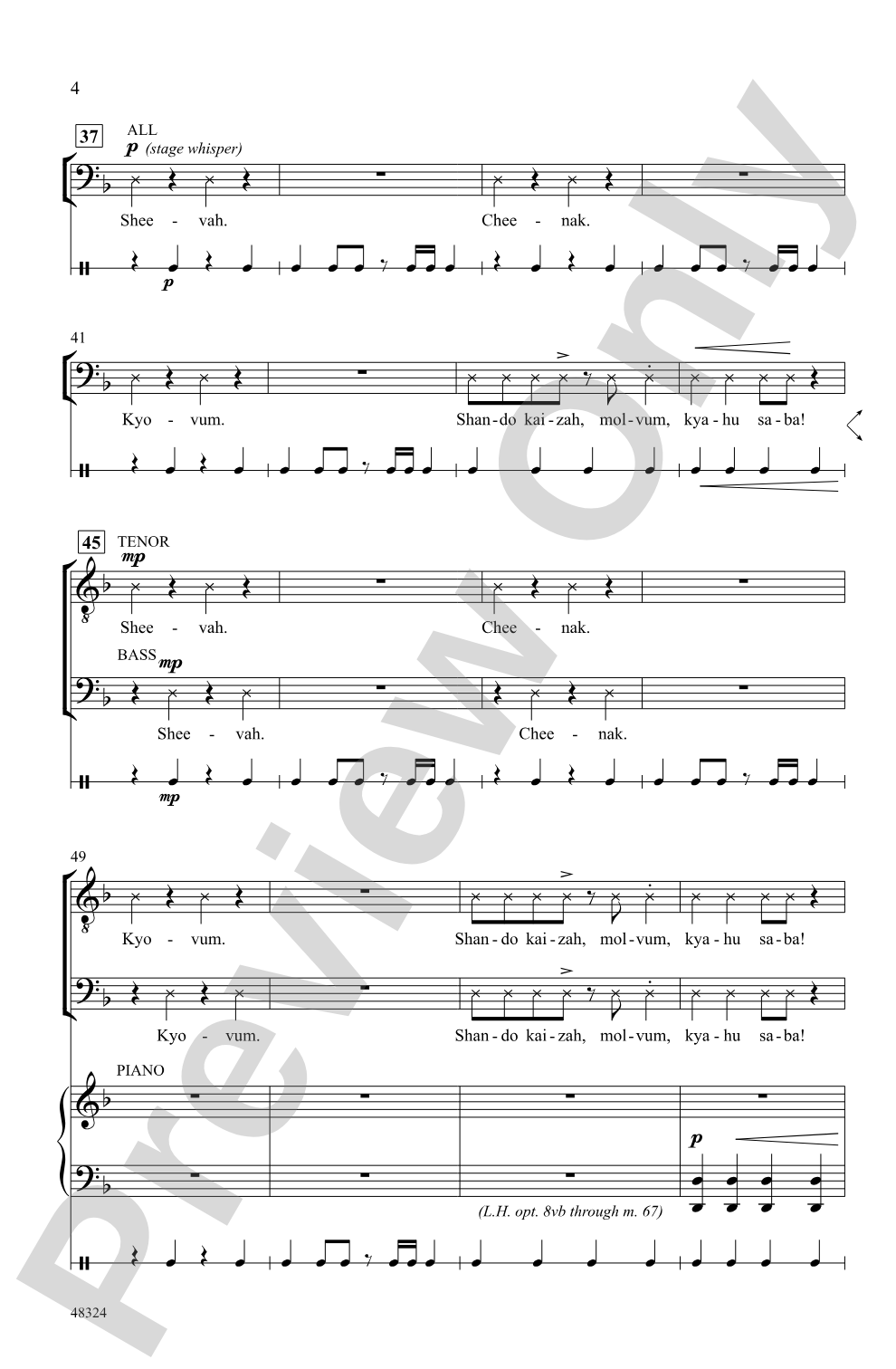
Here's a dramatic detour into choral theater! Using a fictional language from an imaginary oracle, this exceptional piece effectively combines narration, rhythmic chanting, singing, and percussion to create an atmosphere of awe and mystery. A selection that your audience will be talking about for weeks afterward, and your singers will never forget. Also available: an epic accompaniment track (orchestrated by Ruben Reyes), as a free download here.


Don't just read it, hear it, play along with it, and watch your students grow with it. In MakeMusic Cloud, Bringers of Noise: TB Choral Octavo comes alive with professional accompaniment, adjustable tempo, and built-in practice tools that turn solo practice into real progress.
Open in the Player
Jump straight in and assign it today.
Start Your Free Trial
Open this title and explore the full library in minutes.
Sample Audio
1
Audio File
--:--
0:00
0:00
Sample Video
1 / 2
Additional Details
Series:
Lawson-Gould
Publisher:
Alfred Music
Page Count:
16
SKU:
00-PO-0006404
More about this title
About the Composer: Kyle Pederson

Kyle Pederson composes and writes lyrics from Minneapolis, where he balances his work as both a creator and educator. His compositions often explore territory between the sacred and secular, using music and text to challenge choirs and audiences to embody values like hope, grace, and compassion.
Pederson holds degrees from Augustana University, the University of St. Thomas (M.A. in Education), and Vermont College of Fine Arts (M.F.A. in Music Composition). His work has earned recognition including the American Prize in Choral Composition (2019) and the ACDA Genesis Prize (2020). More information about his catalog is available at kylepederson.com.
Why we love this
This piece genuinely delivers on the promise of theatrical choral writing without relying on overwrought sentiment or easy effects. Pederson constructs genuine drama through layered textures, invented language that audiences find compelling rather than gimmicky, and percussion integration that feels compositionally necessary rather than decorative. Your singers will leave rehearsal talking about what they just created, and your audience will ask for a program note.
What to expect
An oracle has spoken and you are witnessing something ancient and unknowable unfold in real time. The blend of rhythmic chanting, sung melody, spoken narrative, and percussion creates an atmosphere that feels both ritualistic and contemporary. This is music designed to captivate, unsettle slightly, and linger in memory.
Who it's for
Treble-voiced and mixed choirs seeking repertoire with genuine dramatic arc and novelty factor. This works for ensembles comfortable with contemporary writing, theatrical commitment, and a bit of controlled chaos. It's equally effective for concert programming and festival competition.
How to get the most out of it
- Treat the narration passages with the same care you'd give to any sung line. These moments anchor the piece's storytelling and deserve deliberate pacing and diction.
- Explore the percussion parts early in rehearsal. Players need time to internalize rhythmic relationships with the choral lines; treating them as background texture will flatten the whole effect.
- Use the orchestrated accompaniment track (available as a free download) to help singers lock the harmonic and rhythmic foundation before balancing against live instrumentation.
- Establish clear physical vocabulary for the chanting sections. Unified body language and breath will amplify the sense of unified purpose that makes these moments powerful.
How to use it
Program this as a concert centerpiece or second-half opener where it can command full attention and benefit from the emotional energy a live audience brings. It pairs well with contrasting repertoire that's either more introspective or more overtly joyful, since its theatrical intensity needs breathing room in the program arc.
Skills your students will build
- Narration and text delivery in a sung context
- Rhythmic unison and chanting coordination
- Ensemble integration with percussion accompaniment
- Dramatic interpretation and theatrical commitment
- Reading extended techniques and non-traditional notation
- Balancing articulation across mixed TB voicing