
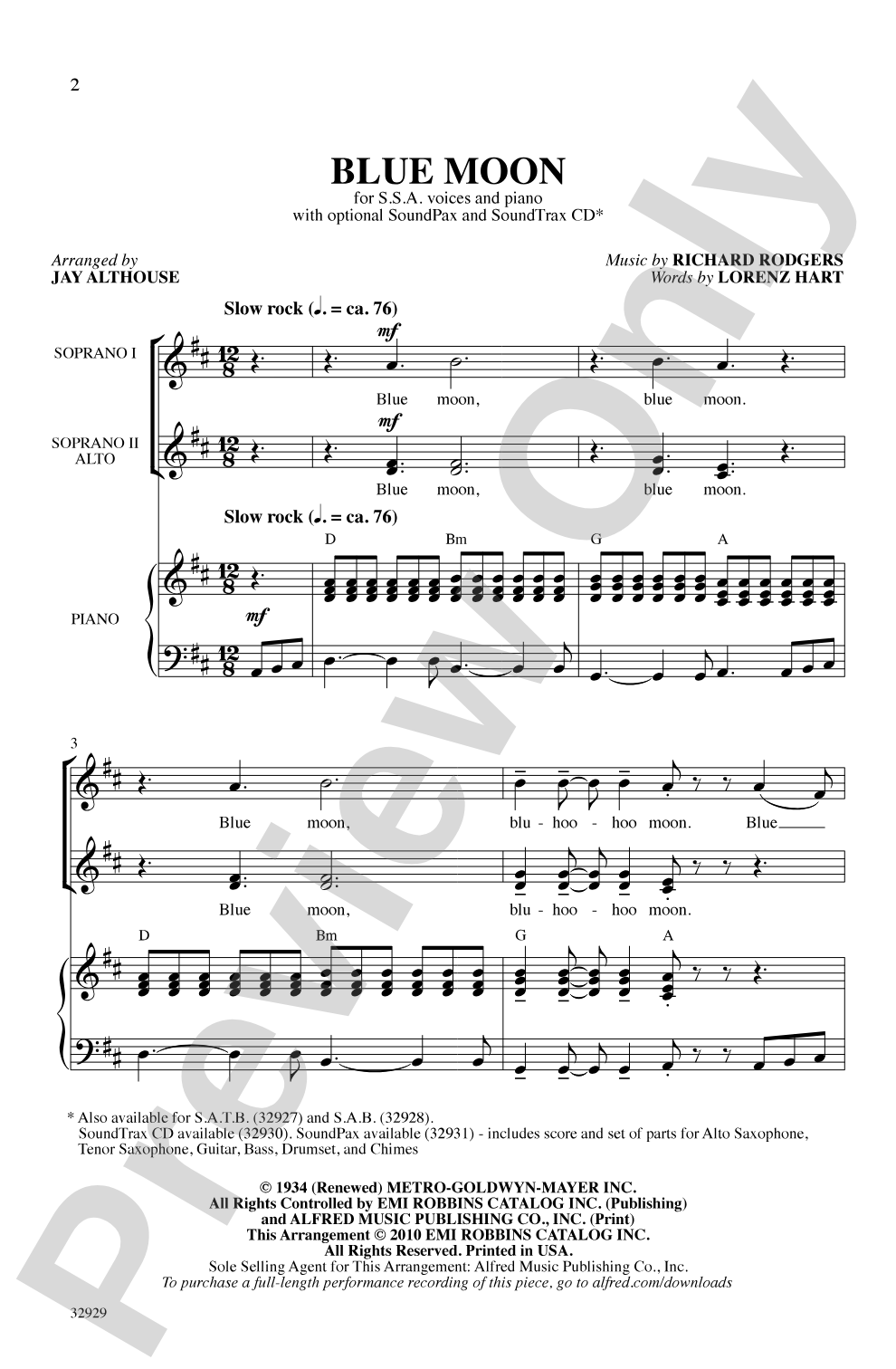
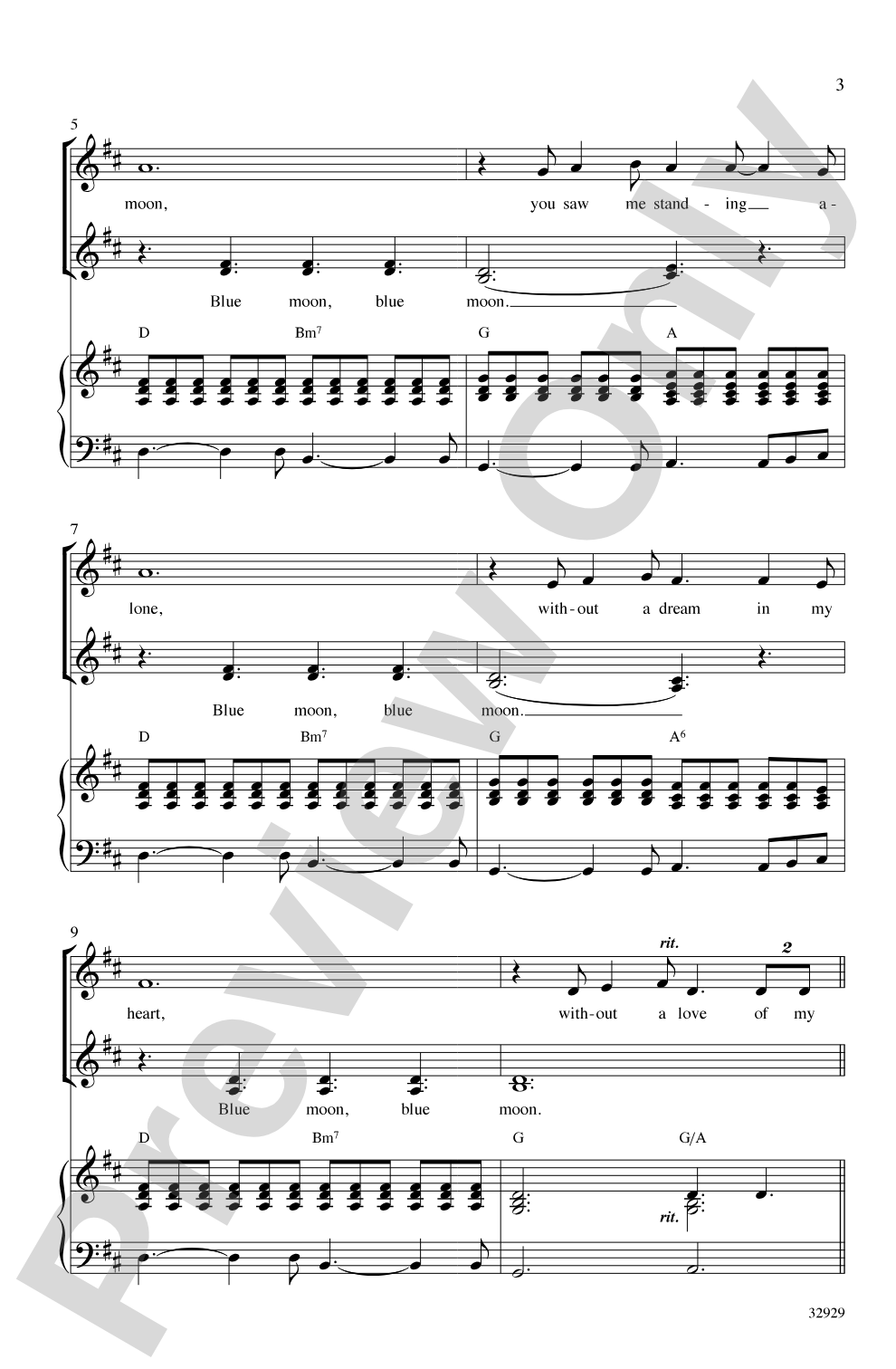

Blue Moon: SSA Choral Octavo
Music by Richard Rodgers, words by Lorenz Hart / arr. Jay Althouse
Item: 00-PO-0007716
$2.10
Minimum order quantity: 20 copies
Pickup currently not available
Related Items
Blue Moon: SoundTrax Digital Audio Download |
$27.99
|
View | |
Blue Moon: SATB Choral Octavo |
$2.10
|
View | |
Blue Moon: SAB Choral Octavo |
$2.25
|
View | |
Blue Moon: Choral SoundPax |
$30.00
|
View | |
Blue Moon: SATB Choral Octavo |
$2.10
|
View | |
Blue Moon: SAB Choral Octavo |
$2.25
|
View | |
Blue Moon: SSA Choral Octavo |
$2.10
|
View | |
Blue Moon: Choral Octavo SoundTrax CD |
$27.99
|
View | |
Blue Moon: Choral SoundPax |
$30.00
|
View |
Description
Only once in a blue moon does a song like this come along! This Rodgers and Hart hit has been recorded by legions of stars. Jay's arrangement starts soulfully, then kicks into The Marcels' 1961 doo-wop version.


Blue Moon: SSA Choral Octavo isn't in MakeMusic Cloud just yet...but it could be. Let us know you'd like to see it, and you'll help shape what comes next. In the meantime, start a free trial and dive into thousands of interactive titles your students can play along with today.
Request This Title
Tell us you want it.
Start Your Free Trial
Explore everything that's ready to play right now.
Sample Audio
1
Audio File
--:--
0:00
0:00
Sample Video
No sample videos found.
Additional Details
Series:
Alfred Pop Choral Series
Publisher:
Alfred Music
Page Count:
12
SKU:
00-PO-0007716
More about this title
About the Composer: Richard Rodgers
Richard Rodgers (1902-1979) was one of the most prolific and influential composers in American musical theatre. Collaborating with lyricist Lorenz Hart throughout the 1920s and 1930s, he created some of the Great American Songbook's most enduring melodies, including "Blue Moon," "My Funny Valentine," and "The Lady Is a Tramp." His gift for crafting memorable, singable lines made his work instantly accessible to performers and audiences alike.
Rodgers's later partnership with Oscar Hammerstein II produced groundbreaking musicals including "Oklahoma!," "The King and I," and "The Sound of Music," which revolutionized the form by integrating music and narrative. His influence on generations of composers, arrangers, and music educators remains profound. Rodgers demonstrated that popular music could be both commercially successful and musically sophisticated, a philosophy that continues to shape music education repertoire selection.
Why we love this
Jay Althouse's arrangement captures the sophisticated emotional arc of "Blue Moon" while giving students a tangible connection to popular music history. The shift from soulful opening to energetic doo-wop pays homage to The Marcels' iconic 1961 recording, letting singers experience how the same song can take on completely different life in different hands. This teaches interpretive choice and style without requiring elaborate staging or instrumental resources.
What to expect
The arrangement unfolds like a reminiscence, beginning with wistful, introspective harmony before suddenly lifting into bright, infectious doo-wop energy. Singers move from intimate vulnerability to playful confidence, experiencing the full emotional and stylistic range of this classic melody. The contrast refreshes what might otherwise be a familiar song, inviting the ensemble to discover something new in Rodgers's timeless writing.
Who it's for
SSA choirs at the middle school through community level will find immediate success with this piece. The straightforward voicing allows singers to focus on style, interpretation, and the joy of performing a recognizable standard. It works beautifully for choirs looking to program popular music that has genuine musical substance.
How to get the most out of it
- Honor the soulful opening with sustained phrasing and careful attention to dynamics; let the harmonies breathe before the energy builds into the doo-wop section.
- Lock in the rhythmic precision during the doo-wop section; this style demands crisp articulation and unified syllable choices to capture the playful character.
- Use the recorded accompaniment to hear how the arrangement unfolds, then work toward independence from it so singers develop their own musical confidence.
- Shape the transition between the two sections deliberately; this pivot moment defines the arrangement and rewards clear communication from your conducting.
How to use it
Program this as a bridge between classics and contemporary repertoire, demonstrating how standards remain vital when reimagined. It pairs well with other popular standards or with pieces that explore the same doo-wop tradition. Spring concerts or end-of-year shows benefit from its accessibility and built-in crowd appeal, while still offering substantive musical learning.
Skills your students will build
- Stylistic contrast and interpretation (soulful versus doo-wop articulation)
- Sustaining soulful phrasing while maintaining ensemble cohesion
- Rhythmic precision in swing and doo-wop idioms
- Dynamic shaping across extended phrases
- Understanding how arrangement choices reshape a familiar melody