
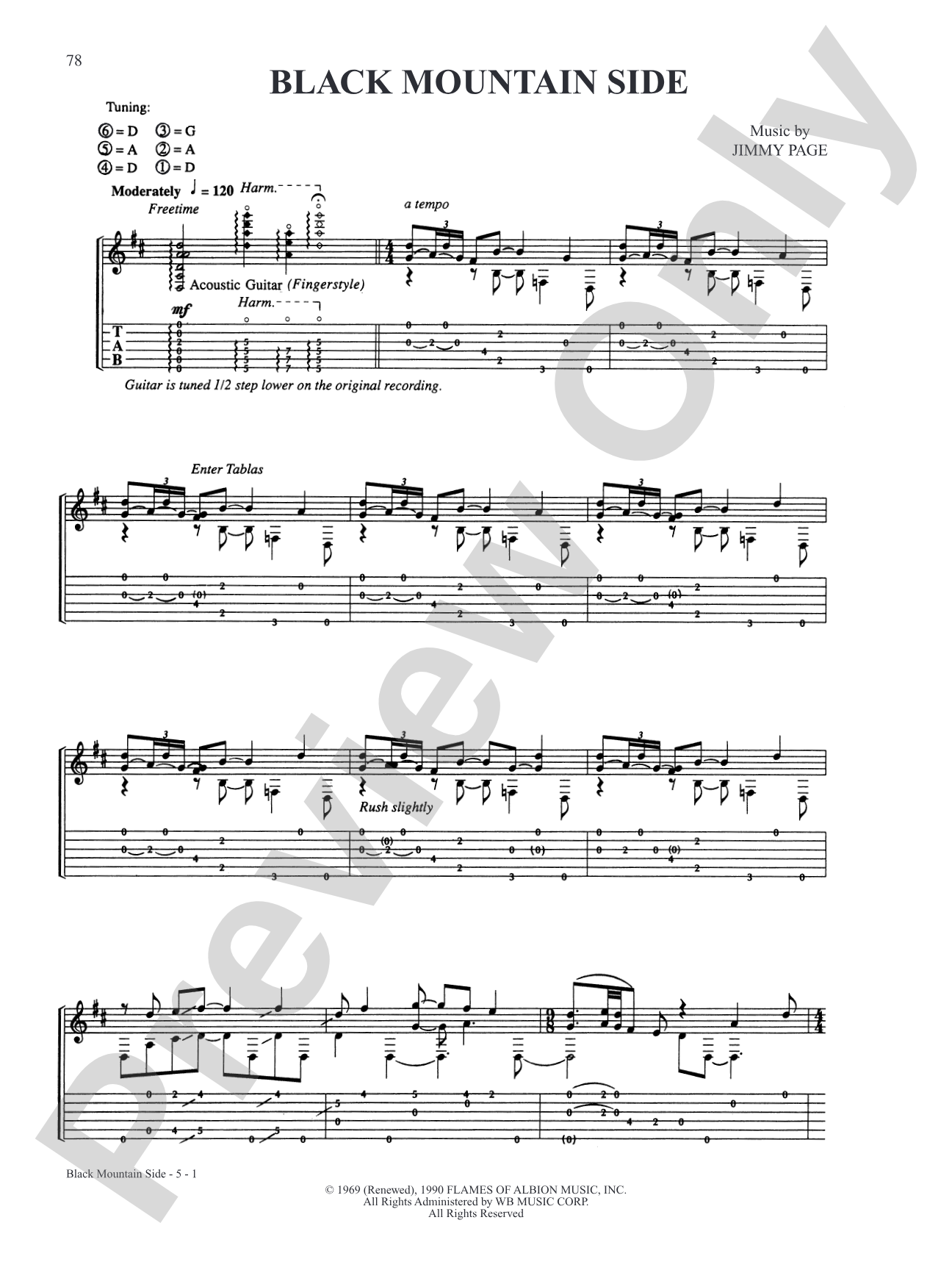

Black Mountain Side: Authentic Guitar TAB
Led Zeppelin
Item: 00-PSG-000115
$4.99
Pickup currently not available
Related Items
Babe I'm Gonna Leave You: Authentic Guitar TAB |
$9.99
|
View | |
Communication Breakdown: Authentic Guitar TAB |
$5.99
|
View | |
Good Times, Bad Times: Authentic Guitar TAB |
$5.99
|
View | |
Your Time Is Gonna Come: Authentic Guitar TAB |
$5.99
|
View | |
How Many More Times: Authentic Guitar TAB |
$9.99
|
View | |
Dazed And Confused: Authentic Guitar TAB |
$9.99
|
View | |
Communication Breakdown: Piano/Vocal/Chords |
$4.99
|
View | |
Your Time is Gonna Come: Piano/Vocal/Chords |
$5.99
|
View | |
Led Zeppelin: I Platinum Album Edition: Authentic Guitar TAB Book |
$24.99
|
View | |
Led Zeppelin: I Platinum Album Edition: Drum Transcriptions Book |
$19.99
|
View | |
Led Zeppelin: I Platinum Album Edition: Piano/Vocal/Chords Book |
$19.99
|
View | |
Led Zeppelin: I Platinum Album Edition: Authentic Bass TAB Book |
$16.99
|
View |
Description
Alfred Music, in association with Led Zeppelin, is proud to present new Platinum Album Edition songbooks for each of the band's classic studio recordings. Drawn from more than 30 years of documentation, interviews, and recorded footage, these all-new transcriptions deliver unprecedented accuracy and insight into the guitar style of Jimmy Page. With vintage Zeppelin photographs and a historical foreword by Guitar World magazine's editor-in-chief, Brad Tolinski, each volume is a true collectible every fan must own. Titles: Good Times Bad Times * Babe I'm Gonna Leave You * You Shook Me * Dazed and Confused * Your Time Is Gonna Come * Black Mountain Side * Communication Breakdown * I Can't Quit You Baby * How Many More Times.


Black Mountain Side: Authentic Guitar TAB isn't in MakeMusic Cloud just yet...but it could be. Let us know you'd like to see it, and you'll help shape what comes next. In the meantime, start a free trial and dive into thousands of interactive titles your students can play along with today.
Request This Title
Tell us you want it.
Start Your Free Trial
Explore everything that's ready to play right now.
Sample Audio
No sample audio found.
Sample Video
No sample videos found.
Additional Details
Series:
Alfred's Platinum Album Editions
Publisher:
Alfred Music
Page Count:
92
SKU:
00-PSG-000115
More about this title
About the Composer: Jimmy Page
Jimmy Page is the guitarist and primary composer behind Led Zeppelin, the band that fundamentally reshaped rock music in the 1970s. His approach to the instrument combined blues foundations with experimental production techniques, modal tunings, and unconventional song structures that influenced generations of guitarists across all genres.
Why we love this
These transcriptions represent decades of meticulous documentation and represent the most accurate guitar TAB available for Led Zeppelin's debut album. Students get direct access to Page's original arrangements and fingerings, not approximations, making this an invaluable resource for understanding how iconic riffs were actually constructed and performed.
What to expect
Raw, exploratory, and deliberately unconventional. These early Zeppelin compositions blend folk traditions with blues vocabulary and electronic experimentation, creating a guitar sound that feels both acoustic and orchestral in scope. The arrangements reveal Page's willingness to abandon standard tunings and chord shapes in pursuit of something completely original.
Who it's for
Intermediate to advanced guitarists seeking authentic transcriptions of foundational rock material and musicians interested in studying Page's compositional and arranging techniques. Teachers and serious students who want to understand the actual mechanics behind classic recordings rather than working from approximations.
How to get the most out of it
- Study the open tunings used throughout the album; Page frequently employed alternate tunings like DADGAD to achieve the distinctive resonance and harmonic richness that define these recordings.
- Pay attention to right-hand dynamics and pick attack; the transcriptions document Page's approach to tone production, which varies significantly between fingerpicking passages and full chord work.
- Use the historical context provided in the foreword to understand the creative decisions behind each arrangement, helping you recognize why certain techniques and voicings matter to the overall composition.
- Reference the vintage photographs and liner notes alongside the TAB to visualize Page's setup and approach; context often reveals performance choices that standard notation alone cannot convey.
How to use it
Use individual transcriptions as advanced study material for guitarists working toward mastery of rock idioms and open tuning techniques. This resource works equally well as supplementary listening guide material for music history or contemporary music courses examining the development of rock guitar language.
Skills your students will build
- Reading and playing open tunings (DADGAD and other modal tunings)
- Interpreting fingerstyle versus pick-based articulation from TAB documentation
- Understanding harmonic movement and modal interchange in rock composition
- Analyzing tone production and right-hand dynamics through transcription
- Recognizing unconventional song structures and arrangement techniques