Basix®: Electronic Keyboard Method Cover Image

Basix®: Electronic Keyboard Method: Electronic Keyboard Book & Online Audio

$12.99 USD
Sale price  $12.99 USD Regular price 
Skip to product information
Basix®: Electronic Keyboard Method Cover Image

Basix®: Electronic Keyboard Method: Electronic Keyboard Book & Online Audio

By Willard A. Palmer, Morton Manus, and Amanda Vick Lethco

Item: 00-16753

$12.99
Shipped

One moment…

Description
Designed for use with any electronic keyboard with 44 or more keys and automatic chord and rhythm effects, this book goes beyond teaching how to use these features and covers how to read music in treble and bass clefs, form chords and much more, with plenty of songs to play.

Basix®: Electronic Keyboard Method: Electronic Keyboard Book & Online Audio isn't in MakeMusic Cloud just yet...but it could be. Let us know you'd like to see it, and you'll help shape what comes next. In the meantime, start a free trial and dive into thousands of interactive titles your students can play along with today.

Sample Pages

Sample Audio
1 Jingle Bells --:--
2 Money Can't Buy Everything --:--
3 The Hokey Pokey --:--

Jingle Bells

0:00
0:00
Sample Video
Additional Details
Series: Basix® Series
Publisher: Alfred Music
Page Count: 72
ISBN10: 8-86388-044-1
ISBN13: 978-8-86388-044-1
UPC: 038081134512
SKU: 00-16753

More about this title

About the Author: Willard A. Palmer
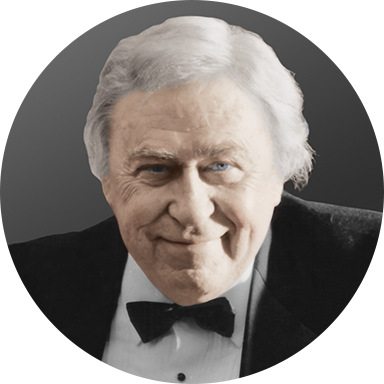
Willard A. Palmer

Willard A. Palmer authored nearly 800 published compositions spanning accordion, piano, guitar, and choral music, many of which have circulated internationally in German, Japanese, French, Dutch, and Spanish editions. His foundation began as a child prodigy who performed piano on radio at age 13, then deepened through formal study at the Conservatory of Leipzig on scholarship and later at the University of Houston, where he taught accordion for 18 years as a faculty pioneer in college-level instruction.

Palmer's scholarly authority on Baroque music ornamentation became the intellectual backbone of the acclaimed Alfred Masterworks series, earning him a Doctor of Humanities degree (1971) and Doctor of Music degree (1983). Beyond his prolific output as a composer and pedagogue, he served as director of the Riemenschneider Bach Institute and maintained deep involvement with the American Accordionists' Association and ASCAP throughout his career.

Why we love this

Palmer and his co-authors built this method on the principle that electronic keyboards deserve serious musicianship instruction, not just button-pushing tutorials. The book balances practical skill with genuine musical literacy, teaching treble and bass clef reading alongside chord construction so students understand what they're playing, not merely how to trigger it.

What to expect

Practical and grounded. The song collection gives students real material to play immediately while the clef and chord work builds genuine understanding underneath. It's a method that respects the instrument and the learner.

Who it's for

Students beginning on any 44-key or larger electronic keyboard who need a comprehensive entry into music reading and keyboard technique. Teachers seeking a method that treats electronic keyboards as legitimate instruments deserving full musical training, not mere accompaniment devices.

How to get the most out of it

  • Start with the automatic rhythm features as scaffolding, then encourage students to count and feel the pulse independently so they're not enslaved to the preset tempo.
  • Have students transpose songs across different keys using the keyboard's transposition function to reinforce chord relationships and interval thinking.
  • Ask them to play melodies in both clefs early on; this cross-staff fluency prevents the common trap of treating bass clef as foreign territory.

How to use it

Assign this as the primary text for beginner keyboard classes where students have access to instruments with automatic accompaniment features. The 72-page scope works well as a full-year foundation course, with the online audio supporting practice outside rehearsal time.

Skills your students will build

  • Reading treble and bass clef with fluency across both staves
  • Chord construction and harmonic function on keyboard
  • Using automatic rhythm and chord accompaniment features musically rather than mechanically
  • Transposition and key relationships
  • Proper keyboard technique and hand position

You May Also Like