
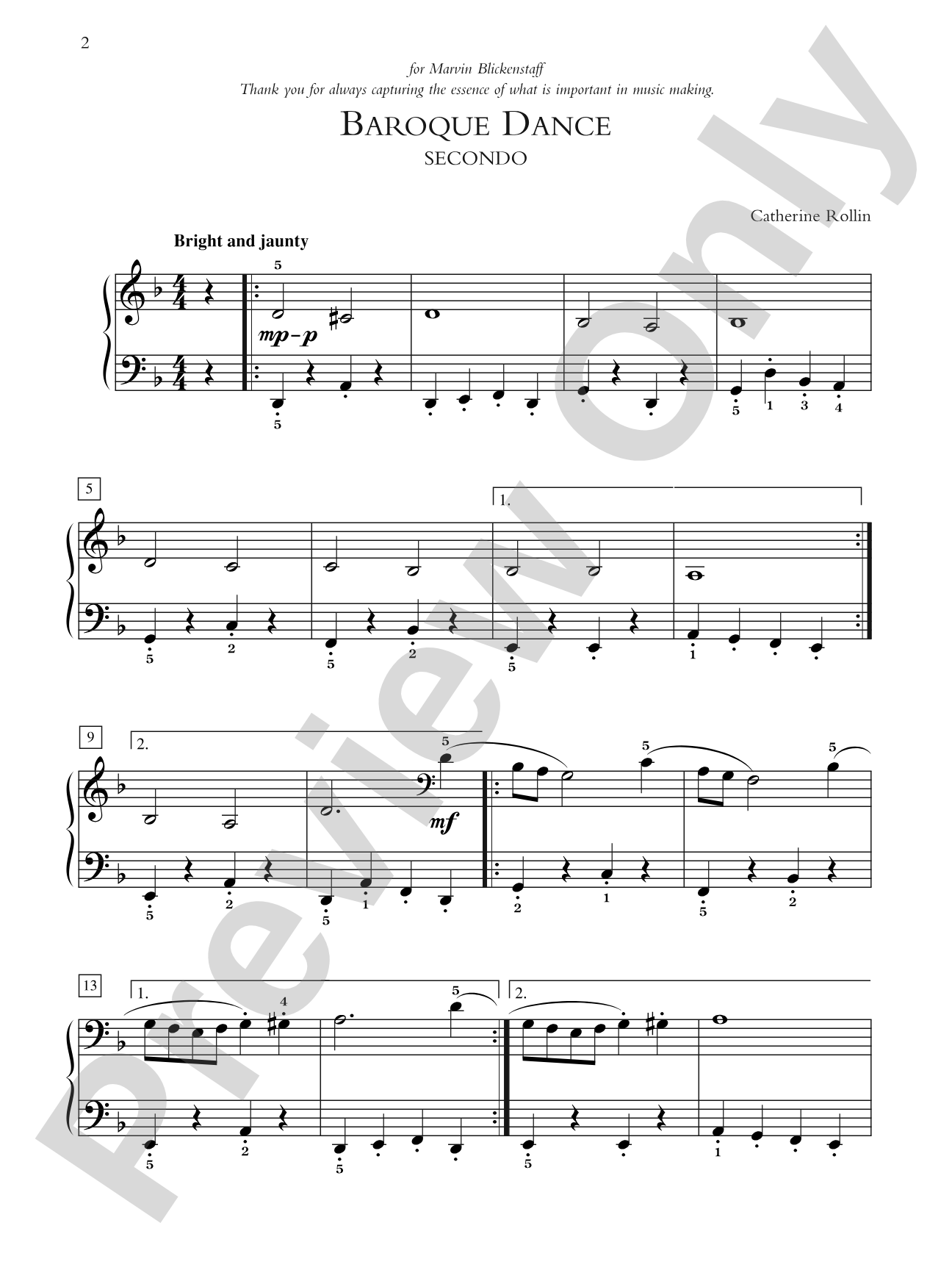

Baroque Dance - Piano Duet (1 Piano, 4 Hands): Piano Duet (1 Piano, 4 Hands)
5 Early Intermediate to Intermediate Piano Duets in Dance Styles
By Catherine Rollin
Level: Early Intermediate / Intermediate
Item: 00-PS-0017595
$7.95
Pickup currently not available
Related Items
Parisian Waltz - Piano Duet (1 Piano, 4 Hands): Piano Duet (1 Piano, 4 Hands) |
$5.99
|
View | |
Tap Extravaganza - Piano Duet (1 Piano, 4 Hands): Piano Duet (1 Piano, 4 Hands) |
$5.99
|
View | |
Tarantella Brillante - Piano Duet (1 Piano, 4 Hands): Piano Duet (1 Piano, 4 Hands) |
$5.99
|
View | |
Dances for Two, Book 1: Piano Duet (1 Piano, 4 Hands) Book |
$7.95
|
View |
Description
All of the pieces in the Dances for Two series are intended to capture the rhythmic essence of dance music. Just as two dancing partners work best when they're in sync, playing duets with great rhythmic chemistry is just as wonderful! Both the primo and secondo parts in Book 1 are written at the early intermediate level. Youths, teens and adults will all enjoy these charming pieces with seamless page turns and interesting parts where each partner has plenty of opportunity to lead and play the melody. A Federation Festivals 2024-2028 selection.


Baroque Dance - Piano Duet (1 Piano, 4 Hands): Piano Duet (1 Piano, 4 Hands) isn't in MakeMusic Cloud just yet...but it could be. Let us know you'd like to see it, and you'll help shape what comes next. In the meantime, start a free trial and dive into thousands of interactive titles your students can play along with today.
Request This Title
Tell us you want it.
Start Your Free Trial
Explore everything that's ready to play right now.
Sample Audio
No sample audio found.
Sample Video
No sample videos found.
Additional Details
Series:
Dances for Two
Publisher:
Alfred Music
Page Count:
32
SKU:
00-PS-0017595
More about this title
About the Composer: Catherine Rollin

Catherine Rollin balances an active performance schedule with mentoring accomplished students, having led workshops and masterclasses across the United States, Canada, Japan, and Taiwan. She holds a Bachelor of Musical Arts degree with distinction from the University of Michigan and a Master of Music degree from Oakland University School of Performing Arts.
Rollin's compositions have earned commissions from Clavier Companion magazine, the Music Teachers National Association (MTNA), and the Michigan Music Teachers Association, with multiple selections appearing in the National Federation of Music Clubs Festivals Bulletin. Her work has been recognized with an ASCAP award, and she has served as judge for the MTNA Student Composition Competition and the Lynn Freeman Olson Composition Contest. In 2018, she premiered Suite Detroit (a trio for flute, alto saxophone, and piano) as part of MTNA's From the Pen to the Premiere series and was featured by the Steinway Society in concert as both composer and pianist.
Why we love this
Rollin understands what makes duet playing rewarding: both hands matter equally, neither player takes a back seat, and the page turns actually work. The rhythmic drive in these Baroque dances comes alive when two players lock in together, giving students a genuine reason to listen and respond to their partner rather than just playing their own line.
What to expect
Elegant and spirited, with the courtly grace of period dance but none of the stuffiness. The writing sparkles; rhythmic patterns propel the music forward, and the interplay between the two parts creates genuine dialogue rather than parallel playing.
Who it's for
Early intermediate pianists who are ready for duet music that doesn't talk down to them. This series works equally well with young students discovering ensemble playing, teenagers seeking bridge repertoire, and adult students who appreciate stylistic depth.
How to get the most out of it
- Establish the pulse together before each piece; a steady heartbeat makes the Baroque rhythmic character come through naturally.
- Let the parts trade melody passages rather than thinking of primo as always on top. The secondo carries real musical weight here.
- Attend to the page turns as designed. They're intentional, which means you can play with confidence and momentum.
How to use it
These pieces fit naturally into recitals where you're pairing young or intermediate soloists for a lighter, ensemble-focused segment. They also work as teaching demonstrations of duet balance and rhythm at student showcases, or as supplementary repertoire for studio recitals where families want to celebrate collaborative learning.
Skills your students will build
- Rhythmic synchronization with a partner at moderate tempo
- Balancing volume between primo and secondo to let melody stand without drowning accompaniment
- Maintaining independence while listening to another part
- Baroque stylistic conventions (articulation, ornamentation, phrasing)
- Page turn management in longer works