
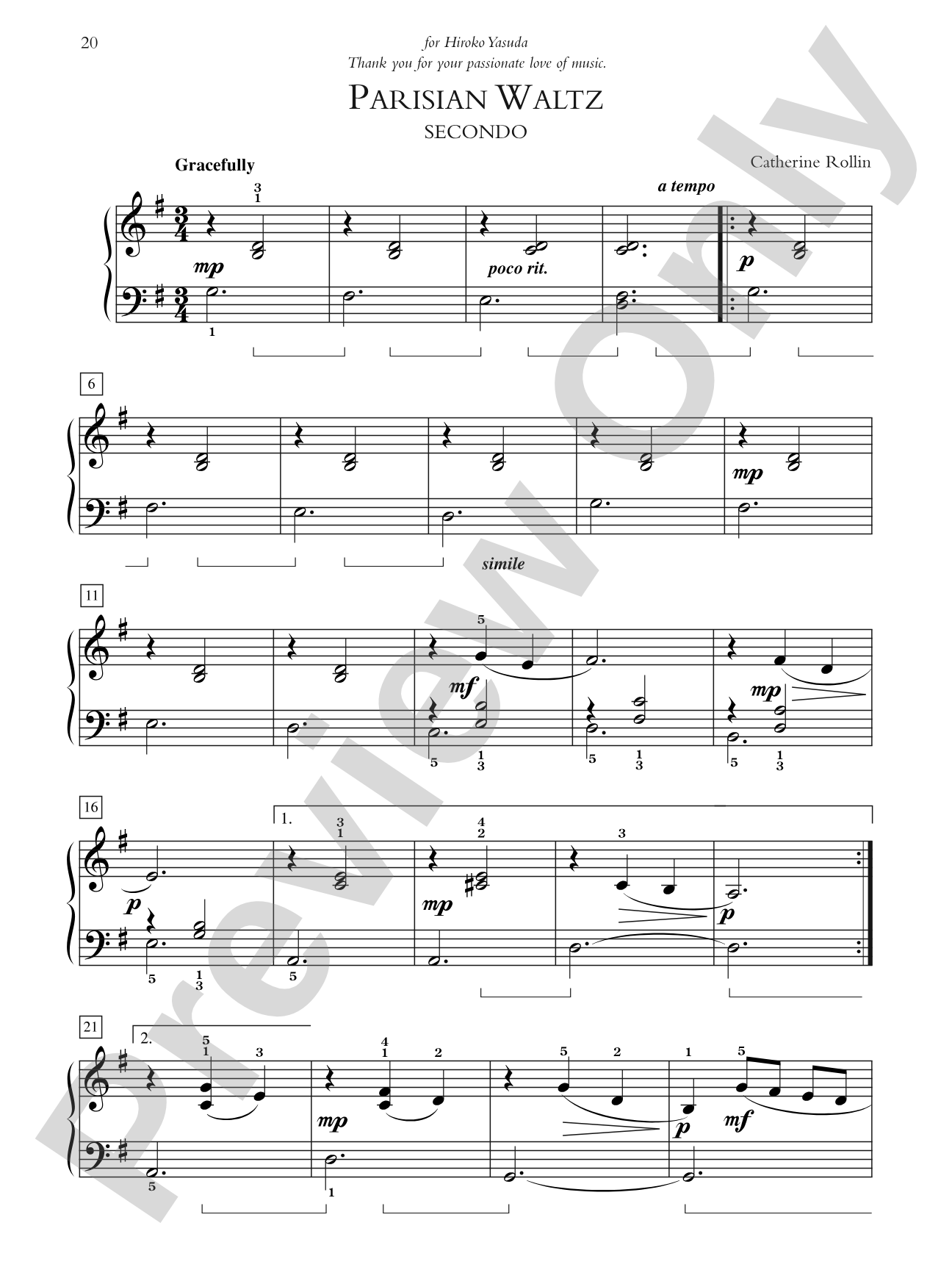
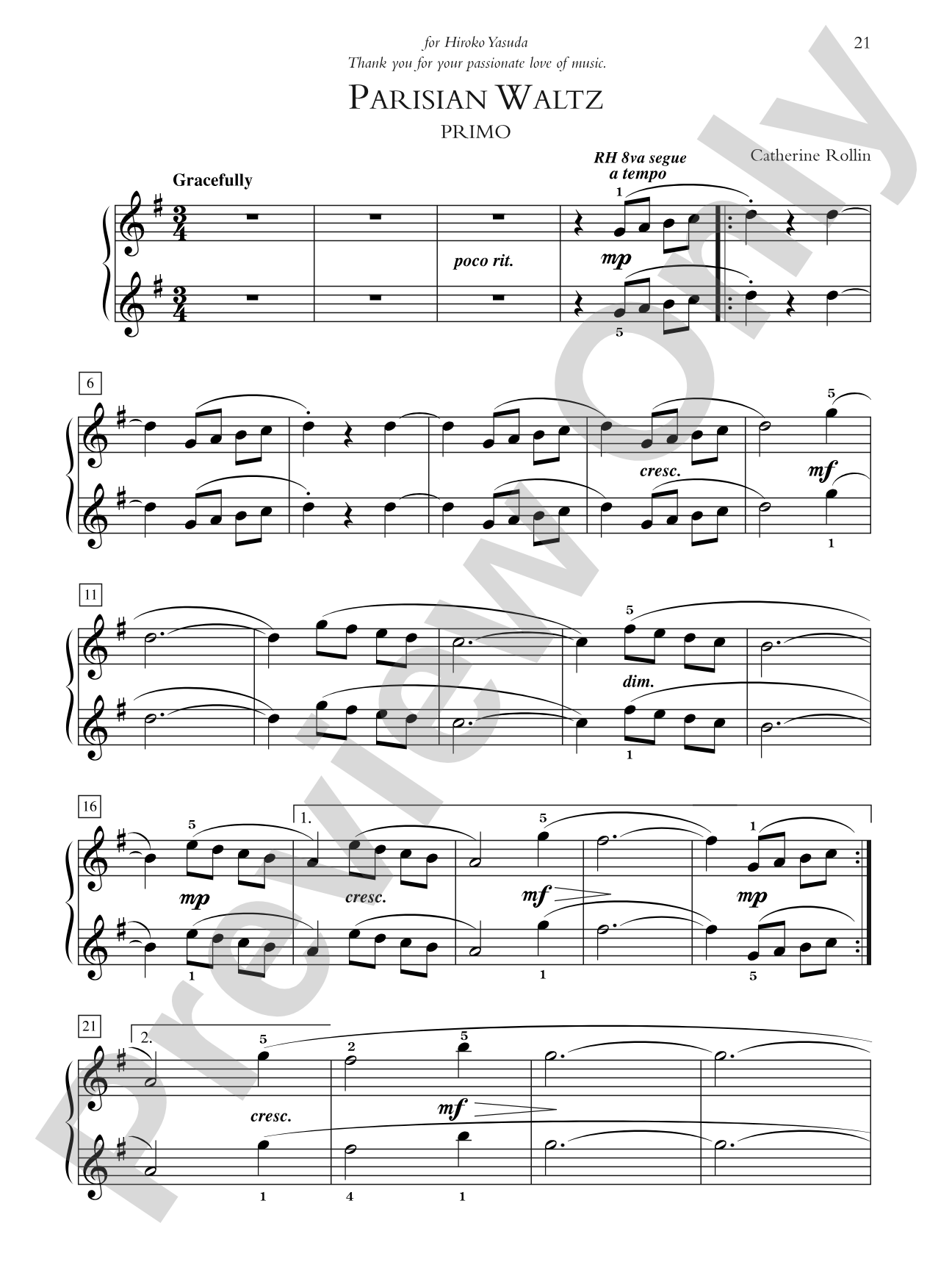

Parisian Waltz - Piano Duet (1 Piano, 4 Hands): Piano Duet (1 Piano, 4 Hands)
5 Early Intermediate to Intermediate Piano Duets in Dance Styles
By Catherine Rollin
Level: Early Intermediate / Intermediate
Item: 00-PS-0017596
$5.99
Pickup currently not available
Related Items
Baroque Dance - Piano Duet (1 Piano, 4 Hands): Piano Duet (1 Piano, 4 Hands) |
$7.95
|
View | |
Tap Extravaganza - Piano Duet (1 Piano, 4 Hands): Piano Duet (1 Piano, 4 Hands) |
$5.99
|
View | |
Tarantella Brillante - Piano Duet (1 Piano, 4 Hands): Piano Duet (1 Piano, 4 Hands) |
$5.99
|
View | |
Dances for Two, Book 1: Piano Duet (1 Piano, 4 Hands) Book |
$7.95
|
View |
Description
All of the pieces in the Dances for Two series are intended to capture the rhythmic essence of dance music. Just as two dancing partners work best when they're in sync, playing duets with great rhythmic chemistry is just as wonderful! Both the primo and secondo parts in Book 1 are written at the early intermediate level. Youths, teens and adults will all enjoy these charming pieces with seamless page turns and interesting parts where each partner has plenty of opportunity to lead and play the melody. A Federation Festivals 2024-2028 selection.


Parisian Waltz - Piano Duet (1 Piano, 4 Hands): Piano Duet (1 Piano, 4 Hands) isn't in MakeMusic Cloud just yet...but it could be. Let us know you'd like to see it, and you'll help shape what comes next. In the meantime, start a free trial and dive into thousands of interactive titles your students can play along with today.
Request This Title
Tell us you want it.
Start Your Free Trial
Explore everything that's ready to play right now.
Sample Audio
No sample audio found.
Sample Video
No sample videos found.
Additional Details
Series:
Dances for Two
Publisher:
Alfred Music
Page Count:
32
SKU:
00-PS-0017596
More about this title
About the Composer: Catherine Rollin

Catherine Rollin balances an active performance schedule with mentoring accomplished students, having presented workshops and masterclasses across more than 200 cities in North America and Asia. She holds degrees from the University of Michigan and Oakland University School of Performing Arts, and her compositions have earned commissions from major organizations including the Music Teachers National Association and the Michigan Music Teachers Association.
Rollin's work appears regularly on festival syllabi and has received recognition from ASCAP, the National Federation of Music Clubs, and the Lynn Freeman Olson Composition Contest. She served as a judge for the MTNA Student Composition Competition and premiered a chamber work, Suite Detroit, at the MTNA national conference in 2018. Her multimedia composition series Museum Masterpieces demonstrates her distinctive ability to blend accessible writing with substantial musical substance.
Why we love this
Rollin writes duet parts that genuinely feel like a conversation between two equals rather than a melody-plus-accompaniment setup. Both players spend considerable time with the lead line, which keeps engagement high during rehearsals and makes preparation feel like a shared musical project instead of a hierarchy. The rhythmic clarity that defines this series makes it invaluable for teaching ensemble precision without sacrificing the joy of playing something genuinely charming.
What to expect
Parisian Waltz captures that buoyant, three-beat elegance you hear in the ballrooms and concert halls of France. The piece moves with natural grace, inviting both players into a seamless rhythmic partnership that feels less like technique work and more like actual dancing.
Who it's for
This duet works well for advancing pianists who are ready to balance independence with collaboration. Both teens and adults preparing for festival competition will find the early intermediate writing accessible without feeling like a step backward musically.
How to get the most out of it
- Record a performance on your phone before the recital. Playing it back between rehearsals helps both students internalize the tempo and phrasing together, especially if practice time is limited to lessons.
- Start by isolating the rhythm without the melody. Have both players tap out their parts against a metronome to establish the groove that makes the waltz character come alive.
- Map the page turns together before your first run-through. Rollin has designed this duet with seamless page turns in mind, so acknowledge which player leads the navigation at each turn.
- Assign the primo player to listen for the secondo's pulse beneath the melody. This inverts the typical hierarchy and gives both performers equal ownership of the result.
How to use it
Slot this into a recital or festival program where you want to showcase duet collaboration without requiring a two-piano setup. It pairs well alongside solo repertoire from the same level, offering an elegant contrast and giving your audience a chance to hear how much personality emerges when two players lock in together.
Skills your students will build
- Rhythmic entrainment and listening to a partner's pulse
- Trading melodic roles and adjusting touch accordingly
- Three-beat metric clarity in a waltz context
- Managing page turns cooperatively at the instrument
- Balancing independence with ensemble awareness