
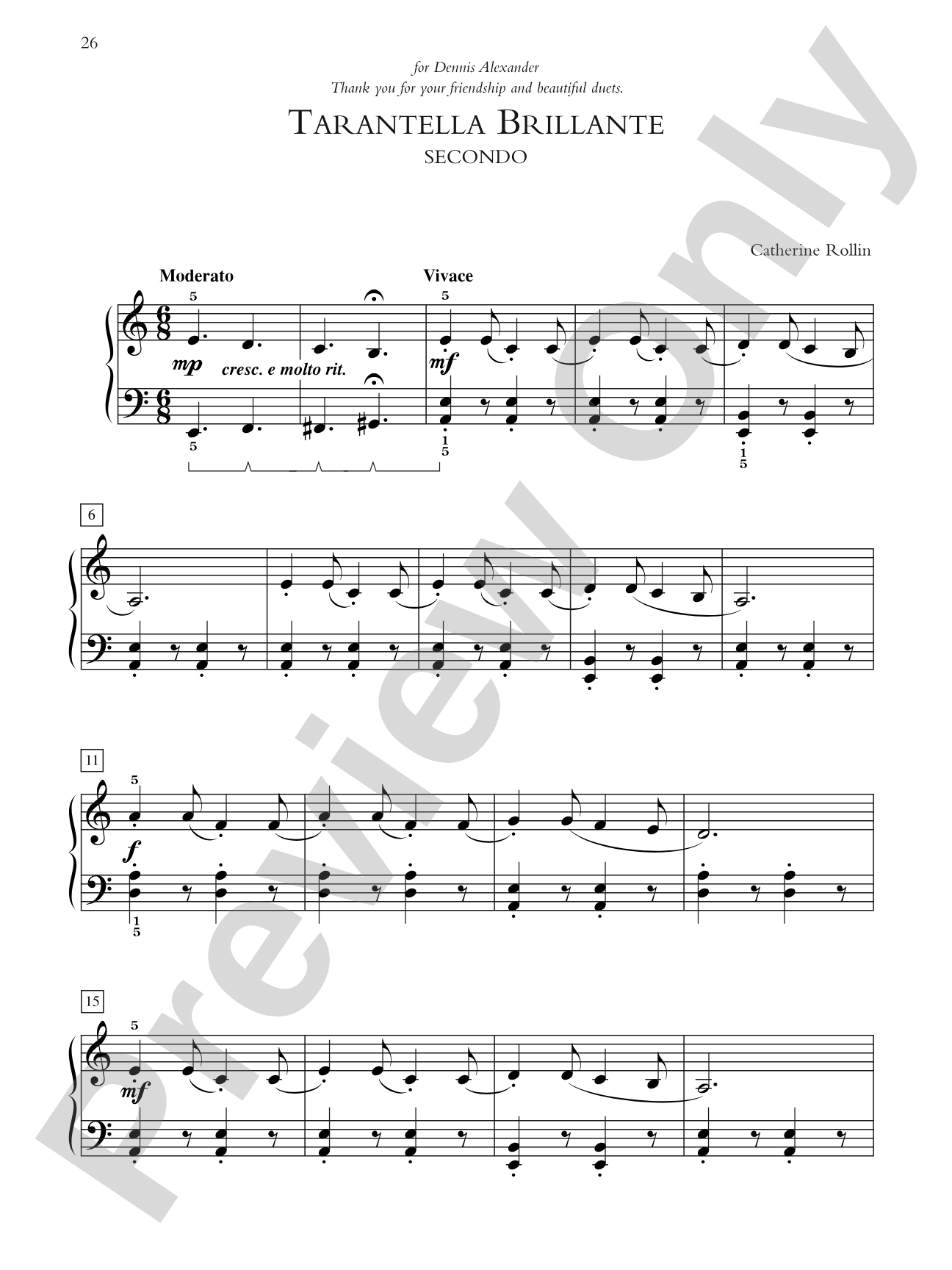
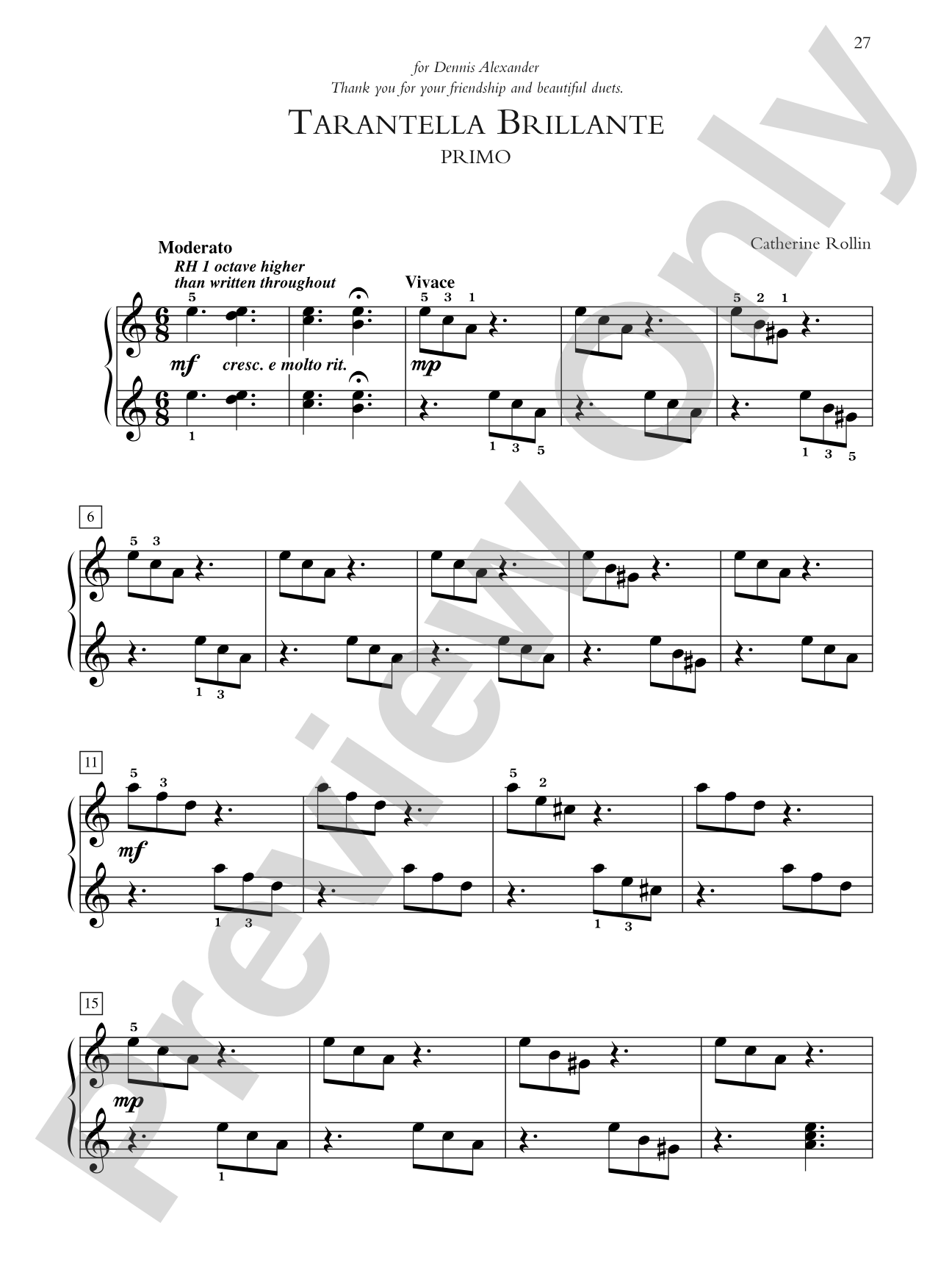

Tarantella Brillante - Piano Duet (1 Piano, 4 Hands): Piano Duet (1 Piano, 4 Hands)
5 Early Intermediate to Intermediate Piano Duets in Dance Styles
By Catherine Rollin
Level: Early Intermediate / Intermediate
Item: 00-PS-0017598
$5.99
Pickup currently not available
Related Items
Baroque Dance - Piano Duet (1 Piano, 4 Hands): Piano Duet (1 Piano, 4 Hands) |
$7.95
|
View | |
Parisian Waltz - Piano Duet (1 Piano, 4 Hands): Piano Duet (1 Piano, 4 Hands) |
$5.99
|
View | |
Tap Extravaganza - Piano Duet (1 Piano, 4 Hands): Piano Duet (1 Piano, 4 Hands) |
$5.99
|
View | |
Dances for Two, Book 1: Piano Duet (1 Piano, 4 Hands) Book |
$7.95
|
View |
Description
All of the pieces in the Dances for Two series are intended to capture the rhythmic essence of dance music. Just as two dancing partners work best when they're in sync, playing duets with great rhythmic chemistry is just as wonderful! Both the primo and secondo parts in Book 1 are written at the early intermediate level. Youths, teens and adults will all enjoy these charming pieces with seamless page turns and interesting parts where each partner has plenty of opportunity to lead and play the melody. A Federation Festivals 2024-2028 selection.


Tarantella Brillante - Piano Duet (1 Piano, 4 Hands): Piano Duet (1 Piano, 4 Hands) isn't in MakeMusic Cloud just yet...but it could be. Let us know you'd like to see it, and you'll help shape what comes next. In the meantime, start a free trial and dive into thousands of interactive titles your students can play along with today.
Request This Title
Tell us you want it.
Start Your Free Trial
Explore everything that's ready to play right now.
Sample Audio
No sample audio found.
Sample Video
No sample videos found.
Additional Details
Series:
Dances for Two
Publisher:
Alfred Music
Page Count:
32
SKU:
00-PS-0017598
More about this title
About the Composer: Catherine Rollin

Catherine Rollin balances an active performance schedule with mentoring accomplished students, having presented masterclasses and workshops across North America and Asia. She holds a Bachelor of Musical Arts degree with distinction from the University of Michigan and a Master of Music degree from Oakland University School of Performing Arts.
Rollin's compositions have earned commissions from the Music Teachers National Association, the Michigan Music Teachers Association, and Clavier Companion magazine. Her work has been selected multiple times for the National Federation of Music Clubs Festivals Bulletin, and she served as a judge for the MTNA Student Composition Competition and the Lynn Freeman Olson Composition Contest. Her ASCAP award-winning Museum Masterpieces series and the commissioned trio Suite Detroit (premiered at the 2018 MTNA national conference) demonstrate her standing in the composition community.
Why we love this
Rollin has designed both parts with genuine musicality rather than relegating the secondo to accompanying duty. The primo and secondo trade the melodic spotlight throughout, keeping both players engaged and invested in the partnership. This approach transforms what could be a supporting role into an equal collaboration, which students find far more rewarding than traditional duet writing.
What to expect
A spirited Italian dance that sparkles without demanding virtuosity. The piece captures the propulsive, infectious rhythm of a tarantella while staying playable for hands still developing independence and control. Both players feel the momentum of the music rather than fighting against the technique.
Who it's for
Early intermediate pianists preparing for festival play or seeking quality repertoire that challenges both hands equally. Adults returning to piano and teen students benefit from the clear part writing and the collaborative energy of a well-balanced duet.
How to get the most out of it
- Lock in the rhythmic drive before worrying about dynamics. The tarantella's character depends on that infectious, steady pulse that both players maintain together.
- Pay attention to the page turn markings. Rollin has thought through the logistics here, so you won't find yourself scrambling mid-phrase.
- Distinguish between the moments where primo and secondo play in unison versus when they're weaving independent lines. This clarity helps the listener follow the conversation between the partners.
- Bring out the melodic exchanges with slight rubato rather than applying strict tempo throughout. This lightens the dance character and makes the handoffs between players feel natural rather than mechanical.
How to use it
Include this on a recital alongside solo repertoire from your students; the contrast and ensemble experience add dimension to a concert. It also serves well as a festival selection where adjudicators appreciate writing that balances accessibility with genuine musical content.
Skills your students will build
- Ensemble listening and response within a two-part texture
- Maintaining consistent tempo across hand positions while supporting a partner
- Tracking independent melodic lines in primo and secondo that weave in and out
- Reading and executing clear dynamic contrasts that shape phrasing in both parts
- Technical coordination demands of early intermediate hand independence without excessive velocity requirements