At the Royal Court Cover Image

At the Royal Court: Concert Band Conductor Score & Parts

$65.00 USD
Sale price  $65.00 USD Regular price 
Skip to product information
At the Royal Court Cover Image

At the Royal Court: Concert Band Conductor Score & Parts

By William Owens

Grade: 1.5

Item: 00-51939

makemusic Cloud badge

Need it now?

Buy Digital Version
$65.00
Shipped

One moment…

Description
Revisit the magic of the Renaissance with At the Royal Court, a clever and engaging original work by William Owens that sounds remarkably sophisticated yet is extremely playable! This three movement work is inspired by popular dance forms from the era including "Basse Danse," "Galliard," and 'Bransle." Perform individual movements or as a complete set! (3:30)

Don't just read it, hear it, play along with it, and watch your students grow with it. In MakeMusic Cloud, At the Royal Court: Concert Band Conductor Score & Parts comes alive with professional accompaniment, adjustable tempo, and built-in practice tools that turn solo practice into real progress.

Sample Pages

Sample Audio
0:00
0:00
Sample Video
Additional Details
Series: MakeMusic Developing Band
Publisher: MakeMusic Publications
ISBN10: 1-4706-7436-X
ISBN13: 978-1-4706-7436-6
UPC: 038081596631
SKU: 00-51939

More about this title

About the Composer: William Owens
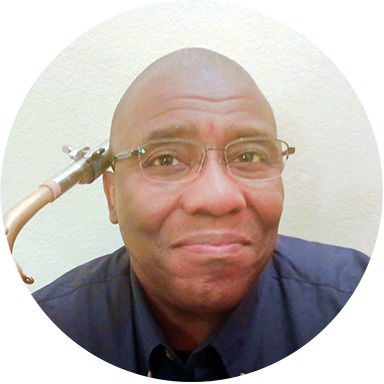
William Owens

William Owens has spent decades composing music that balances artistic substance with practical classroom demands. A Gary, Indiana native and 1985 graduate of VanderCook College of Music, he has built a prolific catalog of over 300 works for concert band, string orchestra, and small ensemble since 1993, earning recognition from the American Bandmasters Association, ASCAP, and his alma mater as a Distinguished Alumnus.

Owens brings three decades of band directing experience to his compositional voice, which has made his work a fixture on required music lists and festival programs across North America. His contributions have been analyzed in educational texts, and he has received commissions from organizations including the South Plains College Department of Fine Arts and Phi Beta Mu International. He retired from full-time teaching in Texas in 2014 and now resides in Fort Worth with his wife, Georgia.

Why we love this

At the Royal Court delivers Renaissance flavor with a Grade 1.5 technical footprint, a rare combination that lets developing ensembles tackle engaging programmatic content without getting bogged down in technical complications. The three-movement structure gives directors flexibility: use it as a concert opener or closer, program individual dances, or perform it complete. Owens writes with clear understanding of what young bands can actually accomplish, making this a piece that sounds impressive to audiences while building genuine musicality rather than just technique.

What to expect

Step into a Renaissance court where elegance meets playfulness. The Basse Danse opens with stately grace, the Galliard dances with sprightly charm, and the Bransle invites the full ensemble into a joyful celebration. Owens captures the spirit of period dance forms while keeping the orchestration transparent and the joy immediate.

Who it's for

Grade 1.5 concert bands seeking repertoire with programmatic interest and historical context without scaling back musical sophistication. This works equally well for developing ensembles building confidence and for experienced young bands looking for clever, engaging material that audiences genuinely enjoy.

How to get the most out of it

  • Balance the dialogue between sections in the Basse Danse by keeping the primary melody audible without drowning out inner harmonic support; young bands often need a reminder that not every voice should play at full volume.
  • Draw attention to the rhythmic vitality of the Galliard with clear articulation and consistent pulse; the character depends on buoyancy rather than speed.
  • Shape the Bransle's repeated sections with subtle dynamic shaping and timbral variety to maintain freshness across repetitions.

How to use it

Open a concert with individual movements to establish a thematic arc, or use the complete three-movement work as a substantial mid-program selection that shows off your band's range. The festival and contest suitability makes it ideal for adjudicated events where you want musical sophistication paired with accessible execution.

Skills your students will build

  • Phrasing and articulation in contrasting dance styles
  • Balance between melody and accompaniment within homophonic textures
  • Stylistic awareness of period forms and their musical characteristics
  • Sustained tone control in legato passages
  • Rhythmic precision in syncopated and dotted figures

You May Also Like
