
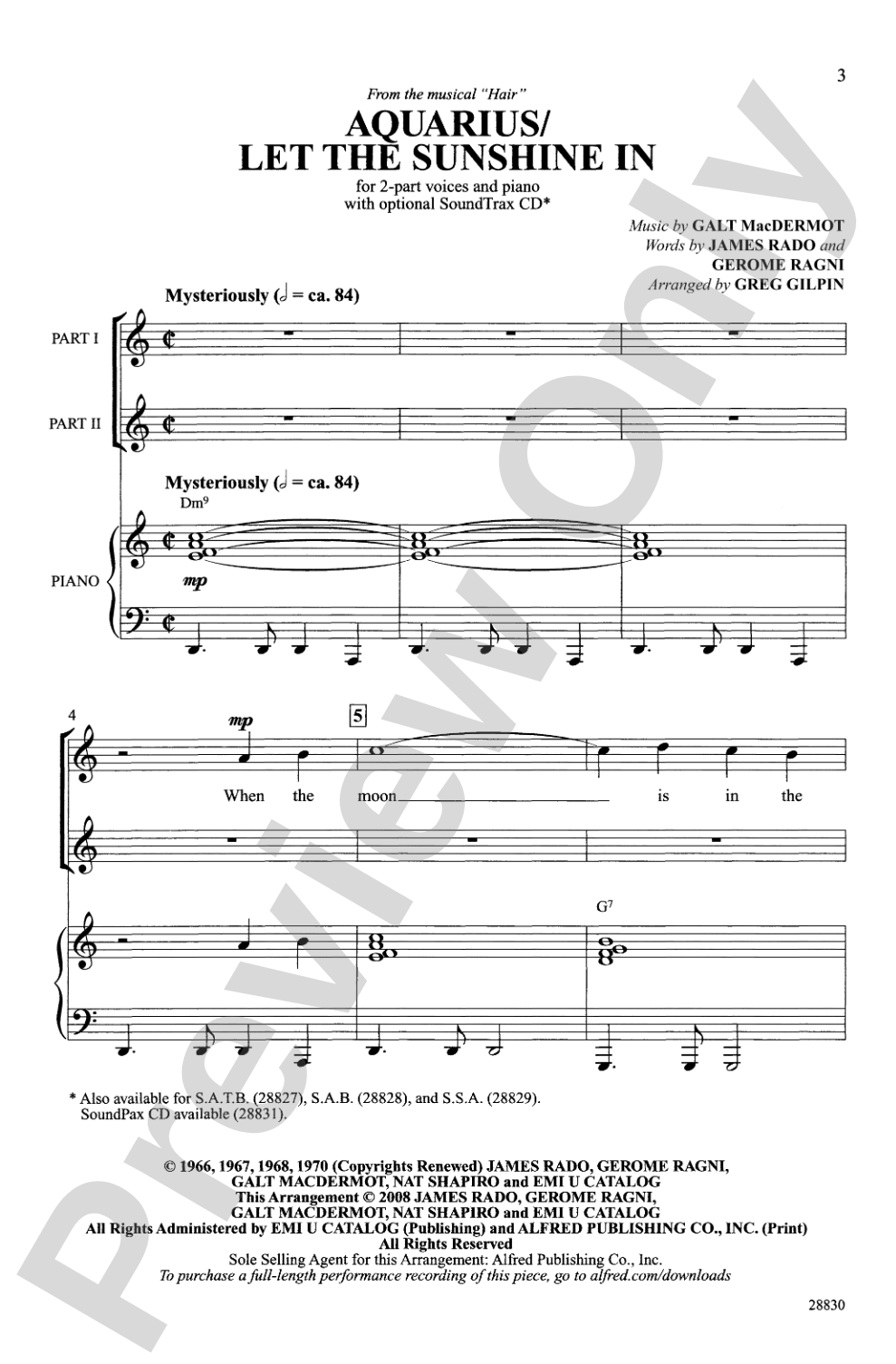

Aquarius / Let the Sunshine In: 2-Part Choral Octavo
Music by Galt MacDermot, words by James Rado and Gerome Ragni / arr. Greg Gilpin
Item: 00-PO-0002919

$2.25
Minimum order quantity: 20 copies
One moment…
Related Items
Aquarius / Let the Sunshine In: SoundTrax Digital Audio Download |
$27.99
|
View | |
Aquarius / Let the Sunshine In: SATB Choral Octavo |
$2.10
|
View | |
Aquarius / Let the Sunshine In: SAB Choral Octavo |
$2.25
|
View | |
Aquarius / Let the Sunshine In: SSA Choral Octavo |
$2.25
|
View | |
Aquarius / Let the Sunshine In: SATB Choral Octavo |
$2.10
|
View | |
Aquarius / Let the Sunshine In: SAB Choral Octavo |
$2.25
|
View | |
Aquarius / Let the Sunshine In: SSA Choral Octavo |
$2.25
|
View | |
Aquarius / Let the Sunshine In: 2-Part Choral Octavo |
$2.25
|
View | |
Aquarius / Let the Sunshine In: Choral Octavo SoundTrax CD |
$27.99
|
View |
Description
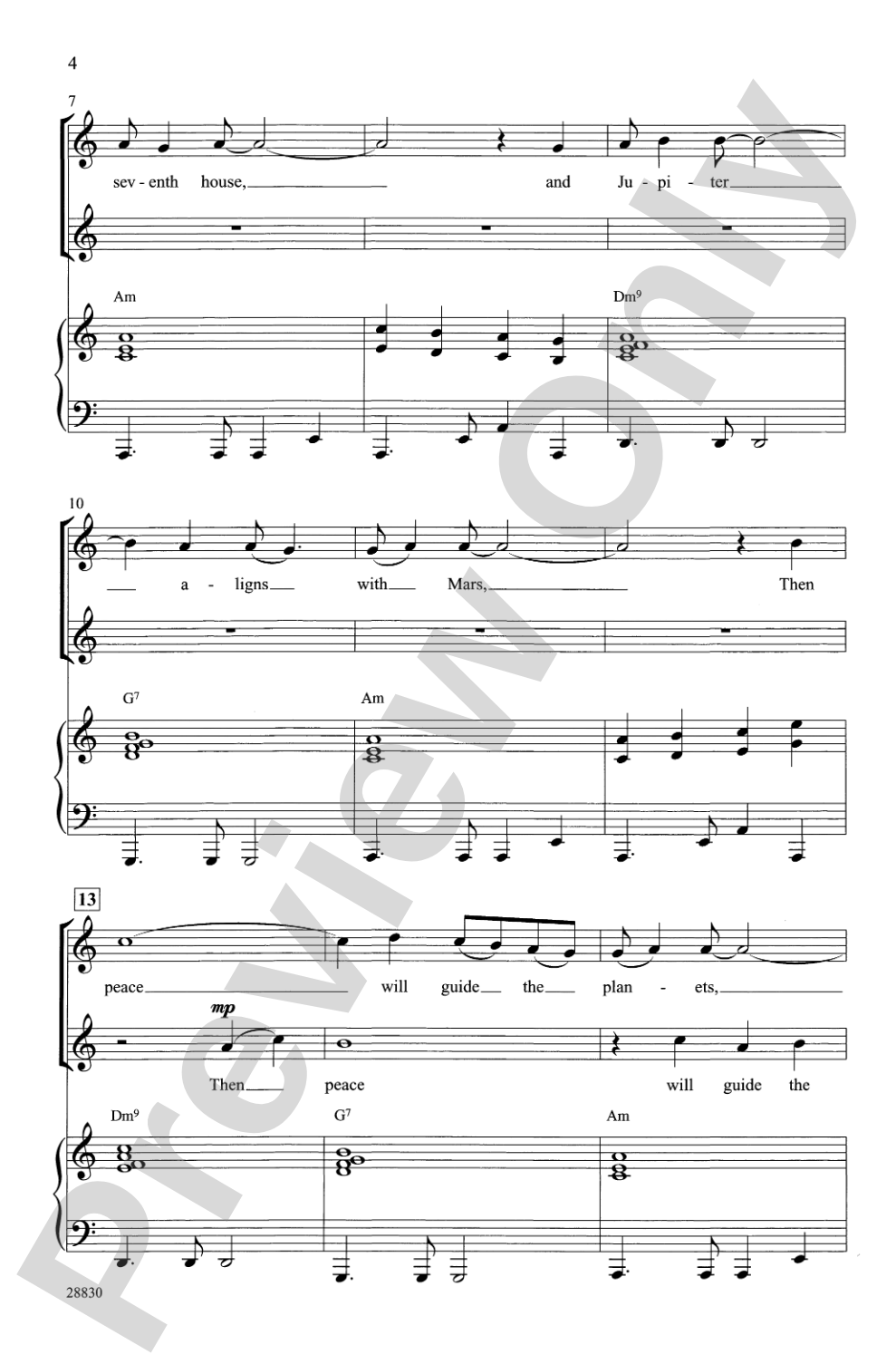
The groundbreaking musical Hair gave us many hits, including this medley, which was recorded by the vocal group The Fifth Dimension. This arrangement stays true to its 1960s roots, with a pulsing bass line and easy-singing harmonies. And the "peace and love" lyrics ring as true today as they did during the "Age of Aquarius."


Don't just read it, hear it, play along with it, and watch your students grow with it. In MakeMusic Cloud, Aquarius / Let the Sunshine In: 2-Part Choral Octavo comes alive with professional accompaniment, adjustable tempo, and built-in practice tools that turn solo practice into real progress.
Open in the Player
Jump straight in and assign it today.
Start Your Free Trial
Open this title and explore the full library in minutes.
Sample Audio
1
Audio File
--:--
0:00
0:00
Sample Video
No sample videos found.
Additional Details
Series:
Alfred Archive Edition: Alfred Pop Choral Series
Publisher:
Alfred Music
Page Count:
12
SKU:
00-PO-0002919
More about this title
About the Composer: Galt MacDermot
Galt MacDermot composed the groundbreaking score for Hair (1967), the rock musical that challenged theatrical conventions and defined a generation's soundtrack. His work blended contemporary rock and pop idioms with Broadway sophistication, creating music that felt urgent and of-the-moment rather than traditionally operatic. MacDermot's willingness to embrace electric instruments, vernacular harmony, and social relevance helped legitimize popular music as serious compositional material.
Why we love this
Greg Gilpin's arrangement preserves the infectious groove and optimistic energy of the original while making it genuinely singable for two-part choirs. The pulsing bass line anchors the piece without overwhelming younger or less experienced singers, and the harmonies sit naturally in the treble and lower voice ranges. Programming this medley signals to your audience that choral music can be contemporary, socially aware, and joyful all at once.
What to expect
Optimistic and energized, with a modern-retro character that feels both familiar and surprising. The pulsing accompaniment creates an infectious forward momentum, while the clean two-part harmonies let the peace-and-love message come through with genuine warmth rather than kitsch. Singers experience the satisfaction of locking into a groove while making something that sounds polished and complete.
Who it's for
Two-part choirs at the middle school, high school, or community level will find this medley accessible and engaging. Singers appreciate repertoire that connects to real musical culture and popular history, and this arrangement delivers both without requiring advanced vocal technique. Directors looking to program something with contemporary relevance and historical significance will find a piece that teaches musicianship while celebrating the joy of singing together.
How to get the most out of it
- Keep the bass line steady and grounded throughout; it's the heartbeat of the arrangement and establishes the 1960s groove that makes the piece work.
- Shape the phrase "Let the sunshine in" with a gentle dynamic rise, then release the final vowel cleanly to let the accompaniment shine through.
- Encourage singers to feel the "peace and love" message in their tone quality; the lyrics invite sincerity, not irony.
- Balance the two voice parts so neither overwhelms the other; the beauty lies in how they interlock rather than one dominating the texture.
How to use it
This works beautifully as an opener or closer to a concert program, especially one featuring other pop or contemporary choral work. Pair it with other Broadway arrangements or 1960s-inspired pieces to build a thematic set about music and social change. The 12-page length makes it ideal for a program that needs substance without monopolizing rehearsal time.
Skills your students will build
- Singing in two-part harmony with secure voice independence
- Locking into a rhythmic groove and maintaining pulse across phrase boundaries
- Performing popular music with vocal maturity and intention rather than pastiche
- Balancing ensemble tone when parts move at different rhythmic rates