
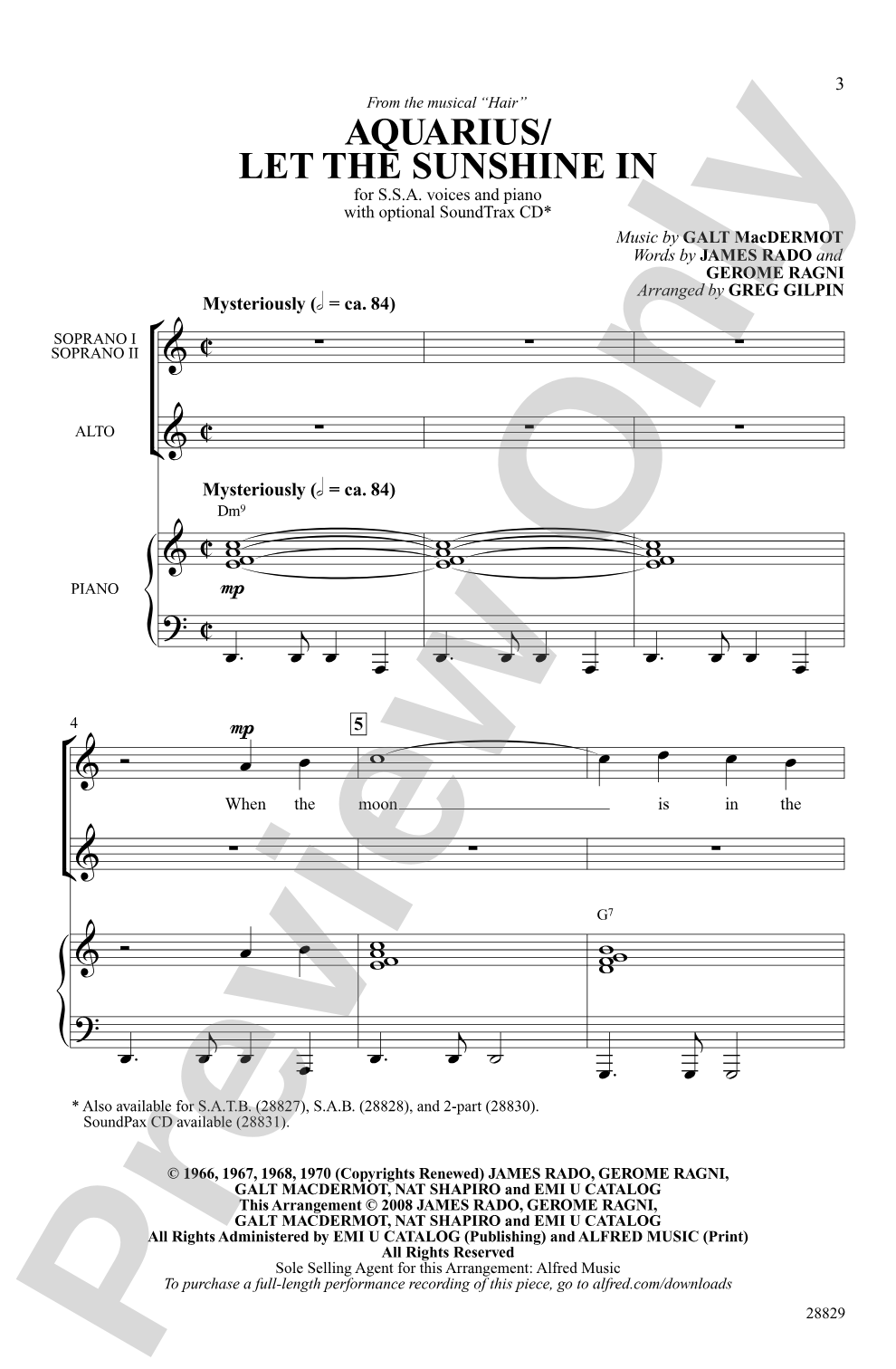
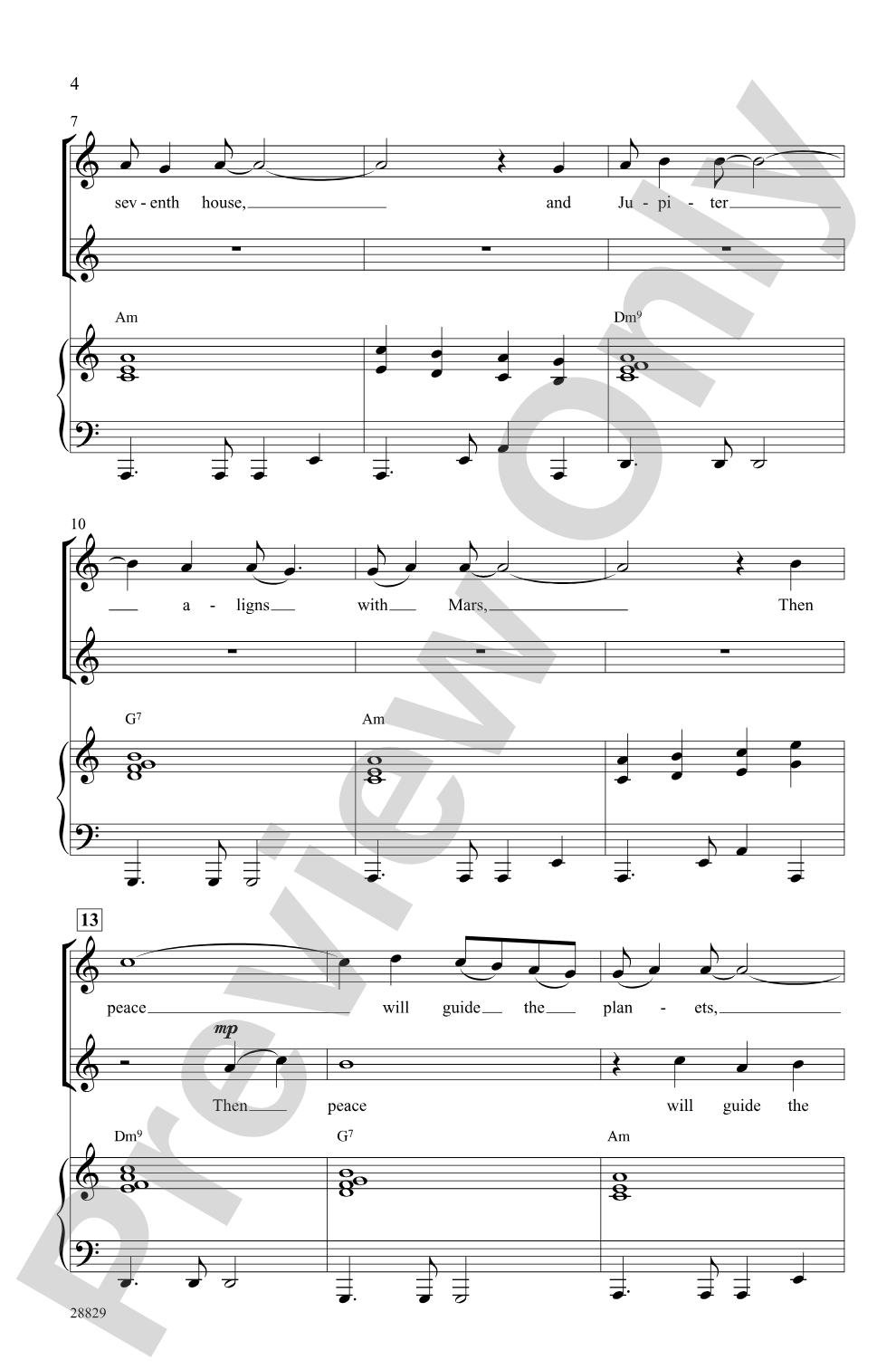

Aquarius / Let the Sunshine In: SSA Choral Octavo
Music by Galt MacDermot, words by James Rado and Gerome Ragni / arr. Greg Gilpin
Item: 00-PO-0002311

$2.25
Minimum order quantity: 20 copies
One moment…
Related Items
Aquarius / Let the Sunshine In: SoundTrax Digital Audio Download |
$27.99
|
View | |
Aquarius / Let the Sunshine In: SATB Choral Octavo |
$2.10
|
View | |
Aquarius / Let the Sunshine In: SAB Choral Octavo |
$2.25
|
View | |
Aquarius / Let the Sunshine In: 2-Part Choral Octavo |
$2.25
|
View | |
Aquarius / Let the Sunshine In: SATB Choral Octavo |
$2.10
|
View | |
Aquarius / Let the Sunshine In: SAB Choral Octavo |
$2.25
|
View | |
Aquarius / Let the Sunshine In: SSA Choral Octavo |
$2.25
|
View | |
Aquarius / Let the Sunshine In: 2-Part Choral Octavo |
$2.25
|
View | |
Aquarius / Let the Sunshine In: Choral Octavo SoundTrax CD |
$27.99
|
View |
Description
The groundbreaking musical Hair gave us many hits, including this medley, which was recorded by the vocal group The Fifth Dimension. This arrangement stays true to its 1960s roots, with a pulsing bass line and easy-singing harmonies. And the "peace and love" lyrics ring as true today as they did during the "Age of Aquarius."


Don't just read it, hear it, play along with it, and watch your students grow with it. In MakeMusic Cloud, Aquarius / Let the Sunshine In: SSA Choral Octavo comes alive with professional accompaniment, adjustable tempo, and built-in practice tools that turn solo practice into real progress.
Open in the Player
Jump straight in and assign it today.
Start Your Free Trial
Open this title and explore the full library in minutes.
Sample Audio
1
Audio File
--:--
0:00
0:00
Sample Video
No sample videos found.
Additional Details
Series:
Alfred Archive Edition: Alfred Pop Choral Series
Publisher:
Alfred Music
Page Count:
12
SKU:
00-PO-0002311
More about this title
About the Composer: Galt MacDermot
Galt MacDermot (1928-2018) was a Canadian composer who fundamentally changed American musical theater with Hair, the 1967 rock musical that became a cultural phenomenon. His innovative score blended rock, soul, and pop idioms with classical harmonic sophistication, creating a sound that defined a generation's music. MacDermot went on to compose for theater, film, and television, but Hair remains his most enduring legacy in music education and popular culture.
Why we love this
Greg Gilpin's SSA arrangement captures the infectious energy and optimism of the original without sacrificing musical substance. The pulsing bass line and intuitive harmony voicings make this accessible to developing singers while preserving the piece's cultural weight and contemporary relevance. Programming this medley signals to audiences that your choir engages with music that shaped American culture, not just classical repertoire.
What to expect
The arrangement radiates warmth and cautious hope. The opening builds with a gentle, pulsing energy that feels less like a political statement and more like shared conversation among friends. By the time "Let the Sunshine In" arrives, the piece has earned an emotional directness that resonates regardless of when it's performed.
Who it's for
This arrangement fits choirs with developing to intermediate treble sections seeking repertoire that connects with modern audiences. Directors programming mixed-level concerts or seeking to build bridges between classical and contemporary vocal music will find this accessible yet substantive.
How to get the most out of it
- Lock the rhythm section (bass line and harmonic pulse) before layering melody parts. The groove is fundamental to the arrangement's character, so even a capella rehearsals benefit from establishing this foundation first.
- Balance the melody across your soprano section rather than concentrating it in the highest voices. This arrangement distributes the tune strategically, and spreading the responsibility prevents fatigue and improves blend.
- Lean into the relaxed, conversational quality of the lyrical passages. These songs came from a musical celebrating authenticity, so overly polished articulation can work against the piece's spirit.
- Use the recorded accompaniment to establish tempo and feel during early rehearsals. The groove sits differently in SSA voicing than in other versions, and hearing the intended phrasing accelerates your singers' internalization.
How to use it
This medley works beautifully as a concert closer, offering a joyful send-off that acknowledges contemporary concerns without heaviness. It also bridges thematic programming effectively; pair it with other repertoire exploring social values, or use it to showcase how your choir engages with American musical theater across generations.
Skills your students will build
- Groove-based rhythm reading and ensemble lock with syncopated accompaniment
- Sustaining tone in block harmonies across multiple phrase lengths
- Stylistically informed phrasing in pop and rock idioms
- SSA voice distribution and range management in close harmony