
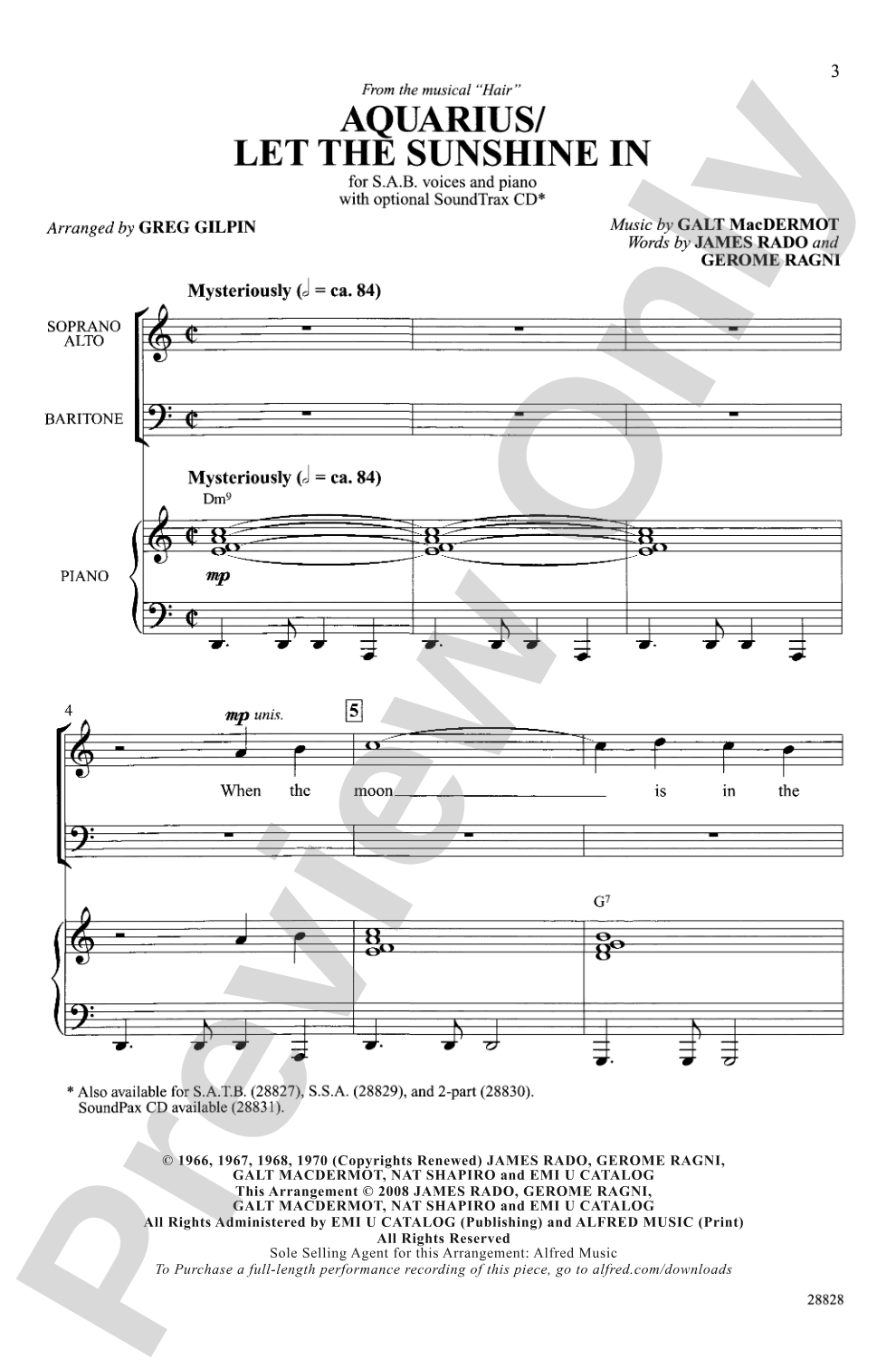

Aquarius / Let the Sunshine In: SAB Choral Octavo
Music by Galt MacDermot, words by James Rado and Gerome Ragni / arr. Greg Gilpin
Item: 00-PO-0002918

$2.25
Minimum order quantity: 20 copies
One moment…
Related Items
Aquarius / Let the Sunshine In: SoundTrax Digital Audio Download |
$27.99
|
View | |
Aquarius / Let the Sunshine In: SATB Choral Octavo |
$2.10
|
View | |
Aquarius / Let the Sunshine In: SSA Choral Octavo |
$2.25
|
View | |
Aquarius / Let the Sunshine In: 2-Part Choral Octavo |
$2.25
|
View | |
Aquarius / Let the Sunshine In: SATB Choral Octavo |
$2.10
|
View | |
Aquarius / Let the Sunshine In: SAB Choral Octavo |
$2.25
|
View | |
Aquarius / Let the Sunshine In: SSA Choral Octavo |
$2.25
|
View | |
Aquarius / Let the Sunshine In: 2-Part Choral Octavo |
$2.25
|
View | |
Aquarius / Let the Sunshine In: Choral Octavo SoundTrax CD |
$27.99
|
View |
Description
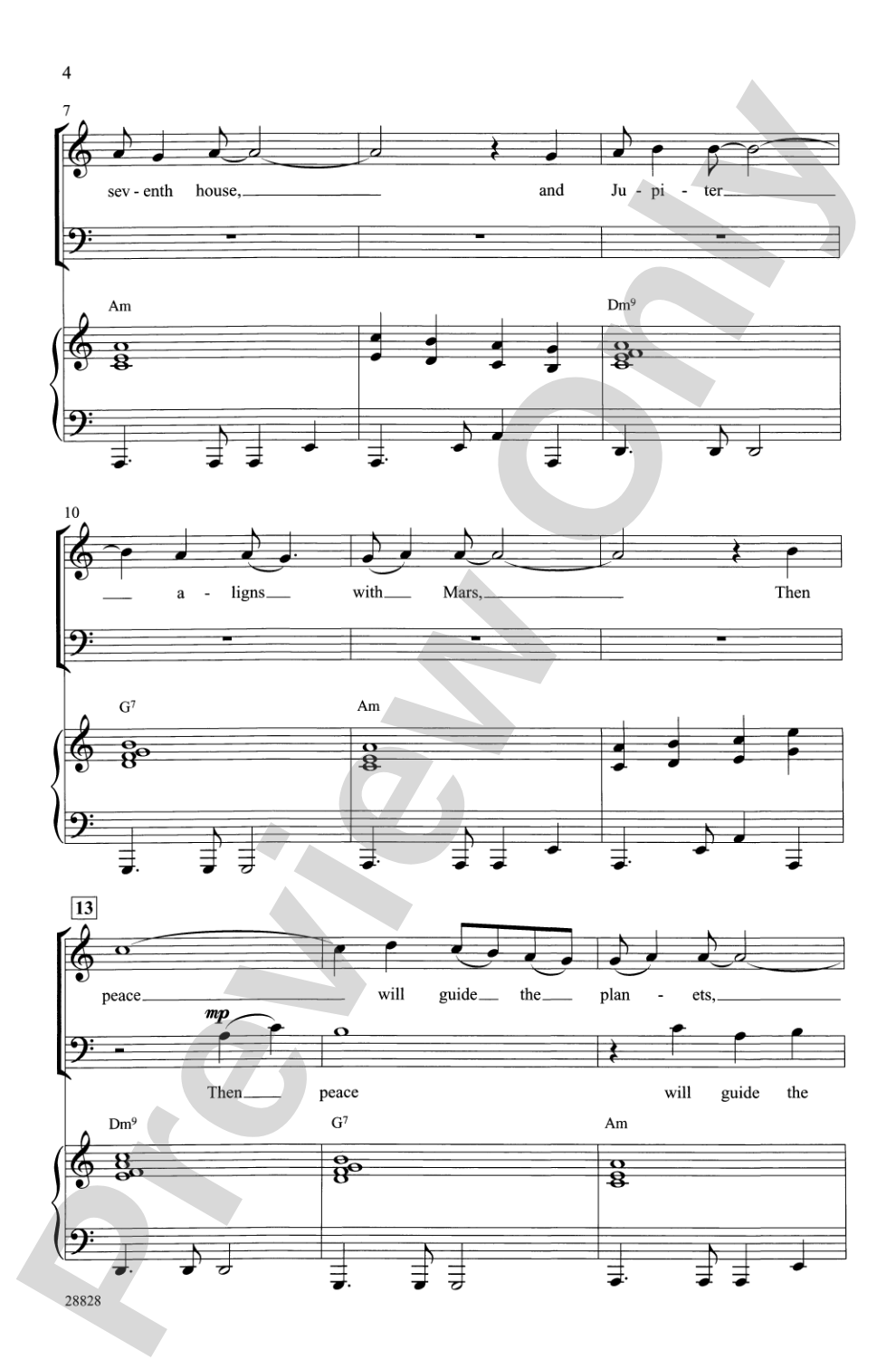
The groundbreaking musical Hair gave us many hits, including this medley, which was recorded by the vocal group The Fifth Dimension. This arrangement stays true to its 1960s roots, with a pulsing bass line and easy-singing harmonies. And the "peace and love" lyrics ring as true today as they did during the "Age of Aquarius."


Don't just read it, hear it, play along with it, and watch your students grow with it. In MakeMusic Cloud, Aquarius / Let the Sunshine In: SAB Choral Octavo comes alive with professional accompaniment, adjustable tempo, and built-in practice tools that turn solo practice into real progress.
Open in the Player
Jump straight in and assign it today.
Start Your Free Trial
Open this title and explore the full library in minutes.
Sample Audio
1
Audio File
--:--
0:00
0:00
Sample Video
No sample videos found.
Additional Details
Series:
Alfred Archive Edition: Alfred Pop Choral Series
Publisher:
Alfred Music
Page Count:
12
SKU:
00-PO-0002918
More about this title
About the Composer: Galt MacDermot
Galt MacDermot composed the score for Hair, the 1967 musical that challenged theatrical conventions and became a landmark of its era. His work on Hair earned him a Tony Award nomination and demonstrated his gift for writing melodies that were both contemporary and emotionally resonant. Beyond Hair, MacDermot continued composing for stage and film, bringing a sophisticated harmonic language to popular music contexts.
Why we love this
Greg Gilpin's arrangement captures the essential spirit of this iconic medley without requiring a full choir or complex vocal writing. The pulsing bass line and open harmonies make this genuinely singable for developing choirs while maintaining the infectious energy that made "Aquarius" and "Let the Sunshine In" enduring standards. You'll find this piece works equally well in concert, community settings, or as a morale-boosting addition to any mixed voices rehearsal.
What to expect
Optimistic and buoyant, with a groove that feels immediate and modern despite its 1960s origins. The arrangement channels the idealism of its source material while remaining straightforward and listenable. Audiences hear the famous melodies right away, making this feel both nostalgic and genuinely fun to sing.
Who it's for
This medley suits mixed choirs (SAB voicing) at the middle school, high school, or community level who want a Broadway selection that's accessible without being trivial. It works for choirs seeking feel-good, uplifting repertoire that appeals to singers and audiences alike. Directors looking to program something with recognizable melodies and cultural relevance will find this a natural fit.
How to get the most out of it
- Keep the bass line rhythmically precise and energetic; it's the heartbeat of the arrangement and needs consistent pulse from rehearsal onward.
- Balance the three parts so the melody remains audible in the sopranos without drowning the harmonic support from altos and baritones.
- Emphasize the legit (straight-tone) quality of the melody lines; resist oversinging or adding excessive vibrato, which pulls away from the pop style's directness.
- Take advantage of the recorded accompaniment to lock in the groove during sectional rehearsals and to build confidence in less experienced singers.
How to use it
Program this as a spring concert opener or closer to set an uplifting mood, or use it alongside other pop or musical theatre selections to create a themed concert segment. It pairs naturally with other accessible Broadway arrangements and provides a natural contrast to classical or more formal repertoire on the same program. The recorded accompaniment makes it flexible enough to perform with or without piano support, depending on your setting.
Skills your students will build
- Sustaining a rhythmic pulse in a pop-influenced harmonic texture
- Three-part voice independence in an accessible mixed voicing
- Balancing melody and harmonic support within a single vocal line
- Connecting lyrics to groove and contemporary vocal style
- Ensemble blend across SAB ranges