
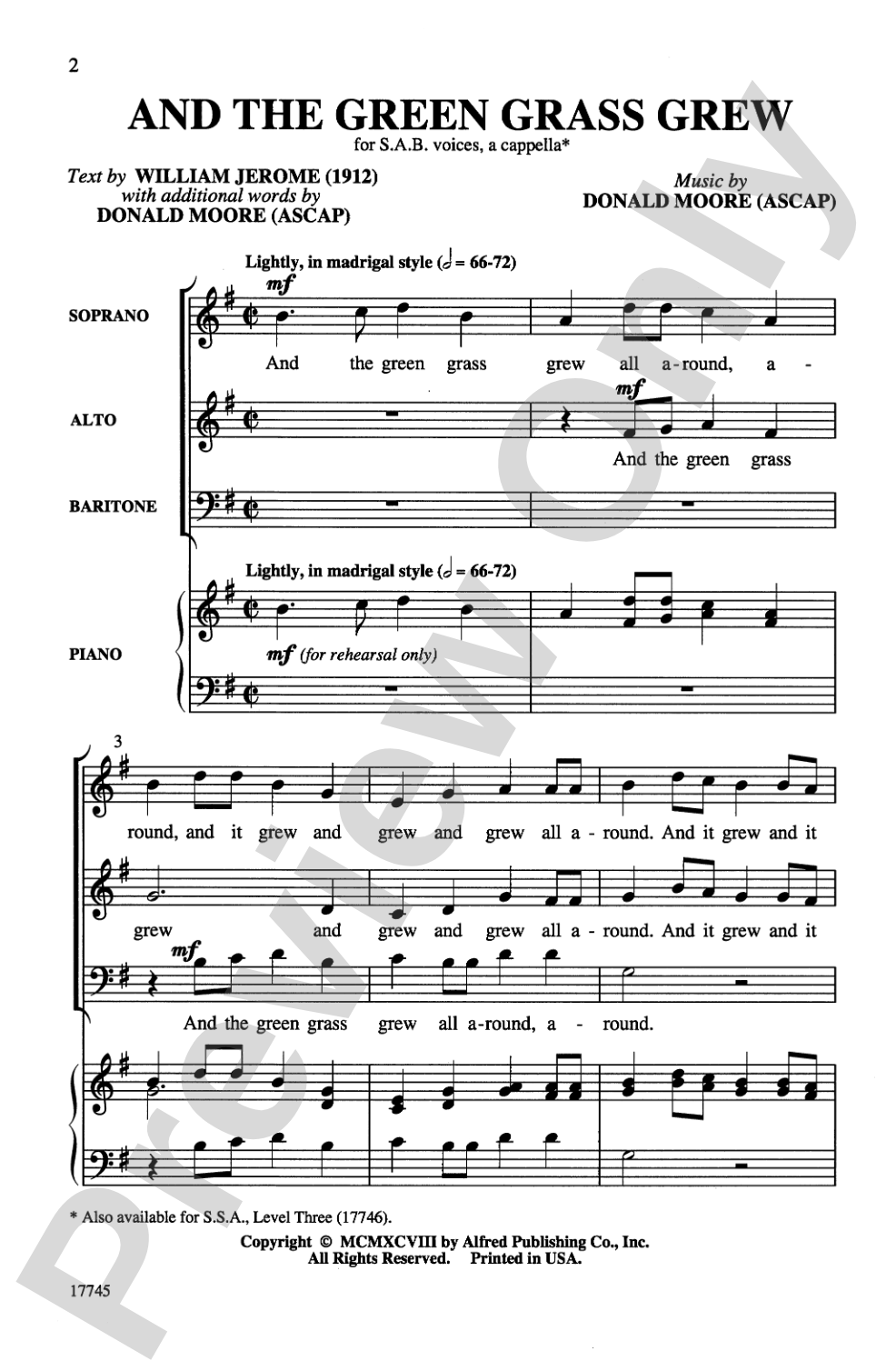
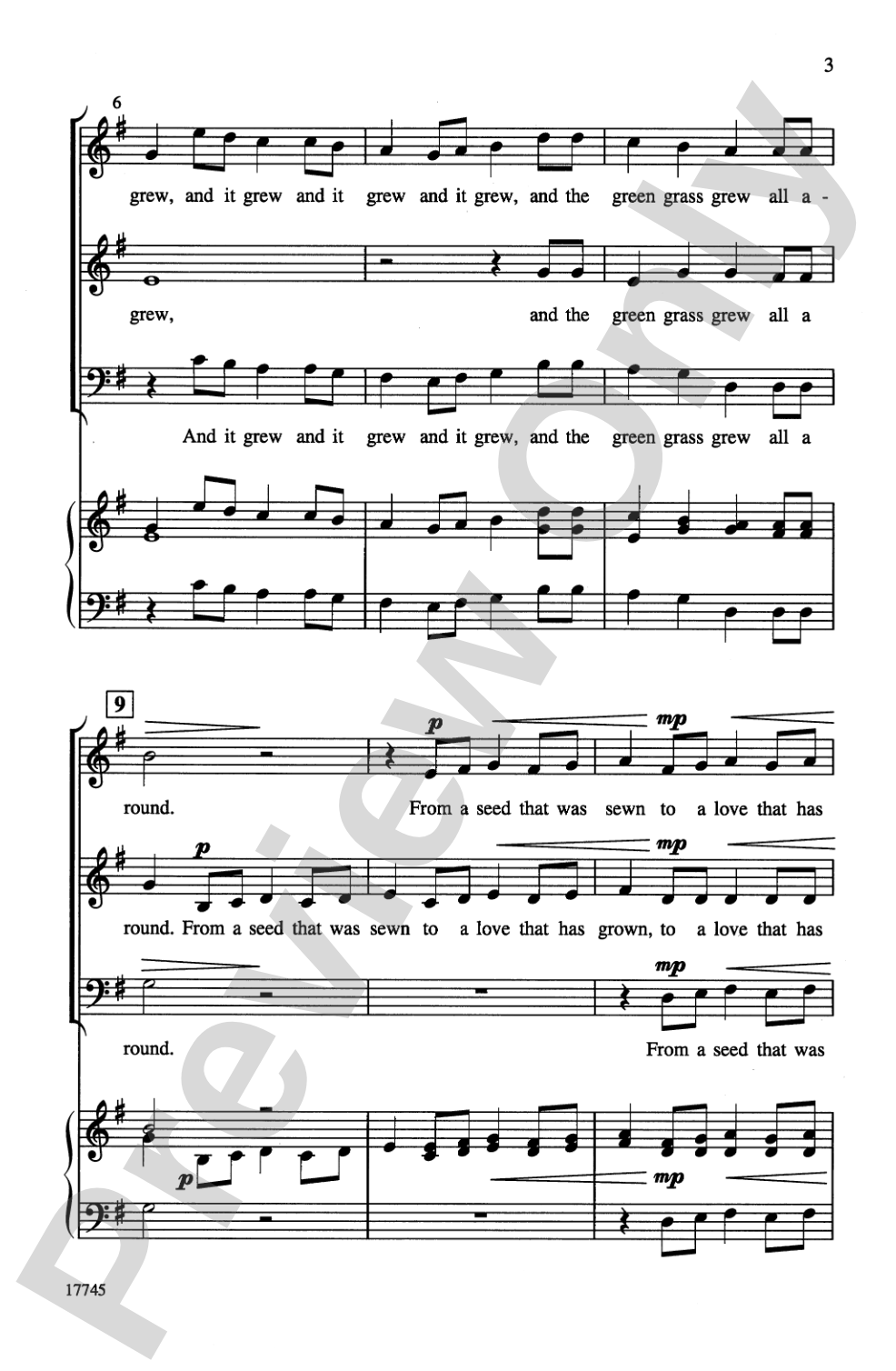

And the Green Grass Grew: SAB, a cappella Choral Octavo
Music by Donald Moore
Item: 00-PO-0002114

$2.25
Minimum order quantity: 20 copies
Pickup currently not available
Description
An original, newly composed madrigal written for developing SAB and SSA choirs. Great for any choir of any size learning to sing in the madrigal style. The unique text, written in 1912 by William Jerome, is perfect for madrigal singing and is especially appropriate in the spring. Echoes and repeated sections make for easy learning.


Don't just read it, hear it, play along with it, and watch your students grow with it. In MakeMusic Cloud, And the Green Grass Grew: SAB, a cappella Choral Octavo comes alive with professional accompaniment, adjustable tempo, and built-in practice tools that turn solo practice into real progress.
Open in the Player
Jump straight in and assign it today.
Start Your Free Trial
Open this title and explore the full library in minutes.
Sample Audio
1
Audio File
--:--
0:00
0:00
Sample Video
No sample videos found.
Additional Details
Series:
Alfred Archive Edition: Alfred Choral Designs
Publisher:
Alfred Music
Page Count:
8
SKU:
00-PO-0002114
More about this title
About the Composer: Donald Moore

Donald Moore earned degrees in organ performance and music education from Kent State University. As Organist-Choirmaster at Pilgrim United Church of Christ in Cuyahoga Falls, Ohio, he has built a distinguished career as a composer and arranger, with over 500 published works across sacred, secular, educational, and pop repertoire through Alfred Music Publishing, Hal Leonard, Heritage Music Press, and other major publishers.
Moore's compositions regularly appear on state festival and contest programs, and his work has been presented at state, regional, national, and international music conventions. A seventeen-time recipient of the ASCAP Composers Standard Award, he was recently recognized by the American Choral Directors Association as one of 400 elite composers of significance in American choral music history. Beyond composing, Moore is also an accomplished arranger and author of educational music resources.
Why we love this
Moore captures the madrigal style with genuine wit and accessibility, setting Jerome's charming 1912 text to music that feels both period-informed and immediately singable. The repeating sections and echoes make this an ideal entry point for singers who haven't tackled madrigals before, yet the harmonic language keeps things interesting enough that experienced singers will find genuine musical substance. Its spring context and lighthearted character make it a natural fit for festival season programming.
What to expect
Fresh and playful, with a gentle pastoral charm that evokes springtime and natural growth. The echoing textures create intimacy among the singers, and Jerome's text lands with surprising humor and warmth in Moore's setting.
Who it's for
This piece works for any developing SAB or SSA choir, from middle school through community ensembles, that wants genuine madrigal experience without the historical complexity. Its accessible vocal ranges and built-in repetition make it ideal for singers new to the style, while its musicality rewards careful preparation from any group.
How to get the most out of it
- Shape each echo section with clarity and just slightly reduced dynamic; echoes should feel like responses, not repetitions. This gives the madrigal style its conversational quality.
- Pay attention to how the three voices interact during overlapping sections. Blend the vocal lines so that no single part dominates, and ensure the sopranos and tenors sit well above the altos.
- Encourage singers to lift consonants cleanly and stay engaged through rests; a cappella clarity depends on rhythmic precision across all parts, especially when voices enter at staggered moments.
How to use it
Schedule this in the spring half of your concert season, where its seasonal relevance and accessible style provide a bright contrast to heavier repertoire. It also works beautifully in a madrigal set or as an opening piece that invites audiences into a lighter mood before moving into more substantial work.
Skills your students will build
- Singing madrigal style, including proper phrasing and characteristic articulation
- Managing overlapping vocal lines and echoing textures in a cappella settings
- Blending three-part mixed voicing without instrumental support
- Reading SAB voicing and balancing soprano, alto, and tenor parts
- Maintaining rhythmic precision and textual clarity in a cappella performance