
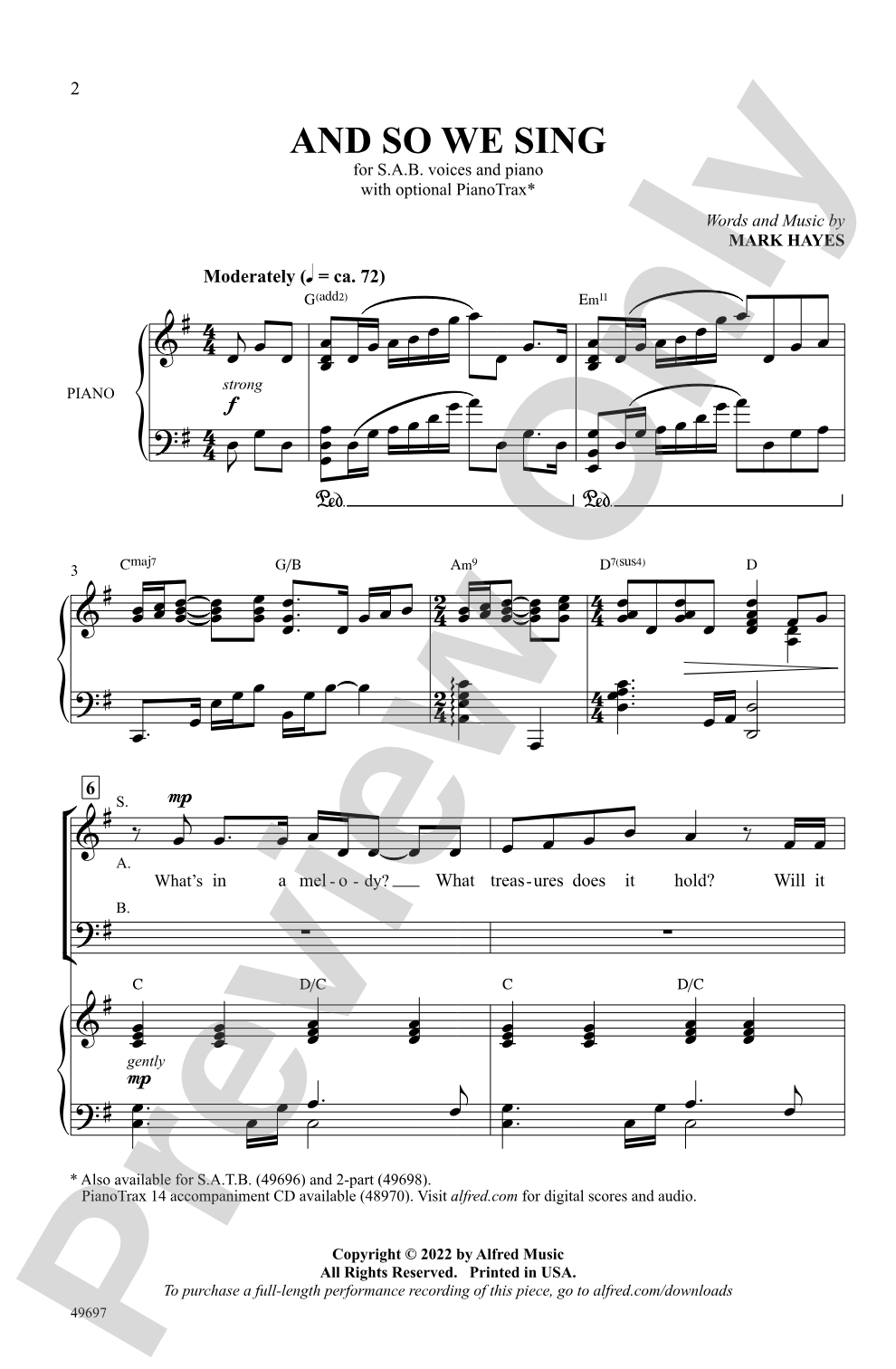
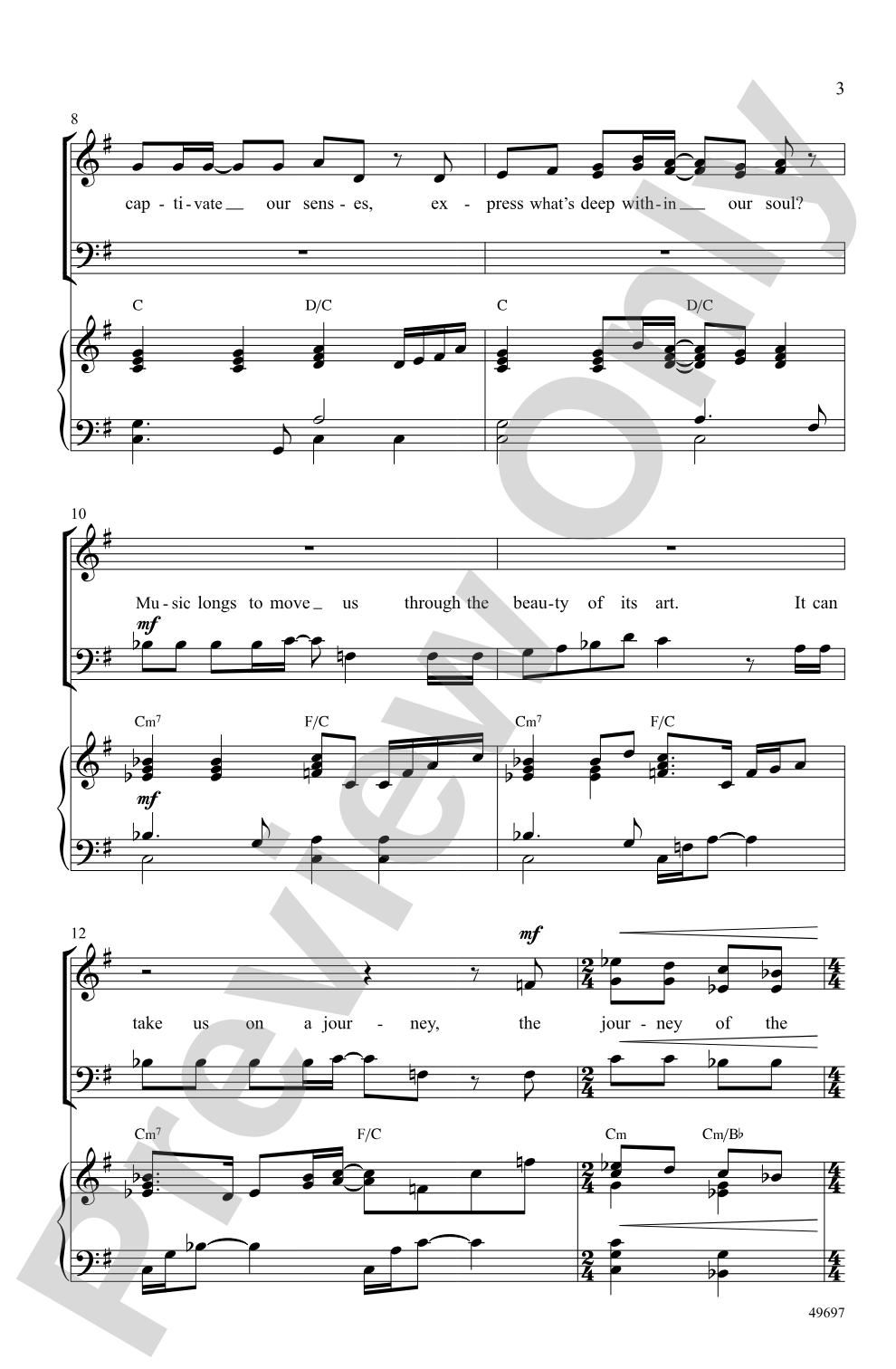
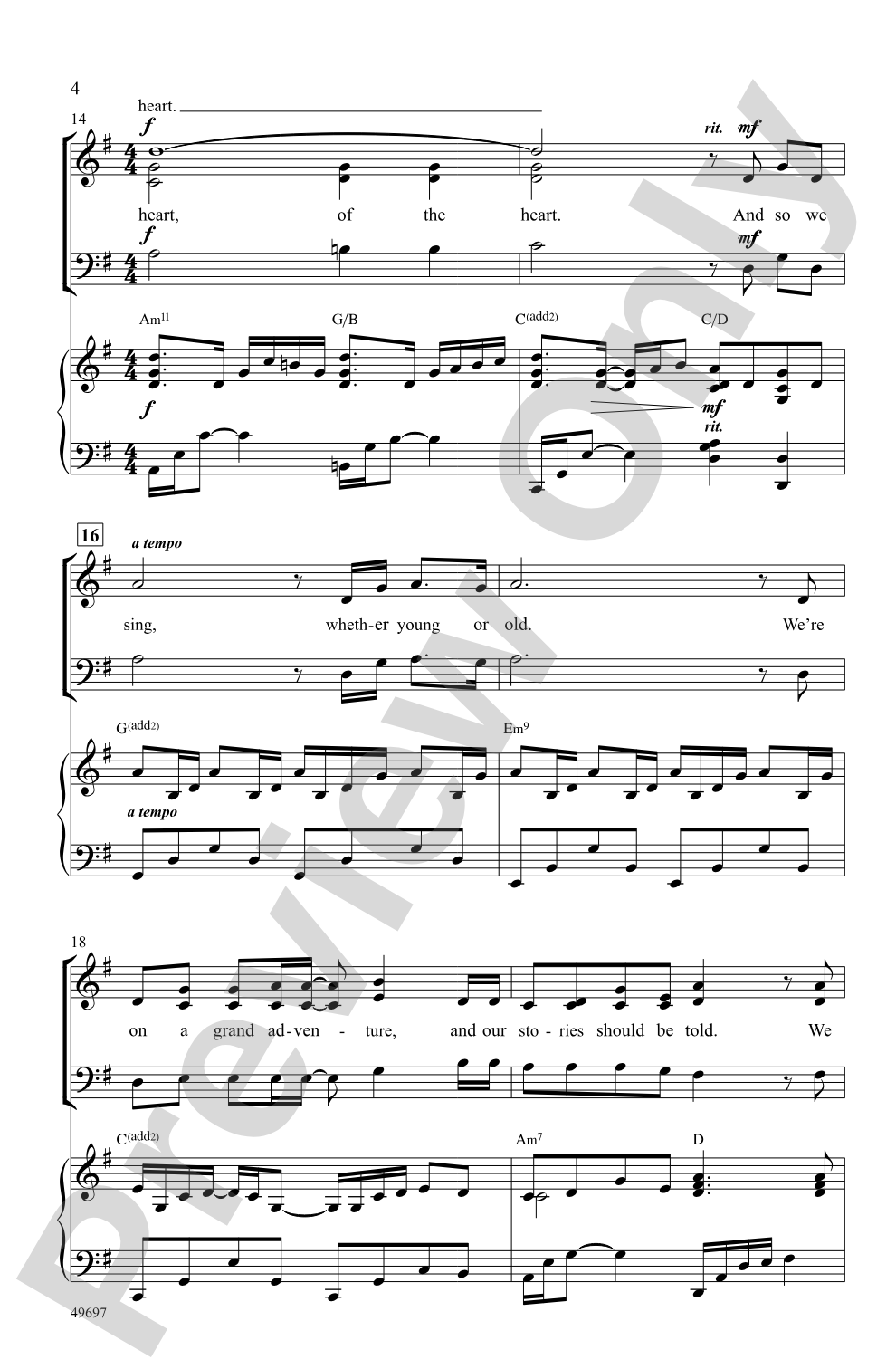

And So We Sing: SAB Choral Octavo
Words and music by Mark Hayes
Item: 00-PO-0006908
$2.05
Minimum order quantity: 20 copies
Pickup currently not available
Related Items
And So We Sing: SATB Choral Octavo |
$2.05
|
View | |
And So We Sing: TTBB Choral Octavo |
$2.50
|
View | |
And So We Sing: 2-Part Choral Octavo |
$2.05
|
View | |
And So We Sing: PianoTrax Digital Audio Download |
$9.99
|
View | |
And So We Sing: SATB Choral Octavo |
$2.05
|
View | |
And So We Sing: SAB Choral Octavo |
$2.05
|
View | |
And So We Sing: TTBB Choral Octavo |
$2.50
|
View | |
And So We Sing: 2-Part Choral Octavo |
$2.05
|
View |
Description
Here's a grand celebration of music from esteemed contemporary composer Mark Hayes. Effective as an opener, closer, concert theme, graduation, festival or combined choir feature, this powerhouse piece will be a high point no matter where it falls in the program! A virtuosic piano part supports full choral harmonies as the dramatic form unfolds.


And So We Sing: SAB Choral Octavo isn't in MakeMusic Cloud just yet...but it could be. Let us know you'd like to see it, and you'll help shape what comes next. In the meantime, start a free trial and dive into thousands of interactive titles your students can play along with today.
Request This Title
Tell us you want it.
Start Your Free Trial
Explore everything that's ready to play right now.
Sample Audio
1
Audio File
--:--
0:00
0:00
Sample Video
1 / 2
Additional Details
Series:
Alfred Choral Designs
Publisher:
Alfred Music
Page Count:
12
SKU:
00-PO-0006908
More about this title
About the Composer: Mark Hayes
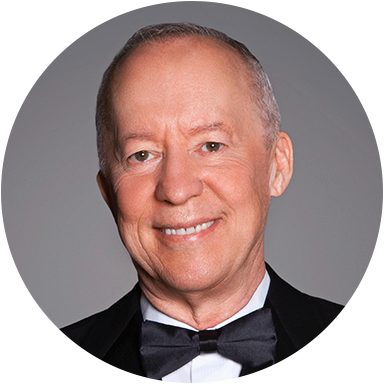
Mark Hayes has established himself as a prolific composer, arranger, and conductor whose output exceeds 1,750 published works across multiple genres. A summa cum laude graduate in piano performance from Baylor University, Hayes has conducted major ensembles at Lincoln Center, the National Cathedral, and Carnegie Hall, premiering large-scale works including his Requiem at Lincoln Center in 2013 and again at St. Ignatius Basilica in Rome as part of a Vatican-sponsored festival in 2014.
Beyond his choral and orchestral achievements, Hayes is deeply committed to keyboard writing, with over 100 piano books in print spanning classical, gospel, jazz, and Broadway idioms. His versatility extends to theater; he composed the score for Civil War Voices, which earned six awards at the Midtown International Theatre Festival in New York City, and orchestrated the musical Madame Buttermilk. Baylor University recognized his influence on Christian music with a special award in 2010. Based in Kansas City, Missouri, Hayes continues composing across sacred and secular genres while maintaining an active guest conducting schedule.
Why we love this
Mark Hayes writes with the confidence of someone who knows exactly what choirs can do and loves pushing them into exciting territory. The virtuosic piano part transforms what could be a standard arrangement into something genuinely theatrical; your accompanist becomes a full partner in the performance rather than a support player. Its versatility as an opener, closer, or standalone feature means you can build a program around it rather than forcing it into one predetermined slot.
What to expect
The piece radiates affirmation and momentum, balancing the intimacy of a celebration song with the grandeur of something meant to move a room. The interplay between voices and piano creates moments of both lush harmony and dramatic clarity, building toward a finish that feels inevitable rather than imposed.
Who it's for
This piece belongs in programs featuring intermediate to advanced choirs comfortable with Hayes's contemporary harmonic language and the demands of a virtuosic accompaniment. It works equally well for community choirs, church music programs, and school ensembles seeking a showcase piece with genuine musical substance.
How to get the most out of it
- Balance the choral parts carefully against the active piano writing; the accompaniment is substantial enough that singers must commit fully to their lines to avoid being buried.
- Establish clear communication about the dramatic arc with your accompanist before rehearsal begins. Hayes's form unfolds with intentional dynamics and pacing; locking in those transitions together pays immediate dividends.
- Mark the moments where the harmonic texture shifts or thickens, and use those as rehearsal anchors. SAB writing can obscure structural moments that feel obvious in full SATB scores.
- Consider the hall acoustics when balancing the lower voices (alto and bass). SAB voicing places less weight on the foundation, so ensure your lower singers project with the same energy as the sopranos.
How to use it
Program this as your concert opener to set an energetic tone immediately, or close with it for a triumphant send-off that leaves the audience on an upswing. It also serves beautifully as a festival or combined-choir feature where you want a single piece to make a strong, memorable statement without requiring an extended suite of selections.
Skills your students will build
- Sustaining consistent blend across three distinct voice parts with independent piano accompaniment
- Navigating contemporary harmonic language and chromatic voice leading
- Responding to a virtuosic keyboard part that drives the musical architecture
- Projecting SAB voicing with clarity and presence in larger concert spaces