

Amazing Grace: SATB Choral Octavo
Arr. Jay Althouse
Item: 00-PO-0002458
$2.25
Minimum order quantity: 20 copies
Pickup currently not available
Description
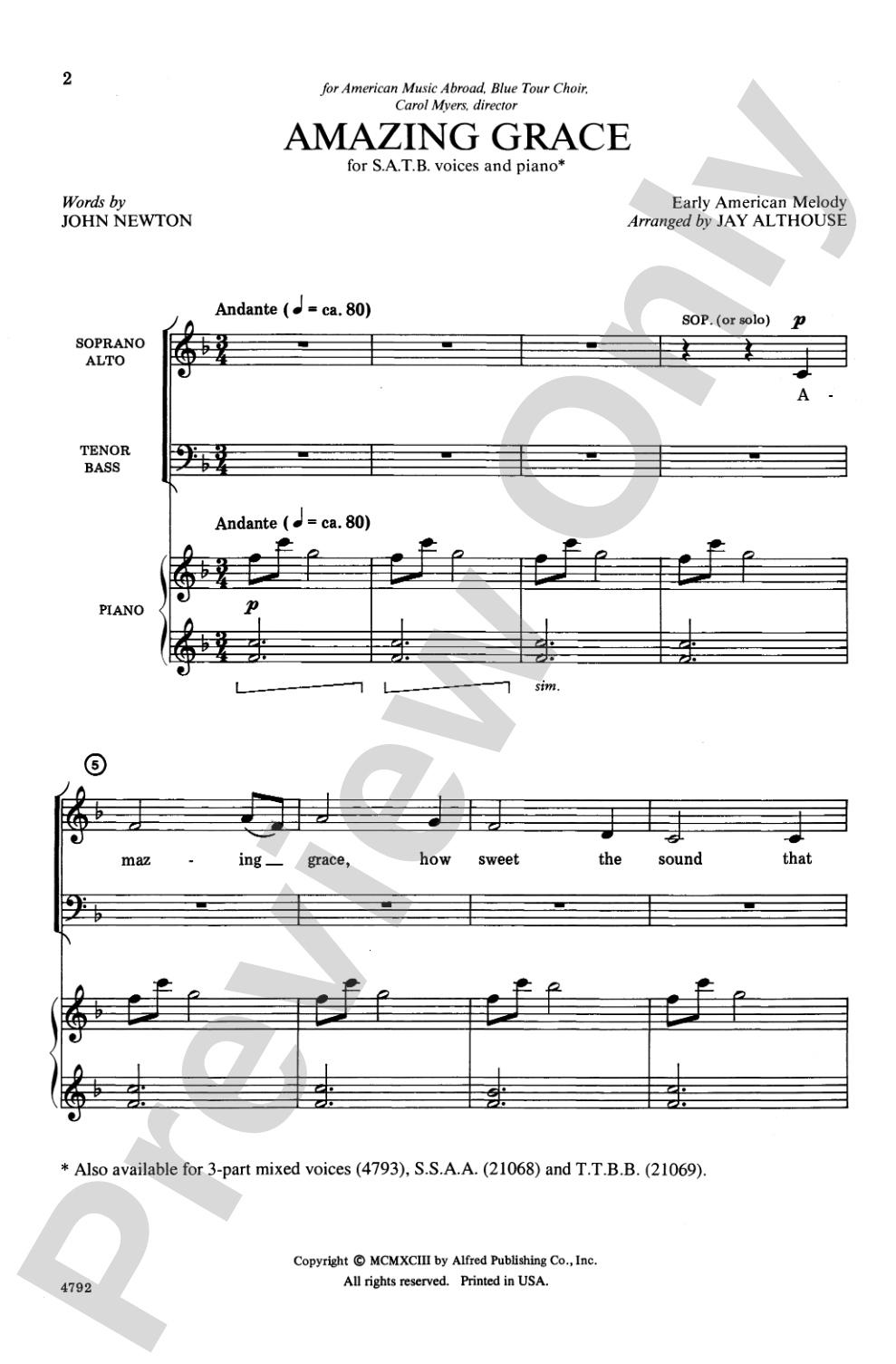
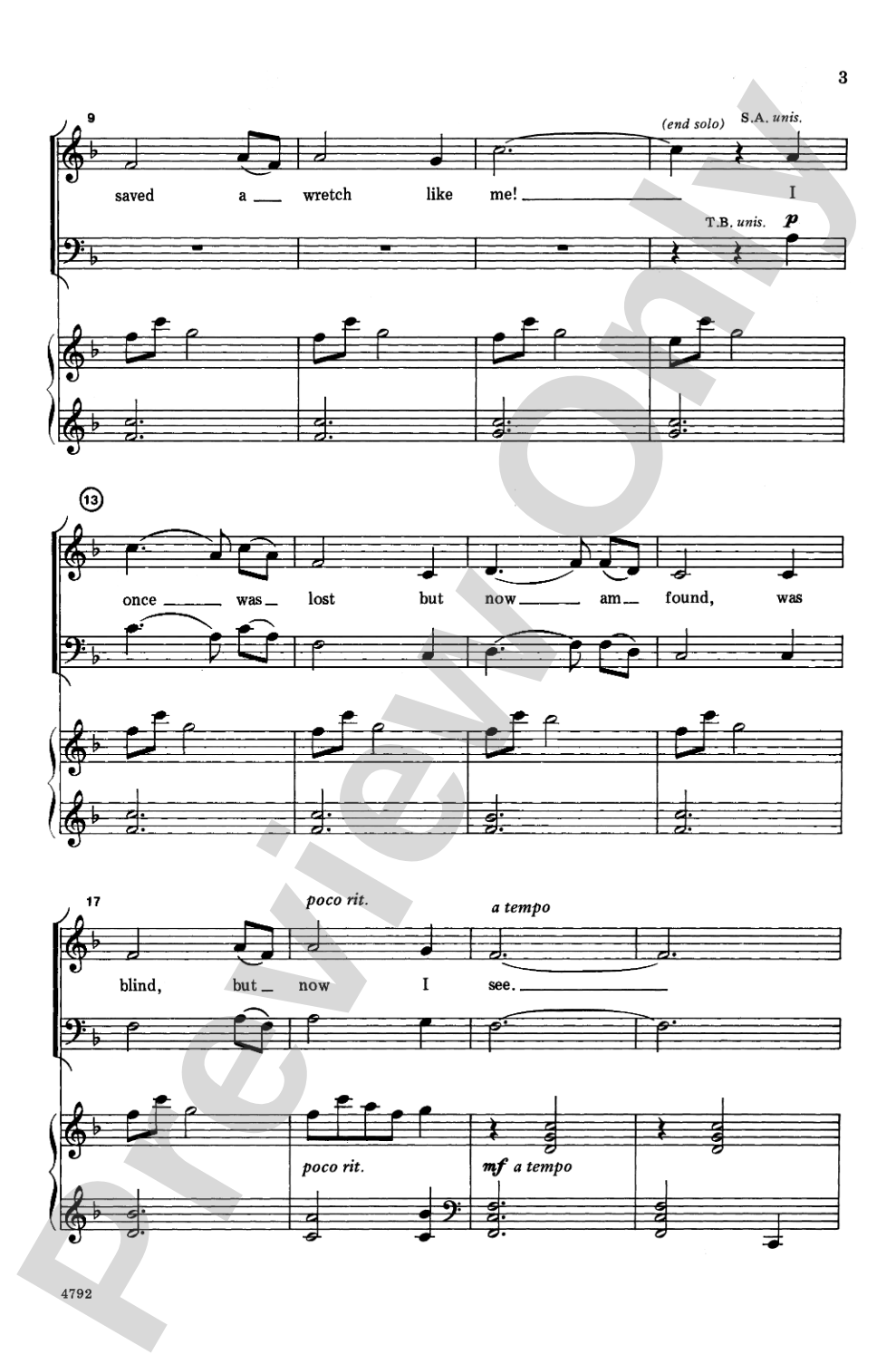
It's a sensitive and elegant setting of America's favorite folk melody. This arrangement opens with a haunting piano figure followed by a soprano solo (or section). Features an a cappella section with a harmonization reminiscent of Copland. Amazing Grace is one of Jay Althouse's finest arrangements and could become a choral classic. A touchingly simple, yet sophisticated arrangement.


Amazing Grace: SATB Choral Octavo isn't in MakeMusic Cloud just yet...but it could be. Let us know you'd like to see it, and you'll help shape what comes next. In the meantime, start a free trial and dive into thousands of interactive titles your students can play along with today.
Request This Title
Tell us you want it.
Start Your Free Trial
Explore everything that's ready to play right now.
Sample Audio
1
Audio File
--:--
0:00
0:00
Sample Video
No sample videos found.
Additional Details
Series:
Alfred Archive Edition: Alfred Choral Designs
Publisher:
Alfred Music
Page Count:
8
SKU:
00-PO-0002458
More about this title
About the Arranger: Jay Althouse

Jay Althouse holds degrees in Music Education and Music from Indiana University of Pennsylvania, where he was later honored as a Distinguished Alumnus. His eight-year tenure as rights and licenses administrator for a major educational music publisher gave him deep insight into the choral world; during this time he also served on the Executive Board of the Music Publishers Association of America.
With over 800 choral compositions in print, Althouse's work reaches choirs across the English-speaking world. He is a writer member of ASCAP and a frequent recipient of the ASCAP Special Award. Beyond his prolific output as a composer, he has co-written children's musicals with Sally K. Albrecht, curated vocal solo collections including Folk Songs for Solo Singers, and co-authored influential resources like The Complete Choral Warm-up Book and Accent on Composers. His educational publications (Ready to Read Music, Sixty Music Quizzes, One-Page Composer Bios) and his service on the National Advisory Board of the Folk Art Society of America reflect his commitment to making music accessible to students and teachers alike.
Why we love this
Althouse's approach to this American hymn strikes an almost rare balance: the arrangement respects the melody's devotional power while giving your choir something genuinely rewarding to sing. The opening piano figure and soprano solo immediately signal that this won't be a routine performance, and the Copland-inspired a cappella section offers a moment of pure vocal beauty that resonates long after the final note.
What to expect
Spare yet luminous, this setting unfolds with the quietness of reflection. The elegant piano writing creates an intimate atmosphere before the choir enters, and the a cappella passage feels like a moment of collective breath, grounded and meditative.
Who it's for
This octavo suits choirs across a wide range of levels who want to program a sacred work with both emotional depth and musical sophistication. It works equally well for community choirs seeking repertoire that speaks to universal values and for school or church choirs preparing for contest or festival performance.
How to get the most out of it
- Shape the soprano solo (or section opening) with unhurried phrasing; let the haunting piano figure breathe underneath rather than rushing toward harmonic changes.
- In the a cappella section, prioritize blend and intonation by having singers visualize the Copland-style harmonization as a unified wash of sound rather than individual parts competing for prominence.
- Balance the return to piano accompaniment carefully so the instrument doesn't overwhelm the choir's vulnerability; this is a moment of reentry, not a dramatic swell.
How to use it
Program this as a centerpiece for a concert or festival focused on American roots music or peace and brotherhood themes. Its eight-page length and moderate difficulty make it a strong choice for a spring festival slot, where it can anchor a set of spirituals and folk arrangements or stand alone as a meaningful closing piece.
Skills your students will build
- Singing sustained lines with dynamic control and phrase shaping
- Blend and intonation in a cappella four-part harmony
- Entrance and exit technique when joining and leaving piano accompaniment
- Lyrical interpretation of a familiar melody in a new harmonic context