
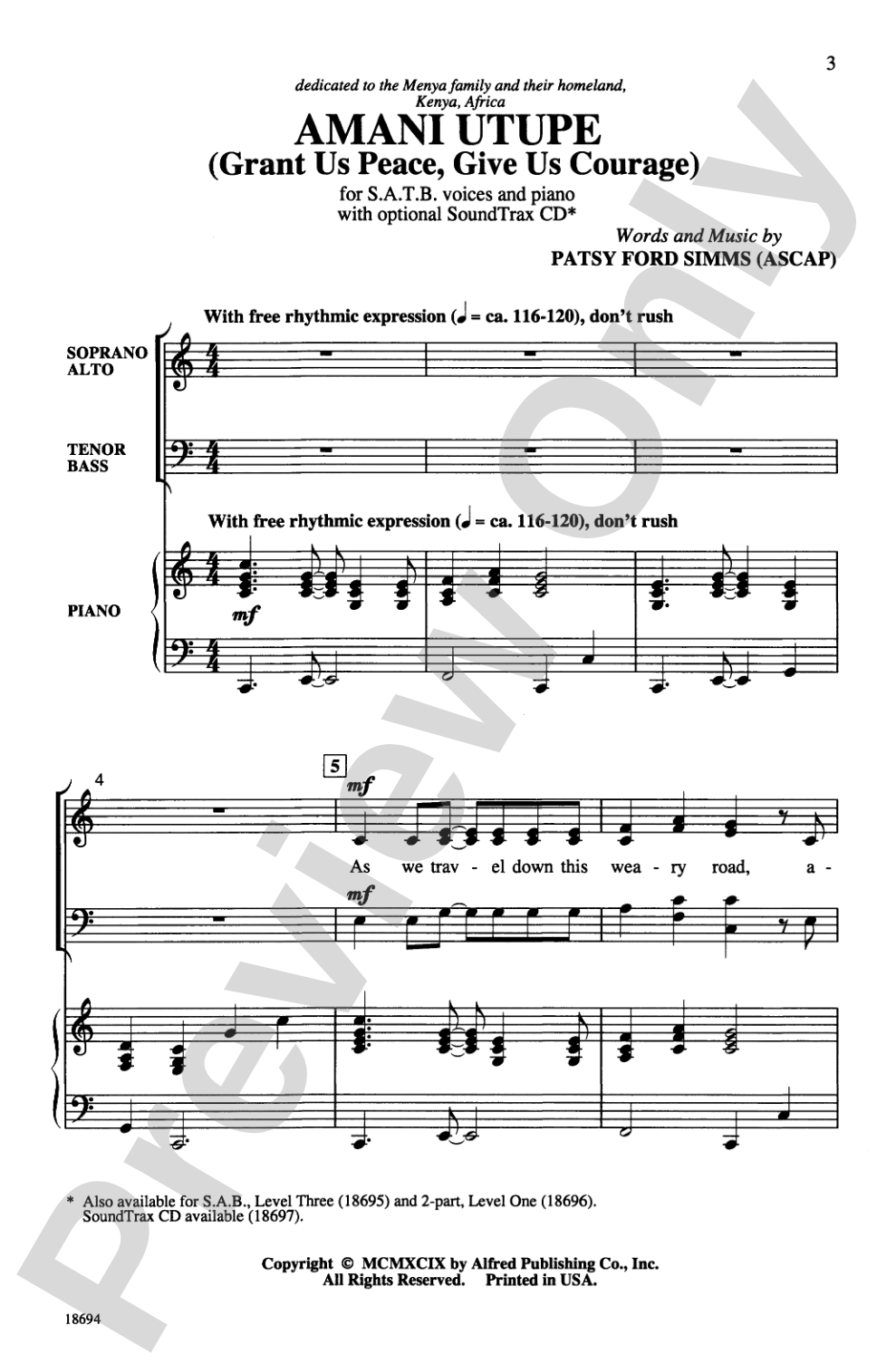
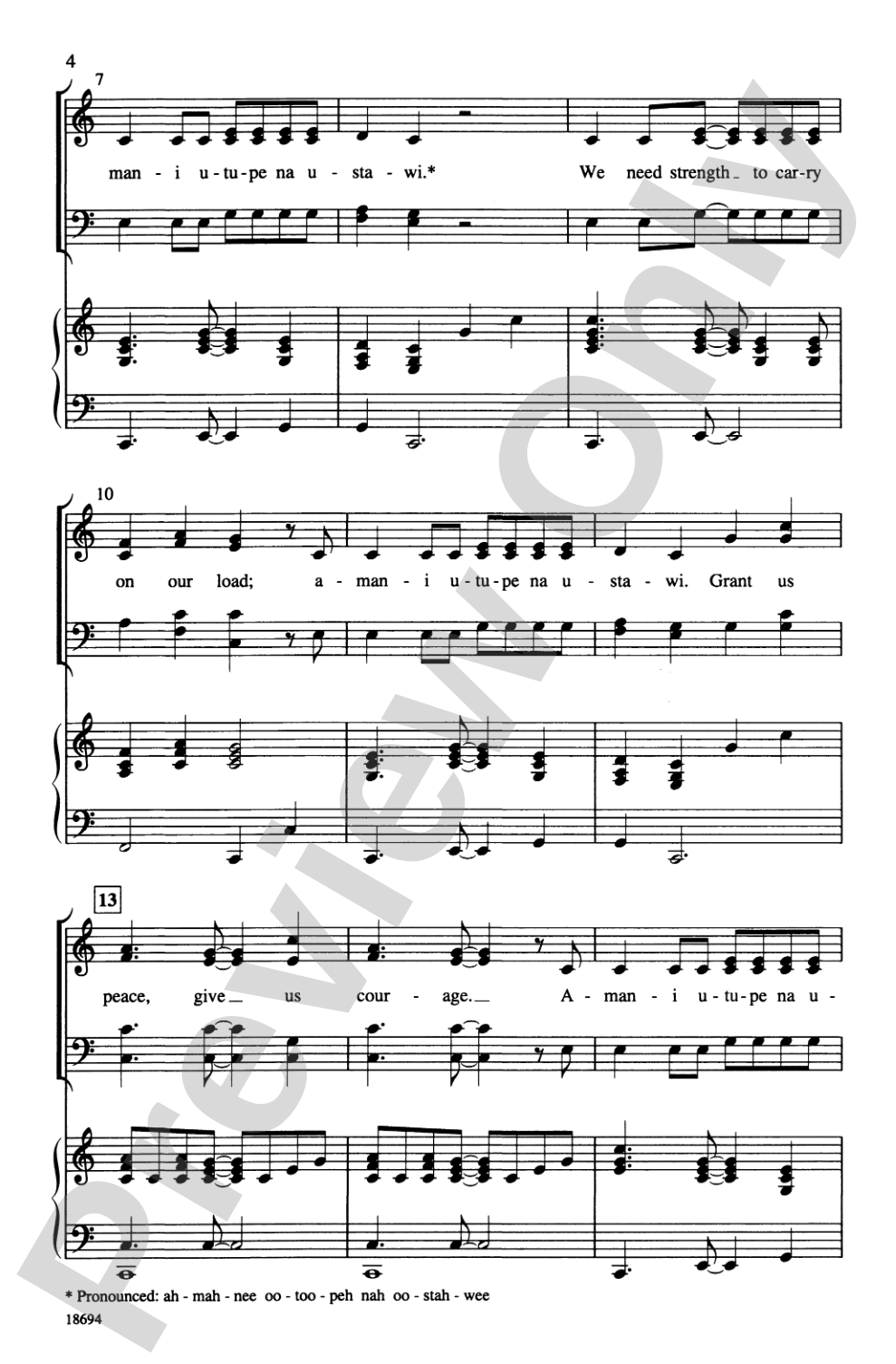

Amani Utupe (Swahili-Grant Us Peace, Give Us Courage): SATB Choral Octavo
(Swahili -- Grant Us Peace, Give Us Courage)
Music by Patsy Ford Simms
Item: 00-PO-0002143
$2.25
Minimum order quantity: 20 copies
Pickup currently not available
Related Items
Amani Utupe (Swahili-Grant Us Peace, Give Us Courage): SAB Choral Octavo |
$2.05
|
View | |
Amani Utupe (Swahili-Grant Us Peace, Give Us Courage): 2-Part Choral Octavo |
$2.05
|
View | |
Amani Utupe: SATB Choral Octavo |
$2.25
|
View | |
Amani Utupe: SAB Choral Octavo |
$2.05
|
View | |
Amani Utupe: 2-Part Choral Octavo |
$2.05
|
View | |
Amani Utupe: Choral Octavo SoundTrax CD |
$27.99
|
View |
Description
Here's an African-style piece which includes a combination of English and Swahili text: "As we travel down this weary road, amani utupe na ustawi." Outstanding SoundTrax has an African feel.


Amani Utupe (Swahili-Grant Us Peace, Give Us Courage): SATB Choral Octavo isn't in MakeMusic Cloud just yet...but it could be. Let us know you'd like to see it, and you'll help shape what comes next. In the meantime, start a free trial and dive into thousands of interactive titles your students can play along with today.
Request This Title
Tell us you want it.
Start Your Free Trial
Explore everything that's ready to play right now.
Sample Audio
1
Audio File
--:--
0:00
0:00
Sample Video
No sample videos found.
Additional Details
Series:
Alfred Archive Edition: Alfred Choral Designs
Publisher:
Alfred Music
Page Count:
12
SKU:
00-PO-0002143
More about this title
About the Composer: Patsy Ford Simms
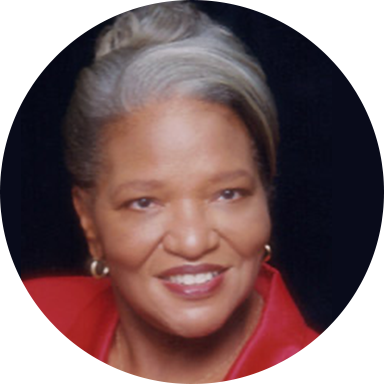
Patsy Ford Simms began her publishing career in 1981 and has composed and arranged over 300 works for educational and church choirs across multiple major publishing houses, including Shawnee Press. Her academic training includes a Bachelor of Science in Music Education from Knoxville College, a Master of Education from the University of Louisville, and a doctorate in Music Education from Columbia Pacific University.
Simms spent thirty years teaching music in grades K-12 and at the Youth Performing Arts School before retiring from full-time classroom work. Recognized internationally as a composer, arranger, and clinician, she has presented at conferences in Italy and Africa, composed several commissioned works, and created short musicals centered on African American history. Two of her pieces were selected for MENC World's Largest Concerts, and she has received numerous ASCAP Special Music Awards throughout her career.
Why we love this
Simms writes with genuine understanding of how middle school voices develop, and this piece proves why directors have turned to her work for decades. The blend of English and Swahili text creates an authentic cultural moment without requiring prior knowledge from singers, while the African rhythmic feel energizes rehearsal and holds student interest. The movement and staging options built into the piece transform a standard concert number into a memorable performance.
What to expect
The piece radiates warmth and forward motion. There's a buoyant quality to the African-style accompaniment that lifts the choir's voices, even as the text acknowledges difficulty and fatigue. The combination of English reflection and Swahili affirmation creates a sense of solidarity and hope, inviting singers and listeners into a shared human experience.
Who it's for
This octavo works well for middle and high school choirs, particularly ensembles that benefit from accessible, engaging repertoire with clear cultural context. Directors seeking repertoire that authentically represents African musical traditions while remaining vocally manageable will find this piece directly addresses that need.
How to get the most out of it
- Lean into the rhythmic precision of the African-style accompaniment; lock your section entrances with the SoundTrax, letting the recorded percussion establish the groove before voices enter.
- Explore the text's dual meaning: the English lyrics about life's journey pair directly with the Swahili request for peace and prosperity. Singers will connect more deeply when they understand they're singing the same sentiment in two languages.
- Shape the dynamics around the recorded accompaniment's energy levels rather than against them. When the SoundTrax builds, your choir should swell; when it pulls back, create space for vulnerability.
- Plan staging deliberately. Movement should feel organic to the piece's message and the singers' vocal range, not choreographed for its own sake.
How to use it
Pair this with other world music selections to build a thematic concert exploring music across cultures, or use it as a standalone highlight that showcases your choir's ability to connect with non-Western styles. The piece works equally well in spring festivals, community celebrations focused on peace or cultural awareness, or as a concert opener that energizes the room.
Skills your students will build
- Singing in Swahili with authentic pronunciation and tonal quality
- Maintaining rhythmic independence in SATB texture over syncopated African accompaniment
- Understanding and expressing multilingual text with unified emotional intent
- Integrating movement and staging choices that enhance rather than distract from vocal performance
- Listening to and synchronizing with recorded accompaniment that emphasizes percussion rather than melodic instruments