
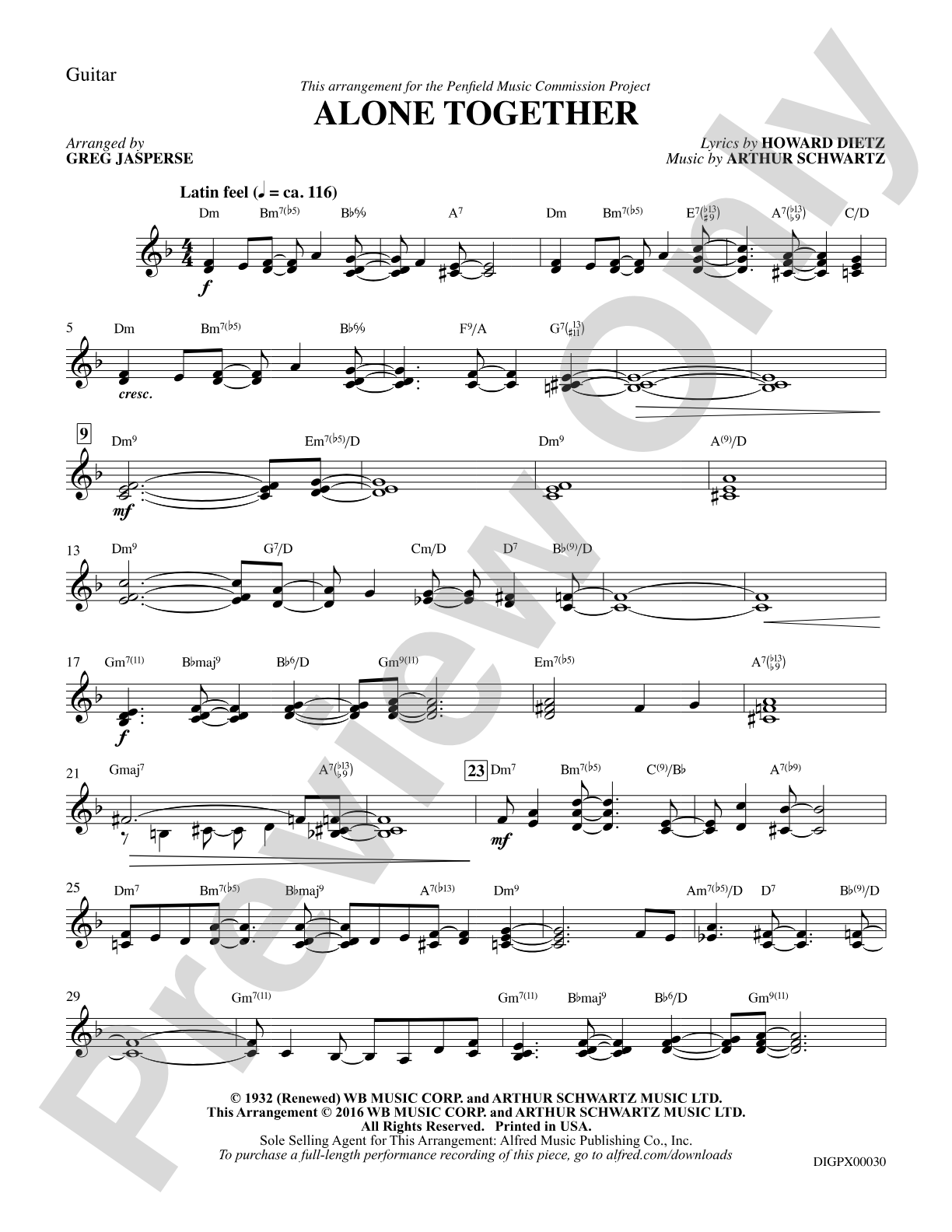
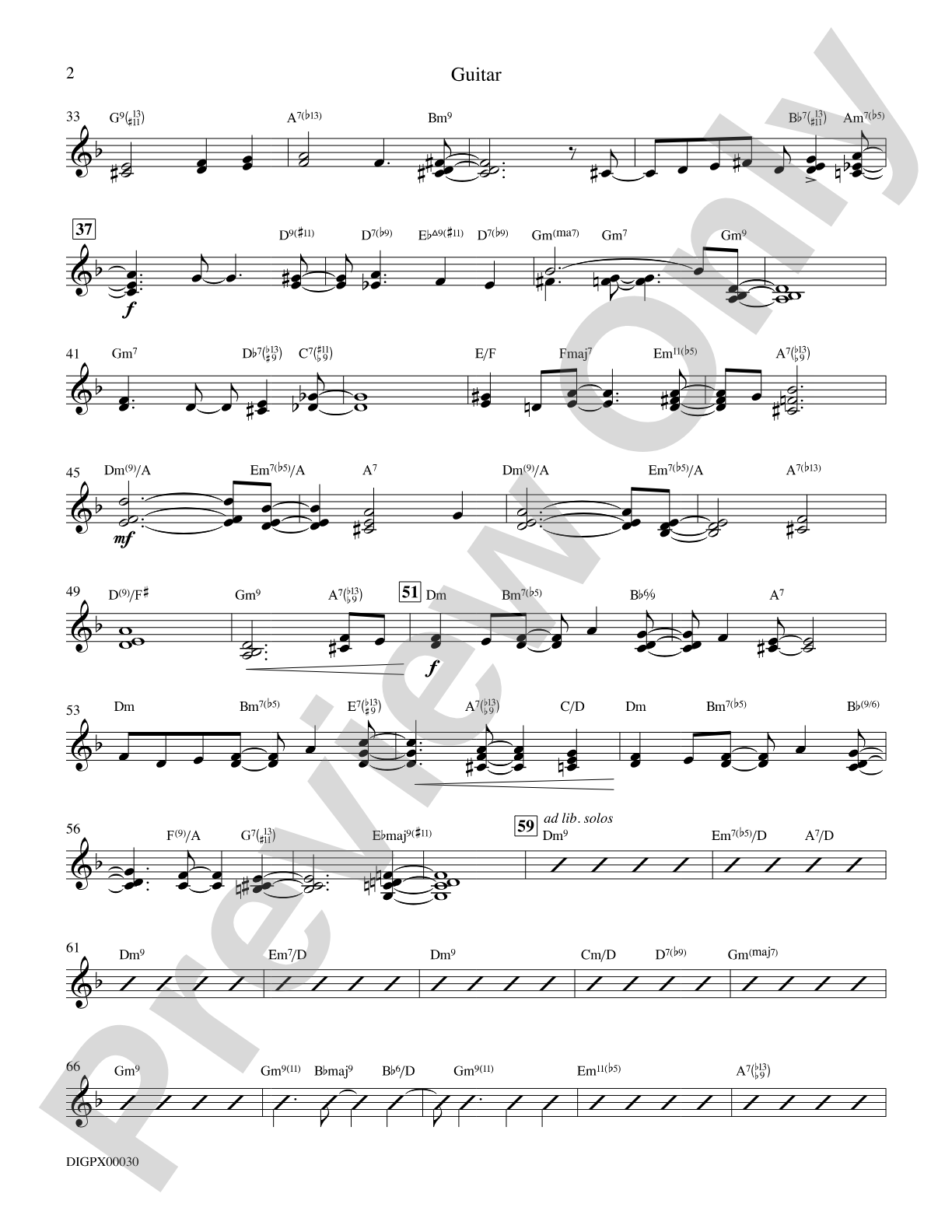
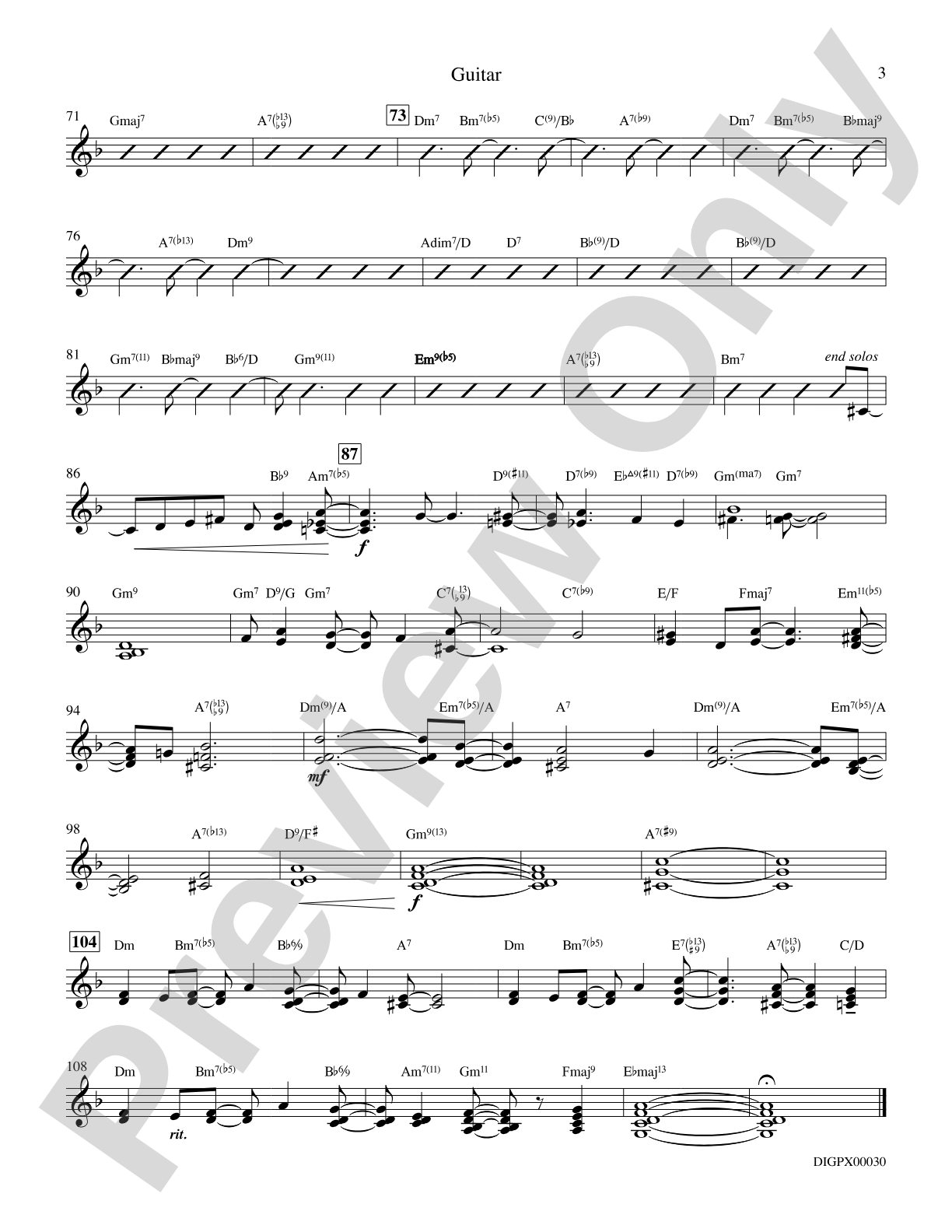

Alone Together: Choral SoundPax
Lyrics by Howard Dietz, music by Arthur Schwartz / arr. Greg Jasperse
Item: 00-PK-0007476

$15.00
One moment…
Description
Originally written for the stage, this jazz standard has been recorded by a who's who of jazz icons including Dizzy Gillespie, Miles Davis, Julie London, and Ella Fitzgerald. Hauntingly beautiful!


Don't just read it, hear it, play along with it, and watch your students grow with it. In MakeMusic Cloud, Alone Together: Choral SoundPax comes alive with professional accompaniment, adjustable tempo, and built-in practice tools that turn solo practice into real progress.
Open in the Player
Jump straight in and assign it today.
Start Your Free Trial
Open this title and explore the full library in minutes.
Sample Audio
1
Audio File
--:--
0:00
0:00
Sample Video
No sample videos found.
Additional Details
Series:
Alfred Pop Choral Series
Publisher:
Alfred Music
Page Count:
12
SKU:
00-PK-0007476
Instrumentation:
SoundPax
More about this title
About the Composer: Arthur Schwartz
Arthur Schwartz (1900-1984) was a prolific composer who bridged Broadway and jazz during the golden age of American musical theater. His catalog includes dozens of stage scores and popular songs that became standards, written in collaboration with lyricists including Dorothy Fields and Howard Dietz. Schwartz had an instinctive gift for melody and understood how to write for the voice with clarity and accessibility, qualities that made his work enduring in both theatrical and jazz contexts.
Beyond the stage, Schwartz's compositions attracted top jazz interpreters who recognized the harmonic sophistication and emotional depth beneath their apparent simplicity. His melodies continue to serve as vehicles for jazz improvisation and choral interpretation, offering musicians and singers a bridge between written composition and interpretive freedom.
Why we love this
This arrangement captures the smoky intimacy of a jazz standard while remaining fully accessible for school and community choirs. The harmonic language sits naturally for mixed voices, and Greg Jasperse's SoundPax setting gives you the flexibility to perform with or without instrumental accompaniment, making it practical for any performance context.
What to expect
There's a quiet melancholy in this piece, almost conversational, as if two people are acknowledging something both beautiful and fleeting. The jazz harmonies create a sophisticated, slightly impressionistic texture that feels more elegant than sentimental, with moments that linger in space rather than pushing forward.
Who it's for
This arrangement works for intermediate to advanced mixed choirs, jazz ensembles with vocal components, and community choruses looking to expand into jazz repertoire. It's equally valuable for directors seeking a secular piece that celebrates a genuine jazz standard rather than a pop arrangement.
How to get the most out of it
- Treat the phrasing like a singer would: lean into the longer lines rather than punctuating every bar. Jazz standards reward continuity over metrical rigidity.
- Balance the parts so the melody line emerges clearly without drowning out the harmonic interest in the supporting voices. This is not a vertical block-chord style.
- Explore dynamic shape within phrases rather than holding a single dynamic level throughout. The "hauntingly beautiful" quality comes from vulnerability and variation, not uniformity.
- If using instrumental accompaniment, rehearse without it first so singers own the harmonic foundation and phrasing independently.
How to use it
Place this as a standalone feature or pair it with other jazz standards to create a jazz-focused set. Its reflective quality makes it particularly effective as a second-half opener, where it can reset the emotional temperature of the concert before moving to livelier material.
Skills your students will build
- Jazz phrasing and rubato within a composed score
- Singing through jazz chord changes with harmonic awareness
- Balancing melody and accompaniment in a non-homophonic texture
- Interpreting a standard with emotional nuance rather than technical display