
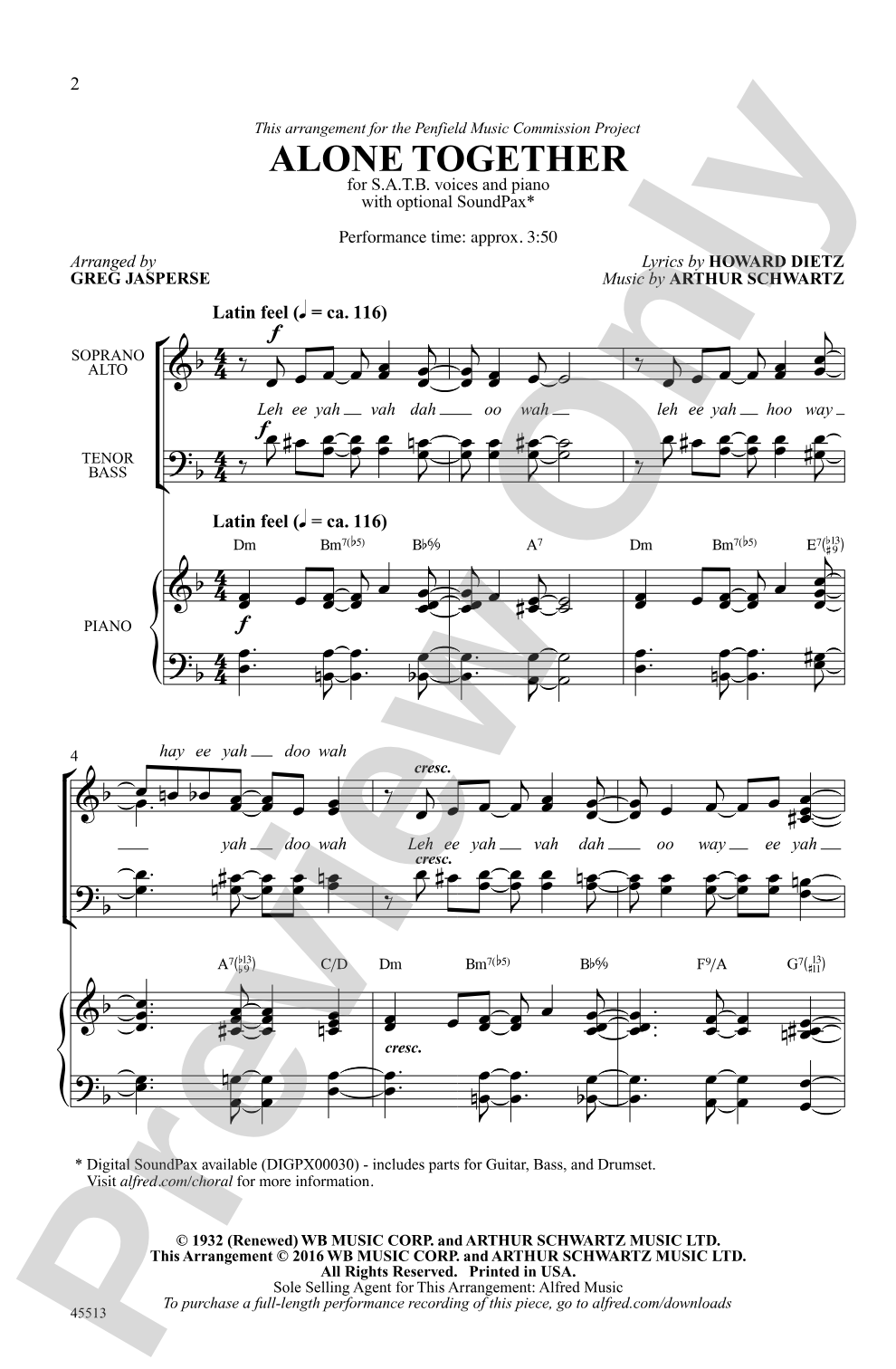
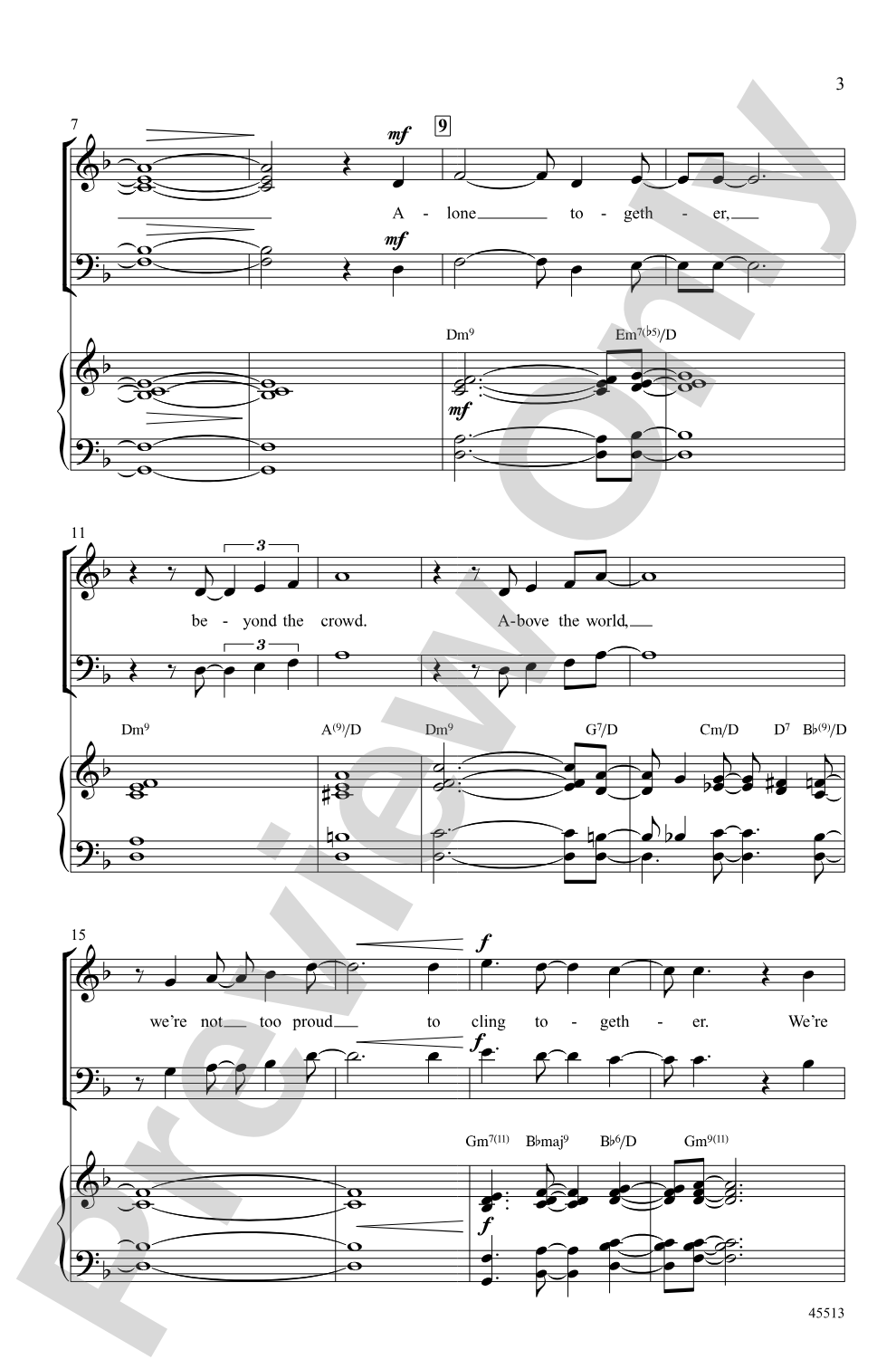
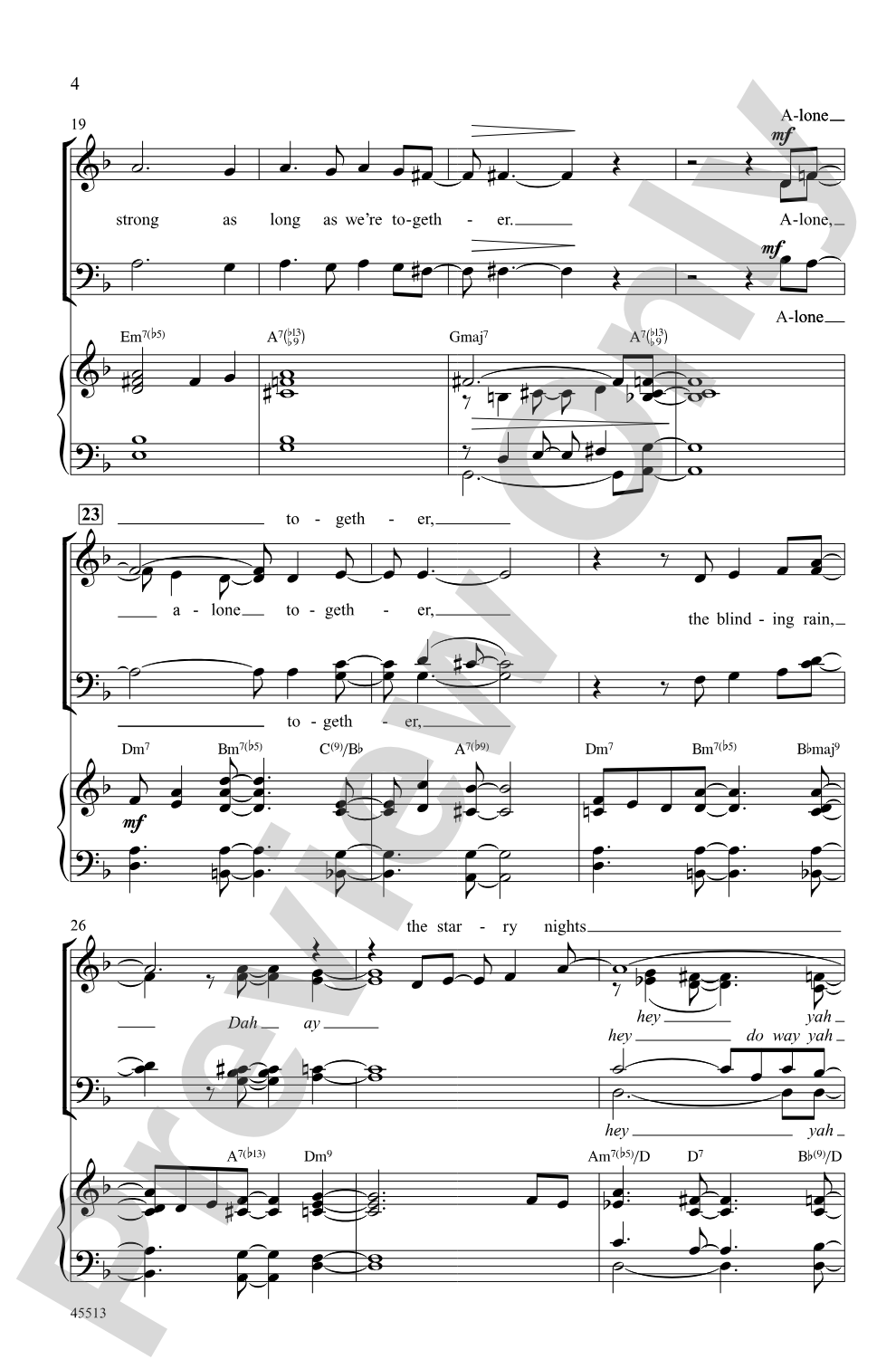

Alone Together: SATB Choral Octavo
Lyrics by Howard Dietz, music by Arthur Schwartz / arr. Greg Jasperse
Item: 00-PO-0005478
$2.10
Minimum order quantity: 20 copies
Pickup currently not available
Description
Originally written for the stage, this jazz standard has been recorded by a who's who of jazz icons including Dizzy Gillespie, Miles Davis, Julie London, and Ella Fitzgerald. Hauntingly beautiful!


Alone Together: SATB Choral Octavo isn't in MakeMusic Cloud just yet...but it could be. Let us know you'd like to see it, and you'll help shape what comes next. In the meantime, start a free trial and dive into thousands of interactive titles your students can play along with today.
Request This Title
Tell us you want it.
Start Your Free Trial
Explore everything that's ready to play right now.
Sample Audio
1
Audio File
--:--
0:00
0:00
Sample Video
Additional Details
Series:
Alfred Pop Choral Series
Publisher:
Alfred Music
Page Count:
12
SKU:
00-PO-0005478
More about this title
About the Composer: Arthur Schwartz
Arthur Schwartz (1900-1984) composed the score for "Alone Together" during Broadway's golden age, a period when American musical theater produced standards that would outlive the shows themselves. His gift for melody and sophisticated harmony established him as one of the era's most enduring songwriters, collaborating with lyricist Howard Dietz on a catalog that jazz musicians would adopt and reinterpret for generations.
Schwartz's influence on American music extends beyond Broadway. His compositions became vehicles for jazz artists to explore harmonic complexity and emotional depth, making his work foundational repertoire for jazz education and performance. Choral arrangers continue to find fresh interpretive possibilities in his melodies, which reward both classical precision and interpretive freedom.
Why we love this
The arrangement captures the bittersweet sophistication that made this standard a favorite among jazz vocalists while remaining singable for developing ensembles. Jasperse preserves Schwartz's harmonic language without overwhelming SATB singers, allowing each section to contribute meaningfully to the jazz idiom rather than simply supporting a melody line.
What to expect
There's an aching quality to this piece, a tender reflection on connection and separation rendered in Schwartz's elegant harmonic language. The arrangement holds space for vulnerability; it doesn't demand volume or histrionics but instead asks singers to find intimacy within the ensemble sound.
Who it's for
Choirs with solid sight-reading skills and some exposure to jazz harmony will find this accessible and rewarding. Advanced high school choirs, college non-majors ensembles, and community choirs looking to expand beyond traditional classical repertoire can all execute this effectively.
How to get the most out of it
- Approach the harmonic movements with independence in each voice part. These aren't block chords; each line has character and should be heard as a distinct melodic element.
- Balance the ensemble so the soprano line registers clearly without forcing. Jazz standards depend on lyrical phrasing that can get buried if the top voice oversings.
- Work the text rhythmically as written before adding expressive liberties. Once the ensemble locks the notation, rubato and slight pushing/pulling of phrases will feel intentional rather than sloppy.
- If instrumental parts are used (strings, reeds, or rhythm section), rehearse frequently with those players so the choir's phrasing coordinates naturally with the accompaniment.
How to use it
Position this in a jazz-focused concert or a secular choral program exploring American musical theater standards. The 12-page score makes it substantial enough to anchor a set alongside other Schwartz numbers or contemporary jazz arrangements, yet it stands powerfully as a solo selection.
Skills your students will build
- Reading jazz chord progressions and harmonic movement
- Singing independent lines within a jazz voicing context
- Responding to stylistically appropriate phrasing and rubato
- Balancing parts so each voice contributes to overall sonority without forcing