

Alleluia for Our Time: SATB Choral Octavo
By Jay Althouse
Item: 00-PO-0000385
$1.75
Minimum order quantity: 20 copies
Pickup currently not available
Description
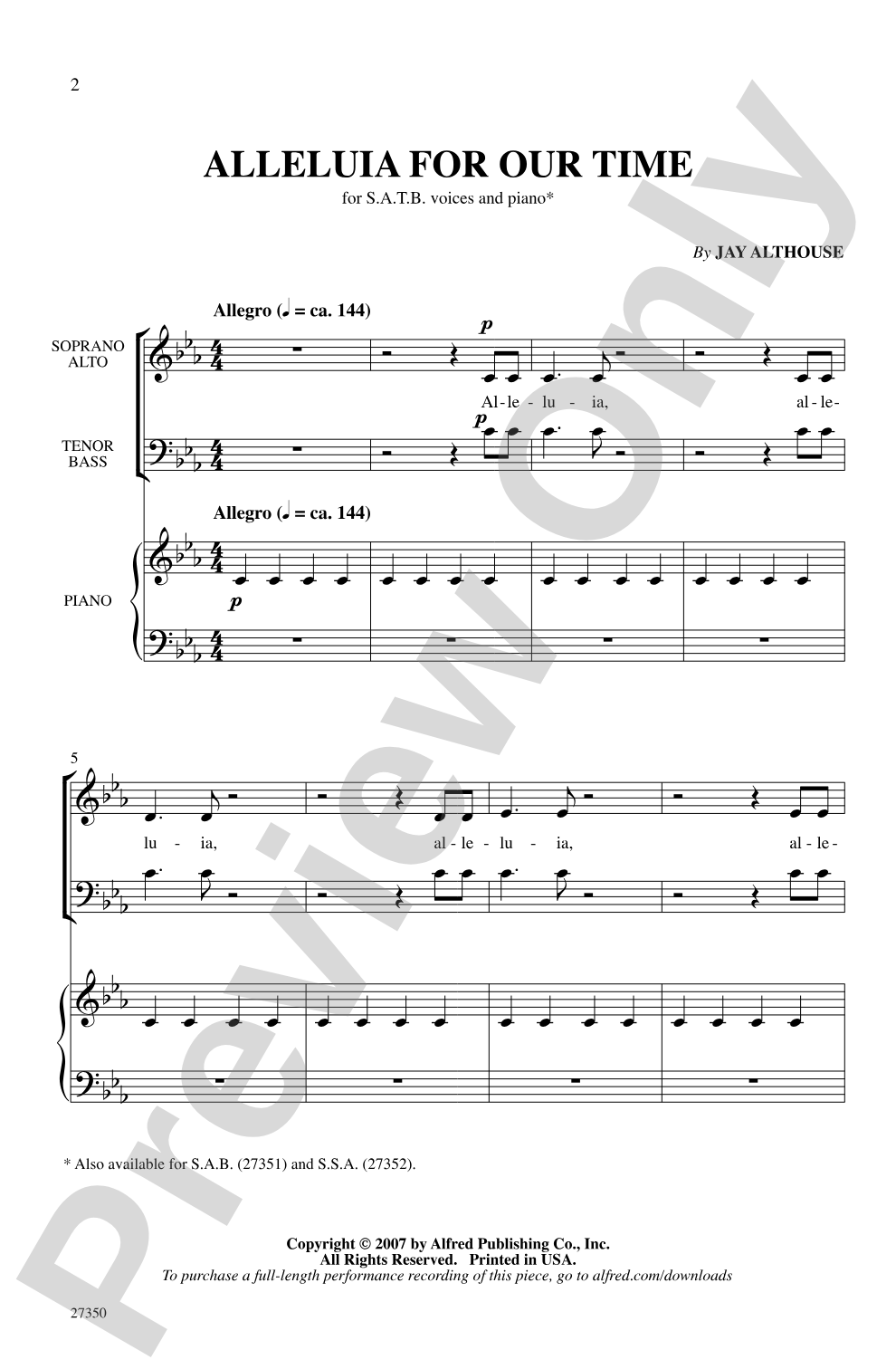
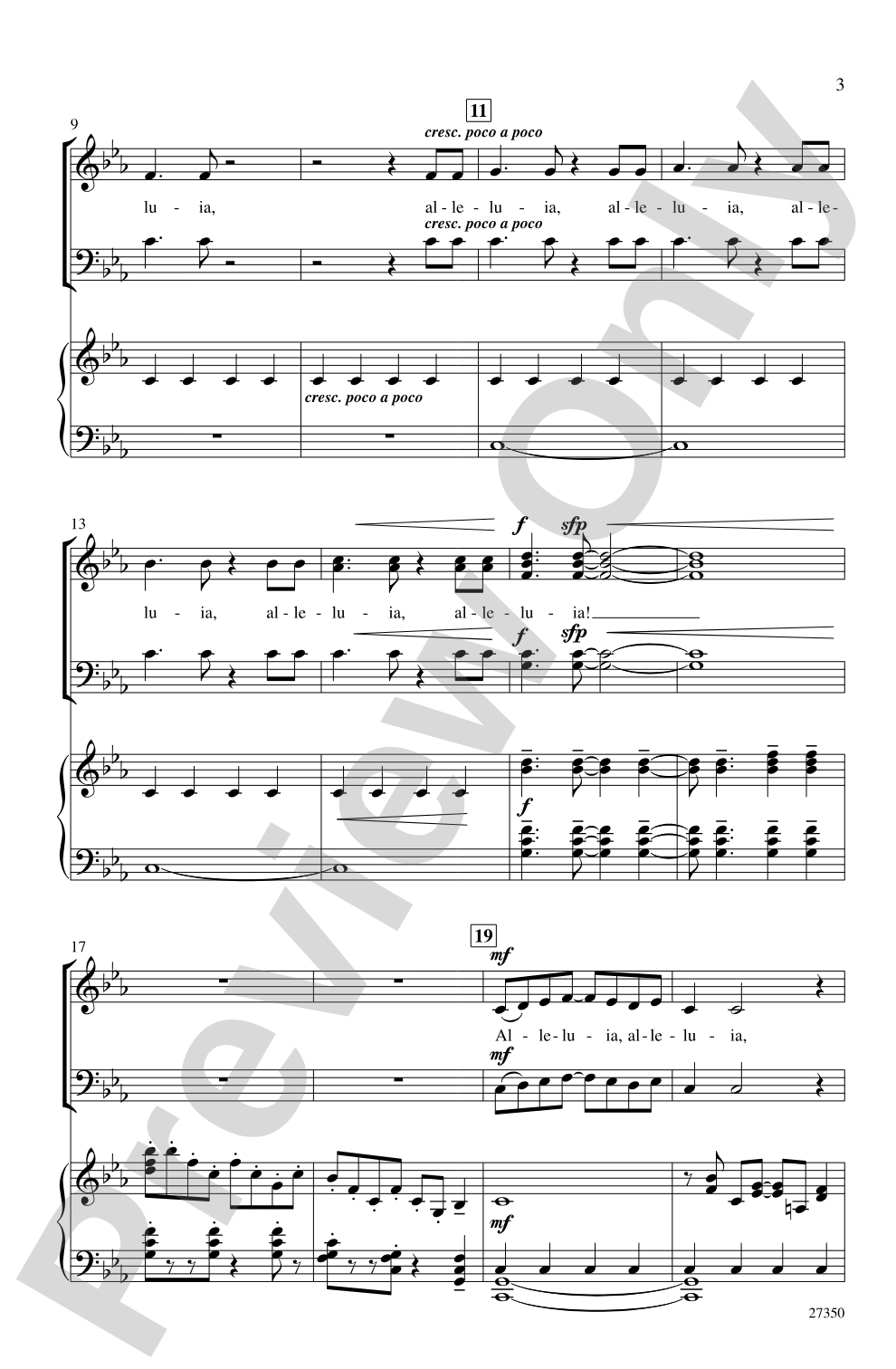
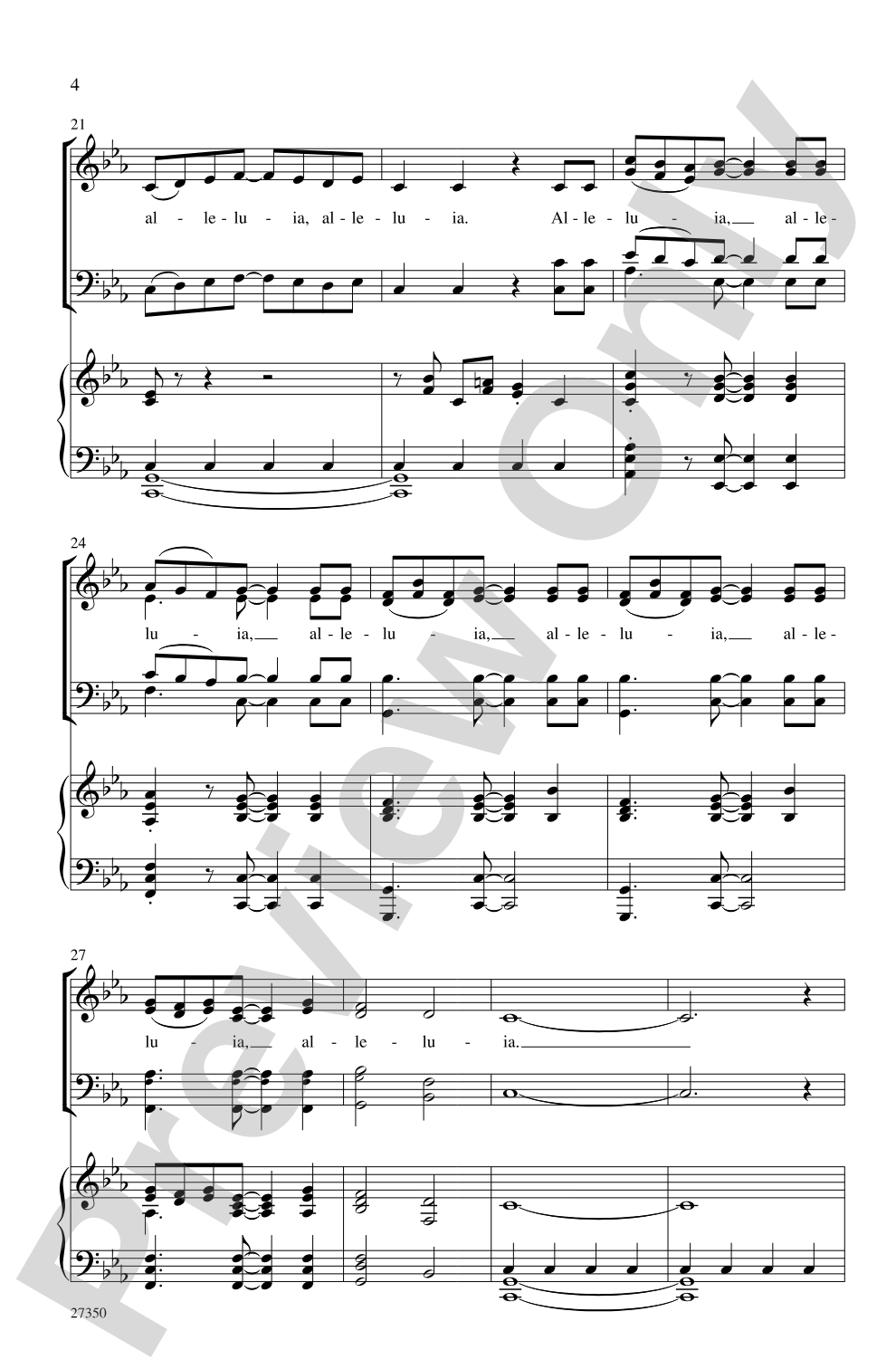
A strong choral statement that begins in C minor, builds, and finishes powerfully with a jubilant ending in E-flat major. Great contemporary writing, accessible for today's choirs. One of Jay Althouse's best works. Perfect for festivals, adjudications, and concerts, any time of year.


Alleluia for Our Time: SATB Choral Octavo isn't in MakeMusic Cloud just yet...but it could be. Let us know you'd like to see it, and you'll help shape what comes next. In the meantime, start a free trial and dive into thousands of interactive titles your students can play along with today.
Request This Title
Tell us you want it.
Start Your Free Trial
Explore everything that's ready to play right now.
Sample Audio
1
Audio File
--:--
0:00
0:00
Sample Video
No sample videos found.
Additional Details
Series:
Alfred Choral Designs
Publisher:
Alfred Music
Page Count:
12
SKU:
00-PO-0000385
More about this title
About the Composer: Jay Althouse

Jay Althouse holds degrees in Music Education and Music from Indiana University of Pennsylvania, where he was later honored as a Distinguished Alumnus. Early in his career, he spent eight years managing rights and licenses for a major educational music publisher and served on the Executive Board of the Music Publishers Association of America. His work as a composer has resulted in more than 800 published choral pieces performed regularly across the English-speaking world, and he maintains membership in ASCAP with multiple Special Awards recognizing his contributions to standard music.
Beyond composition, Althouse has shaped music education through numerous collaborative and solo projects. He co-wrote children's musicals with his wife Sally K. Albrecht, curated influential vocal collections including Folk Songs for Solo Singers, and authored The Complete Choral Warm-up Book and Accent on Composers alongside other classroom resources. His choral composition "I Hear America Singing," written with Albrecht, was performed by the San Francisco Girls and Boys Choirs at President Barack Obama's inauguration in 2009. Currently based in Wake Forest, North Carolina, he serves on the National Advisory Board of the Folk Art Society of America.
Why we love this
Althouse's gift for blending accessibility with genuine musical substance shines throughout this piece. The tonal journey from C minor to E-flat major gives you a natural arc that builds momentum without requiring excessive ranges or technical demands, making it realistic for mixed-ability ensembles. The jubilant final arrival feels earned rather than imposed, and that emotional payoff makes this piece memorable for singers and audiences alike.
What to expect
The opening unfolds with introspective strength in C minor, a grounded and purposeful sound. As the piece builds, you sense the energy gathering toward something inevitable; the harmonic pivot to E-flat major arrives as genuine release and celebration, bringing the work to a powerful, resonant close.
Who it's for
Directors seeking a strong contemporary piece that works equally well for festival selections, adjudication programs, or general concert programming. This octavo suits choirs with solid fundamentals who are ready to tackle a piece with real musical architecture and tonal sophistication without excessive vocal or reading demands.
How to get the most out of it
- Balance the minor-to-major key relationship by allowing the darker opening to establish its own weight; resist rushing the build so the eventual shift to E-flat lands with genuine brightness.
- Lock the harmonic motion with the lower voices, particularly during the transition section, so the piece doesn't lose its structural clarity when dynamics increase.
- Shape the text with conviction in the final triumphant section; Althouse's contemporary idiom depends on clear articulation and rhythmic precision in the climax.
How to use it
Program this as a centerpiece for a concert devoted to contemporary sacred choral writing, where its tonal boldness and accessible sophistication will anchor the programming. It also works effectively as a festival or competition selection where directors value pieces with clear emotional arc and polished contemporary craft.
Skills your students will build
- reading music that modulates between distant keys (C minor to E-flat major)
- building and releasing dynamic tension over longer phrases
- balancing harmonic clarity in contemporary voicings
- sustaining text delivery through key transitions