

Alleluia Fanfare: SATB Choral Octavo
By Earlene Rentz
Item: 00-PO-0000030
$1.65
Minimum order quantity: 20 copies
Pickup currently not available
Related Items
Alleluia Fanfare: SoundTrax Digital Audio Download |
$22.95
|
View | |
Alleluia Fanfare: 3-Part Mixed Choral Octavo |
$2.25
|
View | |
Alleluia Fanfare: SSA Choral Octavo |
$2.25
|
View | |
Alleluia Fanfare: Choral SoundPax |
$30.00
|
View | |
Alleluia Fanfare: SATB Choral Octavo |
$1.65
|
View | |
Alleluia Fanfare: 3-Part Mixed Choral Octavo |
$2.25
|
View | |
Alleluia Fanfare: SSA Choral Octavo |
$2.25
|
View | |
Alleluia Fanfare: Choral Octavo SoundTrax CD |
$22.95
|
View | |
Alleluia Fanfare: Choral SoundPax |
$30.00
|
View |
Description
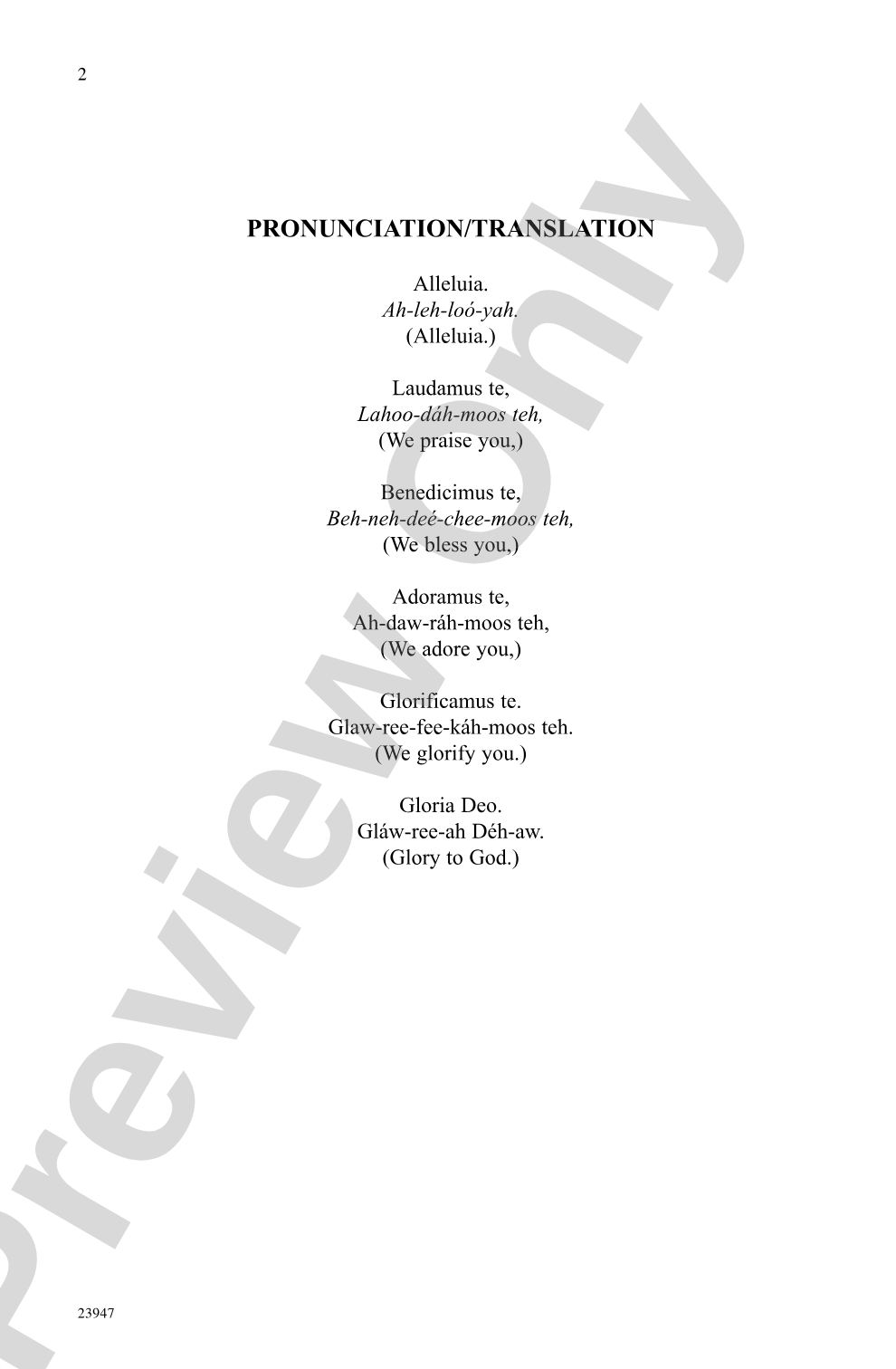
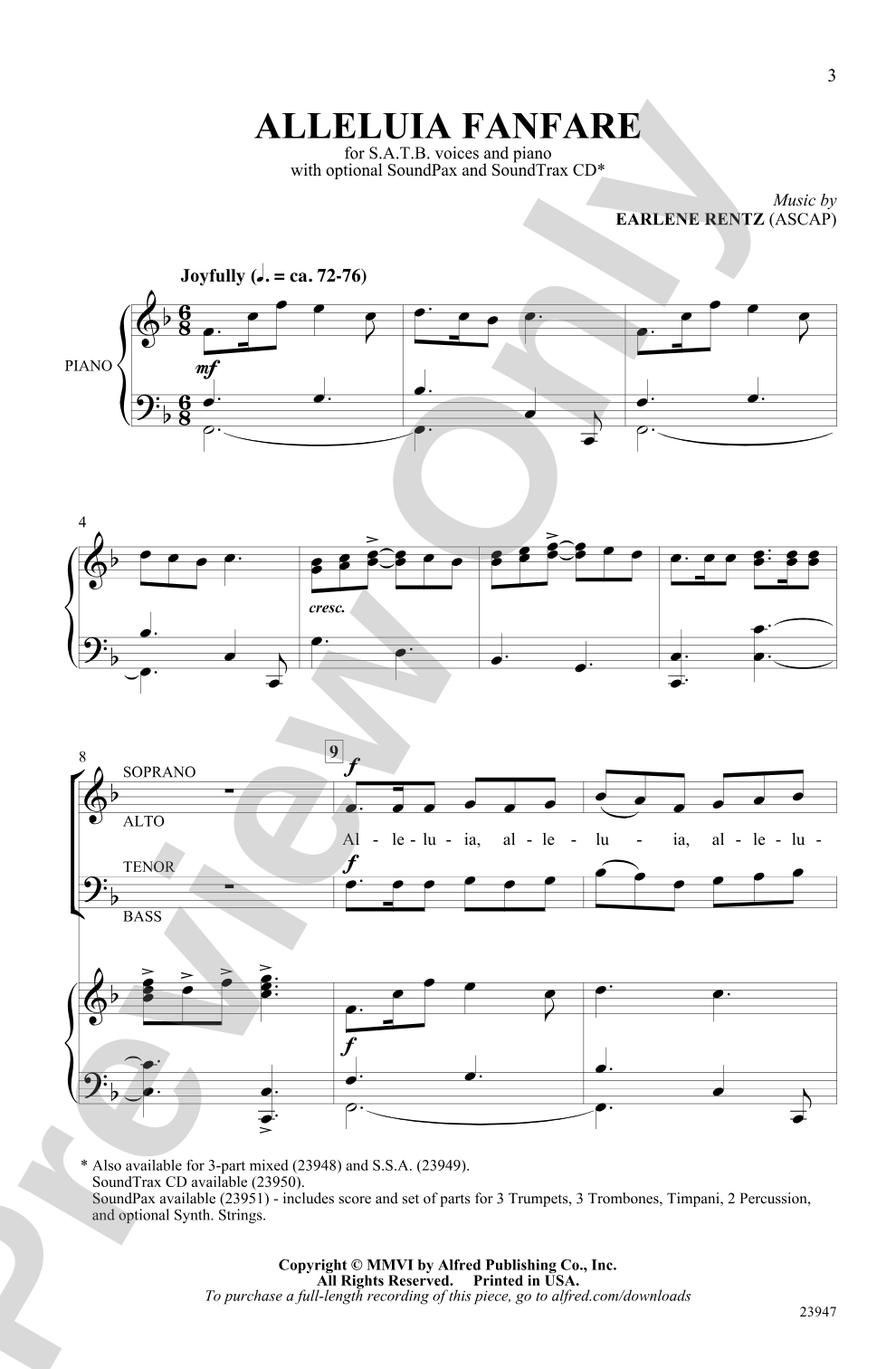
This majestic piece is a glorious addition to choral concerts and festivals year round. Earlene's 6/8 setting of the Latin text is underscored by a full-sounding piano accompaniment that is not difficult to play. Make it more festive by performing with live brass and percussion or the jubilant SoundTrax CD.


Alleluia Fanfare: SATB Choral Octavo isn't in MakeMusic Cloud just yet...but it could be. Let us know you'd like to see it, and you'll help shape what comes next. In the meantime, start a free trial and dive into thousands of interactive titles your students can play along with today.
Request This Title
Tell us you want it.
Start Your Free Trial
Explore everything that's ready to play right now.
Sample Audio
1
Audio File
--:--
0:00
0:00
Sample Video
No sample videos found.
Additional Details
Series:
Alfred Choral Designs
Publisher:
Alfred Music
Page Count:
12
SKU:
00-PO-0000030
More about this title
About the Composer: Earlene Rentz

Earlene Rentz has spent her career bridging the gap between classroom practice and concert performance. She spent seven years teaching choral music across elementary, junior high, and high school settings, then moved into higher education where she taught choral pedagogy and music education for twelve years. Her deep experience working with singers at every level informs every piece she writes.
Rentz has conducted All-State choirs in Georgia, Florida, Kentucky, and Alabama, giving her insight into what works for ambitious ensembles. Her prolific output of over 700 published choral works across 17 different publishers reflects her commitment to creating music that serves real choirs and real singers. Based in North Carolina, she continues to compose music that bridges accessibility with artistic substance.
Why we love this
Rentz understands that a festive choral piece needs to sound bigger than its technical demands require. The 6/8 meter gives the piece natural lift and momentum, while the piano accompaniment sits comfortably under the voices without demanding a virtuoso accompanist. What makes this particularly smart programming is its flexibility: perform it as a standalone SATB moment, or add the optional brass and percussion parts for a true fanfare effect at concert's end.
What to expect
Alleluia Fanfare radiates brightness and exultation. The 6/8 meter bounces with energy, and the full piano accompaniment creates a sense of occasion and ceremony. This is music built for moments when your choir should feel proud, when the text demands celebration, and when the audience should leave energized.
Who it's for
This octavo works for intermediate to advanced SATB choirs looking for a piece that celebrates without requiring extended vocal range or complex rhythmic figuration. It serves festivals, holiday concerts, worship services, and end-of-year celebrations where you want music that feels substantial and joyful in equal measure.
How to get the most out of it
- Establish the 6/8 pulse clearly in your first rehearsal; the bright meter can either dance or drag depending on how you shape the beat. Conduct it with one beat per measure to find the lilting character Rentz built into the piece.
- Balance the parts so the text projects clearly without pushing. In SATB writing, especially in sacred texts, diction carries as much weight as volume.
- If you're using the optional brass and percussion reinforcement, rehearse the choral parts to a clean piano first so the choir owns its own line before adding color.
- The full sound comes from solid four-part blend, not individual voice volume. Emphasize vowel matching across all sections to create resonance without effort.
How to use it
Place this piece near the end of a concert where it can serve as a moment of climactic joy. It pairs naturally with other sacred or festival repertoire and provides an excellent contrast to more introspective pieces earlier in your program. It also works brilliantly as a festival finale or closing number for a spring concert.
Skills your students will build
- Reading and singing in 6/8 meter with confidence and lilt
- Blending four-part SATB voicing with clear diction of Latin text
- Responding to piano accompaniment that supports rather than doubles the choir
- Performing with dynamic control and musicality in a celebratory context