
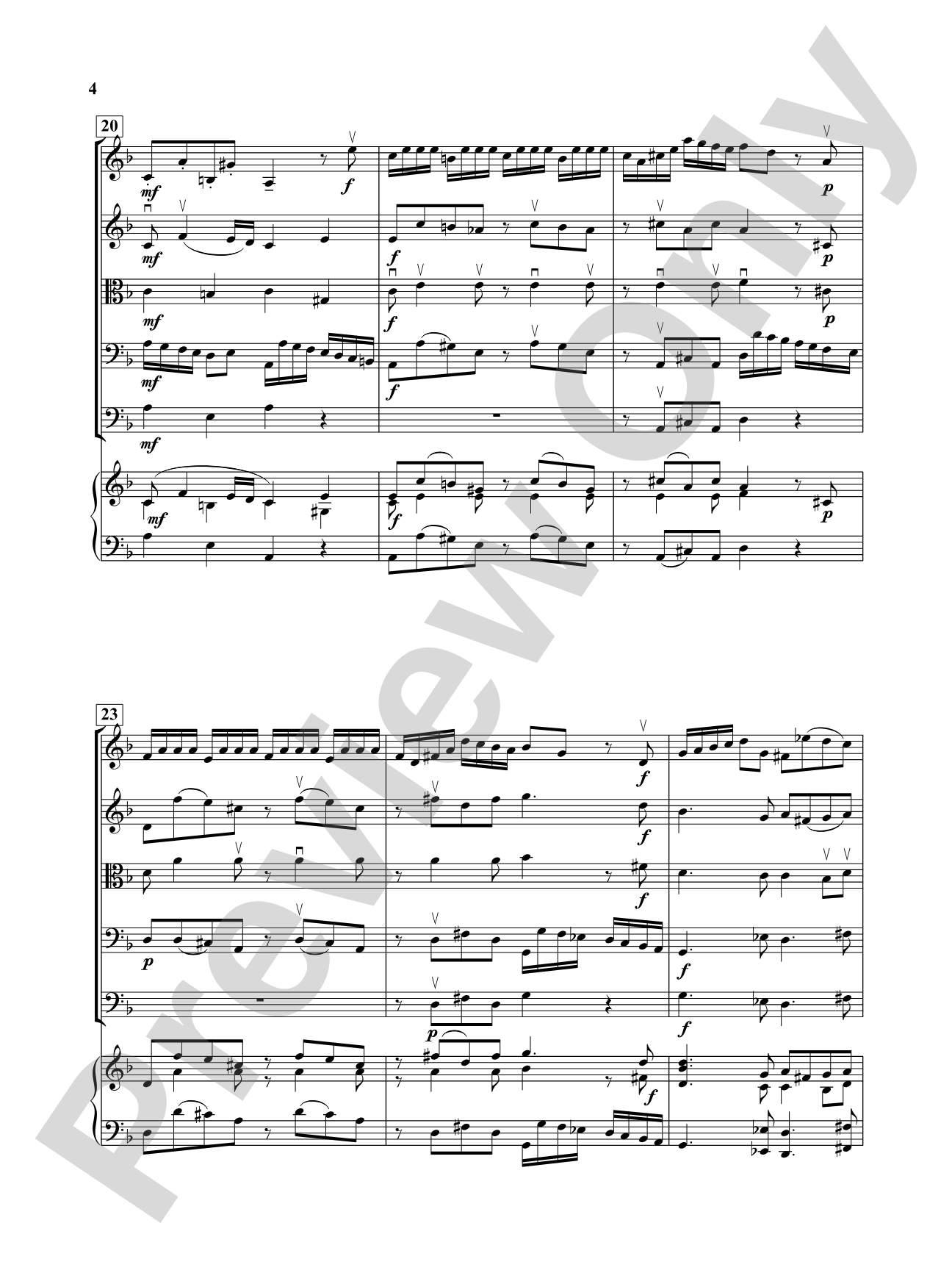
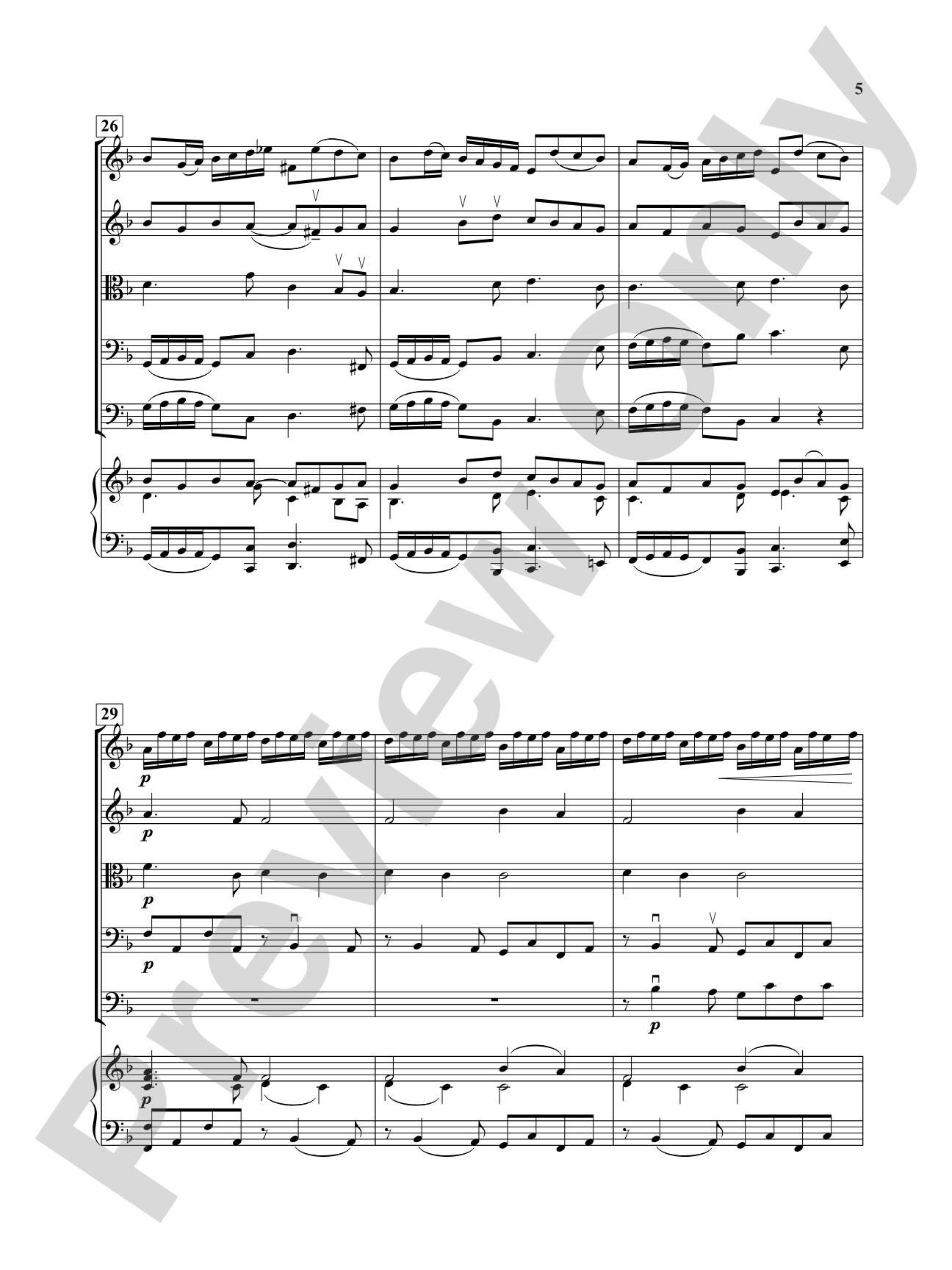
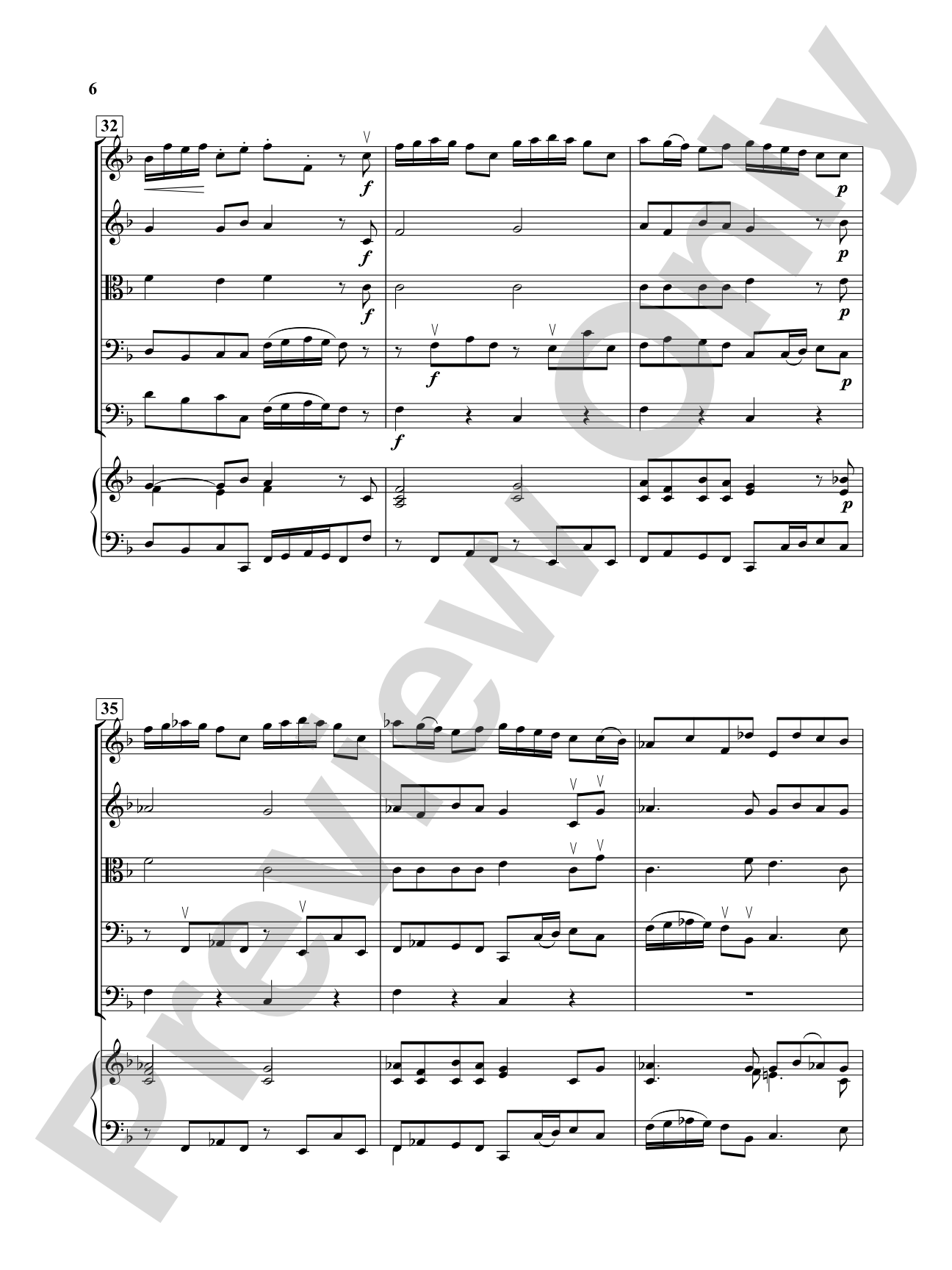
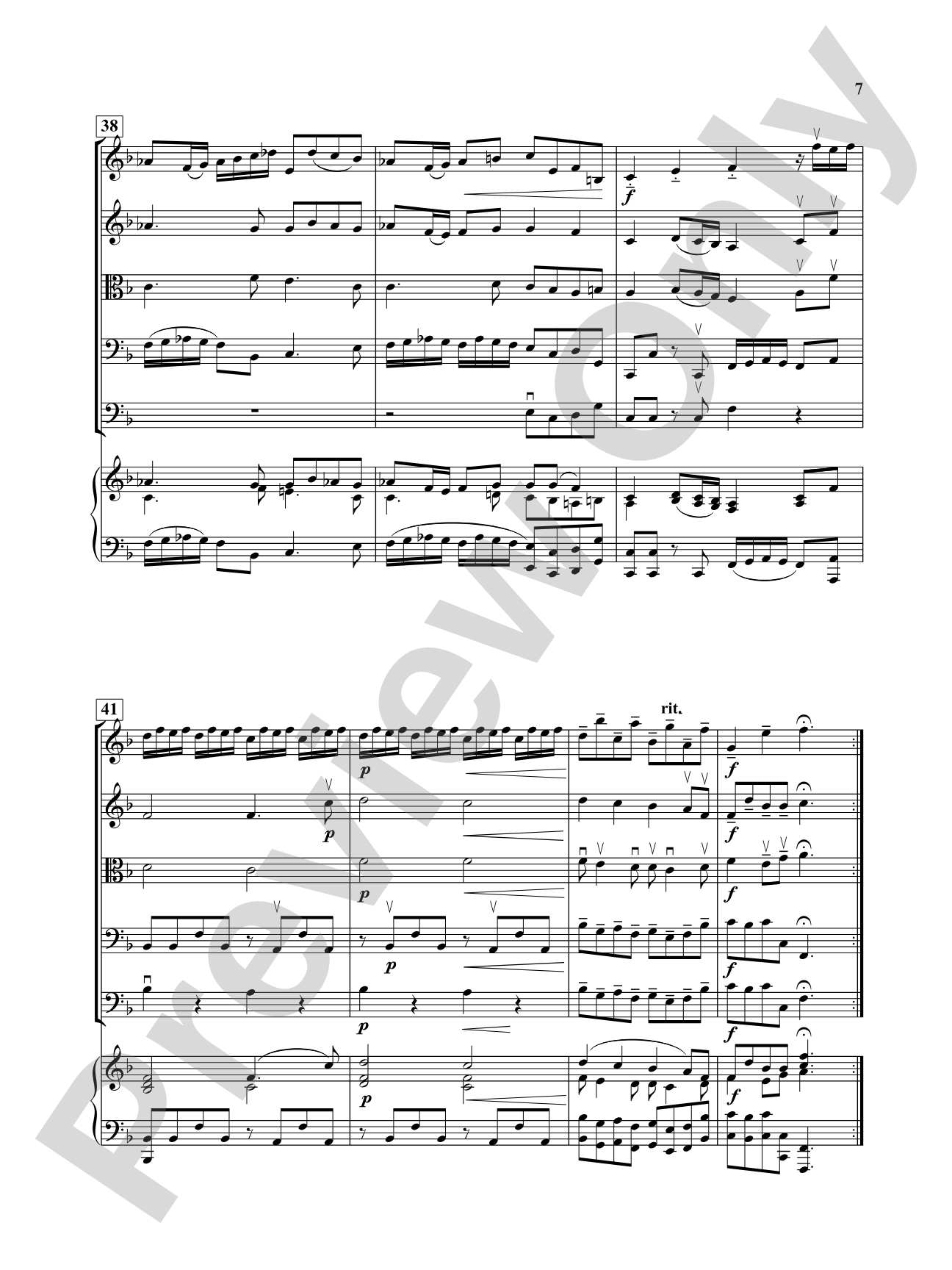




Allegro from Sonata in F: String Orchestra Conductor Score & Parts
Arr. Loreta Fin
Grade: 3-3.5
Item: 76-PK-0000029
$45.00
Pickup currently not available
Buy Extra Parts (Digital PDF Download)
| Product | Price | Quantity |
|---|---|---|
| Allegro from Sonata in F: Score | $7.00 | |
| Allegro from Sonata in F: 1st Violin | $5.99 | |
| Allegro from Sonata in F: 2nd Violin | $5.99 | |
| Allegro from Sonata in F: 3rd Violin (Viola [TC]) | $5.99 | |
| Allegro from Sonata in F: Viola | $5.99 | |
| Allegro from Sonata in F: Cello | $5.99 | |
| Allegro from Sonata in F: String Bass | $5.99 | |
| Allegro from Sonata in F: Piano Accompaniment | $5.99 |
Parts Added to Cart!
Description
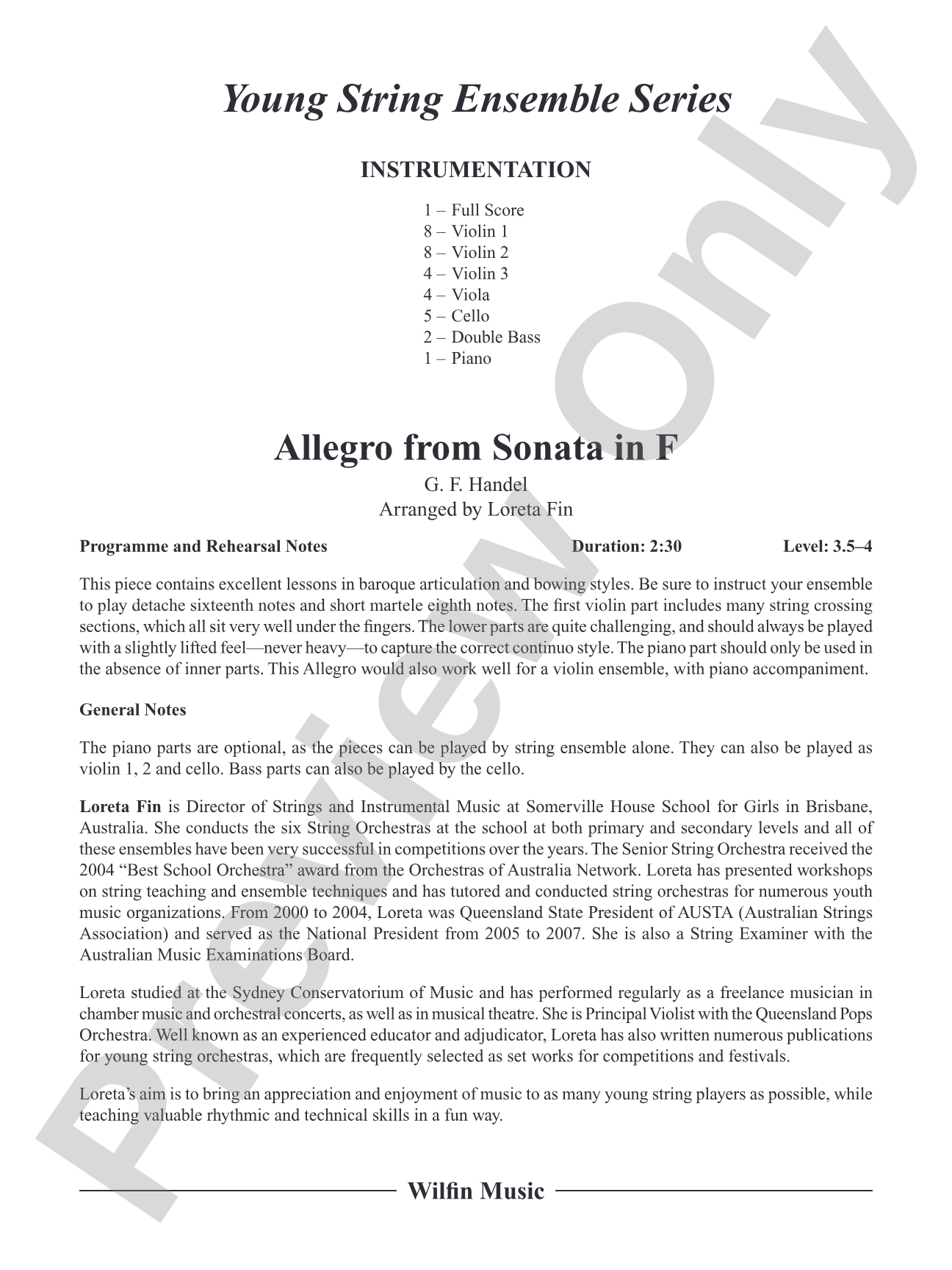
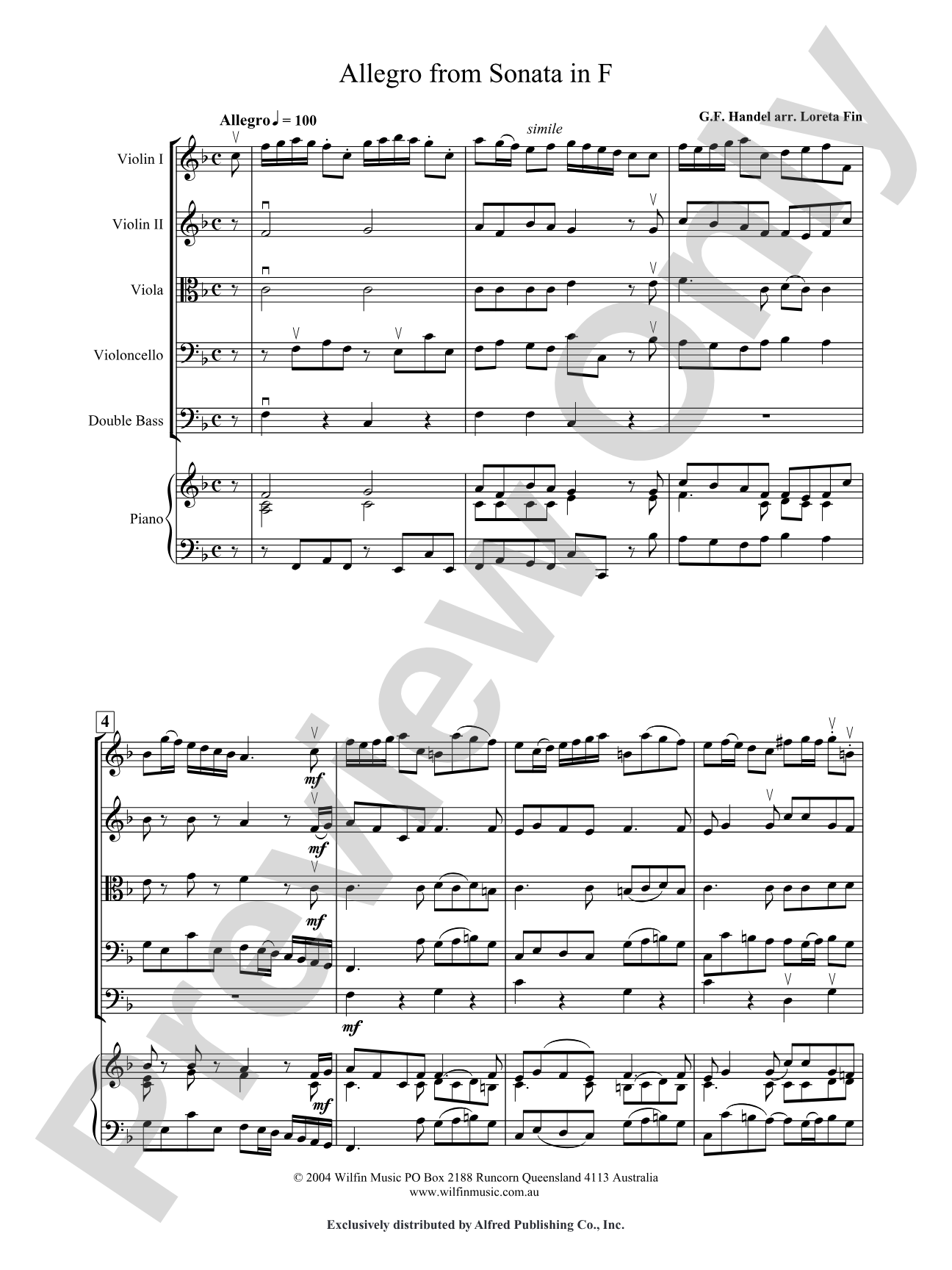
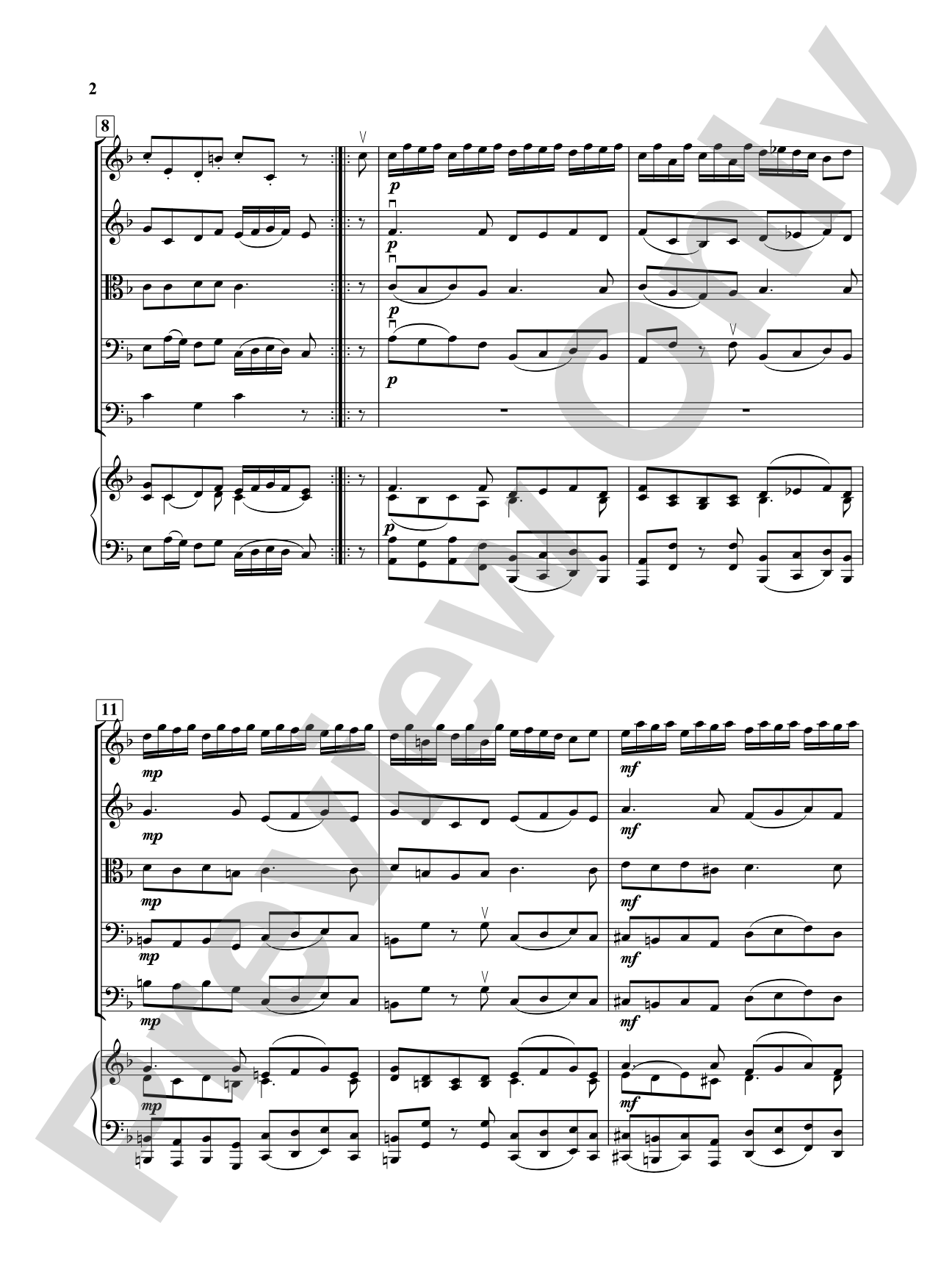
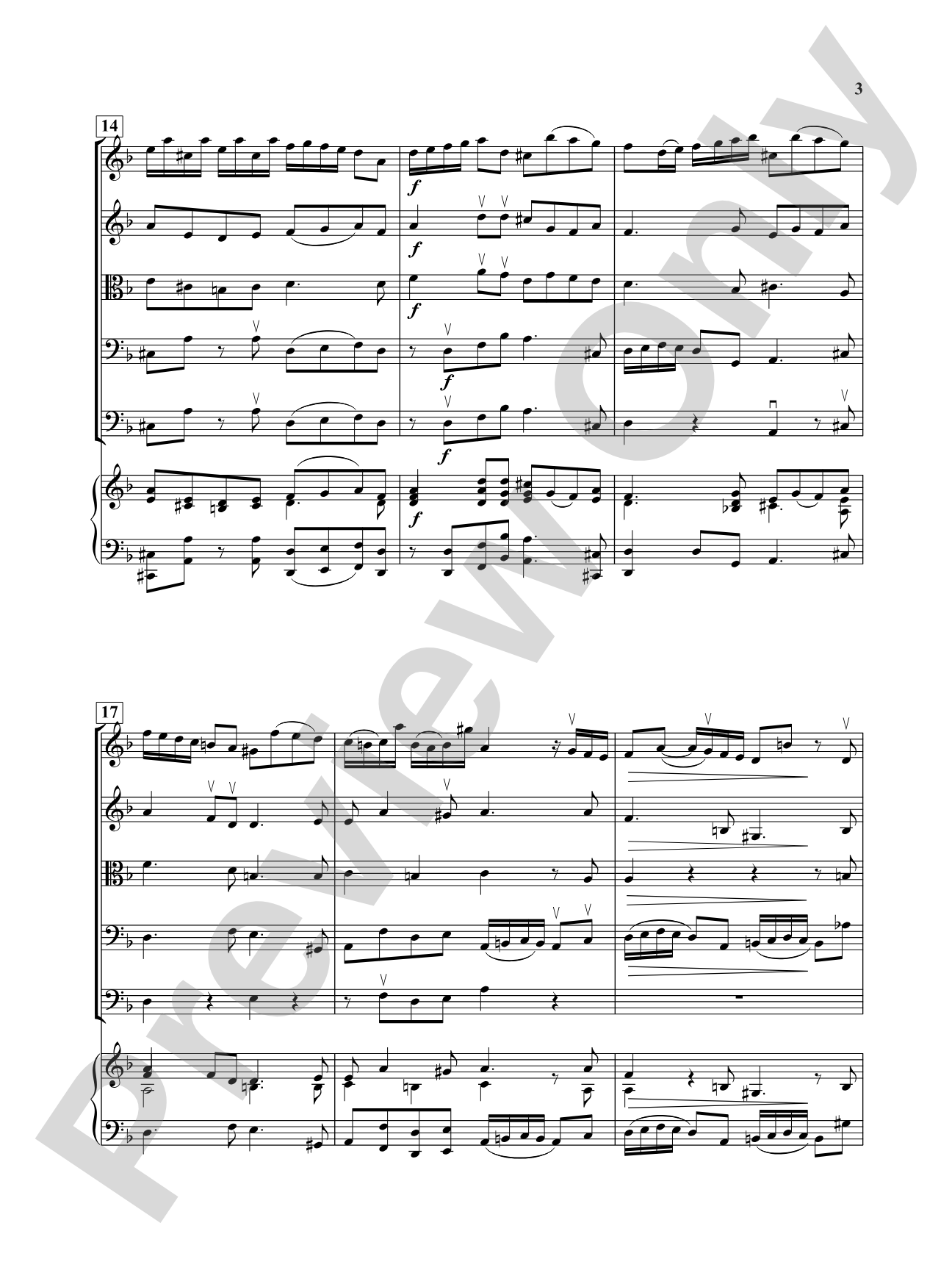
This piece contains excellent lessons in baroque articulation and bowing styles. Be sure to instruct your ensemble to play detached sixteenth notes and short martelé quarter notes. The first violin part includes many string crossing sections, which all sit very well under the fingers. The lower parts are quite challenging, and should always be played with a slightly lifted feel (never heavy) to capture the correct continuo style.


Allegro from Sonata in F: String Orchestra Conductor Score & Parts isn't in MakeMusic Cloud just yet...but it could be. Let us know you'd like to see it, and you'll help shape what comes next. In the meantime, start a free trial and dive into thousands of interactive titles your students can play along with today.
Request This Title
Tell us you want it.
Start Your Free Trial
Explore everything that's ready to play right now.
Sample Audio
No sample audio found.
Sample Video
No sample videos found.
Additional Details
Series:
Wilfin String Orchestra: Young String Ensemble Series
Publisher:
Wilfin Music
Page Count:
92
SKU:
76-PK-0000029
More about this title
About the Arranger: Loreta Fin
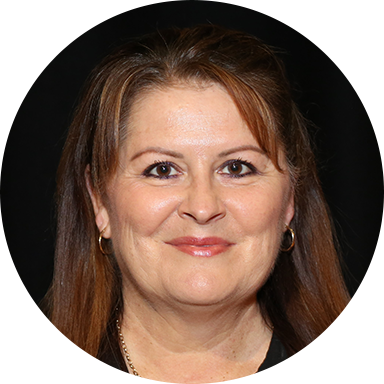
Loreta Fin AM is an Australian string educator and composer whose career spans performance, teaching, and advocacy across multiple continents. A first violinist with the Sydney Youth Orchestra and principal viola with the Queensland Pops Orchestra for over 25 years, she has performed alongside internationally renowned artists while maintaining an active presence as a clinician and adjudicator at major competitions throughout Australia and the United States.
Since 1993, Fin has directed strings at Somerville House School in Brisbane and has served the Australian Strings Association in leadership roles, including State and National President. She has published more than 100 works for string orchestra through Alfred Music, received the National Award for Services to Music and String Teaching in Australia, and currently serves as State Advisor for Strings with the Australian Music Examinations Board. In recent years, she has conducted the State and National Honours Ensembles Programs and led the Miri Music Project in Malaysia.
Why we love this
Fin's arrangement brings authentic baroque style within reach of younger ensembles while preserving genuine musical substance. The orchestration sits beautifully across four parts, and her pedagogical approach to articulation and bowing gives students specific, reproducible techniques they can apply to other Baroque repertoire.
What to expect
Bright and articulate, with the energy of a Baroque dance refined by clear bowing and precise rhythmic clarity. The lower parts provide gentle harmonic support rather than weight, allowing the upper voices to dance with elegance and definition while the ensemble moves as a unified whole.
Who it's for
String orchestra directors working with Grade 3 to 3.5 ensembles who want to teach authentic Baroque technique through a masterwork arrangement that sits naturally under young players' hands. This is ideal for orchestras ready to move beyond basic homophonic textures into genuine contrapuntal writing and classical articulation styles.
How to get the most out of it
- Shape the sixteenth-note passages with clear detachment; think of them as distinct syllables rather than smooth scalar lines, which brings out the character of the baroque style.
- Keep the lower voices buoyant and slightly lifted throughout, avoiding any heaviness that would blur the continuo function and lose the contrapuntal clarity.
- Balance the first violin's string crossings so they emerge cleanly without sacrificing the ensemble's overall blend; these passages should sit comfortably enough that players can focus on articulation rather than technical survival.
- Mark all martelé quarter notes in rehearsal so players understand where to apply that short, controlled stroke, then isolate those figures in sectionals to build consistency.
How to use it
Program this as an anchor for a concert exploring Baroque instrumental music, pairing it with other string orchestra arrangements from the same period or contemporary works in Baroque style. It works particularly well mid-program as a bridge between lighter opening works and more substantial later repertoire, giving audiences a sense of historical context while showcasing your ensemble's growing technical refinement.
Skills your students will build
- Baroque articulation techniques (detached sixteenth notes and martelé quarter notes)
- String crossing execution and seamless voice leading
- Lifting the sound without reducing weight or projection
- Contrapuntal awareness and independence within a collective ensemble sound
- Continuo style and harmonic foundation playing