

Alfred's Basic Piano Library: Fun with Modes: Piano Book
$6.99 USD
Sale price
$6.99 USD
Regular price
Skip to product information


Alfred's Basic Piano Library: Fun with Modes: Piano Book
By Willard A. Palmer, Morton Manus, and Amanda Vick Lethco
Level: 3
Item: 00-3076
$6.99
One moment…
Description
This 32-page book has a wide variety of appealing material that students will learn with ease. All piano students should know about the modes that make uniquely beautiful melodies and harmonies. May be used after page 16 of Level 3 of Alfred's Basic Piano Library or with any other method.


Discover MakeMusic Cloud: thousands of interactive titles your students can play along with today.
Sample Audio
No sample audio found.
Sample Video
No sample videos found.
Additional Details
More about this title
About the Authors
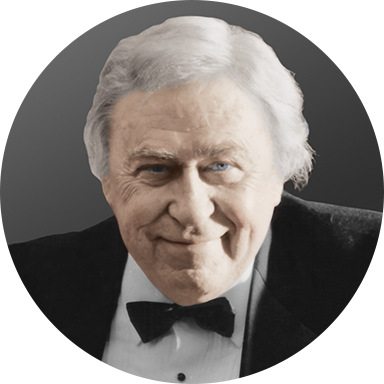
Dr. Willard Palmer stands as an internationally acclaimed musician, educator, and scholar who profoundly shaped music instruction across multiple instruments. A child prodigy who performed piano on radio at age 13, he studied under Mae Vardeman, whose mentorship in proper technique and improvisation fundamentals proved formative to his career. His early musical foundation combined piano and accordion study, disciplines that would define his life's work.
Palmer's prolific output includes 789 published compositions spanning accordion methods, piano methods, Hammond Chord Organ instruction, guitar methods, solo pieces, and choral works. Many of these publications have been translated into German, Japanese, French, Dutch, and Spanish, extending his influence globally. At the University of Houston, where he joined the music faculty after postgraduate study and earned recognition as a distinguished accordion instructor, he taught the institution's first successful college-level accordion courses for 18 years.
His scholarly contributions earned Palmer recognition as a leading expert in Baroque music ornamentation, work that became the foundation for the acclaimed Alfred Masterworks publication series. He received a Doctor of Humanities degree in 1971 and a Doctor of Music degree in 1983 in recognition of his musicological research. Palmer also served as director of the Riemenschneider Bach Institute and was a long-time choir director at Memorial Lutheran Church in Houston. His memberships included the American Federation of Musicians Local #65, the American Accordionists' Association, and the American Society of Composers, Authors and Publishers.
Palmer's prolific output includes 789 published compositions spanning accordion methods, piano methods, Hammond Chord Organ instruction, guitar methods, solo pieces, and choral works. Many of these publications have been translated into German, Japanese, French, Dutch, and Spanish, extending his influence globally. At the University of Houston, where he joined the music faculty after postgraduate study and earned recognition as a distinguished accordion instructor, he taught the institution's first successful college-level accordion courses for 18 years.
His scholarly contributions earned Palmer recognition as a leading expert in Baroque music ornamentation, work that became the foundation for the acclaimed Alfred Masterworks publication series. He received a Doctor of Humanities degree in 1971 and a Doctor of Music degree in 1983 in recognition of his musicological research. Palmer also served as director of the Riemenschneider Bach Institute and was a long-time choir director at Memorial Lutheran Church in Houston. His memberships included the American Federation of Musicians Local #65, the American Accordionists' Association, and the American Society of Composers, Authors and Publishers.
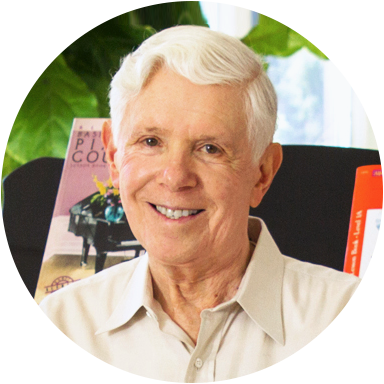
Morton Manus served as president of Alfred Music Publishing Co., Inc. from 1952 to 2016, guiding the company through decades of transformation and growth. He joined the family business in the late 1940s after earning a business degree from City College of New York. As a clarinetist and pianist, Manus brought both musical knowledge and business acumen to his leadership role.
Under Manus's direction, Alfred Music evolved from a popular sheet music publisher into a comprehensive music education powerhouse. Beginning in the 1950s, he championed the development of instructional materials including accordion, guitar, piano, and recorder methods that became industry standards. The company's expansion was marked by strategic growth; in 1975, headquarters relocated to Los Angeles with a distribution center established in upstate New York to meet increasing demand.
Manus's vision extended globally as his sons Ron and Steve joined the company in 1988 and 1992 respectively. Together they expanded Alfred Music's international presence through offices in Australia, Germany, Singapore, and the United Kingdom. A major milestone came in 2005 when Alfred Music acquired Warner Bros. Publications, obtaining rights to the EMI Catalogue Partnership and establishing a significant relationship with Warner/Chappell Music.
Under Manus's direction, Alfred Music evolved from a popular sheet music publisher into a comprehensive music education powerhouse. Beginning in the 1950s, he championed the development of instructional materials including accordion, guitar, piano, and recorder methods that became industry standards. The company's expansion was marked by strategic growth; in 1975, headquarters relocated to Los Angeles with a distribution center established in upstate New York to meet increasing demand.
Manus's vision extended globally as his sons Ron and Steve joined the company in 1988 and 1992 respectively. Together they expanded Alfred Music's international presence through offices in Australia, Germany, Singapore, and the United Kingdom. A major milestone came in 2005 when Alfred Music acquired Warner Bros. Publications, obtaining rights to the EMI Catalogue Partnership and establishing a significant relationship with Warner/Chappell Music.
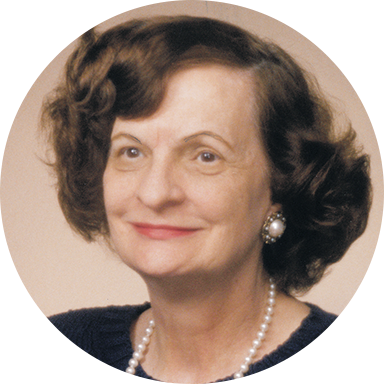
Dr. Amanda Vick Lethco is best known as co-author of Alfred's Basic Piano Library, one of the world's most respected piano methods, which she developed alongside Dr. Willard Palmer and Morton Manus. A graduate of Northwestern University with degrees in piano performance, music education, and a master's degree in piano performance, she studied with renowned pedagogues including James Friskin at Juilliard, Rudolph Ganz at Chicago Musical College, and Douglas Moore at Columbia University.
Throughout her career, Dr. Lethco served as Professor Emeritus of Piano Pedagogy at the University of Texas at Austin and maintained a thriving private teaching practice across New York City, San Antonio, Austin, and Houston. Her contributions to music education earned her an honorary Doctor of Humanities degree from Whitworth College in Brookhaven, Mississippi, and she is recognized in both the International Who's Who of Musicians and the World Who's Who of Women.
Beyond her teaching and publishing work, Dr. Lethco was an active performer and clinician on the international stage. She presented workshops at colleges and universities across the country, conducted recitals throughout the United States, and led clinics and seminars in Europe, Canada, Japan, Hong Kong, Korea, New Zealand, Malaysia, Singapore, Australia, Thailand, and Indonesia. She also co-authored Creating Music at the Piano with Dr. Willard Palmer.
Throughout her career, Dr. Lethco served as Professor Emeritus of Piano Pedagogy at the University of Texas at Austin and maintained a thriving private teaching practice across New York City, San Antonio, Austin, and Houston. Her contributions to music education earned her an honorary Doctor of Humanities degree from Whitworth College in Brookhaven, Mississippi, and she is recognized in both the International Who's Who of Musicians and the World Who's Who of Women.
Beyond her teaching and publishing work, Dr. Lethco was an active performer and clinician on the international stage. She presented workshops at colleges and universities across the country, conducted recitals throughout the United States, and led clinics and seminars in Europe, Canada, Japan, Hong Kong, Korea, New Zealand, Malaysia, Singapore, Australia, Thailand, and Indonesia. She also co-authored Creating Music at the Piano with Dr. Willard Palmer.