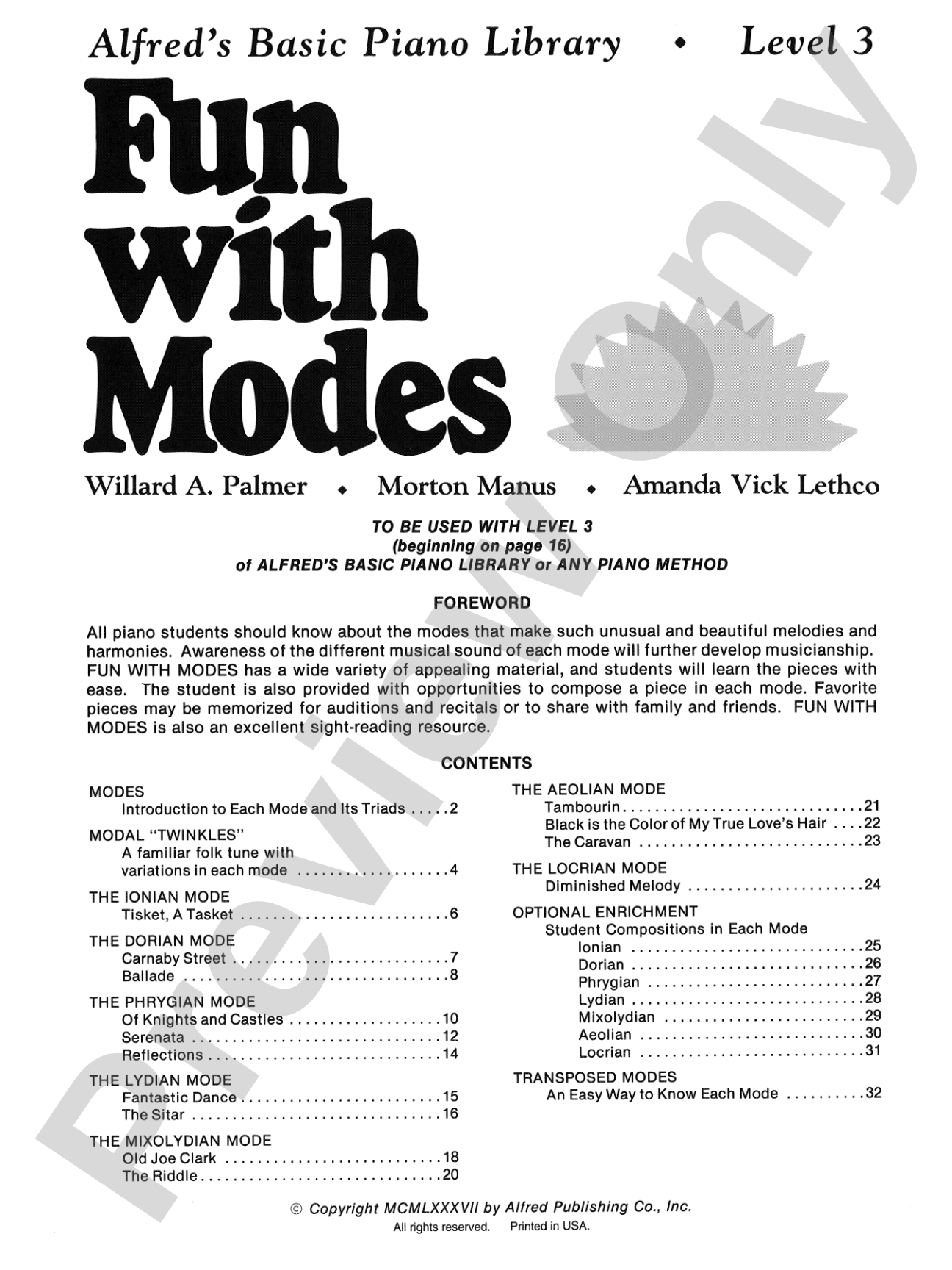
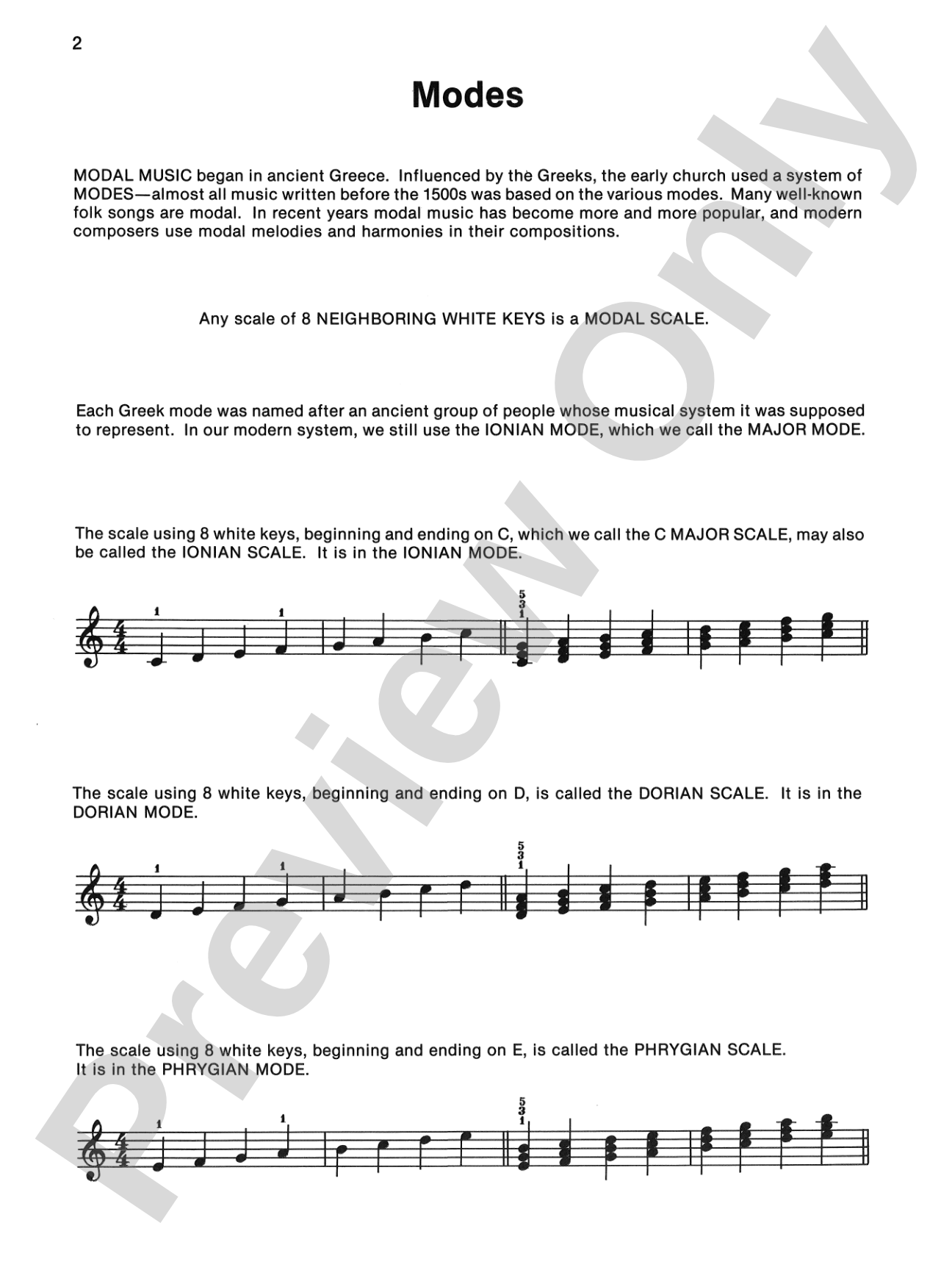
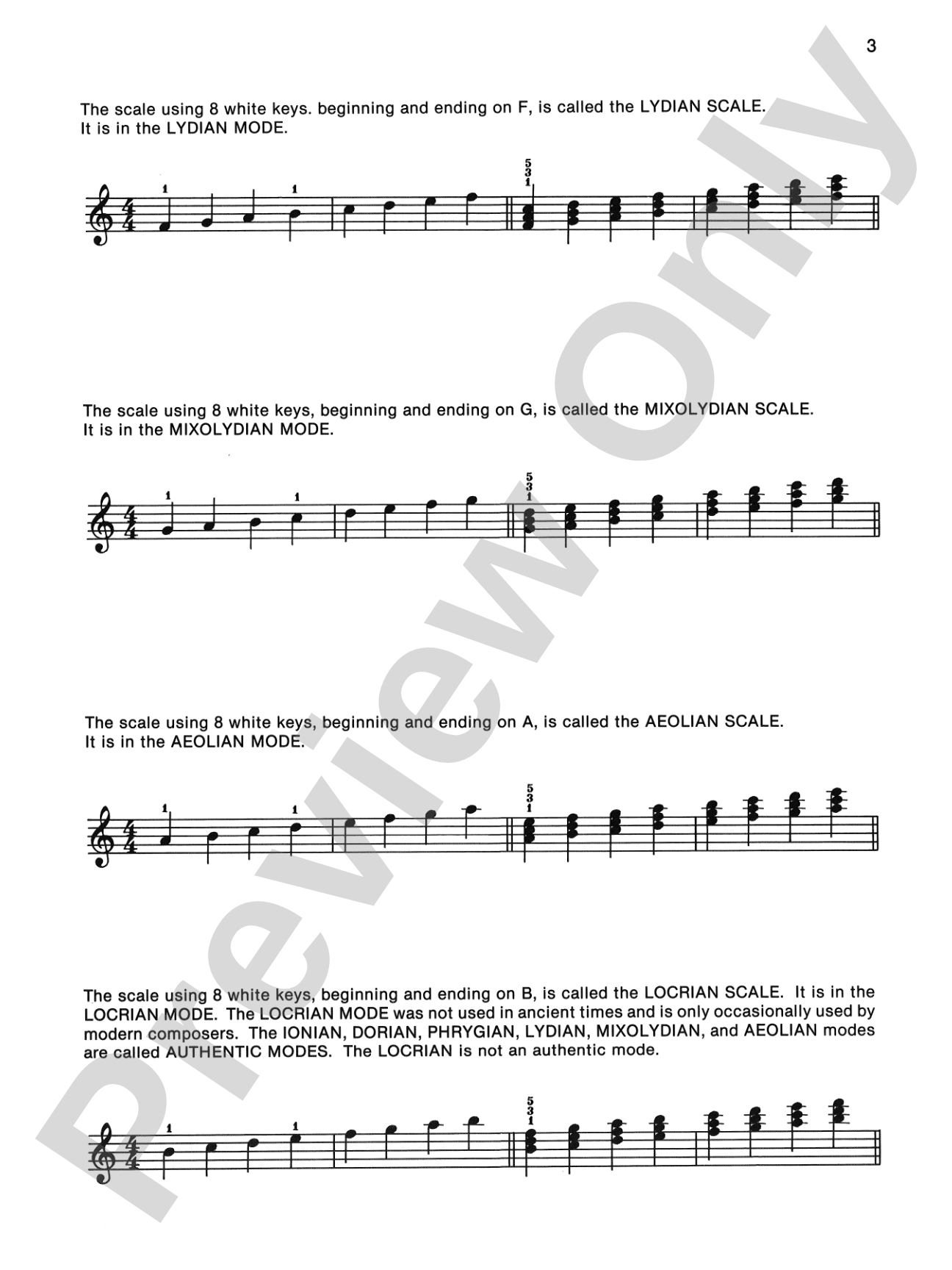
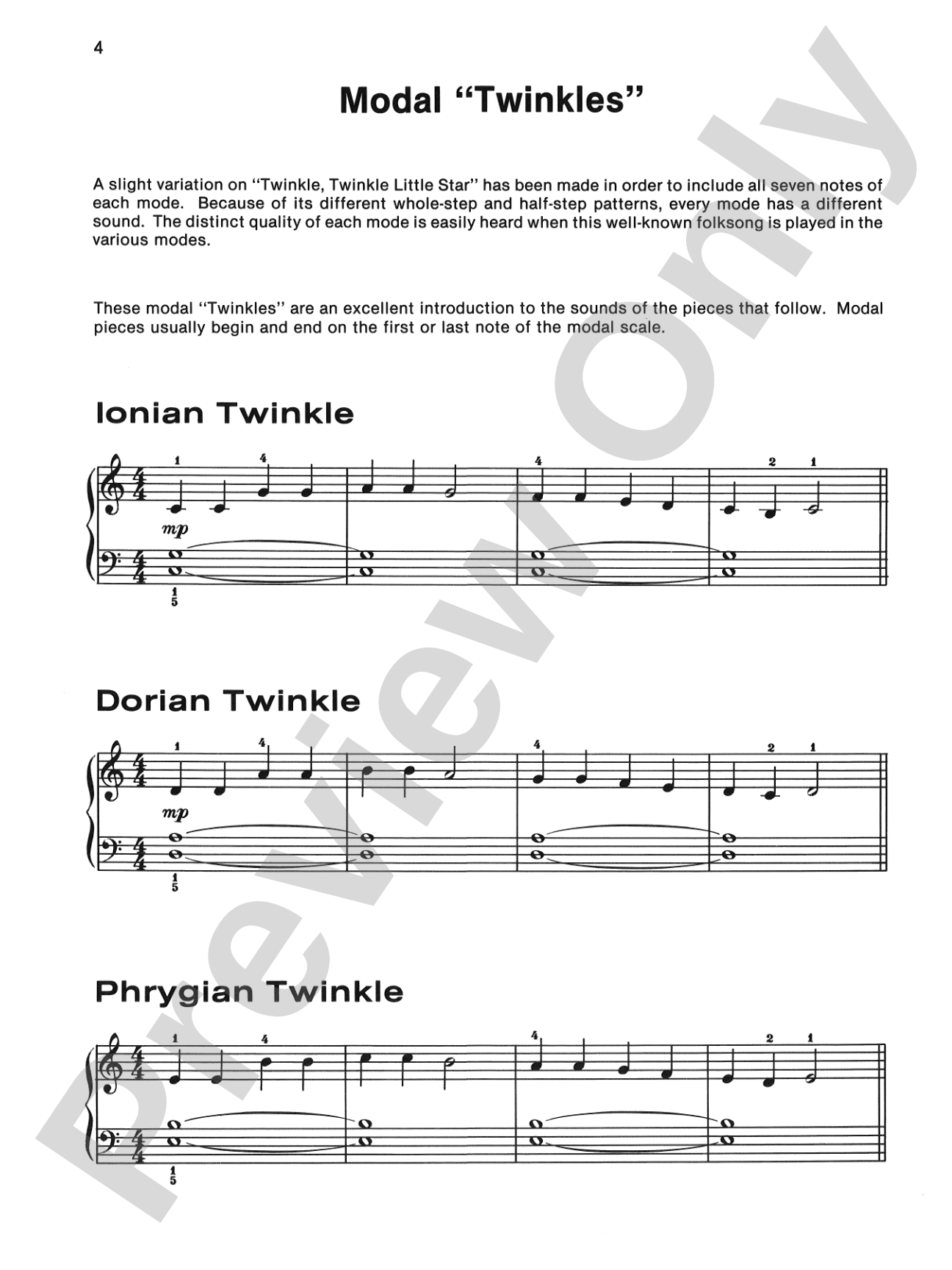
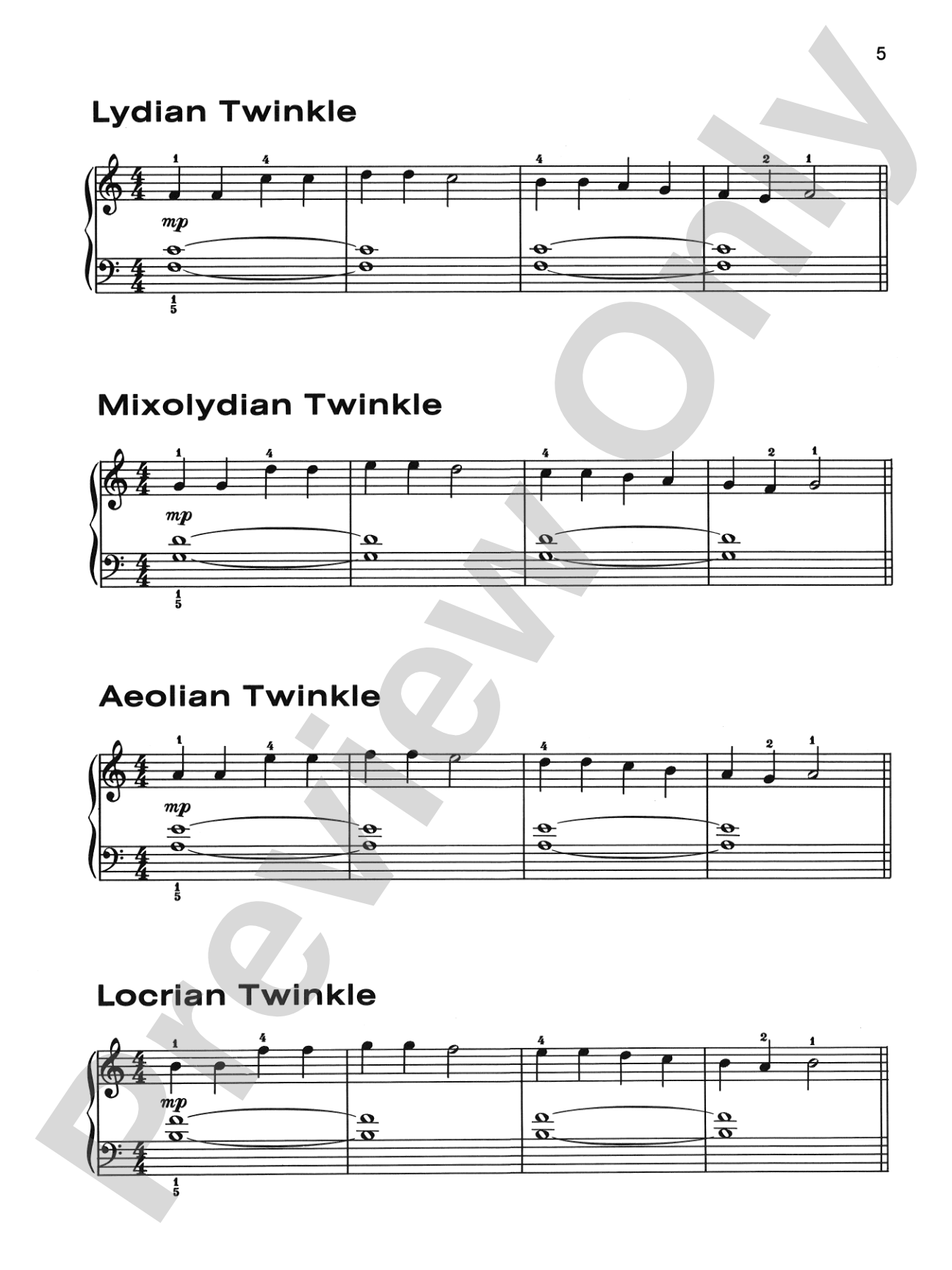
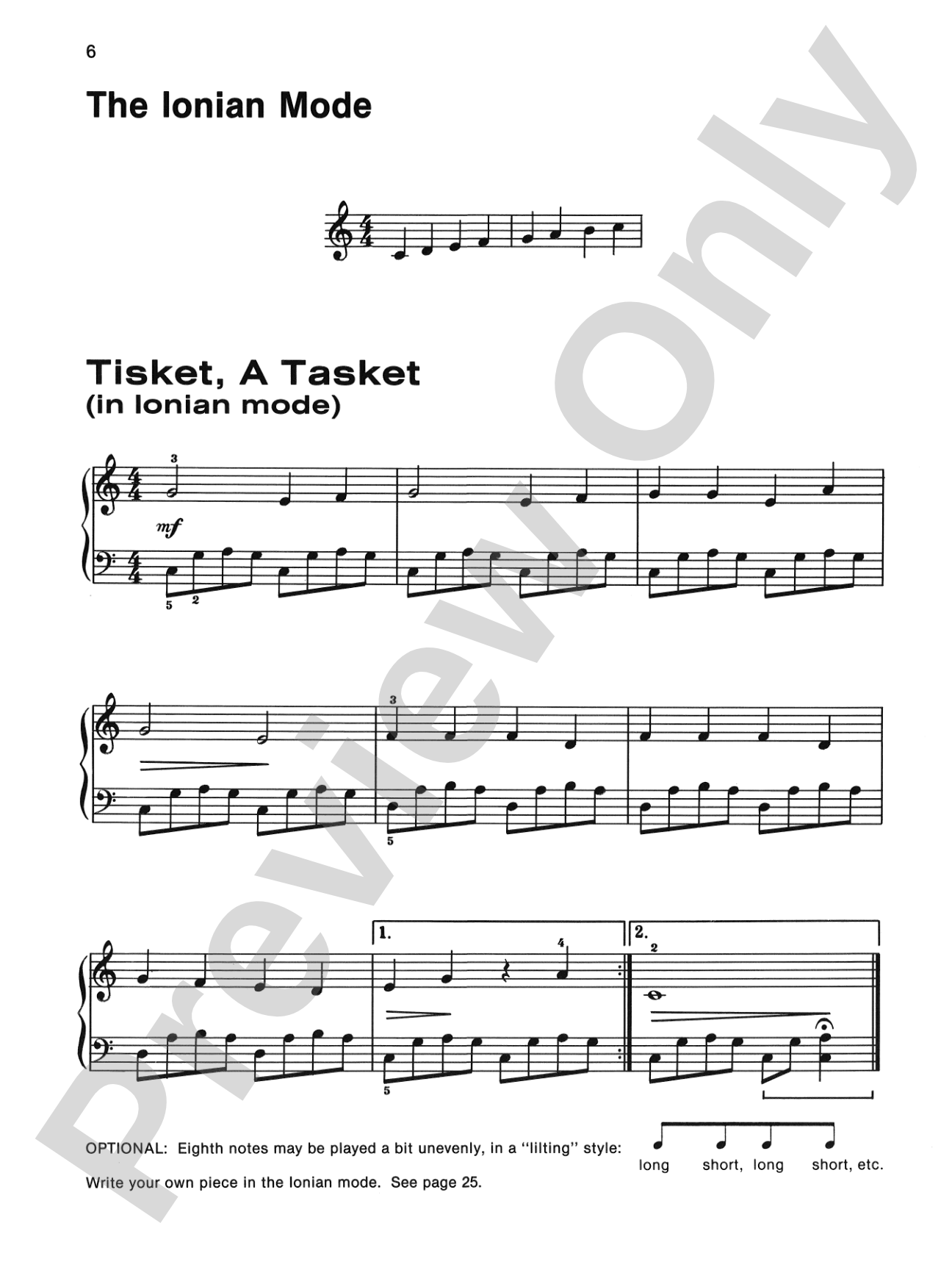
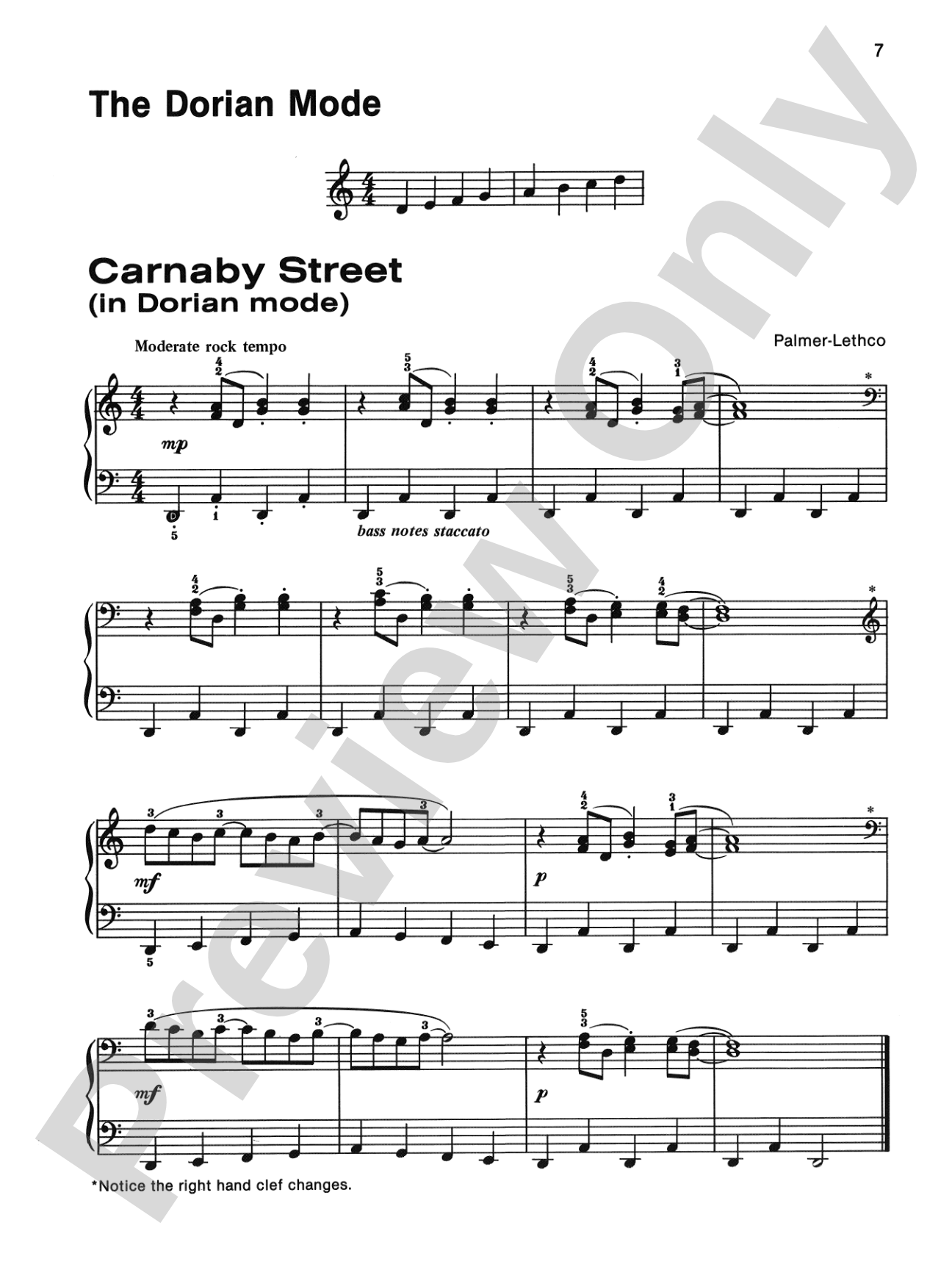
This 32-page book has a wide variety of appealing material that students will learn with ease. All piano students should know about the modes that make uniquely beautiful melodies and harmonies. May be used after page 16 of Level 3 of Alfred's Basic Piano Library or with any other method.
Discover MakeMusic Cloud: thousands of interactive titles your students can play along with today.
Dr. Willard A. Palmer shaped generations of music students through his prolific output of 789 published compositions spanning accordion, piano, guitar, and choral idioms. His work has been translated into German, Japanese, French, Dutch, and Spanish, and his meticulous scholarship on Baroque ornamentation became foundational to the Alfred Masterworks series. Palmer studied at the Conservatory of Leipzig on scholarship and later joined the University of Houston faculty, where he pioneered the first successful college accordion courses over an 18-year tenure.
Palmer's career was rooted in both performance and pedagogy. As a child prodigy who played piano on radio at age 13, he studied with Mae Vardeman, whose emphasis on technique and improvisation shaped his teaching philosophy. His later scholarly work earned him recognition as a world authority on Classical and Baroque music, resulting in honorary doctorates in Humanities (1971) and Music (1983). He served as director of the Riemenschneider Bach Institute and was deeply involved in professional organizations including the American Society of Composers, Authors and Publishers.
Why we love this
Palmer and his coauthors built this book to make modal understanding genuinely intuitive rather than theoretical. Every piece feels musical and singable, which means students absorb the character of each mode through playing rather than memorization. The 32 pages move at exactly the right pace to reinforce these concepts without overwhelming a Level 3 student still consolidating their fundamentals.
What to expect
Each page opens a new harmonic world. You'll encounter Dorian's jazz-inflected smoothness, the brightness of Lydian, the melancholy pull of Phrygian. The material never feels academic; instead, you discover these modes by playing through them, letting your fingers and ears learn what each one brings to music.
Who it's for
Level 3 pianists ready to expand beyond major and minor, particularly those working through Alfred's Basic Piano Library who want a deeper foundation in harmonic color. Teachers seeking a systematic, playable introduction to modal thinking will find this resource efficient and engaging.
How to get the most out of it
Listen for the tonal center in each piece before you begin. Each mode has a distinctive flavor, and identifying what makes one sound different from its neighbor sharpens your ear for that modal color.
Play the pieces expressively rather than mechanically. The melodies in each mode have natural phrasing; honor those curves and breathing points to bring out what makes each one unique.
Explore improvisation using the provided modal scales. Once you've learned a piece, try creating your own short melodies in that same mode to deepen your ownership of its sound.
How to use it
Introduce this after your students have solidified Level 3 fundamentals, roughly midyear or into spring. It works beautifully as a bridge into jazz or contemporary styles later, giving pianists vocabulary they'll need. You might also pair it with listening assignments featuring modal jazz or classical pieces to show how these concepts sound in professional contexts.
Skills your students will build
Recognition and performance of the seven modes (Ionian, Dorian, Phrygian, Lydian, Mixolydian, Aeolian, Locrian)
Auditory discrimination of modal color and emotional character
Reading and playing melodies built on modal scales rather than traditional major/minor tonality
Understanding the relationship between scale degree and harmonic function within different tonal centers
Improvisation using modal frameworks
You May Also Like
Scan to Complete Your Purchase
Use your phone's camera to scan the code below
You'll log in on your phone and the order will be added to your account