

Alfred's Basic Piano Library: Fun Book 3: Piano Book
$8.99 USD
Sale price
$8.99 USD
Regular price
Skip to product information


Alfred's Basic Piano Library: Fun Book 3: Piano Book
A Collection of 17 Entertaining Solos
By Willard A. Palmer, Morton Manus, and Amanda Vick Lethco
Level: 3
Item: 00-2393
$8.99
One moment…
Description
The Fun Books provide additional recital pieces designed for students who require more solo material and are particularly useful when two students are from the same family (Recital Book for one, Fun Book for the other).


Discover MakeMusic Cloud: thousands of interactive titles your students can play along with today.
Sample Audio
No sample audio found.
Sample Video
No sample videos found.
Additional Details
More about this title
About the Authors
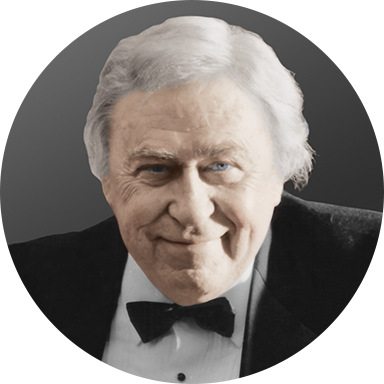
Dr. Willard Palmer stands as an internationally celebrated musician, educator, and scholar whose prolific career spanned multiple instruments and musical genres. A child prodigy who performed piano on radio at age 13, he built his musical foundation through early studies with Mae Vardeman, a mentor who cultivated his improvisational talents alongside rigorous technical training. His early years saw him performing accordion and piano across radio broadcasts and campus ensembles while studying at Whitworth College and Millsaps College in Mississippi.
Palmer's scholarly contributions proved equally impressive. He authored 789 published compositions including accordion and piano methods, guitar materials, and choral works translated into German, Japanese, French, Dutch, and Spanish. His expertise in Baroque music ornamentation earned him worldwide recognition and formed the foundation for the Alfred Masterworks series. He received a Doctor of Humanities degree in 1971 and a Doctor of Music degree in 1983 in recognition of his musicological achievements.
Beyond composition and writing, Palmer maintained an active teaching presence. He spent 18 years at the University of Houston, establishing the first successful college-level accordion courses while conducting advanced post-graduate study. As director of the Riemenschneider Bach Institute and longtime choir director at Memorial Lutheran Church in Houston, Palmer remained deeply engaged in both performance and spiritual music. He held memberships in the American Federation of Musicians, American Accordionists' Association, and American Society of Composers, Authors and Publishers.
Palmer's scholarly contributions proved equally impressive. He authored 789 published compositions including accordion and piano methods, guitar materials, and choral works translated into German, Japanese, French, Dutch, and Spanish. His expertise in Baroque music ornamentation earned him worldwide recognition and formed the foundation for the Alfred Masterworks series. He received a Doctor of Humanities degree in 1971 and a Doctor of Music degree in 1983 in recognition of his musicological achievements.
Beyond composition and writing, Palmer maintained an active teaching presence. He spent 18 years at the University of Houston, establishing the first successful college-level accordion courses while conducting advanced post-graduate study. As director of the Riemenschneider Bach Institute and longtime choir director at Memorial Lutheran Church in Houston, Palmer remained deeply engaged in both performance and spiritual music. He held memberships in the American Federation of Musicians, American Accordionists' Association, and American Society of Composers, Authors and Publishers.
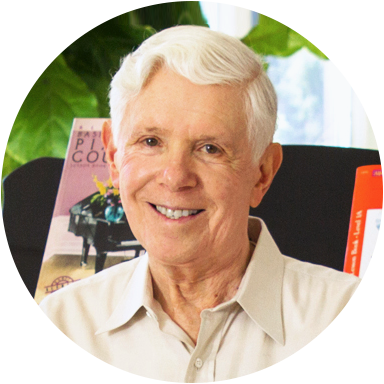
Morton Manus served as president of Alfred Music Publishing Co., Inc. for more than six decades, from 1952 to 2016. He joined the company in the late 1940s after earning a business degree from City College of New York, eventually taking over leadership when his father Sam retired. A skilled clarinetist and pianist, Manus transformed Alfred Music from a traditional sheet music publisher into a comprehensive music education enterprise.
During his tenure, Manus spearheaded the creation of instructional materials that became industry standards. He commissioned the development of accordion instruction books in the 1950s, followed by educational series for guitar, piano, and recorder. These innovative products established Alfred Music as a leader in music education resources. The company's success prompted a relocation of its main headquarters to Los Angeles in 1975, with a separate distribution center built in upstate New York.
Manus's sons Ron and Steve continued the family legacy by joining Alfred Music in 1988 and 1992 respectively. Together they expanded the company's global reach by opening international offices in Australia, Germany, Singapore, and the UK. In 2005, Alfred Music acquired Warner Bros. Publications and secured rights to the EMI Catalogue Partnership, further solidifying its position as a major force in music publishing and education.
During his tenure, Manus spearheaded the creation of instructional materials that became industry standards. He commissioned the development of accordion instruction books in the 1950s, followed by educational series for guitar, piano, and recorder. These innovative products established Alfred Music as a leader in music education resources. The company's success prompted a relocation of its main headquarters to Los Angeles in 1975, with a separate distribution center built in upstate New York.
Manus's sons Ron and Steve continued the family legacy by joining Alfred Music in 1988 and 1992 respectively. Together they expanded the company's global reach by opening international offices in Australia, Germany, Singapore, and the UK. In 2005, Alfred Music acquired Warner Bros. Publications and secured rights to the EMI Catalogue Partnership, further solidifying its position as a major force in music publishing and education.
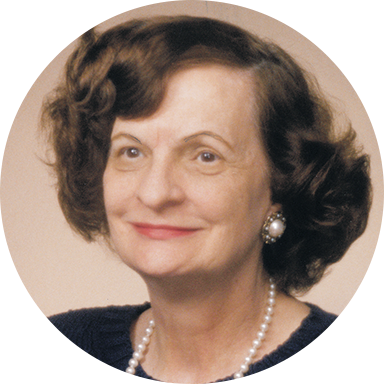
Dr. Amanda Vick Lethco co-authored Alfred's Basic Piano Library with Dr. Willard Palmer and Morton Manus, a piano method that has achieved worldwide recognition. She earned her Bachelor of Music degree in Piano Performance and Bachelor of Music Education from Northwestern University, followed by a Master of Music degree in Piano Performance from the same institution. Her training also included study with prestigious pedagogues including James Friskin at Juilliard, Rudolph Ganz at Chicago Musical College, and Douglas Moore at Columbia University.
As Professor Emeritus of Piano Pedagogy at the University of Texas at Austin, Dr. Lethco maintained an extensive teaching practice in major cities including New York, San Antonio, Austin, and Houston. She received an honorary Doctor of Humanities degree from Whitworth College in Brookhaven, Mississippi, and appears in both the International Who's Who of Musicians and the World Who's Who of Women. In addition to co-authoring Creating Music at the Piano with Dr. Palmer, she published numerous works on piano pedagogy and performance.
Dr. Lethco established herself as an active clinician and workshop leader, conducting sessions across the United States and internationally in Europe, Canada, Japan, Hong Kong, Korea, New Zealand, Malaysia, Singapore, Australia, Thailand, and Indonesia. She performed recitals throughout the United States and contributed significantly to music education through her presentations on college and university campuses.
As Professor Emeritus of Piano Pedagogy at the University of Texas at Austin, Dr. Lethco maintained an extensive teaching practice in major cities including New York, San Antonio, Austin, and Houston. She received an honorary Doctor of Humanities degree from Whitworth College in Brookhaven, Mississippi, and appears in both the International Who's Who of Musicians and the World Who's Who of Women. In addition to co-authoring Creating Music at the Piano with Dr. Palmer, she published numerous works on piano pedagogy and performance.
Dr. Lethco established herself as an active clinician and workshop leader, conducting sessions across the United States and internationally in Europe, Canada, Japan, Hong Kong, Korea, New Zealand, Malaysia, Singapore, Australia, Thailand, and Indonesia. She performed recitals throughout the United States and contributed significantly to music education through her presentations on college and university campuses.