

Ain't No Windin' in the Road: SATB divisi, a cappella Choral Octavo
Words by John Parker, music by Greg Gilpin
Item: 00-PO-0001912
$1.85
Minimum order quantity: 20 copies
Pickup currently not available
Related Items
Ain't No Windin' in the Road: SSAB, a cappella Choral Octavo |
$1.85
|
View | |
Ain't No Windin' in the Road: SSAA, a cappella Choral Octavo |
$1.85
|
View | |
Ain't No Windin' in the Road: SATB divisi, a cappella Choral Octavo |
$1.85
|
View | |
Ain't No Windin' in the Road: SSAB, a cappella Choral Octavo |
$1.85
|
View | |
Ain't No Windin' in the Road: SSAA, a cappella Choral Octavo |
$1.85
|
View |
Description
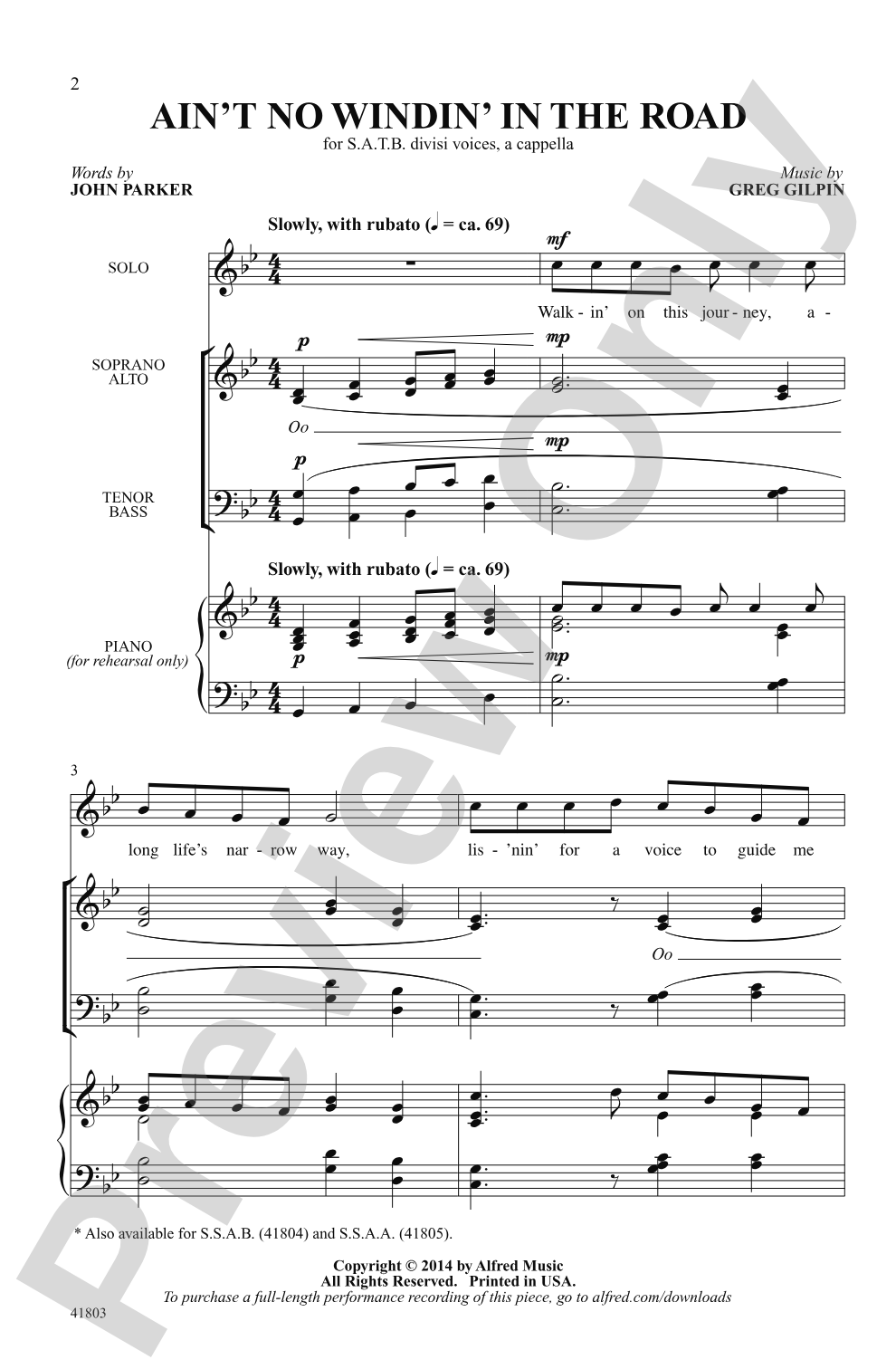
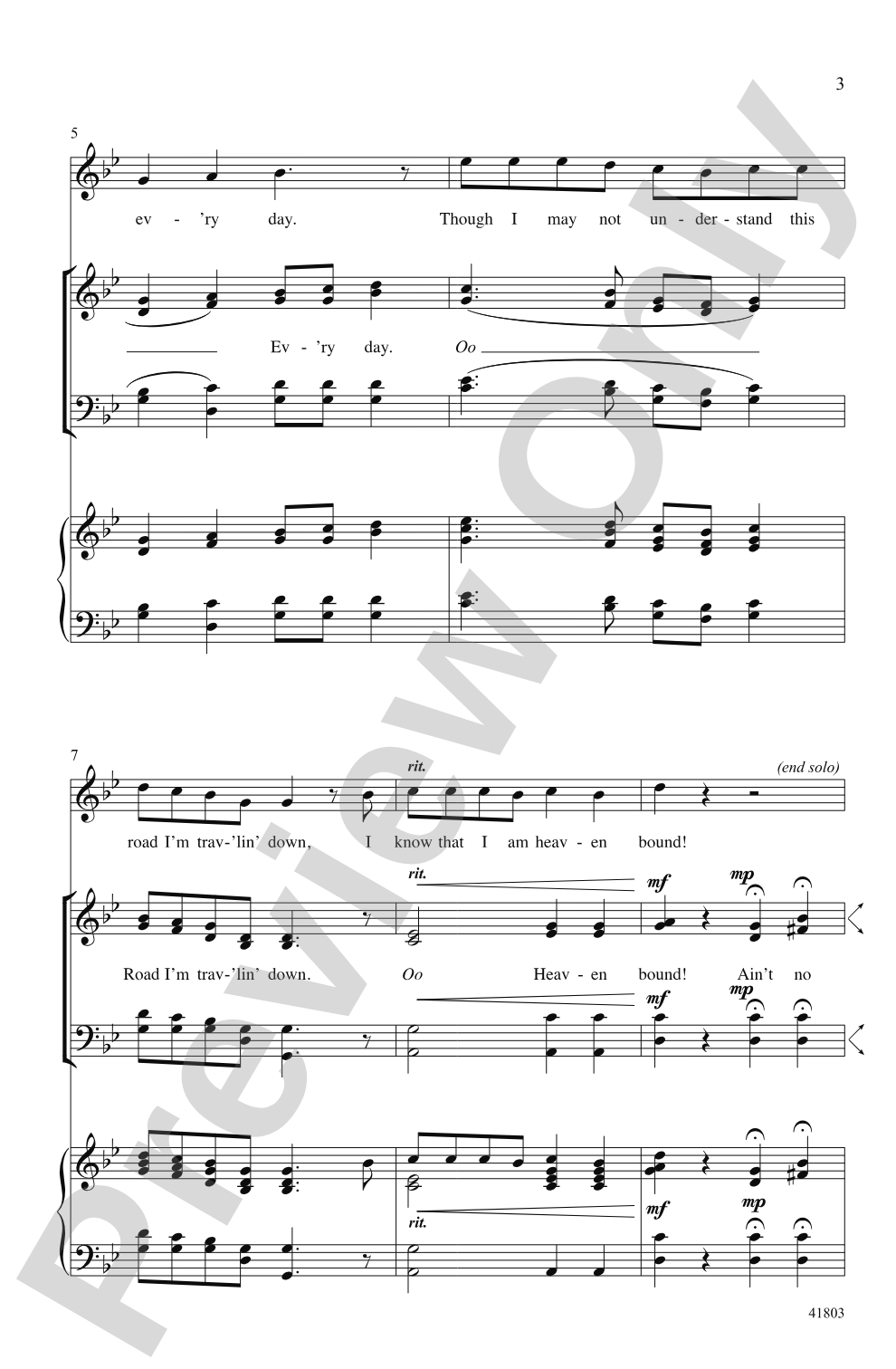
An earnest soloist is accompanied by the soulful "oo"s of an a cappella choir during the expressive introduction to this spirited original. Soon we take a turn as the piece bursts into an exciting, rhythmic, and polyphonic tour de force. Thrilling in all voicings! This title is available in Music Prodigy.


Ain't No Windin' in the Road: SATB divisi, a cappella Choral Octavo isn't in MakeMusic Cloud just yet...but it could be. Let us know you'd like to see it, and you'll help shape what comes next. In the meantime, start a free trial and dive into thousands of interactive titles your students can play along with today.
Request This Title
Tell us you want it.
Start Your Free Trial
Explore everything that's ready to play right now.
Sample Audio
1
Audio File
--:--
0:00
0:00
Sample Video
No sample videos found.
Additional Details
Series:
Alfred Choral Designs
Publisher:
Alfred Music
Page Count:
12
SKU:
00-PO-0001912
More about this title
About the Composer: Greg Gilpin

Greg Gilpin brings decades of choral conducting and composing experience to every piece he writes. His work has been performed at prestigious venues including Carnegie Hall, Lincoln Center, the Sydney Opera House, and Royal Festival Hall, establishing him as a major voice in contemporary choral music. As Director of Educational Choral Publications for Shawnee Press and an ASCAP award-winning composer, Gilpin has shaped the landscape of accessible, singable choral literature for school and community ensembles.
Beyond the concert hall, Gilpin has expanded his creative reach into film scoring, earning Best Score recognition for the short film "Rosie's Rescue" in 2021. He holds memberships in ACDA, NAfME, and Phi Mu Alpha Sinfonia, and has collaborated with opera singers and symphonic choirs on world premieres. His commitment to the choral art form spans conducting, publishing, composing, and mentoring the next generation of musicians.
Why we love this
Gilpin crafts the dramatic arc here with surgical precision: the vulnerable opening solo over hushed choir vowels gives way to a rhythmically propulsive second section that demands real polyphonic independence from all four voices. The spiritual authenticity and accessibility make this work equally at home in a concert setting or a service, and singers leave rehearsal knowing they've tackled something genuinely substantial.
What to expect
The piece opens with tender introspection, a single voice reaching out over a veil of choir warmth. Then it ignites. The rhythmic drive and overlapping lines create forward momentum that feels urgent and alive, rooted in the spiritual tradition but fully present in the moment.
Who it's for
Choirs with solid part-singing skills and the ability to sustain ensemble blend through contrasting textures. The divisi voicing and polyphonic writing demand singers who can track their line independently while listening across the ensemble.
How to get the most out of it
- Balance the opening soloist carefully so the choir's sustained "oo"s remain supportive rather than overwhelming. The introduction hinges on vulnerability, so the ensemble should think of their vowels as a cushion, not a bed of sound.
- Mark the rhythmic entries in the polyphonic section clearly during rehearsal. Once all voices understand their individual lines, the piece develops thrilling independence without losing cohesion.
- Use the text and spiritual language as your emotional anchor through both the introspective and driving sections. This piece earns its power from genuine conviction, not volume.
How to use it
This works beautifully on a concert that pairs sacred repertoire with contemporary spiritual arrangements. It also serves as an excellent closer for a shorter program, leaving audiences moved by both the emotional journey and the singers' command of the material. The transition from intimate to explosive makes it a natural separator between contrasting pieces.
Skills your students will build
- Balancing solo and ensemble textures in a cappella setting
- Sustaining independent vocal lines while maintaining harmonic blend
- Interpreting rhythmic precision in polyphonic writing
- Connecting textual and emotional content to musical choices