Afterlife Cover Image

Afterlife: Concert Band Conductor Score

$10.00 USD
Sale price  $10.00 USD Regular price 
Skip to product information
Afterlife Cover Image

Afterlife: Concert Band Conductor Score

By Rossano Galante

Grade: 4 (Medium Difficult)

Item: 00-44198S

$10.00
Shipped

One moment…

Description
Since the beginning of time man has pondered what happens when our physical body dies. Some believe we go to Heaven. Others doubt its existence entirely. Then there are those who have had near death experiences and live to tell their stories. This composition starts delicately as peacefulness returns to the soul. It intensifies as we approach our new consciousness, constantly modulating between the two as we gain knowledge of our new surroundings. (4:45) This title is available in MakeMusic Cloud.

Afterlife: Concert Band Conductor Score isn't in MakeMusic Cloud just yet...but it could be. Let us know you'd like to see it, and you'll help shape what comes next. In the meantime, start a free trial and dive into thousands of interactive titles your students can play along with today.

Sample Pages

Sample Audio
No sample audio found.
Sample Video
Additional Details
Series: Alfred Concert Band
Publisher: Alfred Music
Page Count: 16
UPC: 038081498188
SKU: 00-44198S

More about this title

About the Composer: Rossano Galante
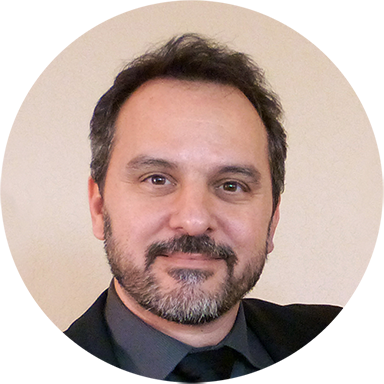
Rossano Galante

Rossano Galante earned his Bachelor of Arts in Trumpet Performance from SUNY Buffalo in 1992 and was selected that same year as one of nineteen candidates worldwide for the University of Southern California's prestigious Film Scoring Program, where he studied under Academy Award winner Jerry Goldsmith. Since relocating to California in 1999, Galante has established himself as a composer and orchestrator, collaborating with Oscar-nominated composers Marco Beltrami, Christophe Beck, Brian Tyler, and Christopher Lennertz, and serving as orchestrator on more than eighty feature films including the Avengers franchise, A Quiet Place, Logan, and The Super Mario Brothers Movie.

Beyond his film work, Galante has become a prolific composer for concert ensembles, with over 68 published compositions across major publishers including Alfred, Schirmer, Hafabra, C.L. Barnhouse, Musikverlag Frank, and Dehaske/Curnow. He regularly receives commissions from concert bands and orchestras around the world.

Why we love this

Galante crafts a genuinely cinematic arc here without relying on bombast. The piece traces a psychological journey through harmonic flux and strategic modulation, giving your band a substantial emotional narrative to shape rather than simply execute. The Grade 4 scoring balances accessibility with sophistication, allowing strong musicians to find depth while keeping the ensemble united on technique.

What to expect

Afterlife unfolds like a near-death experience rendered in sound. Gossamer textures dissolve into urgent queries, then settle again into calm acceptance. The constant push and pull between peaceful resignation and disoriented discovery creates a meditative unease that lingers.

Who it's for

Conductors seeking Grade 4 repertoire with genuine artistic substance for concert or festival programming. This score rewards bands with strong fundamentals and the ability to sustain musical line through harmonic ambiguity.

How to get the most out of it

  • Shape the delicate opening with restraint; let silence and space carry as much weight as sound. Resist the urge to swell too early.
  • Mark the modulations clearly in rehearsal so players understand they're not accidents but intentional shifts in consciousness. This awareness transforms mechanical playing into storytelling.
  • Balance the intensification sections so the band grows in presence and conviction without losing clarity. Dynamics matter more than volume here.
  • Use the four-minute-forty-five-second duration as a pacing guide; check your tempos in full run-throughs to ensure the piece breathes naturally rather than feeling rushed or dragged.

How to use it

Program this as a centerpiece in a concert exploring existential themes or the intersection of film scoring and concert music. Its moderate length and introspective character provide effective contrast to either lighter opening works or dramatic closing pieces.

Skills your students will build

  • Reading and responding to frequent harmonic modulation
  • Sustaining legit, delicate dynamic control in the absence of thick textures
  • Balancing ensemble transparency during sectional independence
  • Understanding harmonic movement as narrative device rather than functional progression

You May Also Like